Structural color creates iridescence in nature through microscopic nanostructures that manipulate light, not pigments. These structures, like those in butterfly wings or peacock feathers, cause light waves to interfere, producing shimmering colors that change with your perspective. This phenomenon results from precise spacing and shape at the nanoscale, which influences how specific wavelengths are reflected. If you stay curious, you’ll discover how these natural designs inspire innovations in technology and materials.

Get the latest gadgets delivered free with Prime
- Fast, free delivery on millions of items
- Prime Video, Amazon Music and more included
- Member-only deals all year
Key Takeaways
- Structural color in nature arises from microscopic nanostructures that manipulate light, creating iridescent and shimmering effects.
- These nanostructures, such as layered plates and photonic crystals, cause light interference that produces vivid colors.
- The colors change with viewing angles due to the interference of reflected light waves, resulting in iridescence.
- Examples include butterfly wings, peacock feathers, and beetle shells, showcasing natural nanostructure-based coloration.
- Understanding natural structural coloration informs the design of advanced materials and optical devices.
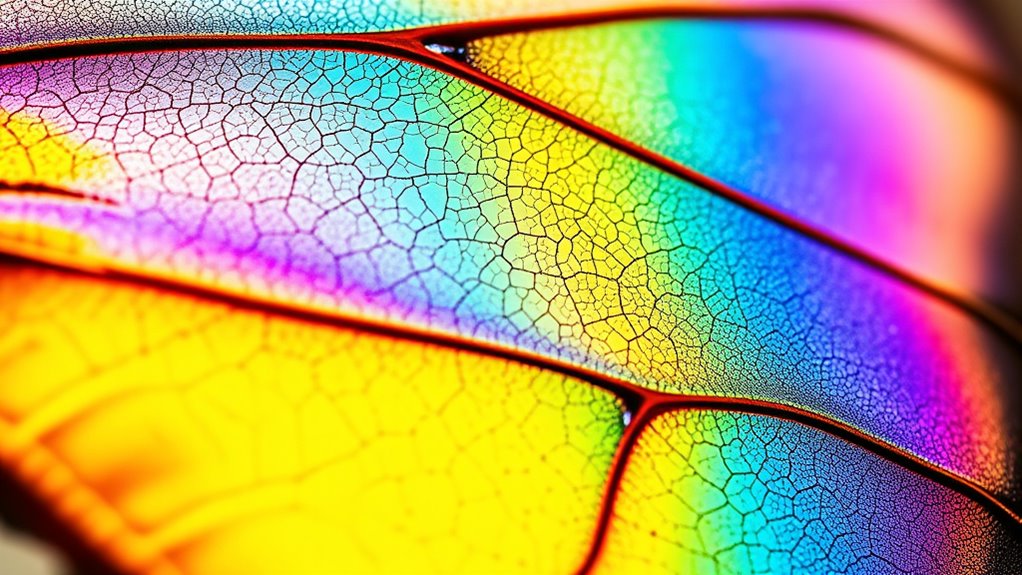
Structural color is a phenomenon where colors appear not because of pigments, but due to the microscopic structures within a material. These structures manipulate light through processes like nanostructure formation and optical interference, creating vibrant, shimmering hues that often change with viewing angles. When you observe iridescent butterfly wings or peacock feathers, you’re witnessing the result of these intricate nanostructures, which are carefully organized at scales comparable to the wavelength of visible light.
Structural colors arise from microscopic nanostructures that manipulate light through interference, creating vibrant hues that shift with perspective.
The formation of nanostructures is a key factor in how structural colors develop. Nature constructs these tiny architectures through processes such as self-assembly, where molecules and particles spontaneously organize into highly ordered patterns. This nanostructure formation can involve layered plates, photonic crystals, or quasi-ordered arrangements, each designed to interact with light in specific ways. As light encounters these nanostructures, certain wavelengths are reflected or transmitted more efficiently, depending on the precise spacing and shape of the structures. The outcome is a color that’s not fixed but can shift with your perspective or lighting conditions.
Optical interference plays a central role in producing the vivid colors you see in nature. When light hits these nanostructures, some of it is reflected off different layers or surfaces within the structure. Because these reflected waves travel different paths, they can interfere with each other—either reinforcing or canceling out certain wavelengths. This constructive and destructive interference results in the intense colors characteristic of structural coloration. Unlike pigment-based colors, which rely on absorbing specific wavelengths, these colors are produced by the physical interaction of light with the nanostructure’s geometry, leading to brilliant and often dynamic visual effects.
You can think of it as a finely tuned optical device built by nature. The nanostructure formation determines which wavelengths are affected, while optical interference amplifies or diminishes these wavelengths to produce the observed color. This combination allows for a broad palette of iridescent effects seen in various species. In some cases, the structures are so precisely ordered that they generate a single, pure hue; in others, a more complex, shifting spectrum appears. This ability to manipulate light without pigments is what makes structural colors so durable and vibrant, often lasting longer than pigment-based colors, which can fade over time.
In essence, the fascinating colors you admire in nature emerge from the microscopic architecture of materials. By understanding nanostructure formation and the principles of optical interference, scientists are inspired to develop new materials and technologies, mimicking nature’s mastery of light manipulation for applications like color displays, sensors, and even camouflage.
As an affiliate, we earn on qualifying purchases.
Frequently Asked Questions
How Do Structural Colors Compare to Pigment-Based Colors?
Structural colors stand out from pigment-based colors because they’re created by nanostructure design, which manipulates light through optical properties. Unlike pigments that absorb and reflect specific wavelengths, structural colors produce iridescence and vivid hues through physical interactions with light. You’ll notice these colors change with viewing angles, making them more dynamic and durable, as they aren’t reliant on chemical stability like pigments.
Can Humans Replicate Structural Colors Artificially?
Yes, you can replicate structural colors artificially through nanostructure fabrication, which creates precise patterns that produce optical interference effects similar to those in nature. By designing and assembling these nanostructures, you manipulate light to generate iridescence without pigments. Advances in nanotechnology enable you to develop vibrant, durable colors for use in textiles, cosmetics, and coatings, making artificial structural colors increasingly feasible and versatile.
Are Structural Colors Permanent or Do They Fade Over Time?
You might think structural colors last forever, but they can fade over time. Their color longevity depends on factors like surface damage, environmental exposure, and material degradation. Fading factors such as scratches, chemicals, or UV light can diminish iridescence. So, while initially vibrant, structural colors are not entirely permanent; they require protection to maintain their stunning effects over the years.
Which Animals Use Structural Color for Communication?
You notice animals like peacocks, mandarin fish, and certain butterflies use structural color for communication. They employ iridescent signaling to attract mates or warn rivals, making their visual communication highly effective. These animals manipulate light with their unique structures, creating shimmering, changing colors that catch your eye. Structural color enhances their ability to convey messages without sound or scent, playing a vital role in their behavioral interactions.
How Does Environmental Change Affect Structural Coloration?
Like a chameleon adapting to shifting skies, you see that environmental impacts and climate variation can alter structural coloration. Changes in temperature, humidity, and light can affect the nanostructures responsible for iridescence, causing colors to fade or shift. These variations serve as signals of ecological health, reminding you that nature’s vibrant displays are sensitive to the planet’s changing climate, emphasizing the delicate balance in our environment.
As an affiliate, we earn on qualifying purchases.
Conclusion
Now that you’ve seen how nature’s architecture creates stunning iridescence, it’s clear that structural color is a marvel of design. From butterfly wings to peacock feathers, these vibrant hues aren’t just pretty—they’re a testament to nature’s ingenuity. Imagine if Leonardo da Vinci had access to these materials! Next time you spot that shimmering jewel tone, remember it’s not paint but science at work, turning everyday things into living works of art.
As an affiliate, we earn on qualifying purchases.
structural color educational kits
As an affiliate, we earn on qualifying purchases.
As an affiliate, we earn on qualifying purchases.
Halloween Picks
halloween
As an affiliate, we earn on qualifying purchases.