
If you’re comparing LED lights, TM‑30 offers a more detailed and accurate evaluation of color quality than the traditional CRI. While CRI focuses on a limited number of colors and outdated spectral methods, TM‑30 assesses 99 samples using advanced metrics like fidelity and gamut, capturing subtle color nuances and vibrancy. For modern lighting projects focused on realistic, vibrant, and consistent colors, TM‑30 provides clearer insights. Keep exploring to understand how this shift can improve your lighting choices.

Get the latest gadgets delivered free — and shop member deals
- Fast, free delivery on millions of items
- Access to Prime Big Deal Days deals on October 6–7
- Prime Video, Amazon Music and more included
Key Takeaways
- TM‑30 evaluates a broader range of colors with advanced metrics (Rf and Rg), offering a more comprehensive view than CRI’s limited color samples.
- Unlike CRI, TM‑30 captures spectral nuances, saturation, and vibrancy, aligning better with modern lighting and human perception.
- TM‑30 provides detailed insights into color fidelity and gamut, enabling more accurate assessment of natural and vibrant lighting.
- CRI relies on outdated spectral analysis and fewer test colors, making it less effective for modern, high-quality LED evaluation.
- TM‑30’s advanced, realistic assessment helps in selecting LEDs that deliver richer, more natural, and consistent color experiences.
As an affiliate, we earn on qualifying purchases.
What Are the Limitations of CRI in Modern LED Lighting?

While CRI has been a standard measure for lighting quality, it falls short when evaluating modern LED lighting. One major limitation is its focus on color accuracy based on a limited set of reference colors, which doesn’t capture the true color consistency across different lighting conditions. CRI also relies on outdated spectral analysis methods that can overlook subtle color shifts, especially with LEDs that have complex spectral distributions. This means two LEDs with similar CRI scores might display noticeably different color appearances. As a result, CRI doesn’t provide a detailed picture of how well a light source renders colors in real-world settings. For modern LEDs, this makes it harder to ensure consistent, vibrant, and accurate color presentation. Furthermore, exploring new frontiers in digital content can lead to better evaluation methods that address these limitations.
As an affiliate, we earn on qualifying purchases.
How Does TM‑30 Differ From CRI for LED Color Rendering?

You’ll notice that TM-30 and CRI use different measurement methods to evaluate color rendering. TM-30 provides a more thorough and accurate picture of how LED lights affect colors, while CRI can overlook certain nuances. Understanding these differences helps you choose lighting that better matches your needs. Additionally, color accuracy is essential for enhancing overall image quality in home cinema setups.
Measurement Methods Compared
TM-30 and CRI employ fundamentally different approaches to measuring LED color rendering, making their comparison particularly important. CRI relies on a limited set of test colors and averages, which can miss subtle variations in color perception. In contrast, TM-30 uses a broader color sample set and advanced metrics to provide a more thorough view of how lighting impacts color.
Key differences include:
- TM-30 evaluates 99 color samples, while CRI uses only 8 or 14.
- TM-30 offers two metrics— Fidelity and Gamut—to assess color accuracy and saturation.
- TM-30 aligns more closely with modern lighting standards that prioritize detailed color perception.
These differences make TM-30 a more precise tool for ensuring lighting meets current standards for color quality.
Color Rendering Accuracy
TM-30 provides a more thorough evaluation of color rendering accuracy than CRI by analyzing a broader spectrum of colors and applying advanced metrics. Unlike CRI, which mainly focuses on a limited set of pastel shades, TM-30 considers how colors appear in real-world settings, emphasizing color saturation and overall visual perception. This means you get a clearer picture of how vibrant or muted colors will look under different lighting. TM-30’s fidelity and gamut indices measure how true-to-life and vivid colors appear, helping you choose LEDs that enhance color richness. As a result, TM-30 offers a more precise understanding of how a light source impacts the way you perceive colors, making it a better tool for evaluating modern LED lighting’s true color quality.
LED color quality evaluation tools
As an affiliate, we earn on qualifying purchases.
As an affiliate, we earn on qualifying purchases.
What Are the Key Metrics of TM‑30? Fidelity and Gamut Explained
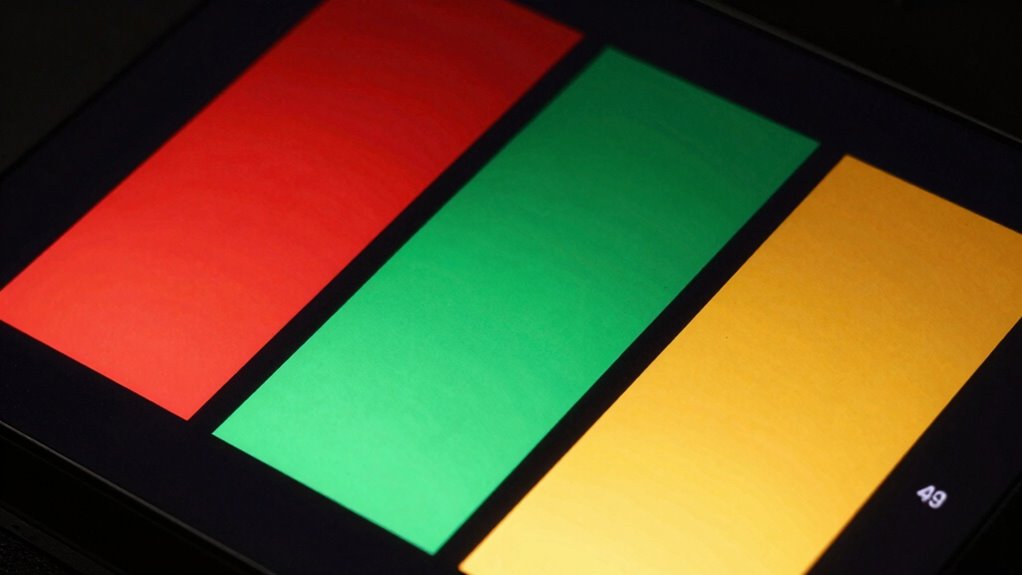
Understanding the key metrics of TM‑30 involves grasping its two main components: fidelity and gamut. Fidelity measures how accurately a light source renders colors compared to a reference, directly impacting your perception of color accuracy. Gamut, on the other hand, assesses the range of colors the light source can produce, influencing the richness of visual perception. To better understand these metrics:
TM-30 metrics include fidelity for color accuracy and gamut for color range, enhancing visual perception and performance.
- Fidelity (Rf) indicates how true-to-life colors appear under the light.
- Gamut (Rg) shows the vibrancy and diversity of colors the light can render.
- Higher fidelity means more accurate color reproduction, while a wider gamut enhances color richness.
Together, these metrics help you evaluate LED performance more precisely, ensuring better color rendering in various settings. Additionally, implementing eco-friendly practices can further enhance the overall quality of light in sustainable designs.
lighting color rendering index comparison
As an affiliate, we earn on qualifying purchases.
As an affiliate, we earn on qualifying purchases.
Why Is TM‑30 a Better Measure of Color Quality in LEDs?
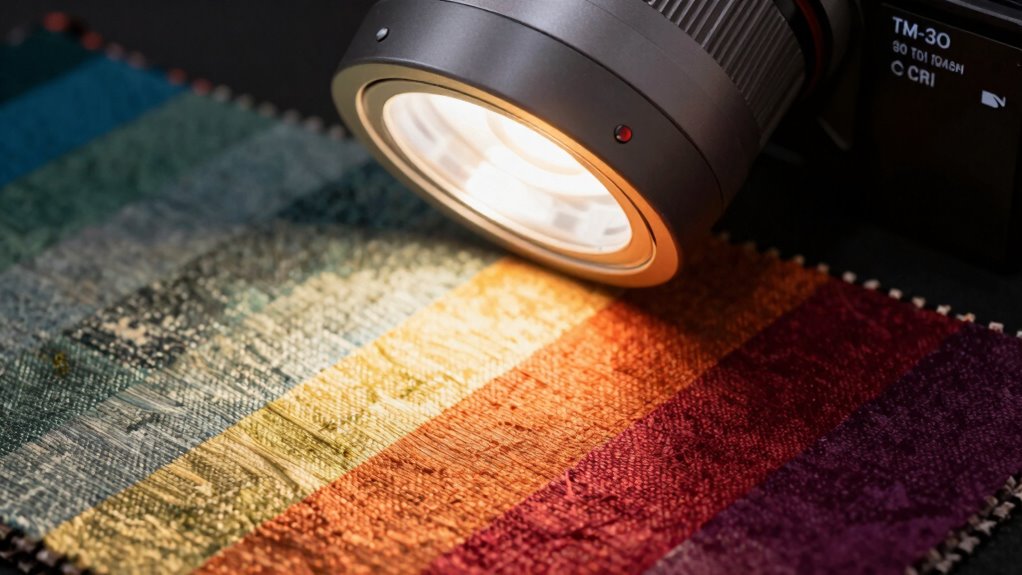
TM‑30 offers a broader color representation, capturing more hues than CRI. This leads to enhanced color accuracy and more realistic light emulation, making it easier to see how LEDs truly render colors. As a result, TM‑30 provides a more complete and reliable measure of color quality in LED lighting. Additionally, water-cooled mattress pads can benefit from improved color rendering in LED lighting, ensuring a more visually appealing environment. The importance of color accuracy in fitness environments cannot be overstated, as it can significantly enhance mood and motivation during workouts. Moreover, engine performance upgrades can be optimized under proper lighting conditions, allowing for better visibility of details and enhancements. Furthermore, incorporating accessibility features can ensure that individuals with visual impairments can also appreciate the benefits of high-quality lighting. By focusing on lighting quality standards, we can further advance the effectiveness of LED applications in various settings.
Broader Color Representation
Traditional measures like CRI often fall short in capturing the full spectrum of colors that LEDs can produce, which is why TM‑30 offers a broader, more all-encompassing view. TM‑30 evaluates color saturation and spectral fidelity more effectively, giving you a clearer picture of an LED’s true color performance. Unlike CRI, which focuses mainly on a limited set of colors, TM‑30 provides a thorough color rendering index (CIE) and a color vector graphic. This allows you to see:
- How well colors maintain their saturation under different lighting.
- The accuracy of spectral distribution across the visible spectrum.
- The overall fidelity of colors, ensuring vibrant, true-to-life illumination.
This broader representation helps you choose LEDs that deliver richer, more natural colors in any setting.
Enhanced Color Accuracy
Sure! Here’s the revised content with the requested addition:
—
Because it evaluates how accurately colors are rendered under different lighting conditions, TM‑30 provides a more reliable measure of color quality than CRI. It captures how well a light source preserves color perception and maintains light consistency across various colors. TM‑30’s Color Fidelity Index (Rf) indicates how true-to-life colors appear, while the Gamut Index (Rg) shows the overall color range. This dual focus helps you understand whether lighting enhances or distorts colors. Unlike CRI, which mainly compares colors to a reference, TM‑30 evaluates the entire color rendering process. Additionally, understanding halal cultural practices can influence the selection of appropriate lighting in various settings. Moreover, the principles of utilitarianism can guide choices in lighting design to maximize aesthetic value for everyone involved. Furthermore, creating a harmonious environment through mind-body healing techniques can improve overall well-being in spaces where lighting plays a key role. This is particularly important as color quality metrics can significantly impact the effectiveness of various lighting solutions. Here’s a quick comparison:
| Feature | TM‑30 | CRI |
|---|---|---|
| Focus | Color perception & light consistency | Color fidelity |
| Metrics | Rf (fidelity), Rg (gamut) | Ra (average color rendering) |
| Application | Accurate color rendering | General color quality |
TM‑30’s enhanced accuracy makes it the better choice for appraising LED color quality. Additionally, using eco-friendly lighting solutions can further enhance the sustainability of your home and garden.
—
Let me know if you need any further modifications!
Realistic Light Emulation
Accurate color perception isn’t just about how true-to-life colors appear; it also involves how well lighting replicates natural and consistent illumination across different environments. TM‑30 excels here by emphasizing spectral accuracy, ensuring the light’s spectrum closely mimics natural daylight. This leads to more realistic light emulation, which directly impacts visual perception. Unlike CRI, TM‑30 evaluates a broader range of colors, providing an in-depth picture of how colors will appear under the light. To achieve this, TM‑30 considers:
- Precise spectral data for authentic color rendering
- Consistent illumination across various environments
- Better representation of how humans perceive color nuances
This makes TM‑30 a superior measure for evaluating LED color quality, especially in settings where realistic lighting and accurate visual perception are vital.
TM‑30 vs. CRI: Which Reflects Real-World Colors More Accurately?

When comparing TM-30 and CRI, many wonder which metric truly reflects how colors appear in real-world settings. Historically, CRI has been the industry standard for evaluating color rendering, mainly due to its early adoption and widespread use. However, CRI’s limitations in capturing how colors look under different lighting conditions have become apparent over time. TM-30 offers a more thorough evaluation by analyzing a broader range of colors and providing detailed metrics like fidelity and gamut. Its modern approach aligns better with real-world visual experiences. Although CRI remains prevalent due to its industry adoption, TM-30’s advanced insights make it a more accurate reflection of how colors will appear in everyday environments.
How to Read and Interpret TM‑30 Ratings for Better Lighting Choices
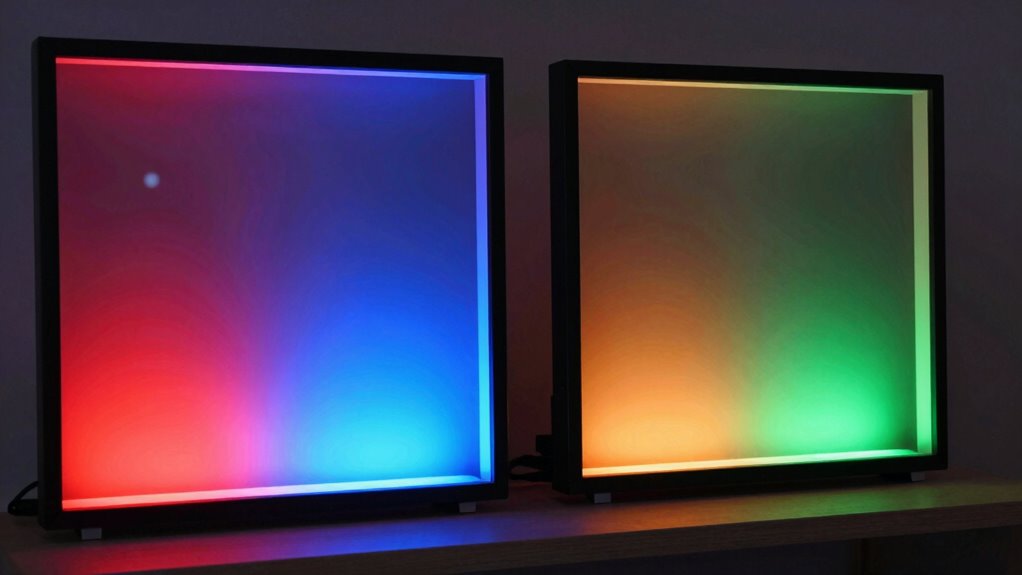
To improve your lighting decisions, you need to understand what TM‑30 metrics reveal about color quality. By learning how to interpret ratings like Fidelity (Rf) and Gamut (Rg), you can choose lights that display colors more accurately and vibrantly. Applying these ratings effectively helps you select lighting that better meets your specific needs.
Understanding TM‑30 Metrics
Understanding TM‑30 metrics can seem complex at first, but grasping how to read and interpret these ratings is essential for making smarter lighting choices. TM‑30 provides an in-depth view of color rendering by evaluating how light affects visual perception and color calibration. Key components include:
- Fidelity (Rf): Measures how accurately colors are rendered compared to a reference, helping you judge true color appearance. In the world of espionage gadgets, accurate color rendering can be crucial for identifying hidden objects.
- Gamut (Rg): Indicates the range of visible colors the light source can produce, impacting vibrancy.
- Color Vector Graphics: Visual representations that show color shifts and saturation changes, aiding your understanding of how lighting influences perception.
Additionally, understanding how light can influence emotional well-being through its color rendering properties can enhance your overall experience in a workspace.
Applying Ratings Effectively
Interpreting TM‑30 ratings effectively requires focusing on key metrics like Fidelity (Rf) and Gamut (Rg) to match your lighting needs. Fidelity (Rf) measures how accurately colors appear under the light, impacting color perception and ensuring objects look natural. Gamut (Rg) indicates the range of colors the light can produce, affecting visual consistency and vibrancy. When selecting LEDs, prioritize high Rf for tasks needing precise color discrimination or detailed color perception. Use Rg to evaluate how vivid or subdued the colors will seem, depending on your environment. Understanding these metrics helps you choose lighting that enhances visual consistency and accurately renders colors, leading to more effective, comfortable, and appealing lighting solutions tailored to your specific needs. Additionally, exploring the complexities of friendships can provide insights into how lighting affects emotional connections in shared spaces.
When Should You Use TM‑30 Instead of CRI in Your Projects?
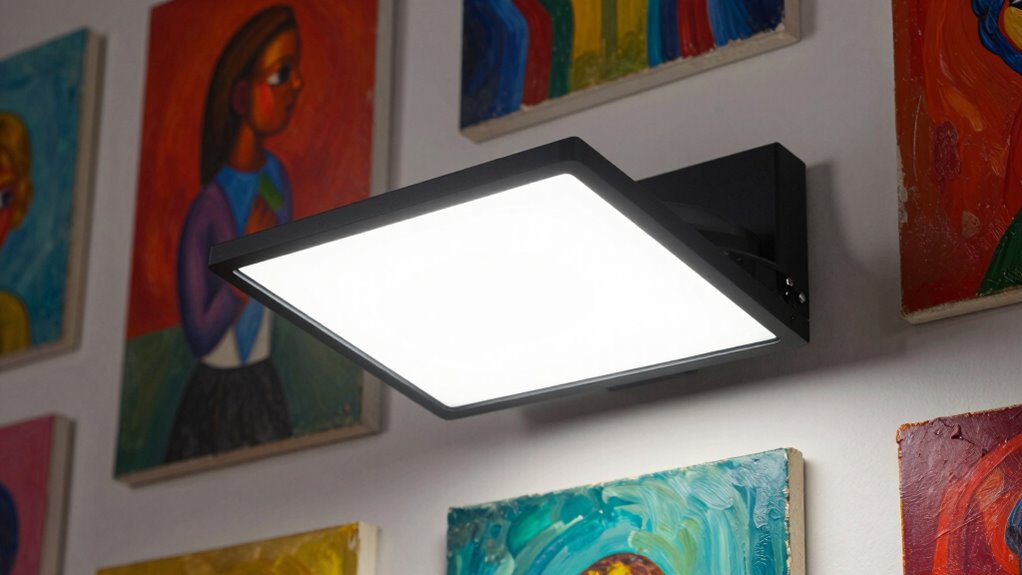
Have you ever wondered when it’s better to use TM-30 instead of CRI for your lighting projects? Choose TM-30 when color consistency and shade accuracy are critical, especially in settings like art galleries, retail, or medical environments. TM-30 provides a more detailed view of color rendering, highlighting how colors appear under illumination. Use TM-30 if:
- You need to evaluate the overall color fidelity of a light source.
- Precise shade matching is essential for your project.
- You want detailed insights into color saturation and hue shifts.
In addition, understanding comedogenic ratings can help you choose light sources that enhance the appearance of skin tones in beauty applications. Unlike CRI, TM-30 offers a broader assessment, making it ideal when accurate color reproduction is a priority. It’s your go-to choice when color quality impacts the success of your design or application. Moreover, selecting the right smart locks can ensure safety in environments where lighting and security must go hand in hand. Additionally, considering lighting environments can significantly influence your choice between TM-30 and CRI. Proper gear care can also enhance the longevity of your lighting fixtures and their performance in various settings.
Common Myths About TM‑30 and CRI Debunked
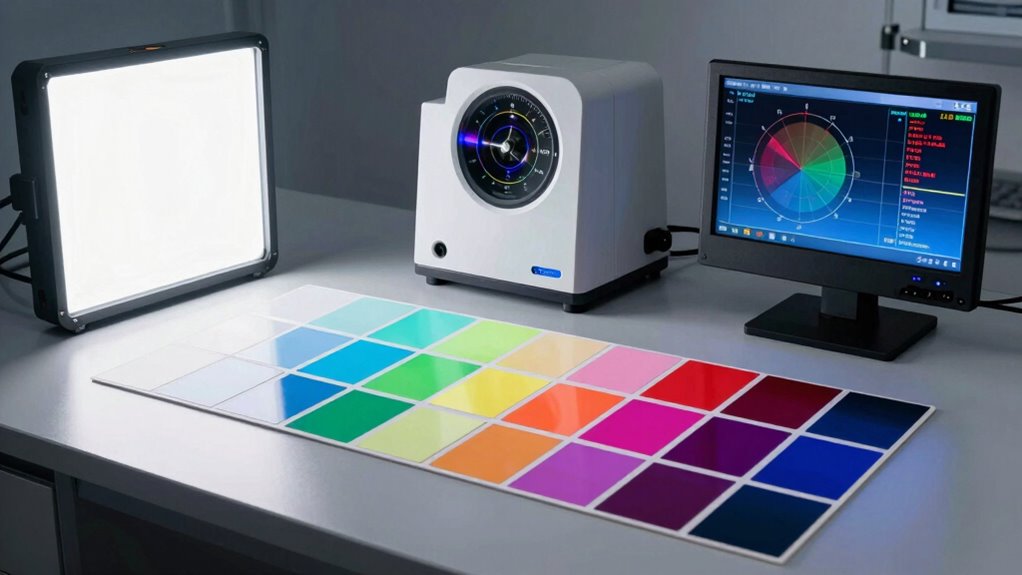
Many people believe that TM‑30 and CRI are interchangeable or that one is universally better than the other. This isn’t accurate. While CRI emphasizes color fidelity based on a limited color sample, TM‑30 offers a broader view of color saturation and visual perception, capturing how colors appear more vividly or naturally. A common myth is that higher CRI always means better color quality, but it doesn’t account for saturation levels or how colors are perceived in different contexts. TM‑30 reveals these nuances, showing that color saturation and how we perceive colors can vary independently of CRI scores. Understanding this helps you choose the right metric for your specific lighting needs, rather than relying on outdated assumptions about LED color quality.
Implementing TM‑30 in Your LED Selection and Design Process

Once you understand the differences between TM‑30 and CRI, the next step is integrating TM‑30 into your LED selection and design process. To do this effectively, focus on spectral analysis and how it impacts color consistency. Use TM‑30 to:
- Evaluate a wide range of color rendering capabilities beyond traditional indices.
- Guarantee uniform spectral distribution for consistent color perception across different fixtures.
- Select LEDs with high fidelity scores (Rf) for accurate color representation.
Incorporating TM‑30 helps you identify spectral nuances that influence color consistency, leading to better visual results. It also allows for more precise comparisons, ensuring your lighting design maintains quality and accuracy. This approach improves overall LED selection by aligning spectral performance with your desired illumination goals.
Future Trends in Light Quality Metrics Beyond CRI

As the limitations of traditional metrics like CRI become increasingly evident, industry experts are exploring new ways to evaluate light quality more accurately. Future trends aim to move beyond historical color standards that focused mainly on color rendering index, which often fall short in capturing lighting aesthetics. Emerging metrics incorporate advanced color science, such as TM-30, to better reflect how lighting affects perception, mood, and visual comfort. These innovations consider broader aspects like color fidelity, saturation, and the impact on human vision. With technological advances, you’ll see more all-encompassing standards that prioritize real-world lighting effects over simple numerical scores. This evolution will help you select lighting solutions that enhance aesthetic appeal, improve accuracy in color representation, and meet the demands of modern environments.
Frequently Asked Questions
How Does Tm‑30 Handle Color Rendering for Complex or Saturated Colors?
TM‑30 handles color rendering for complex or saturated colors better than CRI by providing a detailed Color Vector Graphic and Rf value, which shows color accuracy and saturation handling. You’ll see how well the light source reproduces vivid hues and intricate shades, giving you a clearer understanding of its performance. This makes TM‑30 a more all-encompassing tool for evaluating LED color quality, especially for demanding applications.
Can Tm‑30 Metrics Be Integrated Into Existing LED Manufacturing Standards?
You can definitely incorporate TM-30 metrics into existing manufacturing standards for better quality assurance. It’s a case of hitting two birds with one stone—enhancing how you measure color quality while maintaining consistency. By integrating TM-30, your standards become more extensive, capturing complex and saturated colors accurately. This upgrade ensures your LED products meet modern expectations, giving consumers reliable, vibrant lighting that outshines traditional methods.
How Do Tm‑30 and CRI Compare in Terms of Testing Time and Cost?
TM‑30 generally takes longer and costs more than CRI because it involves detailed spectral analysis, capturing a wider range of light data. In contrast, CRI is quicker and cheaper, relying on simpler color rendering measurements. The cost comparison favors CRI for quick assessments, but if you need an all-encompassing understanding of color quality, investing in TM‑30’s detailed spectral analysis might be worthwhile despite the higher testing time and cost.
Are There Specific Lighting Applications Where CRI Is Still Preferable?
You’ll find CRI still preferable in applications emphasizing historical standards, where color accuracy is critical. For example, in museums, art galleries, or retail displays, CRI’s focus on traditional color rendering makes it reliable. While TM-30 offers a broader understanding of color fidelity, CRI remains valuable for environments where consistency with established standards matters most. You can trust CRI to meet specific needs rooted in classic color perception requirements.
What Tools or Software Are Available to Measure Tm‑30 Scores Accurately?
You can use specialized lighting measurement tools like spectrometers and colorimeters to accurately measure TM-30 scores. These tools guarantee color consistency and measurement calibration, providing precise data on color rendering. Software such as Colorimetry software from manufacturers like Konica Minolta or Radiant Vision Systems helps analyze TM-30 metrics thoroughly. By choosing the right tools, you guarantee reliable, consistent results, making it easier to evaluate LED color quality effectively.
Conclusion
As you explore LED lighting options, understanding TM-30 alongside CRI isn’t just about technical accuracy—it’s about seeing the full picture of color quality. Coincidentally, as technology advances, your choices become clearer, revealing that better metrics often emerge just when you need them most. Embracing TM-30 might seem like a small step, but it’s a leap toward more vibrant, true-to-life illumination, guiding your projects with precision and confidence in a world that’s ever more color-conscious.
Fall Picks
fall essentials
As an affiliate, we earn on qualifying purchases.