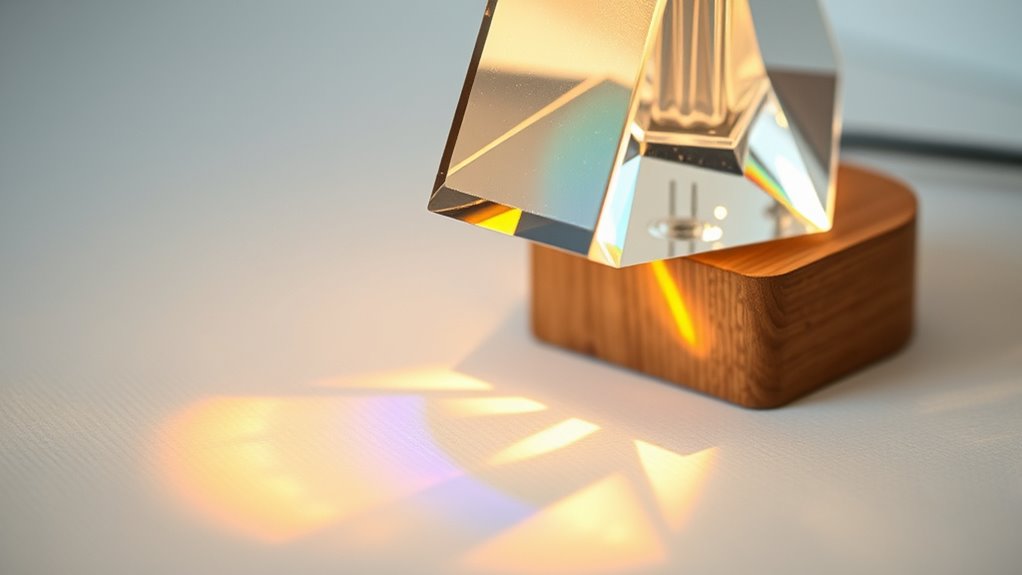

To create a DIY prism lamp that splits light at home, start by selecting high-quality, clear glass or acrylic with precise cuts to guarantee minimal distortion. Assemble the pieces carefully, ensuring tight joints for maximum light refraction. Use energy-efficient LED lights in various colors, positioning them strategically behind the glass to produce vibrant spectrum effects. Experiment with different shapes, facets, and angles to customize your display. Keep exploring to discover how craftsmanship and lighting techniques can transform your space with stunning colorful light displays.
Key Takeaways
- Choose high-quality, clear glass or acrylic with precise edges to ensure optimal light dispersion and minimal distortion.
- Carefully measure, cut, and assemble glass pieces to create seamless joints that enhance light refraction.
- Use energy-efficient LEDs in various colors and position them strategically behind or within the prism for desired effects.
- Experiment with textured or layered glass facets to produce complex, vibrant light displays and rainbow effects.
- Customize the design by adjusting glass shapes, colors, and light angles to craft unique, artistic prism lamps at home.
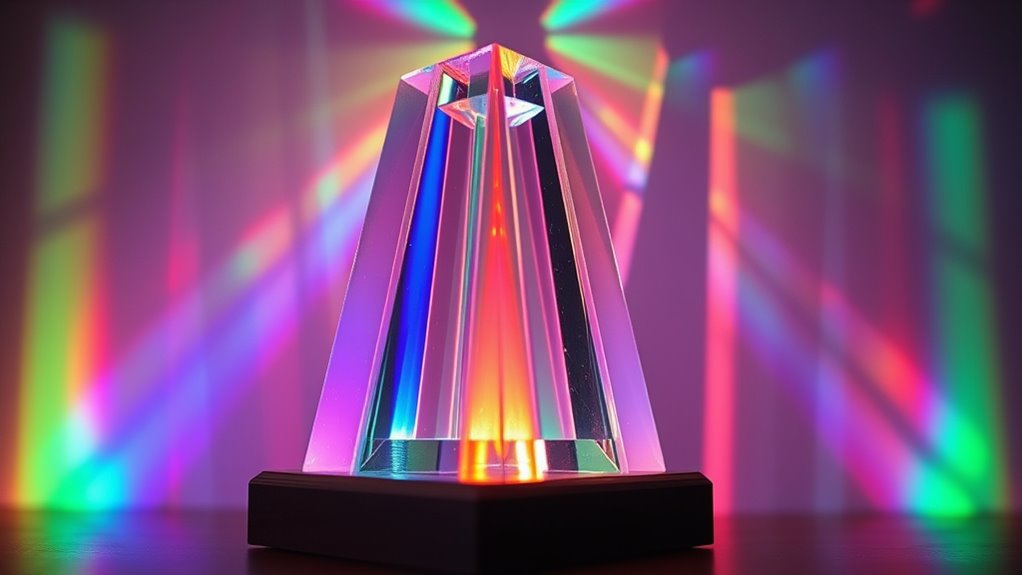
Ever wondered how to create a stunning, colorful lamp that adds a touch of elegance to any space? Crafting a DIY prism lamp is a rewarding project that allows you to experiment with lighting effects and showcase your glass craftsmanship skills. The key to a captivating prism lamp lies in understanding how light interacts with the glass and how you can manipulate that interaction to produce beautiful, dynamic effects. When you focus on lighting effects, you harness the natural beauty of light as it passes through your handcrafted prism, creating a spectrum of colors and mesmerizing patterns. Your goal is to design a piece that not only illuminates but also transforms ambient light into an artistic display.
Start by selecting high-quality glass or acrylic materials. Your choice of glass is crucial because it influences how light refracts and disperses. Opt for clear, smooth glass with precise edges to ensure essential light transmission and minimal distortions. The craftsmanship involved in shaping and assembling the glass pieces is crucial, so take your time with measurements and cuts. Perfectly cut glass facets will enhance the prism’s ability to split light into its component colors, creating vibrant displays when illuminated. The way you assemble your glass pieces impacts the overall lighting effects — tight joints and seamless connections will maximize light refraction and minimize unwanted glare.
When it comes to lighting, LEDs are your best bet. They’re energy-efficient, produce minimal heat, and come in a variety of colors and brightness levels. Position your LEDs strategically behind or within the glass structure to maximize light dispersion. Experiment with different angles and intensities to see how the light interacts with your prism. As you turn on the lamp, observe how the glass craftsmanship influences the dispersion of light into a spectrum of hues. You might notice subtle shifts in color and intensity depending on your setup, so don’t hesitate to tweak your design until you achieve the visual effects you desire. Understanding light dispersion is essential for creating stunning visual effects in your prism lamp.
Adding details like textured glass or layered facets can further enhance your lighting effects, creating more complex and engaging displays. The beauty of a DIY prism lamp is in its customization — you control every aspect, from the shape and color of the glass to the arrangement of the light source. As you develop your skills in glass craftsmanship, you’ll find new ways to manipulate light and craft truly unique lighting effects. Whether you want a gentle glow or a vibrant rainbow cascade, your custom-made prism lamp will turn ordinary illumination into an extraordinary piece of art, elevating any room with its colorful splendor.
Frequently Asked Questions
Can I Use Any Type of Glass for the Prism?
You shouldn’t use just any type of glass for your prism; instead, choose glass with specific properties. Opt for materials like optical or borosilicate glass, which have clear, uniform properties that effectively split light. Different types of glass vary in transparency and refractive index, affecting how well they bend and split light. Using the right glass guarantees your DIY prism lamp works efficiently and creates beautiful light effects.
How Much Does It Cost to Make a DIY Prism Lamp?
Sure, you can pay a fortune or keep it budget-friendly. The cost estimation for a DIY prism lamp depends on your material sourcing—basic glass or repurposed items. Expect to spend around $10-$50 for materials like glass, a light source, and mounting supplies. If you’re clever with sourcing and DIY skills, you can create a stunning piece without breaking the bank—because who needs to spend a fortune just to make light split?
Is It Safe to Use LED or Incandescent Bulbs?
Using LED bulbs in your DIY prism lamp is safer because LED safety is well-established; they emit less heat and contain no hazardous materials. Incandescent hazards, however, include higher heat production and potential burns or fire risks. So, opt for LED bulbs for a safer, energy-efficient experience. Always check the bulb’s specifications to guarantee compatibility with your lamp design and avoid overheating or electrical issues.
How Do I Prevent the Light From Overheating the Prism?
To prevent overheating your prism, guarantee proper heat dissipation by using a low-wattage bulb and avoiding prolonged use. Adding reflective coatings on the lamp housing can help direct heat away from the prism. You might also consider using a heatsink or ventilation to keep the temperature down. Regularly check the setup for signs of excess heat, and never leave the lamp unattended during extended use.
Can I Customize the Color Effects of the Light?
Imagine a rainbow blending seamlessly into a sunset—yes, you can customize your prism lamp’s color effects. By experimenting with color mixing and adjusting your light sources, you gain full lighting customization. Use colored gels, LED strips, or smart bulbs to create your desired ambiance. This way, you transform your lamp into a personalized light display, perfectly matching your mood or decor with vibrant, dynamic colors.
Conclusion
Now that you’ve built your DIY prism lamp, you might wonder if it truly splits light like those fancy commercial models. Scientific tests show that a simple glass prism does refract and disperse light, creating beautiful spectra. While your homemade version might not be as precise, it still demonstrates light’s fascinating properties. So, yes—your prism lamp does split light, proving that with a little curiosity and effort, you can explore science right at home.