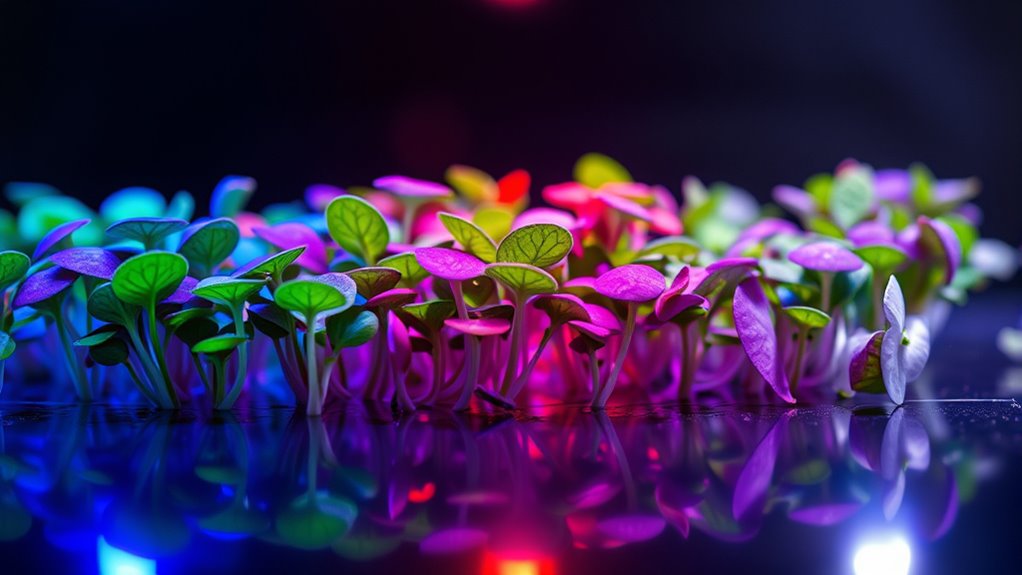

When you grow microgreens under different LEDs, selecting the right spectrum and intensity is key. Blue light promotes lush, compact growth, while red encourages flowering and stem elongation. Combining both creates a balanced environment for healthy development. Adjusting LED height and brightness guarantees your microgreens don’t stretch or scorch. Paying attention to how your plants respond helps you optimize light conditions. Keep exploring to discover how specific settings can boost your microgreens even more.
Listen free for 30 days with Audible
Thousands of audiobooks and originals — cancel anytime.
As an affiliate, we earn on qualifying purchases.
Key Takeaways
- Use full-spectrum or adjustable LED grow lights to mimic natural sunlight for optimal microgreen growth.
- Combine blue (450-495 nm) and red (620-750 nm) LEDs to promote healthy, compact, and vibrant microgreens.
- Maintain LED placement 12-24 inches above microgreens, adjusting height to prevent heat stress and ensure proper coverage.
- Monitor plant response closely; adjust light intensity and spectrum based on signs of stretching, pale leaves, or browning.
- Select LEDs with controllable spectrum and intensity to customize lighting conditions for different microgreen varieties.
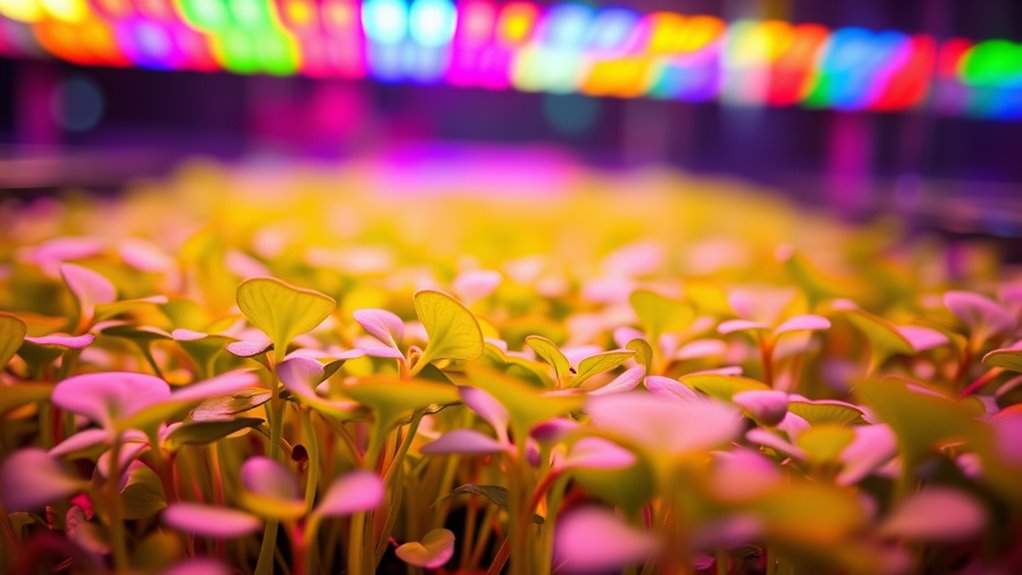
Growing microgreens under different LEDs offers a practical way to optimize your indoor garden. When selecting your lighting setup, understanding the LED spectrum and light intensity is essential for healthy growth. The LED spectrum refers to the range of wavelengths emitted by your LEDs, which directly impacts how your microgreens develop. For example, blue light, typically between 450-495 nanometers, encourages lush, compact growth and boosts the production of chlorophyll, making your microgreens vibrant and nutritious. Red light, around 620-750 nanometers, promotes stem elongation and flowering, but when used alone, it can cause leggy, weak microgreens. Combining blue and red LEDs provides a balanced spectrum that supports overall healthy growth, ensuring your microgreens are robust and flavorful.
Light intensity, on the other hand, determines how much energy your microgreens receive. If the light is too weak, your plants may stretch toward the source, become leggy, and develop pale leaves. Conversely, excessive light intensity can lead to stress, scorching, or wilting. You need to find the right balance; generally, microgreens thrive under moderate to high light intensities, roughly 200-400 micromoles per square meter per second. If you notice your microgreens are stretching or their leaves look pale, it’s a sign to increase the light intensity gradually. Conversely, if the leaves turn brown or curling occurs, you might need to lower the intensity or increase distance from the light source. Proper understanding of light management can help you optimize growth conditions effectively.
Adjusting these factors is straightforward with modern LED grow lights, which often allow you to customize spectrum and intensity settings. For beginners, choosing full-spectrum LEDs simplifies the process, as they mimic natural sunlight and provide a balanced mix of wavelengths. When setting up your grow space, position the LEDs at an appropriate height—typically 12-24 inches above the microgreens—to ensure adequate light coverage without risking heat stress. Keep a close eye on your plants’ response; their growth pattern is the best indicator of whether your lighting conditions are suitable. If your microgreens are growing quickly, with healthy green leaves and a strong stem structure, you’re on the right track.
As an affiliate, we earn on qualifying purchases.
Frequently Asked Questions
What Are the Energy Costs of Different LED Lights for Microgreens?
Different LED lights vary in electricity consumption, impacting your cost efficiency. Generally, high-quality LEDs use less energy while providing sufficient light for microgreens, reducing your electricity costs. You’ll find that full-spectrum or specialized grow LEDs tend to be more energy-efficient than older or lower-quality options. By choosing LEDs with lower wattage and better energy efficiency ratings, you can grow microgreens effectively without inflating your electricity bills.
How Do LED Lights Affect the Nutrient Content of Microgreens?
Thinking of LEDs as a painter’s palette, you realize they influence nutrient density in microgreens. Different light spectra encourage the production of essential compounds, enhancing nutrients like vitamins and antioxidants. You find that blue and red LEDs, in particular, boost nutrient content by stimulating photosynthesis and secondary metabolite synthesis. By choosing the right spectrum, you can considerably improve your microgreens’ nutritional quality, making your harvest both vibrant and healthful.
Can LED Lighting Be Used for All Microgreen Varieties?
Yes, you can use LED lighting for all microgreen varieties. The key is choosing the right LED spectrum to match each microgreen’s specific needs. Different varieties may thrive under full-spectrum LEDs or specific wavelengths like blue or red. By adjusting the LED spectrum, you guarantee ideal growth and flavor, making LED lighting a versatile option for cultivating a wide range of microgreen varieties successfully.
What Is the Optimal Duration of LED Lighting for Best Growth?
You should aim for a light cycle of 12 to 16 hours daily, providing consistent illumination for your microgreens’ different growth stages. During germination, keep lights on for about 12 hours, then extend to 14-16 hours as plants develop. This balanced approach supports healthy root and leaf growth, ensuring your microgreens thrive. Adjust the duration based on plant response, but maintaining a steady light cycle optimizes overall growth.
Are There Any Safety Concerns With Using LED Lights Indoors?
LED light safety is generally high, but you should still follow indoor lighting regulations to prevent accidents. Make certain your LEDs are properly installed, not causing electrical hazards, and avoid direct eye exposure to intense light. Use certified products, keep cords out of reach, and maintain good ventilation. By adhering to safety guidelines, you can enjoy efficient microgreen growth without risking health or safety issues indoors.
adjustable LED grow lights for microgreens
As an affiliate, we earn on qualifying purchases.
As an affiliate, we earn on qualifying purchases.
Conclusion
By experimenting with different LEDs, you realize that light quality truly influences microgreen growth. It’s tempting to believe all LEDs are equal, but the truth is, specific wavelengths can boost flavor, nutrition, and speed. Don’t just take a theory at face value—test it yourself. The deeper lesson? Understanding nature’s subtle cues helps you optimize your microgreens and develop a keen eye for growth patterns, turning a simple experiment into valuable gardening insight.
As an affiliate, we earn on qualifying purchases.
LED grow light height adjustable
As an affiliate, we earn on qualifying purchases.
As an affiliate, we earn on qualifying purchases.
NFL season / tailgating Picks
team gear
As an affiliate, we earn on qualifying purchases.