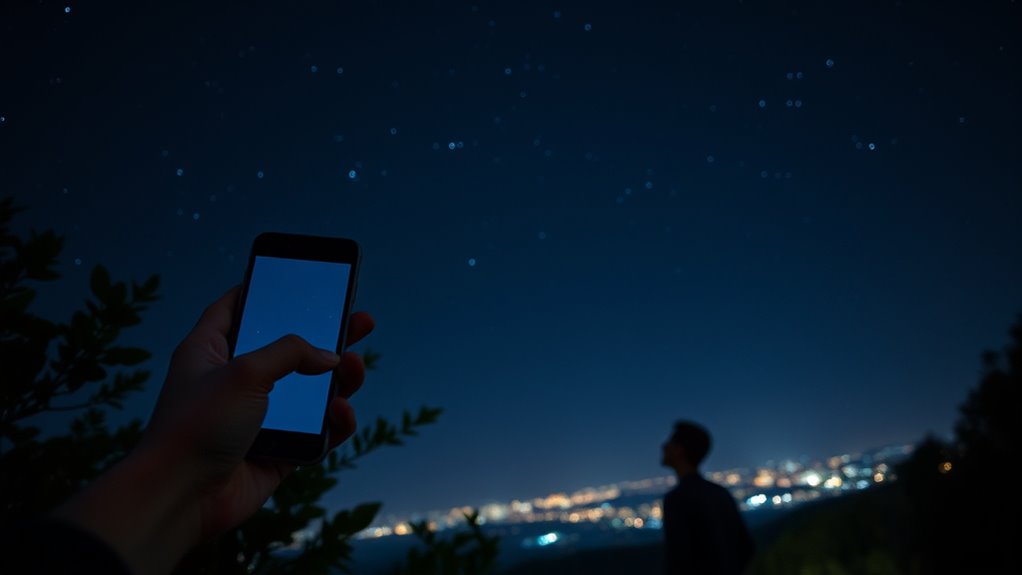

You can easily measure light pollution using various smartphone apps that use your phone’s sensors to gauge sky brightness. These apps often connect to satellite data, giving you real-time information about local lighting conditions. They’re user-friendly and allow you to compare your observations with broader light pollution patterns. Tracking these levels helps find dark sky spots and supports efforts to reduce unnecessary lighting. Keep exploring to discover more ways to protect our night sky.
Key Takeaways
- Smartphone apps use built-in sensors to measure sky brightness and detect light pollution levels in real-time.
- Many apps connect to satellite imagery or databases to compare local light pollution with broader regional patterns.
- Users can record measurements over time to track seasonal or nightly variations in sky brightness.
- Apps often provide maps, overlays, or color-coded indicators to identify dark sky areas ideal for stargazing.
- These tools support citizen science and advocacy by enabling individuals to document and share light pollution data.

Light pollution is a growing problem that affects both our environment and our ability to enjoy clear night skies. As urban areas expand and artificial lighting becomes more prevalent, it’s harder to see stars and appreciate the natural beauty of the night. Fortunately, advancements in technology now allow you to measure and monitor light pollution right from your smartphone. One way to do this is by understanding how satellite imagery and urban lighting patterns reveal the extent of artificial light in your area. Satellite images provide a broad view of how cities and suburbs illuminate the night sky, highlighting areas with intense light pollution. These images show how city centers often have dense, bright lighting, while rural regions tend to be darker. By studying these patterns, you can better grasp how your location contributes to light pollution and identify the sources of excessive lighting nearby.
Using smartphone apps designed for measuring light pollution, you can gather real-time data on the brightness of your local night sky. These apps often incorporate user-friendly tools that analyze your phone’s sensors to estimate sky brightness levels, giving you immediate feedback. Some apps even connect to satellite imagery databases, allowing you to compare your observations with broader urban lighting patterns. This integration helps you understand whether your area’s light pollution stems from specific sources like streetlights, commercial zones, or residential lighting. As you track changes over time, you may notice how certain events or seasonal lighting displays influence the sky’s darkness. This information can motivate you to advocate for better lighting practices or participate in community efforts to reduce unnecessary illumination. Additionally, understanding the role of attention in observing your environment can improve the accuracy of your measurements and heighten your awareness of light pollution’s impact.
Another benefit of these apps is their ability to help you identify ideal locations for stargazing. By knowing where light pollution is minimal, you can plan trips to darker sites and enjoy clearer views of the stars and planets. Some apps also provide maps and overlays of light pollution levels, highlighting neighborhoods or regions that are more prone to excessive lighting. This knowledge empowers you to make informed decisions about where to observe the night sky and promotes awareness of how urban lighting patterns impact our environment. Ultimately, combining satellite imagery insights with your personal measurements enables you to contribute valuable data to citizen science projects aimed at reducing light pollution. Your observations can support local initiatives, influence lighting policies, and foster a greater appreciation for the night’s natural darkness. Through these tools, you become an active participant in protecting our night skies and ensuring future generations can enjoy the stars as you do today.

Bluetooth Lux Meter Light Meter, 0.1~200,000Lux Range Light Meter for Plants and Photography, Wireless Light Meter with App Real-time Monitoring, Data Logging and Data Export
【Bluetooth Connection with Data Logging 】Offers seamless Bluetooth pairing for real-time recording and data export via APP management,…
As an affiliate, we earn on qualifying purchases.
As an affiliate, we earn on qualifying purchases.
Frequently Asked Questions
How Accurate Are Smartphone Apps Compared to Professional Light Pollution Meters?
Smartphone apps aren’t as accurate as professional light pollution meters, but they can give you a decent estimate. Factors like sensor calibration and app compatibility affect their reliability. You’ll get better results if your device’s sensor is well-calibrated and the app is compatible with your phone. Keep in mind, though, that professional meters are designed for precise measurements, while apps serve as useful tools for general assessments.
Can Smartphone Apps Measure Different Types of Light Pollution (E.G., Skyglow, Light Trespass)?
Yes, smartphone apps can help you measure different types of light pollution, like skyglow and light trespass, by analyzing ambient light levels. They use measuring techniques that rely on your device’s sensors to detect various types of light emitted from artificial sources. While they provide a general idea, keep in mind that their accuracy varies and isn’t as precise as professional tools, but they’re useful for initial assessments and raising awareness.
Do Smartphone Apps Require Special Settings or Calibration Before Use?
You might think smartphone apps have magical sensors, but no, they don’t need special calibration or complex app settings to measure light pollution. Usually, you just open the app and start pointing your phone skyward. Still, for more accurate readings, tweaking basic app settings or calibrating your device can help, especially if you want precise data. Ironically, your phone’s built-in camera is often enough for a general idea.
How Does Weather Impact the Accuracy of Light Pollution Measurements?
Weather impacts your light pollution measurements because atmospheric conditions and weather variability can distort the readings. For instance, clouds, fog, or humidity scatter and absorb light, making the sky appear brighter or darker than it truly is. This means your app’s data might not be accurate during such conditions. To get the best results, measure when the sky is clear, dry, and stable, avoiding stormy or foggy weather for reliable data.
Are There Any Privacy Concerns When Using Light Pollution Apps in Urban Areas?
Using light pollution apps in urban areas is like walking a tightrope—you need to stay aware of privacy concerns and data security. These apps often access your location and camera, which could expose personal info if not properly protected. Always check app permissions and privacy policies. By staying cautious, you can enjoy the benefits of measuring light pollution without risking your privacy or data security.

Digital Light or Lux Meter Used for Measuring Brightness and Light Intensity of School, Lab, Office, Stadium, Theatres Along with Calibration Certificate by Testo Model: 540 (Range: 0~99999 Lux)
For quick and easy measurements in the workplace
As an affiliate, we earn on qualifying purchases.
As an affiliate, we earn on qualifying purchases.
Conclusion
Now that you know how to use smartphone apps to measure light pollution, you can help protect the night sky. With just a few taps, you’re like a modern-day astronomer, uncovering the secrets of our universe. Imagine telling your friends about this new superpower—like a space-age adventurer from a sci-fi novel—bringing awareness to light pollution and preserving our celestial view for generations to come. Your efforts can make a brighter, darker night for all.
satellite imagery light pollution app
As an affiliate, we earn on qualifying purchases.
As an affiliate, we earn on qualifying purchases.

Maps International Glow in the Dark Constellation Map – Illuminates After Dark – 33 x 23
Glow in the dark: constellations charge by absorbing light during the day, then glow clear and bright at…
As an affiliate, we earn on qualifying purchases.
As an affiliate, we earn on qualifying purchases.