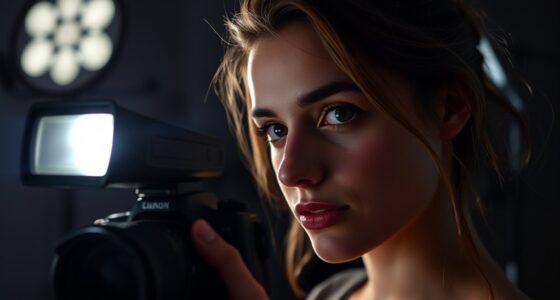

Many portrait shooters believe that a shallow depth of field always isolates the subject, but it’s a myth. In reality, controlling depth of field involves adjusting aperture, focal length, and subject-to-background distance. Using the simple rule of selecting a wider aperture and increasing background distance helps you get beautiful background blur and sharp focus on your subject. Stick around to discover how mastering this rule can transform your portraits and avoid common mistakes.
Key Takeaways
- Shallow depth of field doesn’t always isolate the subject; lighting and composition also play crucial roles.
- Larger apertures don’t automatically improve portrait quality; they can cause focus issues if not used carefully.
- Deep depth of field doesn’t guarantee sharpness throughout; focus point and focus distance are equally important.
- Depth of field isn’t the sole factor; subject placement, background distance, and lighting significantly impact portrait outcomes.
- Mastering the simple rule of balancing aperture, focal length, and subject distance enhances control over depth of field.

EF 85mm f1.8 Portrait Lens – MF for Canon EOS Rebel T8i/T7i/T7/T6i/T5/T3i/T3/T2i/XSi/XS/SL3/SL2/T100/90D/80D/70D/50D/5D Mark IV/6D II/7D II/1D X III II-Manual Focus DSLR Cameras Lenses(EF/EF-S Mount)
[Easy-to-Use Warm Tips] – ⚠Fully manual, Non-autofocus(Advantages: precise focus control, creative freedom, high adaptability, stability and durability, and…
As an affiliate, we earn on qualifying purchases.
As an affiliate, we earn on qualifying purchases.
What Is Depth of Field and Why It Matters in Portraits

Understanding depth of field is essential for creating compelling portraits because it controls how much of your image is in sharp focus. This feature influences your lighting techniques, helping you emphasize your subject while softening the background. When you master depth of field, you can use it to enhance your composition principles, drawing attention exactly where you want it. A shallow depth of field isolates your subject, making them stand out against a blurred backdrop, while a deeper focus keeps more details sharp, providing context. Adjusting aperture, focal length, and distance to your subject directly affects depth of field. By thoughtfully applying these concepts, you guarantee your portraits are visually engaging, with well-balanced focus that guides the viewer’s eye effectively. Additionally, understanding color accuracy can further enhance the visual quality of your portraits. In the realm of digital content, mastering content formats allows you to explore new ways of presenting your work and engaging your audience.

CCTV Joystick Keyboard Controller LCD Display 4D Joystick RS485 Controller for CCTV AHD CVBS Analog PTZ Speed Dome Camera Control
Warning: This control keyboard can only control analog PTZ cameras (or analog DVRs)/AHD PTZ cameras (or AHD DVRs)…
As an affiliate, we earn on qualifying purchases.
As an affiliate, we earn on qualifying purchases.
Common Depth of Field Myths That Mislead Portrait Photographers
Many photographers believe they fully understand how depth of field works, but several common myths can lead you astray. One misconception is that a shallow depth of field always isolates the subject, ignoring how lighting ratios affect overall mood and perception. Astrology & Attractiveness can also play a role in how we perceive beauty and composition in portraits. Another myth is that increasing aperture size automatically improves composition balance, overlooking how background elements influence depth perception. Understanding slang terms in photography can also help clarify how certain styles or techniques are communicated among photographers. Some think that a deep depth of field guarantees sharpness throughout the frame, but improper focus can still cause issues. Others believe that depth of field controls all aspects of portrait quality, ignoring the importance of lighting ratios for highlighting subjects. Using an 85mm lens is a popular choice among portrait photographers for achieving pleasing background blur. Finally, many assume that technical settings are enough, without considering how composition balance guides the viewer’s eye and enhances depth effects. Understanding hydrating ingredients can also play a crucial role in ensuring the subject’s skin appears its best in portraits. Additionally, mastering testing accuracy in your settings can help ensure that your images achieve the desired clarity and focus.

EMART 8.5 x 10 ft Backdrop Support System, Professional Photography Lighting Kit with 5500K 50W LED, 6 * 9ft Backdrop *3, Reflector,Umbrellas&Softbox Lighting Kit for Studio, Portrait, Video Shooting
【8.5x10ft Backdrop Support System】The backdrop support system includes three 6x9ft muslin backdrops (black/white/green) and features adjustable backdrop stand…
As an affiliate, we earn on qualifying purchases.
As an affiliate, we earn on qualifying purchases.
The Simple Rule for Achieving Perfect Portrait Depth of Field

To get the perfect portrait depth of field, you need to pay attention to your focus distance and aperture settings. Adjusting your focus point and controlling your aperture can make your subject stand out sharply against a softly blurred background. Mastering these techniques simplifies achieving that ideal depth of field every time. Incorporating educational resources can further enhance your understanding of these photographic principles. Additionally, understanding the concept of bokeh effects can greatly influence how your background appears in portraits.
Focus Distance Matters
Have you ever wondered why some portraits have a stunning sense of depth while others fall flat? Focus distance plays a vital role in achieving that effect. When you focus closer to your subject, the background naturally blurs, enhancing bokeh patterns and making your subject pop. Moving the focus slightly further back can deepen the background blur, adding more dimension. To maximize depth, consider techniques like focus stacking, which combines multiple shots at different focus points for sharpness throughout. Keep these tips in mind:
- Focus closer for more background blur
- Use focus stacking for sharp backgrounds and subject
- Adjust distance based on your lens’s focal length
- Remember, depth of field is influenced by focus distance
- Experiment to find the perfect balance for your portrait style
Aperture Control Techniques
Achieving the perfect depth of field in portraits hinges on controlling your aperture settings effectively. To do this, consider your lighting techniques first; a wider aperture (smaller f-number) lets in more light, which helps in low-light situations but reduces depth of field. Conversely, a narrower aperture (larger f-number) increases sharpness across the image. Use composition principles to guide your choice—highlight your subject by blurring the background with a wide aperture or include more in focus with a narrower one. Keep in mind, aperture also influences exposure, so adjust your shutter speed or ISO accordingly. Mastering these aperture control techniques allows you to craft portraits with the perfect depth of field, emphasizing your subject while maintaining balanced lighting and strong composition.

mycamera Dof(Depth of Field) Calculator
1) Simple Interface: You can easily enter distance, focal-length and aperture to get Near and far-focus plus the…
As an affiliate, we earn on qualifying purchases.
As an affiliate, we earn on qualifying purchases.
How Aperture Shapes Your Portrait Focus and Background Blur
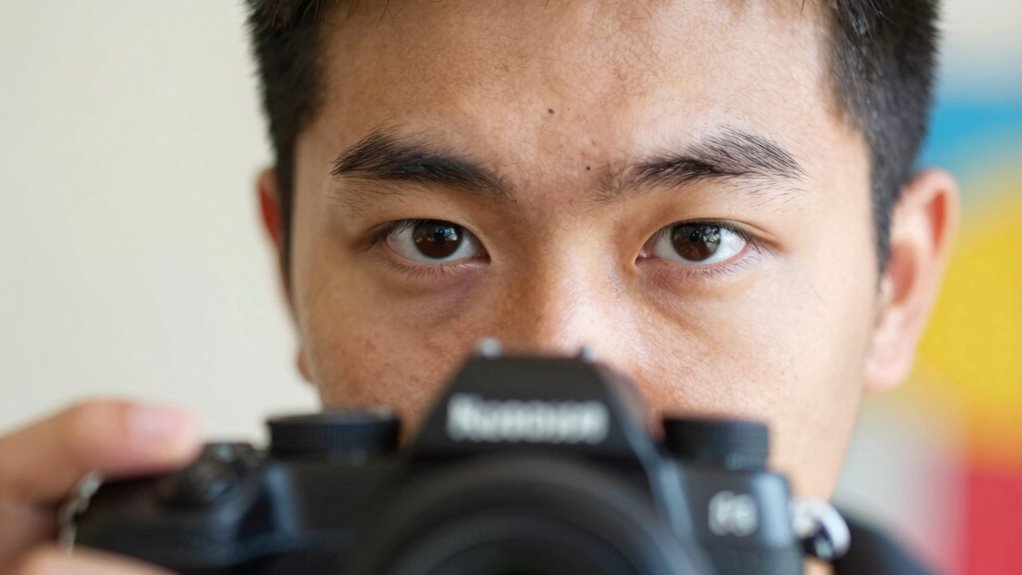
Aperture plays a crucial role in shaping your portrait’s focus and background blur, often called bokeh. A wide aperture (small f-number) creates a shallow depth of field, making your subject pop against a smooth, blurry background. Narrowing the aperture increases depth of field, bringing more of the scene into focus. To improve your portraits, consider these points:
- Use large apertures for artistic background blur and subject emphasis.
- Adjust aperture based on lighting techniques for proper exposure and ethical considerations in photography. Understanding how lighting affects exposure is vital for achieving the desired results, especially in inclusive casting where diverse subjects are represented. The use of AI-generated content can further enhance your approach to diverse representation in portraits.
- Balance aperture with composition strategies to highlight key elements.
- Keep in mind that background distance influences blur intensity.
- Experiment with different apertures to find your preferred focus style.
- Remember that early socialization can enhance your subject’s comfort and natural expression in portraits.
How Focal Length Affects Portrait Backgrounds

How Focal Length Affects Portrait Backgrounds
Focal length considerably influences how background elements appear in your portraits. Longer lenses, like 85mm or 135mm, compress background details, making them seem closer and more blurred. Shorter lenses, such as 50mm, provide a wider view, keeping backgrounds more in focus. Your choice impacts lighting techniques and posing strategies; a longer lens simplifies background management, allowing you to focus on your subject’s expression. Additionally, music therapy can enhance your creative process, helping you maintain focus and reduce stress while shooting. Conversely, shorter focal lengths require careful posing to avoid distortion. Understanding media literacy can help you better interpret the effects of various focal lengths on visual storytelling. Additionally, using different focal lengths can enhance the emotional impact of your portraits. The principles of pool design can also inform the way you set up your shooting environment, emphasizing the importance of spatial relationships. Upgrading your equipment, such as using a quality flywheel in your camera setup, can also significantly improve overall performance and image quality.
| Focal Length | Background Effect | Recommended Technique |
|---|---|---|
| 50mm | Less compression | Use natural light, wide posing space |
| 85mm | Moderate compression | Soft lighting, tight framing |
| 135mm | High compression | Focus on details, minimal background distraction |
| 24-70mm | Variable | Adapt lighting based on scene |
| 200mm+ | Extreme compression | Isolate subject, controlled posing |
Why Subject-to-Background Distance Changes Your Portraits

The distance between your subject and the background plays a crucial role in shaping the overall look of your portrait. Moving your subject closer to or farther from the background affects how much it’s blurred, regardless of your aperture setting. When your subject is closer to the background, it’s easier for background details to appear sharper, especially in challenging lighting conditions. Conversely, increasing the distance helps create a softer, more isolated background. Keep in mind that subject movement can also influence this effect; moving closer may cause motion blur, while moving farther away can make movements less noticeable. To optimize your portraits:
- Increase background distance for more blur
- Decrease distance for sharper backgrounds
- Adjust for lighting conditions to enhance separation
- Be mindful of subject movement to avoid blur
- Use background distance to control depth perception. Additionally, understanding eco-friendly practices can help you maintain focus and creativity while shooting.
Tips for Using the Simple Depth of Field Rule in Portraits

Understanding how to apply the simple depth of field rule can greatly improve your portrait results. Focus on using lighting techniques that highlight your subject and create separation from the background. Adjust aperture to control depth of field, ensuring your subject stays sharp while the background blurs. Posing strategies also matter; guide your subject to face the light and angle their body to enhance focus.
Here’s a quick tip table:
| Tip | Why it helps |
|---|---|
| Use a wide aperture | Blurs background, emphasizes subject |
| Position lights creatively | Adds depth, highlights features |
| Posing strategies | Directs attention, improves focus |
Apply these tips consistently to master the simple depth of field rule in portraits.
Troubleshooting Blurry Backgrounds and Focus Issues

When backgrounds appear blurry or your subject isn’t in sharp focus, it can be frustrating, but these issues often stem from easy-to-adjust settings or positioning mistakes. To troubleshoot:
- Check your focus point; verify it’s directly on your subject.
- Adjust your aperture; a wider opening creates shallow depth of field, but too wide can cause focus issues.
- Use lighting techniques to improve visibility, ensuring your camera can lock focus accurately.
- Reconsider your composition strategies—placing your subject closer to the camera helps maintain sharpness.
- Keep your camera steady, using a tripod if needed, to prevent focus shifts caused by movement.
How to Get the Best Background Blur for Portraits
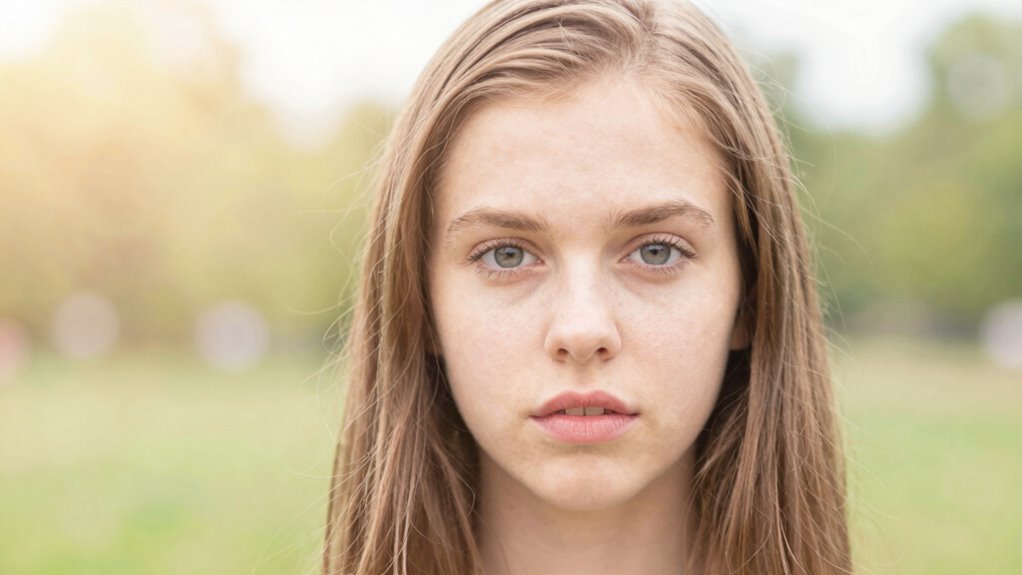
Achieving the perfect background blur, or bokeh, can make your portraits stand out by drawing attention to your subject and creating a pleasing sense of depth. To enhance this effect, start with lighting techniques that emphasize your subject while softening the background, such as backlighting or using diffused natural light. Posing strategies also help—position your subject away from busy backgrounds and encourage them to face the camera, which helps isolate them visually. Use a wide aperture to maximize background separation and create a smooth, creamy blur. Adjust your distance: getting closer to your subject while increasing the distance from the background enhances the blur effect. Combining effective lighting and posing techniques ensures your backgrounds complement without distracting from your subject.
Final Tips to Master Depth of Field and Elevate Your Portraits
To elevate your portraits, focus on adjusting your aperture settings to control depth of field effectively. Use background blur intentionally to highlight your subject without overwhelming the scene. Mastering these techniques will help you create more compelling, professional-looking images. Additionally, consider how ergonomic designs in your camera backpack can enhance your shooting experience by allowing you to carry your gear comfortably. Incorporating balance training can improve your stability while shooting, helping you capture those perfect angles. Investing in the right tools, such as best safety glasses for protection, can also improve your shooting environment, ensuring you stay focused and comfortable while capturing stunning portraits. Maintaining optimal indoor air quality can also improve your shooting environment, ensuring you stay focused and comfortable while capturing stunning portraits.
Focus on Aperture Settings
Mastering aperture settings is essential for controlling depth of field and creating compelling portraits. A wider aperture (smaller f-number) blurs the background, making your subject stand out, while a narrower one keeps more in focus. To optimize your results, consider these tips:
- Adjust aperture based on lighting techniques to avoid overexposure or underexposure
- Use camera ergonomics to steady your shot, preventing accidental blurring
- Balance aperture with shutter speed and ISO for proper exposure
- Practice switching between different apertures to see their impact on focus
- Keep your lens sharpness in mind, as some perform better at certain settings
Use Background Blur Wisely
Once you’ve adjusted your aperture to control focus, the next step is using background blur effectively to make your subject stand out. Pay attention to your background: a busy scene can create distracting background distractions that pull focus from your subject. Use a wide aperture to produce smooth bokeh patterns that soften background elements, enhancing your subject’s prominence. Be mindful of background distractions like bright lights, clutter, or contrasting colors, which can diminish your shot’s impact. Position your subject against a background that offers pleasing bokeh or minimal distractions. This way, the background complements your portrait without competing for attention. Mastering this balance ensures your portraits look polished, with your subject clearly emphasized and the background beautifully blurred.
Frequently Asked Questions
How Does Sensor Size Influence Depth of Field in Portraits?
Sensor size directly influences depth of field in portraits. A larger sensor provides better depth control, allowing you to achieve a beautifully blurred background, making your subject stand out. Smaller sensors produce more depth of field, which can make background details sharper and less distracting. So, when shooting portraits, knowing how sensor size affects depth of field helps you decide the right camera and lens for your desired aesthetic.
Can Depth of Field Be Effectively Controlled in Outdoor Natural Light?
Think of controlling depth of field in outdoor natural light as steering a boat across a wide, open sea. You can adjust your aperture, move closer or farther from your subject, or use a longer lens to craft the focus you desire. In outdoor settings, these tools let you paint a sharp portrait against a softly blurred background, giving you artistic control over how much of your scene stays in crisp detail.
What Role Does Camera Stabilization Play in Achieving Sharp Portraits?
Camera stabilization is essential for sharp portraits, especially in low light or when using slower shutter speeds. By using image stabilization features or ensuring tripod stability, you prevent camera shake that can blur your images. Holding the camera steady on a stable surface or employing a tripod helps you capture crisp, detailed portraits. This stability allows your camera’s focus to be precise, resulting in sharp, professional-looking portraits every time.
How Do Different Portrait Styles Require Different Depth of Field Techniques?
You need to tailor your depth of field to match your portrait style, as one size doesn’t fit all. For close-up, intimate shots, use a shallow depth of field, emphasizing lighting techniques to highlight details. For environmental portraits, opt for a wider depth of field, incorporating composition strategies that include background elements. Remember, adjusting your aperture wisely makes all the difference in capturing the mood and focus you desire.
Is It Better to Prioritize Background Blur or Subject Sharpness?
Prioritize subject sharpness to guarantee they stand out and achieve subject isolation, making your portrait compelling. A sharp subject against a blurred background minimizes background distraction, drawing viewers’ attention where it belongs. While background blur enhances aesthetic appeal, it shouldn’t come at the expense of clarity on your subject. Striking a balance ensures your portrait captures both visual harmony and focus, creating a more impactful and professional image.
Conclusion
Mastering depth of field is like tending a delicate garden—you need the right tools and understanding to make it flourish. I once tried capturing a portrait with a tiny aperture, only to realize the background was painfully sharp and distracting. Remember, using the simple rule of focusing where it counts and adjusting your settings thoughtfully transforms your portraits from good to breathtaking. With practice, you’ll create images as effortlessly as tending a well-kept garden—beautiful, balanced, and mesmerizing.