
Focus peaking helps you nail sharpness in manual photography by highlighting in-focus areas directly on your camera’s screen or viewfinder. It makes achieving precise focus easier, especially with wide apertures or tricky subjects. With this feature, you get instant visual cues, reducing trial-and-error and boosting your confidence. By customizing focus peaking settings, you can optimize accuracy for different shooting scenarios. If you want to master this powerful tool, exploring further will reveal how to get the most out of it.
Key Takeaways
- Focus peaking visually highlights in-focus areas, making manual focusing quicker and more accurate.
- It is especially beneficial with mirrorless cameras that offer live view and electronic viewfinders.
- Customizing focus peaking settings enhances precision, ensuring sharpness in critical shots like macro or portraits.
- Focus peaking reduces trial-and-error, boosting confidence and allowing better focus control in challenging conditions.
- It helps confirm focus when working with narrow depth of field or through obstacles, ensuring crisp, sharp images.

Focus peaking is a powerful feature in modern photography that helps you achieve sharp, well-focused images with ease. When you’re working with manual focus, especially on mirrorless cameras, it can be challenging to determine if your subject is perfectly sharp. That’s where focus peaking comes in—it highlights the areas of the image that are in focus, making it easier to fine-tune your focus point. This feature is particularly useful when you’re working with shallow depth of field, where precise focus becomes critical. With a narrow depth of field, a slight miscalculation can result in a blurry subject, so having real-time visual cues helps you get it right every time.
Mirrorless cameras excel at implementing focus peaking because their electronic viewfinders and live preview screens display focus highlights directly on the image. Instead of relying solely on traditional autofocus or guesswork, you can see exactly which parts of your frame are in focus, allowing you to make quick adjustments. This instant feedback is invaluable when shooting in challenging conditions or working with complex compositions. Plus, since mirrorless systems often have higher resolution screens, the focus peaking highlights are clearer and easier to interpret, giving you confidence in your manual focusing decisions.
Understanding how to leverage focus peaking effectively means paying attention to your depth of field. When you set a wide aperture, your depth of field narrows, so precision in focusing becomes paramount. By activating focus peaking, you can visually confirm that your main subject is crisp and sharp. Conversely, when working with a smaller aperture, your depth of field increases, providing more leeway in focusing. Still, even then, focus peaking can help you quickly verify focus points, especially in fast-paced situations or when shooting through obstacles like fences or glass.
You’ll find that mastering focus peaking on mirrorless cameras transforms your approach to manual photography. It reduces the trial-and-error aspect, letting you focus more on composition and storytelling rather than worrying about focus accuracy. As you become more comfortable with the system, you’ll notice your confidence improves, and your images become more precise. Whether you’re capturing portraits, macro shots, or landscapes with a shallow depth of field, focus peaking acts as a reliable guide. It bridges the gap between manual control and technological assistance, ensuring you always achieve the sharpness your images deserve. Additionally, understanding the focus peaking settings and how to customize them can further enhance your focusing precision.
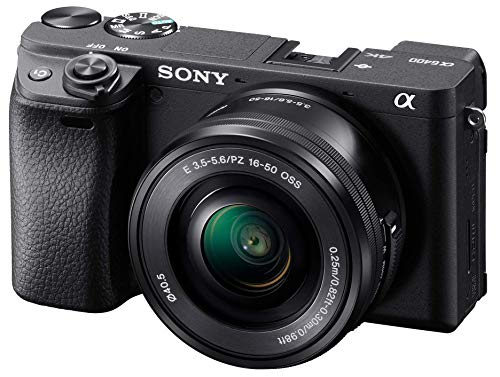
Sony Alpha a6400 Mirrorless Camera: Compact APS-C Interchangeable Lens Digital Camera with Real-Time Eye Auto Focus, 4K Video, Flip Screen & 16-50mm Lens – E Mount Compatible – ILCE-6400L/B, Black
20.1MP stacked back illuminated 1" Exmor RS CMOS sensor w/ DRAM, large aperture 24-70mm1 F1.8-2.8 ZEISS Vario-Sonnar T…
As an affiliate, we earn on qualifying purchases.
As an affiliate, we earn on qualifying purchases.
Frequently Asked Questions
How Does Focus Peaking Compare to Autofocus Accuracy?
You might wonder how focus peaking compares to autofocus accuracy. While autofocus offers quick convenience, manual focus has advantages like precise control, especially with focus peaking highlighting sharp areas. Autofocus limitations can include missed focus in tricky lighting or low contrast scenes. Focus peaking helps you overcome these by visually confirming sharpness, making manual focus more reliable and effective, especially when autofocus struggles or isn’t available.
Can Focus Peaking Be Used in Low-Light Conditions Effectively?
In low-light conditions, you might wonder if focus peaking is effective. It can be, especially if you use low light techniques like boosting your camera’s ISO or using a brighter focus assist. To get sharp results, combine focus peaking with manual focus tips such as zooming in on the subject or using a flashlight. These methods help guarantee you nail focus even when lighting is challenging.
What Are Common Mistakes When Using Focus Peaking?
When using focus peaking, you might overlook calibration, leading to inaccurate focus. Relying solely on peaking can cause you to miss subtle details or misjudge sharpness, especially in complex scenes. It’s crucial to cross-check your focus with other methods, like magnified view, to ensure precision. Avoid assuming peaking is infallible; instead, calibrate your camera properly and use it as a helpful tool rather than the only one.
Is Focus Peaking Suitable for Video or Only Still Photography?
Focus peaking works well for both video and still photography, helping you quickly identify sharp areas. It’s especially useful when practicing manual focus techniques, as it highlights in-focus edges on your camera display options. Whether shooting a moving subject in video or capturing fine details in stills, focus peaking offers real-time feedback, making it easier to achieve precise focus without missing critical moments.
How Do I Customize Focus Peaking Settings on My Camera?
Think of your camera’s focus peaking settings as a tailor-made suit for your photography needs. To customize focus peaking, explore your camera’s menu and locate the focus peaking or focus assist options. Adjust the sensitivity to control how much of the edge detection appears, and select your preferred color for better contrast. These camera focus settings let you fine-tune focus peaking, ensuring sharper images tailored to your style.

Canon EF 50mm f/1.8 STM Lens, Black
50 millimeter focal length and maximum aperture of f/1.8
As an affiliate, we earn on qualifying purchases.
As an affiliate, we earn on qualifying purchases.
Conclusion
Now, as you glance through your camera’s viewfinder, focus peaking highlights the sharp edges like a guiding star, leading your eye to crisp, clear details. Feel the satisfaction as the vibrant outlines confirm your image is perfectly focused, like a painter’s brushstroke bringing a masterpiece to life. With each shot, you sharpen your skills, turning blurry moments into stunning images—your perfect focus, clear as daylight, ready to capture the world’s beauty in its sharpest form.

Fotasy Manual F Mount Lens to E-Mount Adapter, NK E Mount Adapter, Compatible with Nikon F Lens Sony a7 a7R a7s II III IV a9 a7c Alpha 1 a6600 a6500 a6400 a6300 a6100 a6000 a5100 a5000 a3500 ZV-E10
This adapter allows Nikon F-Mount Lens to fit on Sony NEX E-Mount Mirrorless Digital Cameras, extending the usefulness…
As an affiliate, we earn on qualifying purchases.
As an affiliate, we earn on qualifying purchases.

Hitoxi Camera Viewfinder Magnifier, 3X Magnification Sunshade LCD Viewfinder Compatible with 3in, 3.2in Camera Camcorder, SLR Cameras and Mirrorless Cameras Screen Sunshade Hood
High Quality Material—The lens material is made of high‑quality optical glass with very high definition. The viewfinder displays…
As an affiliate, we earn on qualifying purchases.
As an affiliate, we earn on qualifying purchases.