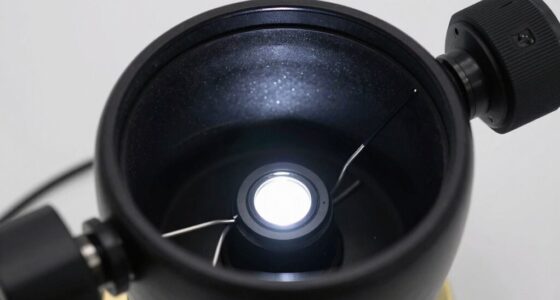
Far-UV-C LEDs are revolutionizing hospital disinfection by offering a safe, chemical-free way to kill germs quickly, even in occupied spaces. With their precise wavelength, they can inactivate bacteria, viruses, and fungi without harming skin or eyes. These compact, durable lights require less maintenance and power, making them cost-effective long-term solutions. As technology advances, they’ll become even more integrated into healthcare facilities. Discover how this innovation can improve hospital hygiene and safety in the future.

Get the latest gadgets delivered free — and shop member deals
- Fast, free delivery on millions of items
- Access to Prime Big Deal Days deals on October 6–7
- Prime Video, Amazon Music and more included
Key Takeaways
- Far-UV-C LEDs enable rapid, chemical-free disinfection of surfaces and air in occupied hospital environments.
- Their safe wavelength (207-222 nm) minimizes risks to human skin and eyes, allowing continuous use in patient areas.
- Compact, durable, and energy-efficient, they support seamless integration into existing hospital infrastructure.
- Long lifespan and low maintenance reduce operational costs and ensure consistent sterilization performance.
- Advancing safety and effectiveness, Far-UV-C LEDs represent a promising, future-proof solution for germ-free hospitals.
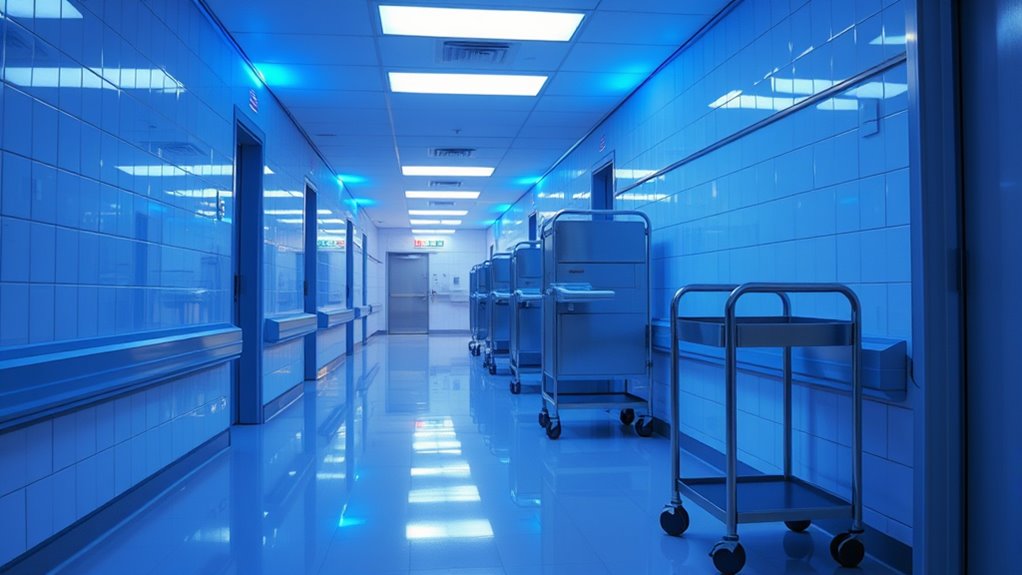
Far-UV-C LEDs are emerging as a promising technology for disinfecting surfaces and air, thanks to their ability to rapidly inactivate bacteria, viruses, and fungi. This innovative approach leverages UV sterilization, a method long used in healthcare settings, but now enhanced through LED technology. Unlike traditional mercury vapor lamps, UV LEDs are compact, durable, and can be integrated into various devices, making them ideal for modern hospital environments. As you explore the future of infection control, you’ll find that far-UV-C LEDs offer a safer, more efficient way to maintain sterile conditions without harmful chemicals or extensive downtime.
Far-UV-C LEDs offer safe, efficient sterilization solutions for modern hospital environments.
With LED technology, UV sterilization becomes more versatile. You can incorporate far-UV-C LEDs into air filtration systems, handheld devices, or automated disinfection units. These LEDs emit a specific wavelength—around 207 to 222 nanometers—that effectively destroys microbial DNA and RNA, preventing replication and rendering pathogens harmless. Because of their precise emission spectrum, far-UV-C LEDs minimize potential harm to human skin and eyes, unlike traditional UV-C lamps, which can cause damage if misused. This safety advantage allows hospitals to deploy UV sterilization more broadly, including in occupied spaces, without risking staff or patient safety.
The rapid inactivation of microorganisms is a key benefit you’ll notice. Far-UV-C LEDs can disinfect surfaces and air within seconds, reducing the time required for manual cleaning and lowering the risk of cross-contamination. This quick turnaround is especially pivotal in busy hospital environments where infections can spread swiftly. Additionally, their small size and energy efficiency enable continuous operation, providing ongoing disinfection without significant power consumption. As you consider implementation, you’ll appreciate that these LEDs can be seamlessly integrated into existing infrastructure, such as ceiling fixtures, air vents, or mobile carts, enhancing overall infection control.
Moreover, the durability and long lifespan of LED technology mean lower maintenance costs over time. Unlike traditional UV lamps, which need frequent replacements, UV LEDs last tens of thousands of hours, ensuring consistent performance. This reliability makes them a cost-effective choice for healthcare facilities aiming to improve hygiene standards while managing expenses. As research advances, you’ll see that far-UV-C LEDs are paving the way for smarter, safer sterilization solutions. They provide a non-invasive, chemical-free method to keep hospital environments cleaner, ultimately reducing healthcare-associated infections and protecting vulnerable patients. Recognizing the long lifespan of LED technology is crucial for understanding their cost-effectiveness and sustainability in healthcare settings.
Far-UV-C LED sterilization lights
As an affiliate, we earn on qualifying purchases.
As an affiliate, we earn on qualifying purchases.
Frequently Asked Questions
Are Far-Uv-C LEDS Safe for Human Exposure?
You might wonder if far-UV-C LEDs are safe for humans. While they’re effective at disinfecting surfaces, safety protocols and regulatory standards are vital to prevent exposure. When used properly within guidelines, these LEDs minimize risks. However, direct exposure to far-UV-C light can harm your skin and eyes. Always follow safety measures, guarantee devices meet regulatory standards, and avoid direct exposure to stay protected.
How Long Do Far-Uv-C LEDS Typically Last?
Think of your LED lights as reliable tools; they typically last around 25,000 to 50,000 hours. This durability means you won’t need frequent maintenance, saving time and costs. The lifespan depends on the quality of the LED and usage conditions, but generally, you can expect consistent performance over years. Proper care and choosing high-quality LEDs guarantee they remain effective and reduce the need for early replacements.
Can Far-Uv-C LEDS Eliminate All Types of Germs?
You might wonder if far-UV-C LEDs can eliminate all types of germs. While they’re highly effective at germ eradication, no technology guarantees 100% removal of every microbe. Their LED durability ensures consistent performance over time, but some germs can be more resistant. Regular maintenance and proper use are essential to maximize germ eradication efforts. Overall, far-UV-C LEDs markedly reduce germs, but complete sterilization depends on multiple factors.
What Are the Costs Associated With Implementing Far-Uv-C LEDS?
Implementing far-UV-C LEDs can seem like a small investment for a revolution in hygiene. You’ll need to contemplate the initial costs, which include purchasing the LEDs and installation, plus ongoing expenses like maintenance, bulb replacements, and energy use. A thorough cost analysis reveals that while upfront costs might be high, long-term savings on infection control could make it worthwhile. You’ll want to balance these expenses carefully for maximum benefit.
Are There Any Environmental Impacts of Using Far-Uv-C LEDS?
You might wonder about environmental concerns related to Far-UV-C LEDs. These LEDs generally have low energy consumption, which helps reduce overall energy use. However, you should consider the production process and disposal, as some materials might impact the environment. While they’re energy-efficient, it’s essential to manage their lifecycle properly to minimize any adverse environmental effects, ensuring safe and sustainable use.
As an affiliate, we earn on qualifying purchases.
Conclusion
Far-UV-C LEDs are paving the way for a safer, germ-free hospital environment. Think of them as a shield that silently battles invisible enemies, protecting patients and staff alike. As technology advances, this light becomes your silent guardian, transforming healthcare into a fortress of cleanliness. Embrace this innovation, and you’ll see a future where hospitals shine brighter with hope and health—like a dawn breaking through the darkest night.
hospital air purification systems with UV-C
As an affiliate, we earn on qualifying purchases.
As an affiliate, we earn on qualifying purchases.
As an affiliate, we earn on qualifying purchases.
Fall Picks
fall essentials
As an affiliate, we earn on qualifying purchases.