
TL;DR
Hugging Face has introduced Grabette, an open-source handheld device for capturing human manipulation demonstrations. The system enables data collection without operating a robot during demonstrations, potentially expanding access to robot training datasets. Its performance and adoption are still being evaluated.
Hugging Face has announced Grabette, an open, handheld system designed to record human manipulation demonstrations without requiring a robot during data collection. For more details, see the original analysis. The device aims to make gathering large, varied datasets more accessible and cost-effective for robotics researchers and developers, addressing longstanding barriers in robot learning.
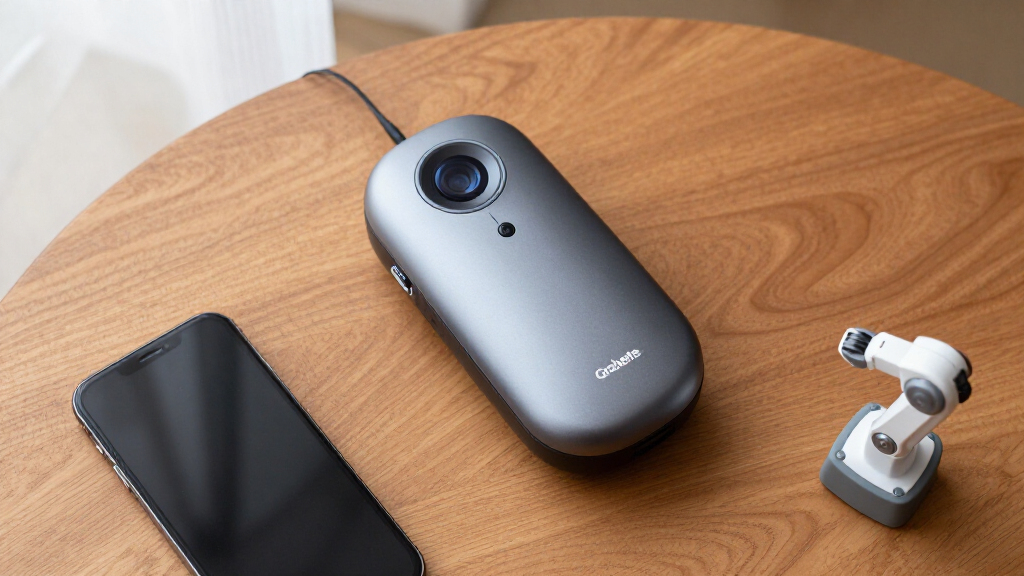
Grabette integrates two cameras, an inertial measurement unit, and magnetic encoders into a handheld gripper that captures detailed manipulation data as a human performs tasks. The system records wrist-level fisheye video, RGBD color and depth data, and gripper joint states, all synchronized via a Raspberry Pi. Demonstrations are saved locally with a simple button press, then uploaded through a browser-based dashboard to Hugging Face’s Hub for further processing.
The system converts recordings into LeRobot datasets using a pipeline that employs RTAB-MAP for trajectory recovery, enabling the data to be used for training robot policies. The hardware components cost approximately €490, with a motorized end effector, Gripette, available at about €120. The project’s open-source release includes hardware files, software, and example training stacks, aiming to lower the costs and logistical barriers of data collection in robotics research. Learn more about open robotics datasets and tools at Hugging Face’s homepage.
Hugging Face emphasizes that Grabette’s design separates demonstration recording from robot deployment, allowing for broader task and environment coverage without the need for a physical robot during data collection. The approach is inspired by Stanford’s UMI system, which similarly used handheld devices for outside-lab demonstrations. However, Grabette distinguishes itself through its open hardware and browser-based processing pipeline, promoting community participation and dataset sharing.
Potential to Expand and Democratize Robot Data Collection
Grabette could significantly reduce the costs and logistical challenges associated with collecting manipulation datasets, which are vital for advancing robot learning. By enabling human demonstrations outside laboratory settings and removing the need for a robot during data capture, the system may facilitate larger, more diverse datasets across institutions and environments. This democratization can accelerate research, improve policy generalization, and foster collaborative development in robotics.
However, the actual impact depends on the system’s reliability, data quality, and community adoption. Without independent validation or performance benchmarks, it remains uncertain whether Grabette can match the accuracy and robustness of existing commercial or research-grade data collection solutions. Its success will be measured by dataset growth, policy transferability, and widespread use in the field.
handheld data collection device for robotics
As an affiliate, we earn on qualifying purchases.
As an affiliate, we earn on qualifying purchases.
Background on Human Demonstration Data Collection in Robotics
Collecting manipulation data for robot learning traditionally involves complex, expensive setups with robotic arms, teleoperation systems, and laboratory environments. These approaches limit dataset diversity and accessibility, slowing progress in the field.
Inspired by Stanford’s UMI project, which used handheld devices for outside-lab demonstrations, Grabette aims to simplify and open this process. Prior efforts from companies like Agibot, Genrobot, and Sunday Robotics have offered proprietary solutions, but none have achieved the open, community-driven model proposed by Hugging Face’s initiative.
The release of Grabette follows ongoing efforts to democratize robot training data, addressing a key bottleneck—access to large, varied datasets—by providing a low-cost, open hardware and software alternative.
“The bottleneck isn’t the model. It’s the data.”
— Hugging Face Grabette team
As an affiliate, we earn on qualifying purchases.
Performance and Adoption Remain Unverified
There are no independent or peer-reviewed results comparing Grabette’s accuracy, reliability, or robustness against existing systems. It is unclear how well the system performs in complex scenarios, such as fast movements, occlusions, or reflective objects. The size and diversity of datasets collected so far, and their impact on training policies, have not been disclosed. Licensing, governance, and quality control measures are also not yet clarified.
As an affiliate, we earn on qualifying purchases.
Community Testing and Dataset Expansion Expected
The next phase involves community members reproducing the hardware setup, recording their own demonstrations, and contributing datasets to Hugging Face’s Hub. Future updates should include validation benchmarks, performance metrics, and expanded documentation. The success of Grabette will be measured by dataset growth, policy transferability, and adoption by researchers and companies.
inertial measurement unit for robotics
As an affiliate, we earn on qualifying purchases.
As an affiliate, we earn on qualifying purchases.
Key Questions
What is Grabette?
Grabette is an open-source handheld device that records human manipulation demonstrations, capturing video, depth, motion, and gripper data for robot training datasets.
Does Grabette require a robot during recording?
No, the system allows data collection without operating a robot, enabling more flexible and accessible demonstration recording.
How does Grabette convert recordings into usable datasets?
The system processes recordings through a pipeline that uses RTAB-MAP for trajectory recovery and converts the data into LeRobot format for training policies.
What are the hardware costs involved?
The estimated cost for the core hardware is around €490, with an additional €120 for a motorized end effector called Gripette. Costs may vary by location and components.
What are the main challenges for Grabette’s adoption?
Key challenges include verifying system reliability, performance in complex scenarios, dataset quality, and establishing community standards for licensing and validation.
Source: ThorstenMeyerAI.com