In industrial automation, choosing between photodiodes and phototransistors depends on your speed, sensitivity, and environment needs. Photodiodes deliver faster response times and higher precision, making them ideal for high-speed tasks, but they tend to be pricier and require careful calibration. Phototransistors offer greater sensitivity and are easier to install, suitable for less demanding settings. To find out which sensor best fits your application, consider their strengths and limitations—more insights await if you keep exploring.
Key Takeaways
- Photodiodes offer faster response times, making them ideal for high-speed industrial automation applications.
- Phototransistors provide higher sensitivity and easier installation, suitable for less demanding environments.
- Photodiodes are more resistant to harsh conditions and corrosion, enhancing durability in tough industrial settings.
- Phototransistors are more cost-effective and require less calibration, reducing maintenance efforts.
- The choice depends on balancing speed, sensitivity, environmental resilience, and system integration needs.
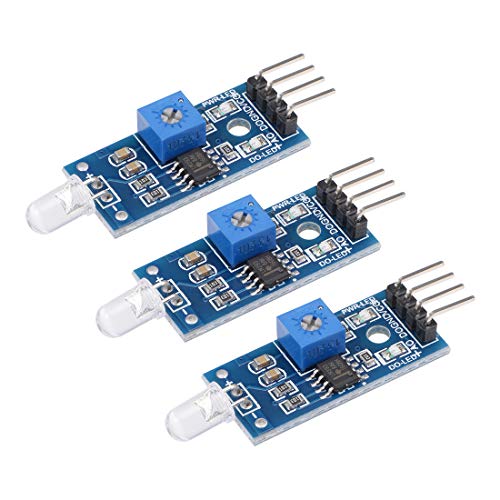
uxcell Photosensitive Diode Sensor Light Detection Photodiode Module with Digital and Analog Output for Smart Car 3pcs
LM393 chip Photoresistor Module for Light Intensity Detection
As an affiliate, we earn on qualifying purchases.
As an affiliate, we earn on qualifying purchases.
Fundamental Operating Principles and Construction

Photodiodes and phototransistors both convert light into electrical signals, but they do so through different mechanisms rooted in their construction. Photodiodes are simple semiconductor devices with a p-n junction that generate current when exposed to light, relying on the quantum efficiency of their semiconductor materials. Higher quantum efficiency means more efficient light-to-electricity conversion. Phototransistors, on the other hand, are fundamentally transistors with a light-sensitive base region. When light strikes their semiconductor materials, it causes the transistor to amplify the generated current, resulting in higher sensitivity. The construction differences—photodiodes having a straightforward p-n junction and phototransistors incorporating a bipolar junction—determine how they respond to light and influence their quantum efficiency. Additionally, the response time of these sensors varies, with photodiodes generally providing faster operation, which can be critical in high-speed applications. Understanding these fundamental differences helps you choose the right sensor for your application.

hiBCTR 20Pcs PT334-6C 5mm Phototransistor Light Sensor – 400-1000nm Wavelength Range, 15-20mA Sensitivity for Optical Switches/Arduino Projects (Clear Round F5 3V)
Broad Spectral Response: Detects 400-1000nm wavelengths (visible to near-infrared) with 15-20mA output current for precise light sensing.
As an affiliate, we earn on qualifying purchases.
As an affiliate, we earn on qualifying purchases.
Sensitivity and Response Time Differences

While both photodiodes and phototransistors detect light, they differ markedly in sensitivity and response time. Phototransistors are more sensitive, responding quickly to changes in light intensity, but their response can be affected by temperature effects. Photodiodes, on the other hand, have a faster response time but lower sensitivity, making them ideal for precise measurements under stable conditions. Additionally, understanding AI in Education can provide insights into how automation and intelligent systems are transforming learning environments, which parallels advancements in sensor technologies.

High-Speed Photodiodes in Standard CMOS Technology (The Springer International Series in Engineering and Computer Science Book 869)
As an affiliate, we earn on qualifying purchases.
As an affiliate, we earn on qualifying purchases.
Applications in Industrial Automation Settings

When choosing sensors for industrial automation, you need to consider material compatibility, as some components work better with specific materials. Response time differences can impact system efficiency, especially in fast-moving processes. Additionally, environmental durability determines whether the sensors can withstand harsh conditions like dust, moisture, or vibrations.
Material Compatibility Factors
Material compatibility is essential when selecting optical sensors for industrial automation, as using incompatible materials can lead to sensor failure or degraded performance. You need to consider how sensor packaging interacts with environmental factors, such as chemicals, temperature, and humidity. Incompatible materials within sensor packaging may cause corrosion or deterioration, reducing sensor lifespan. For example, certain plastics or adhesives used in packaging might not withstand aggressive industrial cleaners or high temperatures. Ensuring your sensor’s materials align with your operational environment helps maintain accuracy and reliability. Always verify that the sensor’s internal components and packaging materials are compatible with your process chemicals and conditions. This careful selection prevents costly replacements and downtime, ensuring your automation system runs smoothly and efficiently.
Response Time Differences
Response time is a key factor to contemplate when choosing between photodiodes and phototransistors for industrial automation. Photodiodes typically offer faster response times, making them ideal for high-speed applications where quick detection is vital. Phototransistors, however, have slower response times due to their internal amplification, which can introduce delays. When considering response time, you should also factor in sensor calibration needs; photodiodes often require more precise calibration to maintain accuracy at high speeds. Additionally, power consumption plays a role—photodiodes generally consume less power, enabling quicker response with less energy. If your application demands rapid detection with minimal calibration effort and energy efficiency, photodiodes are usually the better choice. For slower, cost-effective solutions, phototransistors might suffice. Proper maintenance and understanding of sensor lifespan can further optimize performance in industrial settings.
Environmental Durability
Environmental resilience is crucial when selecting photodiodes or phototransistors for industrial automation, as these sensors often operate in harsh conditions. You need devices with strong corrosion resistance to withstand exposure to moisture, chemicals, and dust without degrading. Temperature tolerance is equally important, ensuring sensors function reliably across extreme heat or cold environments. Photodiodes generally offer higher resistance to corrosion, making them suitable for outdoor or corrosive settings. Phototransistors may require additional protective coatings but can still perform well if designed with robust materials. Choosing sensors with high environmental durability minimizes maintenance, reduces downtime, and extends operational lifespan. Additionally, reliable environmental durability is a key factor, especially in applications subjected to severe conditions, to ensure consistent performance over time. Ultimately, evaluating corrosion resistance and temperature tolerance helps you select the most durable sensor for your specific industrial automation application.

OMRON INDUSTRIAL AUTOMATION E3K-R10K4 PHOTOELECTRIC SENSOR
Price For: Each Sensing Range Max: 10m Output Current: 10A Sensor Output: Relay Supply Voltage DC Min: 24V…
As an affiliate, we earn on qualifying purchases.
As an affiliate, we earn on qualifying purchases.
Advantages and Disadvantages of Each Sensor Type

When choosing between photodiodes and phototransistors, you’ll want to contemplate their sensitivity and speed, as these impact response time and accuracy. Cost and durability also play a role, since some sensors may be more affordable or withstand harsher environments better. Understanding these advantages and disadvantages helps you select the right sensor for your specific application. Additionally, considering the inspirational role of fathers in guiding development and character can serve as a metaphor for choosing sensors that best support your project’s needs.
Sensitivity and Speed
Are photodiodes or phototransistors better suited for applications requiring high sensitivity and speed? Photodiodes excel in these areas due to their quick response times and linear output. They typically offer:
- Faster response speeds, ideal for high-frequency operations.
- Better sensitivity for detecting low light levels.
- Easier calibration techniques that guarantee accuracy.
Phototransistors, while more sensitive in some cases, tend to have slower response times and higher power consumption. They may require more complex calibration to maintain precision. If you prioritize speed and sensitivity, photodiodes are your best bet; however, consider power consumption and calibration complexity for your specific application. Ultimately, your choice depends on balancing these factors to meet automation needs effectively.
Cost and Durability
Photodiodes generally cost more upfront but tend to be more durable and reliable over time, making them suitable for long-term applications. When considering the cost comparison, photodiodes typically have higher initial prices due to their complex manufacturing process. However, they excel in durability factors, often lasting longer with less degradation, especially in harsh environments. Phototransistors, on the other hand, usually come at a lower cost and are easier to replace, but their durability may be compromised over time with exposure to dust, moisture, or temperature fluctuations. If your application demands longevity and consistent performance, investing in photodiodes can be more cost-effective in the long run. Conversely, for short-term or budget-sensitive projects, phototransistors offer a practical, economical choice. Additionally, the horsepower of electric dirt bikes can influence the overall system performance and sensor selection in industrial automation systems.
Cost, Reliability, and Maintenance Considerations

Although both photodiodes and phototransistors are essential in optical sensing applications, their cost, reliability, and maintenance requirements differ considerably.
- Calibration procedures: Photodiodes often require precise calibration to maintain accuracy, increasing setup time and ongoing maintenance. Phototransistors are generally less sensitive to calibration but may need periodic checks for drift.
- Installation challenges: Photodiodes demand careful alignment and stable mounting due to their sensitivity, making installation more complex. Phototransistors are more forgiving, simplifying installation, but may face reliability issues in harsh environments.
- Reliability and maintenance: Phototransistors tend to be more durable with fewer calibration needs, reducing maintenance. Photodiodes, while more precise, can be more vulnerable to damage and require regular checks to guarantee consistent performance.
- Environmental factors such as water exposure can impact the longevity and performance of these sensors, especially in industrial settings where moisture may be present.
Making the Right Choice for Your Automation Needs

Choosing the right optical sensor depends on balancing your specific performance requirements with operational considerations. To do this effectively, consider factors like sensor calibration needs and signal processing capabilities. Photodiodes often require precise calibration for accurate measurements, especially in complex environments. Phototransistors, on the other hand, typically need less calibration but may need enhanced signal processing to filter noise. Use this table to compare key aspects:
| Aspect | Photodiodes | Phototransistors |
|---|---|---|
| Sensor calibration | Often necessary for accuracy | Generally less calibration needed |
| Signal processing | Less complex, high-speed | May require advanced filtering |
| Response time | Faster | Slightly slower |
| Sensitivity | High, precise measurement | Moderate, suitable for general use |
| Cost & maintenance | Slightly higher, more calibration | Lower, easier to maintain |
Additionally, understanding the response time differences can be crucial for high-speed automation applications.
Frequently Asked Questions
How Do Environmental Factors Affect Photodiode and Phototransistor Performance?
Environmental factors like temperature, humidity, and ambient light substantially impact your photodiode and phototransistor performance. They can cause fluctuations in signal strength, reducing environmental stability. To maintain accuracy, you must regularly calibrate your sensors, accounting for changing conditions. Proper shielding and environmental controls help stabilize readings, ensuring your sensors operate reliably. Understanding these influences allows you to optimize sensor calibration and achieve consistent, precise results in industrial automation settings.
Can Photodiodes and Phototransistors Be Used Interchangeably in All Applications?
You might wonder if you can swap photodiodes and phototransistors in all applications. While they share similarities, their sensor compatibility varies; phototransistors are more sensitive and faster, but also more costly. Photodiodes excel in low-light conditions and offer better cost effectiveness for simple tasks. So, you can’t always use them interchangeably, as the specific requirements of your project determine which sensor suits best.
What Is the Typical Lifespan of Each Sensor Type in Industrial Settings?
Think of your sensors as guardians of your systems. Typically, photodiodes last about 10-15 years with proper sensor maintenance, while phototransistors might need replacement after 8-12 years due to wear. Regular checks help prevent costly replacements, saving on replacement costs. Both sensors can be dependable, but understanding their lifespan guarantees you maintain seamless automation and avoid unexpected downtime, keeping your operations running smoothly.
Are There Specific Industries That Favor One Sensor Over the Other?
You’ll find that certain industry-specific applications favor one sensor over the other based on sensor selection criteria. For example, photodiodes are preferred in high-speed, high-precision environments like telecommunications, while phototransistors excel in industrial automation where sensitivity and cost-efficiency matter. Your choice depends on factors like response time, durability, and environmental conditions, ensuring the right sensor enhances performance in each industry’s unique application.
How Do Advancements in Sensor Technology Impact Future Automation Choices?
Imagine upgrading your toolbox with tiny, wireless tools that work faster and smarter. Advancements like sensor miniaturization and wireless integration revolutionize automation, making sensors more adaptable and easier to deploy. These innovations mean you can choose smarter sensors for specific tasks, improving efficiency and flexibility. As technology evolves, your automation systems will become more responsive, precise, and less constrained by size or connectivity issues, shaping the future of industry.
Conclusion
Choosing between photodiodes and phototransistors depends on your specific automation needs. Did you know that phototransistors typically have a response time up to 10 times faster than photodiodes? If speed is critical, they might be your best bet. However, consider factors like cost and reliability too. By understanding each sensor’s strengths, you can make an informed decision, ensuring your automation system runs smoothly and efficiently for years to come.