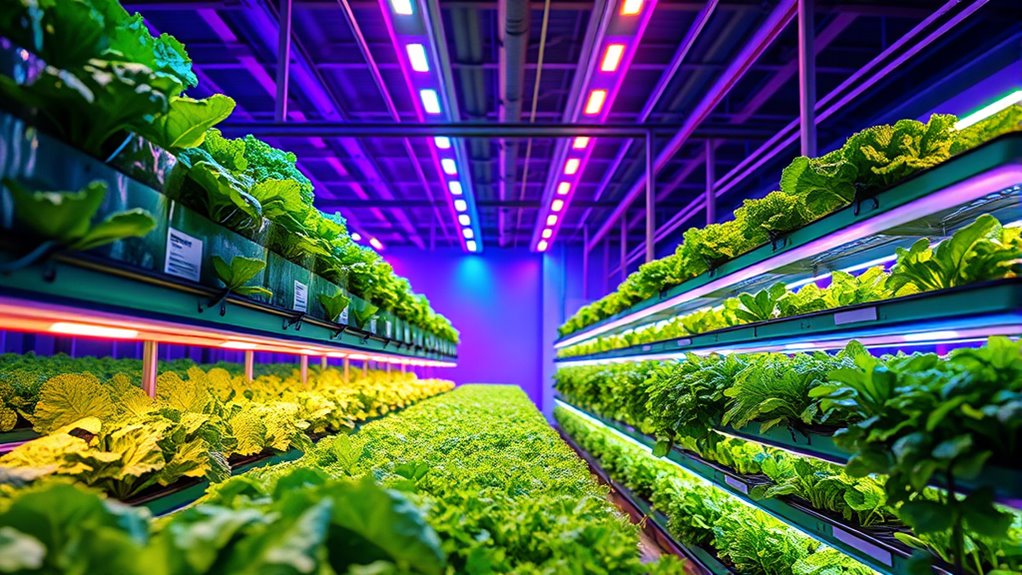

Controlling spectra in vertical farming involves using advanced LED lighting systems that allow you to fine-tune the color and intensity of light emitted. By adjusting blue, red, and other wavelengths, you can optimize plant growth at each stage—promoting vegetative development or flowering. Combining spectrum control with photoperiod management helps create ideal environments year-round, boosting yields and crop quality. Keep exploring to discover how precise spectral tuning can elevate your vertical farm operations.

Get the latest gadgets delivered free with Prime
- Fast, free delivery on millions of items
- Prime Video, Amazon Music and more included
- Member-only deals all year
Key Takeaways
- Utilize LED lighting with adjustable spectra to tailor light quality for different plant growth stages.
- Implement spectrum tuning to optimize photosynthesis and crop quality throughout the growth cycle.
- Combine spectrum control with automated photoperiod management for precise environmental regulation.
- Adjust light spectra dynamically, emphasizing blue during vegetative growth and red during flowering.
- Integrate real-time monitoring systems to fine-tune spectra and photoperiods for maximum efficiency.
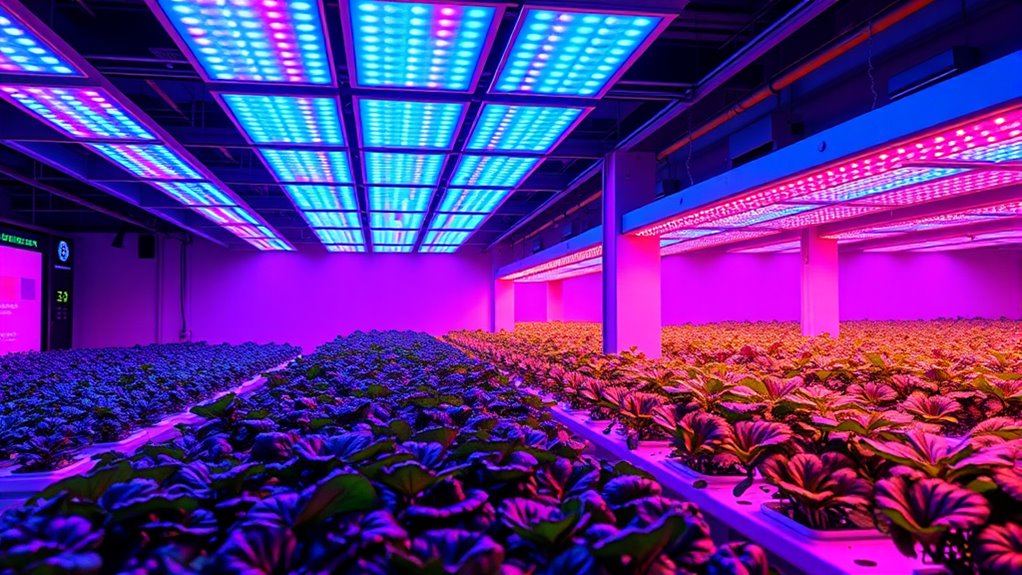
Have you ever wondered how light spectra influence plant growth in vertical farms? It’s more than just shining a light; it’s about customizing the spectrum to match the plant’s needs at each growth stage. LED technology has revolutionized this process, making LED color tuning a critical tool in controlling plant development. By adjusting the color spectrum emitted by LEDs, you can maximize photosynthesis, improve crop quality, and accelerate growth cycles. For example, blue light promotes vegetative growth, while red light encourages flowering and fruiting. Combining these colors precisely allows you to create a tailored environment that boosts efficiency and yields. This level of control is particularly important in vertical farms, where space is limited, and every light counts. Additionally, understanding the light spectrum and its effects on plants enables growers to fine-tune their systems for optimal results.
Alongside LED color tuning, photoperiod management plays a crucial role in regulating plant cycles. Photoperiod refers to the duration of light exposure plants receive each day, which influences flowering, germination, and other developmental processes. By controlling photoperiod, you can simulate seasonal changes, extend growth periods, or induce flowering at specific times. This means you can grow crops year-round, regardless of outdoor conditions, and even manipulate growth to meet market demands. Automated lighting systems enable precise photoperiod management, turning lights on and off at exactly the right times. This not only conserves energy but also ensures plants receive consistent, ideal lighting conditions, leading to healthier, more uniform crops.
Integrating LED color tuning with photoperiod management gives you thorough control over your vertical farm’s environment. You can adjust the light spectrum dynamically throughout the day or growth cycle, providing the perfect wavelengths during specific stages of development. For instance, starting with blue-rich light during early vegetative phases and shifting to red-dominant spectra during flowering mimics natural sunlight patterns, enhancing plant performance. Meanwhile, managing photoperiod ensures plants are exposed to the right amount of light for their physiological needs, preventing stress and promoting vigorous growth.
As an affiliate, we earn on qualifying purchases.
Frequently Asked Questions
How Does Light Spectrum Affect Plant Nutrient Absorption?
You should know that light spectrum directly impacts photosynthesis efficiency and nutrient uptake mechanisms. When you provide the right spectrum, plants can absorb nutrients more effectively because specific wavelengths activate enzymes and transporters involved in nutrient absorption. For example, blue light enhances chlorophyll production, boosting photosynthesis, while red light supports growth. By optimizing light spectrum, you help plants maximize nutrient absorption, leading to healthier, more vigorous growth.
Can Spectrum Control Reduce Energy Costs in Vertical Farms?
Think of spectrum control as your secret weapon, much like Da Vinci’s innovative ideas. By optimizing LED efficiency, you can markedly cut energy costs in your vertical farm. Precise spectrum control ensures plants get only what they need, reducing waste. This targeted approach leads to cost savings, making your operation more sustainable and profitable. So, yes, controlling spectra not only benefits your plants but also your bottom line.
What Are the Long-Term Effects of Specific Spectra on Plant Health?
By maintaining spectral stability, you can positively influence plant health over the long term. Consistent light spectra reduce plant stress, promoting steady growth and stronger yields. However, prolonged exposure to specific spectra may cause adaptations or sensitivities, so it’s crucial to monitor how plants respond over time. Balancing spectral stability helps prevent plant stress, ensuring healthy development and maximizing the benefits of your vertical farm system.
Is Spectrum Adjustment Suitable for All Types of Crops?
Spectrum adjustment isn’t suitable for all crops, but it can work wonders if you tailor it carefully. While it’s a powerful tool to optimize crop diversity, spectrum limitations mean you might need different setups for different plants. Some crops thrive with specific light wavelengths, so one-size-fits-all doesn’t apply. You’ll want to experiment and customize your approach to maximize growth and health across diverse plant types.
How Quickly Can Spectrum Settings Be Changed During Growth Cycles?
You can change spectrum settings quite rapidly, thanks to advanced spectrum automation systems. These setups enable precise timing adjustments, often within seconds or minutes, allowing you to adapt lighting in real-time during growth cycles. This high timing precision guarantees your crops receive ideal light at each growth stage, maximizing yield and health. Implementing automated spectrum control gives you flexibility and efficiency, keeping your vertical farm responsive and productive throughout the entire cultivation process.
automated photoperiod lighting system
As an affiliate, we earn on qualifying purchases.
As an affiliate, we earn on qualifying purchases.
Conclusion
By carefully managing spectra in vertical farming, you open subtle pathways to optimize growth and energy use. While it may seem like fine-tuning, you’re really guiding the plants toward their full potential. Remember, sometimes the most delicate adjustments lead to the most profound results. Embrace this nuanced control, and you’ll find yourself nurturing not just crops, but a future where innovation quietly blossoms beneath your watchful eye.
As an affiliate, we earn on qualifying purchases.
real-time plant monitoring systems
As an affiliate, we earn on qualifying purchases.
As an affiliate, we earn on qualifying purchases.
Fall Picks
fall essentials
As an affiliate, we earn on qualifying purchases.