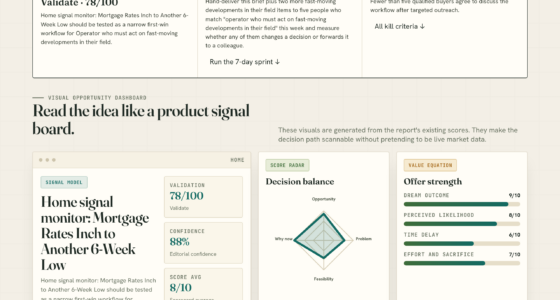

📊 Full opportunity report: Why ByteDance Is Avoiding US AI Distillation Due To Sanction Concerns on ThorstenMeyerAI.com — validation score, market gap, and execution plan.

Get the latest gadgets delivered free — and shop member deals
- Fast, free delivery on millions of items
- Access to Prime Big Deal Days deals on October 6–7
- Prime Video, Amazon Music and more included
TL;DR
ByteDance is reportedly avoiding the use of US artificial intelligence models for training through model distillation due to perceived sanctions risks. The company’s exact policies and the models involved are not publicly confirmed, highlighting potential geopolitical influences on AI development.
ByteDance is reportedly avoiding the use of US artificial intelligence models for training through model distillation due to concerns over sanctions, according to a report attributed to ByteDance Seed. This decision could influence how the Chinese tech giant develops its AI systems, though no official confirmation has been provided.
The report states that ByteDance has rejected a specific approach: using US AI models as ‘teachers’ to refine or train its own models via model distillation. This technique involves one AI system learning from another’s outputs or behavior to transfer capabilities efficiently. The reason cited is perceived sanctions risk, not technical or cost considerations. The report does not specify which US models or providers are involved, nor does it clarify whether the restriction applies broadly across all projects or to specific teams.
There is no official statement from ByteDance confirming this policy, and the report does not include details about the legal basis or the exact nature of the sanctions concern. It remains unclear whether ByteDance previously engaged in such distillation with US models or if this is a new precaution. The decision’s scope and impact on the company’s AI development timeline or capabilities are still unknown.
Implications of Geopolitical Risks on ByteDance’s AI Strategy
This development highlights how geopolitical tensions and sanctions concerns can influence the technical choices of major AI developers. If ByteDance is limiting its use of US models, it may face increased costs or slower development, potentially affecting its competitiveness. The move also underscores how companies operating across borders may preemptively restrict certain technologies to avoid legal or regulatory risks, even absent explicit violations or official bans. Such caution could shape the future landscape of cross-border AI collaboration and innovation.
As an affiliate, we earn on qualifying purchases.
US-China AI Development and Sanctions Environment
ByteDance operates at the intersection of Chinese technology growth and international scrutiny, especially amid rising concerns over export controls and sanctions. Previous reports have indicated that US authorities have tightened restrictions on AI exports and cross-border data flows, which could impact Chinese firms’ access to advanced US AI models. The recent report suggests that ByteDance may be proactively adjusting its training methods to mitigate potential legal or regulatory exposure, reflecting broader geopolitical tensions affecting the tech industry.
“We do not comment on specific technical methods or legal considerations related to our AI development.”
— ByteDance spokesperson (unconfirmed)
machine learning model distillation software
As an affiliate, we earn on qualifying purchases.
As an affiliate, we earn on qualifying purchases.
Legal and Policy Details Remain Unclear
Several key facts are still unknown: the specific US models or providers involved, the legal basis for the restriction, whether ByteDance previously used US models for distillation, and the precise scope of the policy. It is also unclear if this decision is a formal company-wide policy or a cautious stance by certain teams. No official legal or corporate documentation has been disclosed, and the actual impact on ByteDance’s AI capabilities remains unverified.
geopolitical risk management in technology
As an affiliate, we earn on qualifying purchases.
As an affiliate, we earn on qualifying purchases.
Awaiting Official Clarification from ByteDance
The next step will likely involve a formal statement from ByteDance explaining whether the reported restriction exists, which models or regions it covers, and the legal or strategic reasons behind it. Confirmation from US model providers or authorities could clarify whether specific sanctions or export controls prompted this shift. Future ByteDance AI releases and technical disclosures may also offer indirect evidence of its training strategies and compliance approach.
sanctions compliance software for tech companies
As an affiliate, we earn on qualifying purchases.
As an affiliate, we earn on qualifying purchases.
Key Questions
What is model distillation in AI training?
Model distillation is a technique where a smaller or less complex AI model learns from the outputs or behavior of a larger, more capable model to transfer specific capabilities efficiently.
Has ByteDance officially confirmed this policy?
No, ByteDance has not issued a formal statement confirming the avoidance of US AI models. The report remains unverified by the company.
Which US AI models or providers are involved?
The report does not specify any US models, providers, or legal restrictions involved in ByteDance’s decision.
Why would sanctions influence ByteDance’s AI development?
Sanctions or export controls could limit access to US AI models or technology, leading companies to restrict or avoid certain training methods to mitigate legal or regulatory risks.
What are the potential impacts of this decision?
If true, avoiding US models could slow ByteDance’s AI development, increase costs, or limit capabilities, affecting its competitiveness in AI innovation.
Source: ThorstenMeyerAI.com
Halloween Picks
halloween
As an affiliate, we earn on qualifying purchases.