
To prevent and care for light-induced migraines, you should minimize exposure to bright and flickering lights by using softer, indirect lighting, sunglasses outdoors, and blackout curtains indoors. Take regular breaks from screens and adjust device brightness to reduce glare. Establish a consistent sleep routine, stay hydrated, and manage stress effectively. Tracking your triggers can help tailor your environment and habits for better relief—continue to explore strategies that can make a real difference.
Key Takeaways
- Minimize exposure to bright, flickering, or harsh lighting using dimmers, blackout curtains, and indirect lighting.
- Wear sunglasses or tinted glasses outdoors to block sunlight and reduce photophobia triggers.
- Take regular breaks from screens, following the 20-20-20 rule, and adjust device brightness to prevent eye strain.
- Track personal light sensitivity and migraine patterns to identify and avoid specific triggers.
- Combine environmental adjustments with lifestyle habits like stress management, hydration, and consistent sleep for comprehensive prevention.
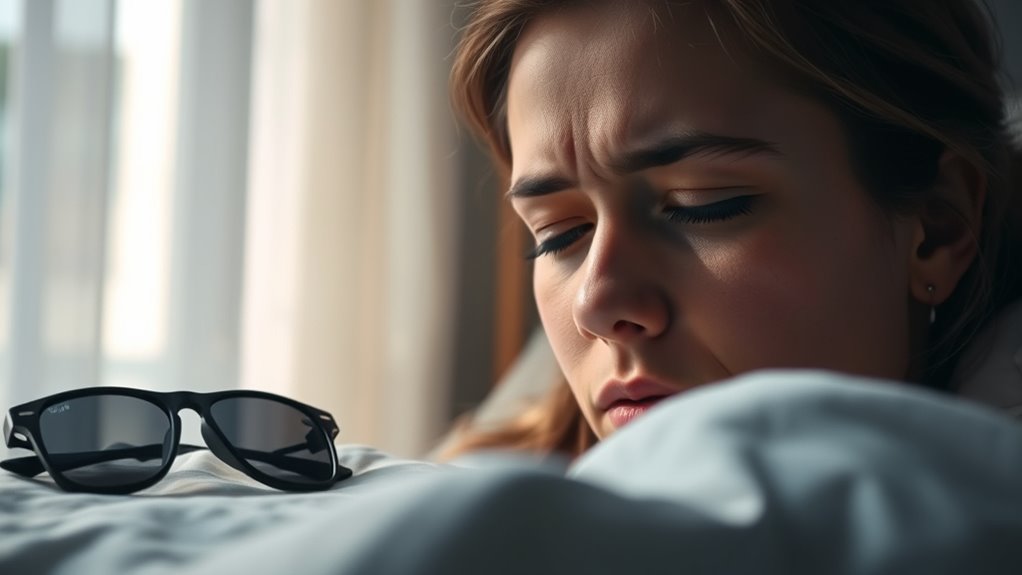
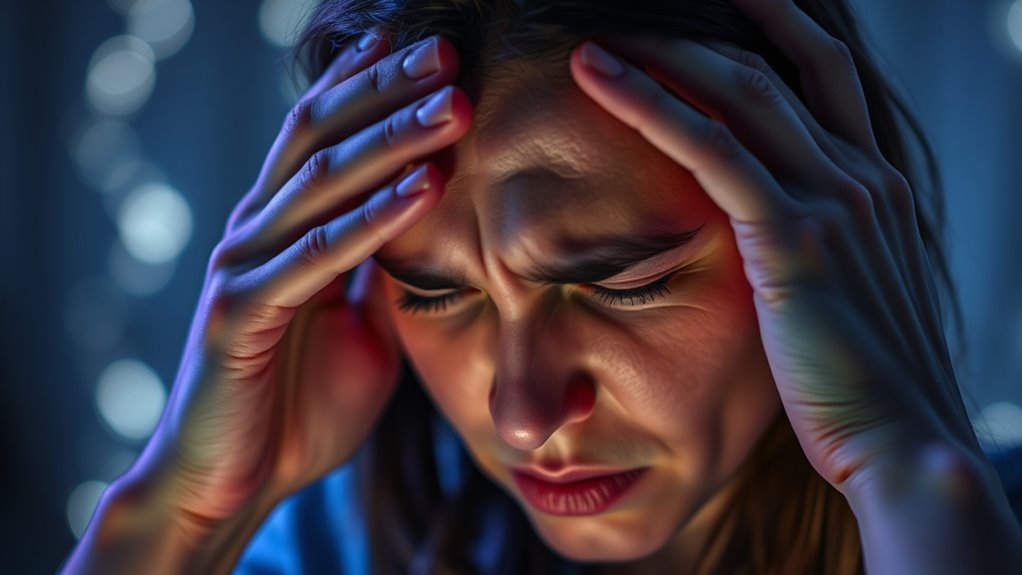
Light-induced migraines are a common trigger for many people suffering from headache disorders. If you’ve experienced intense sensitivity to light, you know how disruptive it can be. Bright or flickering lights can suddenly worsen your headache, making everyday activities difficult. Understanding the connection between light exposure and migraines is essential for effective migraine management, especially when it comes to photophobia triggers. Recognizing these triggers helps you develop strategies to minimize their impact, giving you more control over your symptoms.
Light sensitivity often worsens migraines, so managing exposure can help reduce headache severity and frequency.
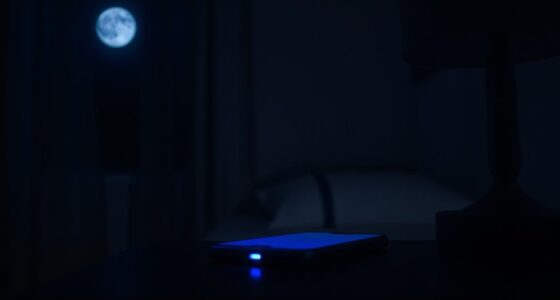
You might notice that certain lighting conditions, such as fluorescent bulbs or sunlight, set off your migraines more frequently. These are classic photophobia triggers. To reduce their influence, start by adjusting your environment. Use softer, indirect lighting whenever possible. Consider installing dimmer switches or using lamps with warm-colored bulbs to create a more migraine-friendly space. Wearing sunglasses or tinted glasses outdoors can also help block harsh sunlight that might trigger a headache. At work or home, blackout curtains or shades can shield you from intense daylight, decreasing the likelihood of an attack.
In addition to environmental adjustments, it’s important to integrate specific migraine management techniques into your routine. Regularly taking breaks from screens can prevent eye strain, which often worsens light sensitivity. If you spend a lot of time on devices, try the 20-20-20 rule: every 20 minutes, look at something 20 feet away for at least 20 seconds. This simple habit helps reduce eye fatigue and can lessen photophobia. Also, consider using screen filters or adjusting brightness and contrast settings to reduce glare. These small changes can make a *notably* difference in your comfort level.
Diet and lifestyle choices play a role too. Staying well-hydrated and maintaining consistent sleep schedules can lessen the severity of migraines. Stress management techniques such as meditation or deep breathing exercises can also help, as stress often amplifies light sensitivity and other migraine symptoms. If you notice certain patterns or specific triggers, keeping a headache diary can be useful. Track your light exposure, activities, and symptoms to identify personal photophobia triggers more precisely. This awareness allows you to tailor your migraine management plan more effectively.
Furthermore, some individuals find that incorporating eye patches into their routine can provide relief by reducing eye strain and light sensitivity. Ultimately, managing light-induced migraines requires a combination of environmental modifications, lifestyle adjustments, and proactive strategies. By understanding your photophobia triggers and implementing targeted changes, you can reduce the frequency and severity of your migraines. While it might take some trial and error to find what works best, small, consistent steps can *remarkably* improve your quality of life and help you regain control over your headache episodes.

NICETOWN Black Out Curtains for Bedroom 84 inches Long – Light Reducing Thermal Insulated Solid Grommet Curtains/Panels/Drapes for Living Room (Set of 2, W52 x L84)
- Elegant Design: Set of 2 panels, 52" x 84"
- High-Quality Material: Heavy, soft, and wrinkle-free fabric
- Light Blocking: Blocks 85%-99% of light
As an affiliate, we earn on qualifying purchases.
As an affiliate, we earn on qualifying purchases.
Frequently Asked Questions
Can Light-Induced Migraines Occur Without Visual Symptoms?
Yes, light-induced migraines can occur without visual symptoms, especially if you have a history of migraines. While many people experience visual disturbances like flickering or aura, some individuals might only feel the headache or other symptoms triggered by bright lights. If you notice your migraines happen without visual signs, it’s important to track your triggers and discuss them with a healthcare professional for better management.
Are Certain Colors of Light More Likely to Trigger Migraines?
Did you know that around 70% of migraine sufferers report sensitivity to specific light colors? Blue and fluorescent lights often trigger migraines more than warm, yellow, or red lights. Your color sensitivity plays a significant role in light therapy; choosing softer, warmer hues can reduce migraine risk. By avoiding harsh or flickering lights and opting for calming colors, you can help prevent migraine episodes and protect your well-being.
How Does Age Affect Susceptibility to Light-Induced Migraines?
As you age, your susceptibility to light-induced migraines can change due to age-related neural changes. Younger individuals often experience developmental migraine patterns that make them more sensitive to light triggers, while older adults might notice a decrease in frequency or intensity. These neural shifts affect how your brain processes visual stimuli, influencing your migraine risk over time. Staying aware of these patterns helps you manage and prevent light-induced migraines effectively.
Can Natural Sunlight Cause Migraines in Sensitive Individuals?
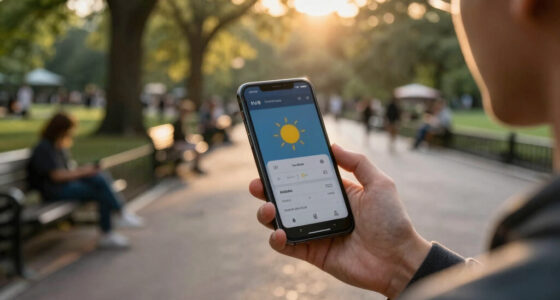
Yes, natural sunlight can cause migraines in sensitive individuals. Sunlight exposure increases eye sensitivity, which can trigger migraines if you’re prone to them. Bright or flickering sunlight, especially during certain times of day, worsens symptoms. To reduce risk, wear sunglasses, use hats, and limit direct sunlight exposure. Managing eye sensitivity and avoiding intense sunlight can help prevent light-induced migraines and keep you more comfortable throughout the day.
Do Certain Medications Increase Vulnerability to Light-Triggered Migraines?
Certain medications can increase your vulnerability to light-triggered migraines due to medication interactions and drug side effects. When you take specific drugs, they may heighten your sensitivity to light, making migraines more likely. Always check with your healthcare provider about potential side effects and interactions, especially if you notice increased migraines with light exposure. Adjusting your medication or dosage can often reduce this risk and help you manage your migraines better.

JOOFO LED Floor Lamp – Super Bright Torchiere with Remote & Foot Switch, Stepless Dimmable Tall Standing Lamp, 69" Modern Pole Light for Corner, Living Room, Bedroom, Reading, Office
- Smart Control Options: Magnetic remote and foot switch
- Glare-Free Upward Lighting: Brightens space without harsh light
- Stepless Dimming Capability: Adjust brightness and color temperature
As an affiliate, we earn on qualifying purchases.
As an affiliate, we earn on qualifying purchases.
Conclusion
If you suffer from light-induced migraines, taking steps to avoid bright or flickering lights can make a big difference. Remember, about 20% of migraine sufferers report that light worsens their attacks. By wearing sunglasses, adjusting your environment, and practicing good eye health, you can reduce your chances of migraines triggered by light. Don’t underestimate the power of small changes—they can lead to significant relief and help you enjoy brighter days without pain.

ANDWOOD Photochromic Sunglasses for Women Men UV Protection Blue Light Blocking Glasses Computer Filter Bluelight Blocker Anti Blue Ray
- Photochromic Lenses: Change from clear to black
- Blue Light Blocking: Filters harmful blue light indoors
- UV Protection: Blocks 100% UVA and UVB rays
As an affiliate, we earn on qualifying purchases.
As an affiliate, we earn on qualifying purchases.

TYRHMY 50 Inch Anti Glare TV Screen Protector Anti Glare for TV Blue Light Filter Matte Finish for Glare Reduction, Reflection Control, and Optimising glare on TV screens (50 inch 1101mm)
- Compatible with 50-inch TVs: Fits most 50-inch diagonal screens
- Reduces reflections and glare: Premium matte coating for comfort
- Outdoor usage tips: Use in shaded areas for best results
As an affiliate, we earn on qualifying purchases.
As an affiliate, we earn on qualifying purchases.