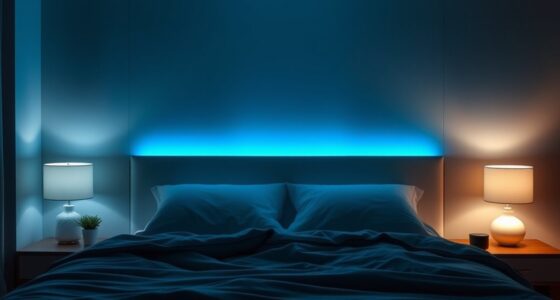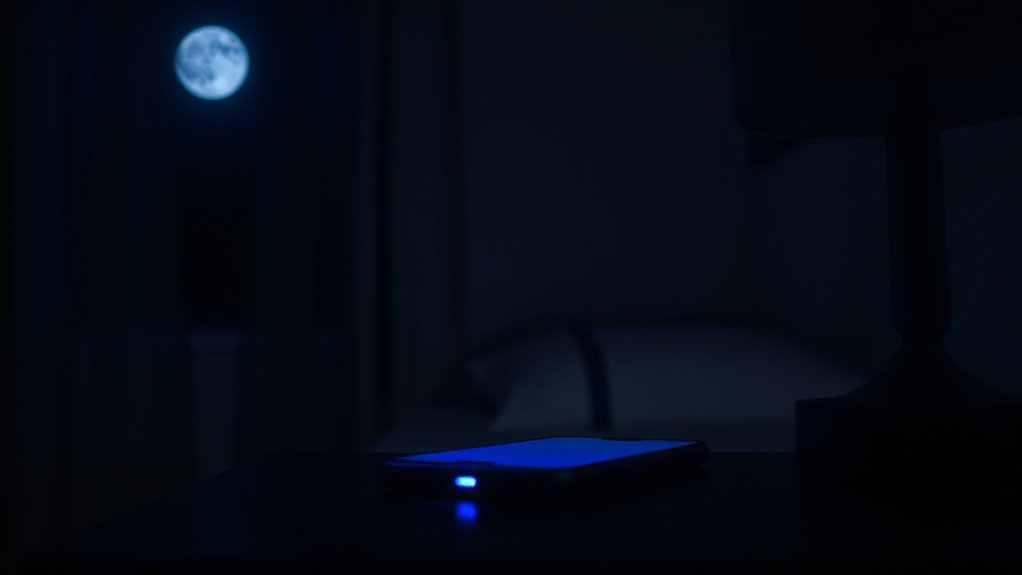
When you expose yourself to light, especially blue wavelengths from screens or artificial lighting in the evening, it suppresses your melatonin production. This hormone naturally signals your body to prepare for sleep, but light activates specialized cells in your eyes called ipRGCs that send wake-up signals to your brain. The more light you get at night, the harder it is to fall asleep and stay restful. Keep going to discover how managing light can improve your sleep quality.
Get ready for Prime Big Deal Days — try Prime free
Exclusive member deals on October 6–7, plus fast free delivery. Cancel anytime.
As an affiliate, we earn on qualifying purchases.
Key Takeaways
- Light exposure, especially blue wavelengths, suppresses melatonin production by activating ipRGC photoreceptors in the eyes.
- Evening or nighttime light inhibits the brain’s circadian signals, delaying sleep onset.
- Screens and artificial lighting emit blue light, which significantly reduces melatonin levels.
- Proper light management, like dimming lights before bed, helps maintain natural melatonin secretion.
- Disrupted melatonin production from excessive light exposure can lead to sleep disorders and health issues.
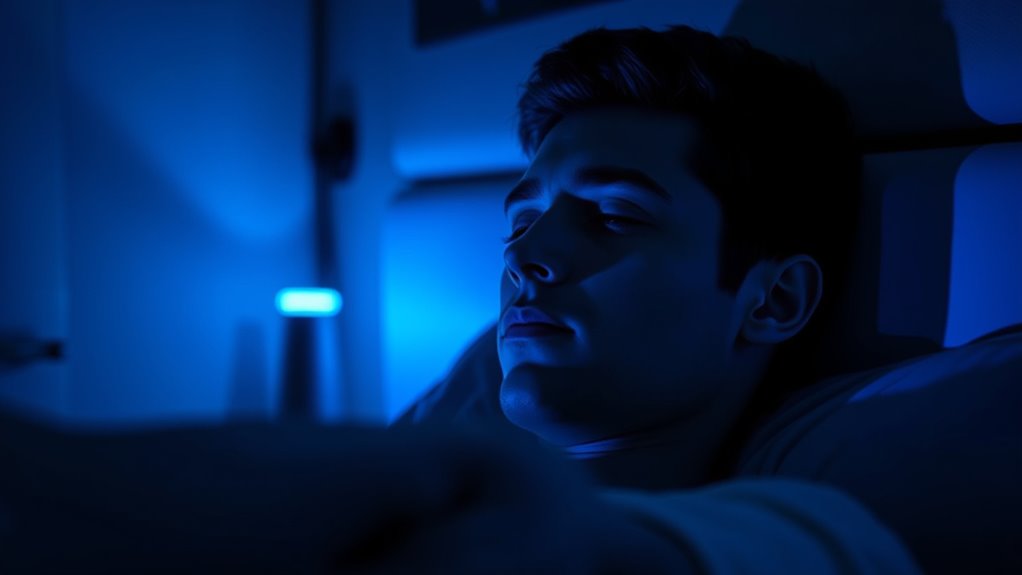
Light exposure, especially during evening hours, directly affects your body’s production of melatonin, the hormone responsible for regulating sleep. When you’re exposed to light at night, it interacts with your eyes’ photoreceptor response, which is essential for maintaining your circadian regulation. Your eyes contain specialized cells called intrinsically photosensitive retinal ganglion cells (ipRGCs), which detect light and send signals to your brain’s suprachiasmatic nucleus (SCN). This process, part of your photoreceptor response, is what informs your body whether it’s day or night. When these cells sense light, especially blue wavelengths common in screens and artificial lighting, they suppress melatonin production, signaling your body that it’s still daytime. This disruption hampers your circadian regulation, the internal clock that coordinates sleep-wake cycles, hormone release, and other critical functions.
Light at night suppresses melatonin through photoreceptor cells, disrupting your circadian rhythm and sleep quality.
Understanding how light influences your circadian rhythm can help you make smarter choices about exposure. For instance, the photoreceptor response is particularly sensitive to blue light, which is prevalent in electronic devices like smartphones, tablets, and computers. When you use these devices late into the evening, you activate those sensitive photoreceptors, sending signals to inhibit melatonin secretion. As a result, you may find it harder to fall asleep, or your sleep becomes less restorative. Over time, this misalignment between your internal clock and external environment can lead to sleep disorders, fatigue, and reduced overall health.
Your body’s circadian regulation depends heavily on consistent light cues. If you’re exposed to bright light during nighttime hours, it confuses your internal clock, making it believe it’s still daytime. This confusion impacts more than just sleep—your alertness, mood, and metabolic processes can all suffer. Conversely, when you reduce evening light exposure, your photoreceptor response diminishes, allowing melatonin levels to rise naturally and prepare your body for sleep. This is why establishing a routine of dimming lights in the evening and avoiding screens before bed can markedly improve your sleep quality.
In essence, your body’s response to light is a finely tuned system that keeps your circadian regulation running smoothly. By understanding how the photoreceptor response works and minimizing blue light exposure at night, you support your natural melatonin production. This adjustment helps you fall asleep faster, stay asleep longer, and wake feeling more refreshed. Recognizing the impact of light on your internal clock underscores the importance of managing your environment, especially in the hours leading up to bedtime, to preserve healthy sleep patterns and overall well-being.
As an affiliate, we earn on qualifying purchases.
Frequently Asked Questions
How Does Natural Sunlight Compare to Artificial Light for Melatonin Suppression?
Natural sunlight is more effective at suppressing melatonin than artificial light because it contains a broad spectrum, including blue light, which strongly impacts your circadian rhythm. When you’re exposed to sunlight during the day, it helps regulate your internal clock, keeping your melatonin levels in check. Artificial light, especially blue-rich sources like screens, can also suppress melatonin but usually less intensely, disrupting your sleep-wake cycle if used late.
Are There Specific Wavelengths of Light That More Effectively Suppress Melatonin?
Blue light, with its specific wavelength of around 460-480 nm, more effectively suppresses melatonin compared to other wavelengths. When you’re exposed to blue light, its wavelength specificity targets your eyes’ photoreceptors, signaling your brain to reduce melatonin production. This is why screens emitting blue light, like phones and computers, can disrupt your sleep. To protect your sleep, limit exposure to blue light, especially before bedtime.
Can Melatonin Suppression From Light Exposure Affect Sleep Quality Long-Term?
Yes, melatonin suppression from light exposure can impact your sleep quality long-term. Prolonged exposure to light pollution or seasonal variations, especially during winter months, can disrupt your circadian rhythm. This misalignment may lead to difficulty falling asleep, poorer sleep quality, and increased fatigue. To protect your sleep, limit bright screen time at night and consider using blackout curtains, especially during seasons with extended daylight or heightened light pollution.
What Devices or Screens Are Most Harmful for Melatonin Production?
You should be most cautious with devices emitting blue light, like smartphones, tablets, and LED screens. These screens, especially when bright, markedly suppress melatonin production, disrupting your sleep. Keep screen brightness low or use blue light filters in the evening to minimize impact. Limiting exposure to these devices before bedtime helps your body maintain healthy melatonin levels, ensuring better sleep quality.
Is There a Way to Measure Individual Sensitivity to Light-Induced Melatonin Suppression?
You can measure your sensitivity to light-induced melatonin suppression through genetic testing that identifies your specific light sensitivity genes. These tests analyze your DNA to determine how your body responds to light exposure, helping you understand your individual vulnerability. By understanding your genetic makeup, you can better manage your light exposure, especially in the evening, to optimize melatonin production and improve sleep quality.
As an affiliate, we earn on qualifying purchases.
Conclusion
So, next time you’re tempted to stay up late staring at screens, remember the ancient Greeks knew about light’s power long before Edison’s bulb. Your nightly exposure to bright lights can suppress melatonin, throwing off your sleep schedule. By limiting blue light before bed, you help your body naturally wind down—no need for a magic elixir, just good old-fashioned habits. Protect your circadian rhythm, and let your body’s clock rule the night!
As an affiliate, we earn on qualifying purchases.
blue light filter screen protector
As an affiliate, we earn on qualifying purchases.
As an affiliate, we earn on qualifying purchases.
NFL season / tailgating Picks
team gear
As an affiliate, we earn on qualifying purchases.