To measure your plant’s light needs, use the Daily Light Integral (DLI), which shows how much light they receive in a 24-hour period. You’ll need a light meter to track the photosynthetically active radiation (PAR) and then sum it over the day, expressing it in mol/m²/day. Knowing your plant’s ideal DLI helps you adjust lighting or placement for healthy growth. Keep going, and you’ll discover how to fine-tune your environment for the best results.
Key Takeaways
- DLI measures total photosynthetically active light plants receive over 24 hours, guiding optimal light conditions.
- Use a PAR light meter to record light intensity at different times for accurate DLI calculation.
- Sum the hourly PAR readings to determine daily DLI, expressed in mol/m²/day.
- Matching DLI to plant-specific light saturation points ensures healthy growth and prevents stress.
- Adjust indoor or outdoor lighting based on DLI data to meet plants’ precise light requirements.
Have you ever wondered how much sunlight your plants actually receive each day? Understanding this is key to ensuring they grow healthy and strong. The concept of Daily Light Integral (DLI) helps you measure exactly that — the total amount of light plants get over a 24-hour period. When you know your plants’ light needs, you can adjust their environment to optimize growth. The first step is to grasp how plants convert light into energy through photosynthesis. Photosynthesis efficiency varies depending on how much light is available, and this is where the light saturation point comes into play. The light saturation point is the level of light intensity beyond which plants no longer increase their photosynthesis rate. In simple terms, once plants reach this point, adding more light won’t boost their growth but might waste energy or cause stress.
Knowing your plant’s photosynthesis efficiency and their light saturation point helps you determine the ideal light conditions. For instance, some plants thrive with high light levels, requiring a higher DLI, while others do fine with less. If you expose a low-light plant to too much light, it might reach its light saturation point quickly, causing stress or damage. Conversely, a high-light plant left in insufficient light won’t reach its full growth potential. That’s why measuring DLI is so valuable. It allows you to match your plant’s natural light needs precisely, whether you’re growing indoors or outdoors.
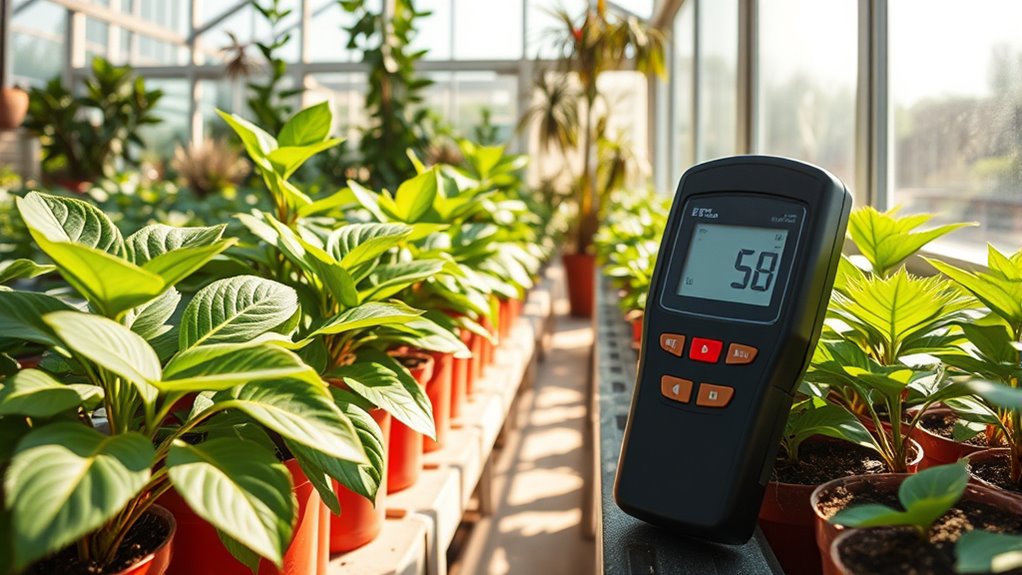
To accurately measure DLI, you need a light meter that records the amount of photosynthetically active radiation (PAR) over the course of a day. PAR is the spectrum of light that plants can use for photosynthesis. Once you have this data, you can calculate the DLI by summing the total daily PAR and expressing it in mol/m²/day. This measurement gives you a clear picture of whether your plants are getting enough light or if adjustments are needed. For example, if your indoor garden receives a DLI of 10 mol/m²/day, but your plant species requires 20 mol/m²/day, you’ll know to supplement with grow lights or reposition your plants.

Quantum PAR Meter Full-Spectrum High Precision PPFD Tester for Photosynthetic Activity of Indoor and Outdoor Plants 400-700nm Light Lux Tester
✅RELIABLE TESTER: The measurement range is between 0 and 5000 μmol/m²/sec. The cut-on wavelength is 400 nm and…
As an affiliate, we earn on qualifying purchases.
As an affiliate, we earn on qualifying purchases.
Frequently Asked Questions
How Does DLI Vary With Seasons and Weather Conditions?
You’ll notice DLI varies with seasonal changes and weather impact. During summer, days are longer and sunnier, increasing DLI and providing more light for plants. In winter, shorter days and cloudy weather decrease DLI, limiting plant growth. Overcast skies and storms also diminish DLI regardless of season. By understanding these seasonal variations, you can adjust your plant care to ensure they get enough light year-round.
Can Indoor Plants Be Accurately Measured Using DLI?
Think of measuring indoor plant light like tuning a radio—accurately capturing the signal is key. Using light measurement tools, you can determine the DLI indoors, helping you optimize conditions for healthy plant growth. While it’s not always perfect, this method provides a close estimate, guiding you to adjust light sources or placement. With careful measurement, you’ll guarantee your plants get just the right amount of light to thrive.
What Are the Best Tools to Measure DLI at Home?
You can measure DLI at home effectively using a light meter or PAR sensor. A light meter is simple to use; just hold it in your plant’s environment to get a reading of light intensity. For more precision, a PAR sensor measures photosynthetically active radiation directly. Both tools help you monitor your indoor plants’ light needs, ensuring they get the right amount for healthy growth.
How Does DLI Influence Flowering and Fruiting in Plants?
You might be surprised how much DLI influences your plants’ flowering and fruiting. When you optimize light spectrum and guarantee sufficient light exposure, you trigger essential processes that lead to robust blooms and abundant harvests. Low DLI can delay or weaken flowering, while high DLI accelerates growth and boosts fruit production. By understanding and managing DLI, you give your plants the perfect conditions for healthy plant growth and fruitful outcomes.
Is There a Universal DLI Value Suitable for All Plant Types?
There isn’t a universal DLI that suits all plant types because each plant has unique light requirements. Some plants thrive with lower light levels, while others need higher DLI for ideal growth. To meet your plants’ needs, you should research their specific light requirements and adjust your lighting accordingly. Understanding your plant’s preferences helps you provide the right amount of light, promoting healthy flowering and fruiting.
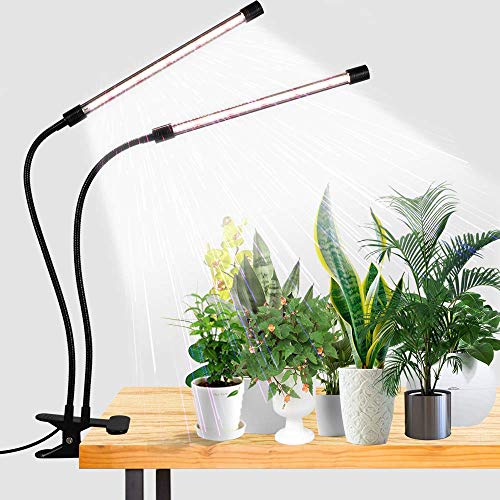
GooingTop LED Grow Light,6000K Full Spectrum Clip Plant Growing Lamp with White Red LEDs for Indoor Plants,5-Level Dimmable,Auto On Off Timing 4 8 12Hrs
6000K White Light – equipped with 10 Red + 74 White LEDs, this growing Lamp is similar to…
As an affiliate, we earn on qualifying purchases.
As an affiliate, we earn on qualifying purchases.
Conclusion
Just like the sun’s gentle touch nurtures a garden’s bloom, understanding daily light integral assists you in meeting your plants’ needs. By measuring and adjusting their light, you become the steady hand guiding their growth—much like a gardener tending to each delicate blossom. With this knowledge, you ensure your plants thrive under your care, turning your space into a vibrant oasis. Embrace the sunlight’s dance, and watch your garden flourish as if touched by nature’s own magic.

Dr.meter LX1330B Digital Illuminance Light Meter, 0-200,000 Measurement Range Lux Meter, Lighting Intensity Brightness Measurement for Indoor Outdoor, Light Meters for Plants
High Precision & Fast Response: This high-precision illuminance meter delivers lightning-fast readings 2 times per second, ensuring you…
As an affiliate, we earn on qualifying purchases.
As an affiliate, we earn on qualifying purchases.
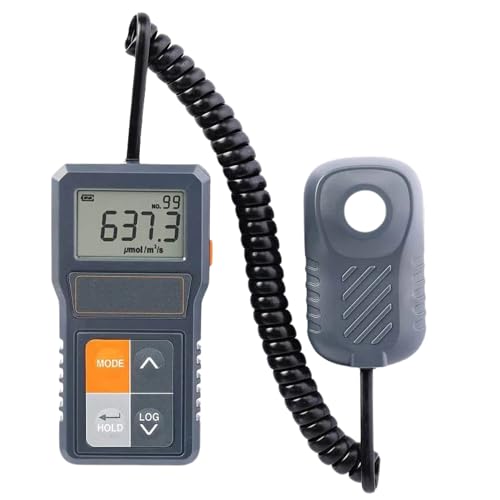
Sper Scientific Detachable Full Spectrum PAR Meter 860054 – Photosynthetically Active Radiation Meter with Remote Sensor & High Accuracy for Horticulture, Plant Physiology, Research & More
PRECISE PAR MEASUREMENT: Accurately measures photosynthetically active radiation (PAR) in the 400-700nm range, perfect for optimizing plant growth…
As an affiliate, we earn on qualifying purchases.
As an affiliate, we earn on qualifying purchases.