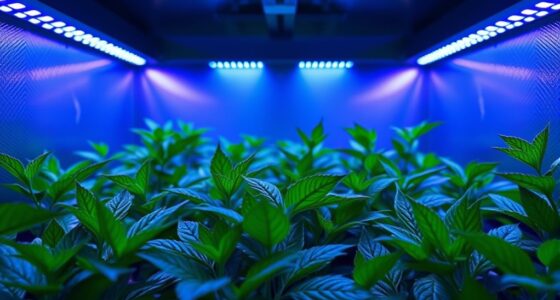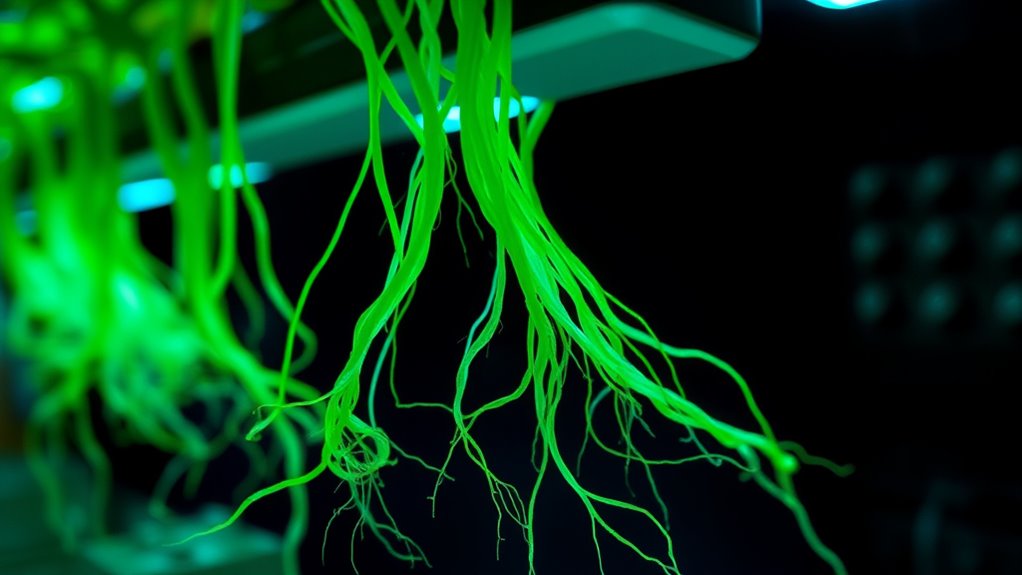

Light-guided root growth is revolutionizing hydroponic farming by offering a way to control root behavior using specific light wavelengths. By targeting roots with blue and red light, you can influence their direction, length, and branching, leading to healthier plants and better nutrient uptake. This method reduces energy waste and mimics natural underground conditions. If you explore this technology further, you’ll discover how to optimize plant development and open new possibilities for efficient, sustainable growth.
Key Takeaways
- Roots actively perceive and respond to specific light signals, enabling targeted control of growth patterns.
- Using tailored wavelengths like blue and red light influences root elongation and branching effectively.
- Integrating LED lighting in hydroponics allows precision manipulation, improving nutrient uptake and root stability.
- Light-guided root growth enhances plant health, yields, and overall crop efficiency in controlled environments.
- Advances in biological understanding and technology position light-based root control as a transformative tool for future hydroponic systems.

Roots don’t just grow underground; they actively respond to light cues in their environment. This understanding opens up exciting possibilities for controlling root behavior through illumination techniques. Traditionally, roots have been viewed as passive structures that seek moisture and nutrients, but recent research shows they’re more dynamic, capable of sensing and responding to light signals. By harnessing this ability, you can influence root growth patterns directly, leading to healthier plants and more efficient hydroponic systems. You might wonder, how exactly can light shape root behavior? The answer lies in carefully designed illumination techniques that target the root zone. Unlike plants’ shoots and leaves, roots are less exposed to light naturally, so introducing specific wavelengths or light intensities can activate unique responses.
Roots actively respond to light cues, enabling precise control of growth for healthier plants and optimized hydroponic systems.
When you use targeted light, you can encourage roots to grow in desired directions or enhance their overall development. For example, blue light has been shown to stimulate root elongation, while red light can influence root branching. By adjusting the light spectrum and intensity, you’re fundamentally communicating with the roots, guiding their growth patterns without physical barriers. This approach allows for precise control, making it possible to optimize nutrient uptake and improve plant stability. Root behavior in response to light isn’t random; it’s a sophisticated process driven by specialized photoreceptors within the roots themselves. These receptors detect changes in light quality and quantity, triggering physiological responses that alter growth rates and directions.
Implementing illumination techniques in hydroponic setups involves integrating LED systems that deliver specific wavelengths directly to the root zone. You don’t need to flood the entire environment with light—just focus on the roots. This precision minimizes energy waste and prevents unnecessary stress on the plant’s shoots. With this technology, you can even simulate natural light conditions that roots would encounter underground, such as subtle variations in light intensity or spectral composition. As you experiment with different illumination techniques, you’ll discover how roots adapt and grow more efficiently, leading to healthier crops and potentially higher yields.
Understanding root behavior and leveraging illumination techniques isn’t just a scientific curiosity—it’s a practical tool for advancing hydroponic farming. You gain the ability to influence root architecture, improve nutrient absorption, and reduce growth times. As research progresses, the potential for light-guided root growth to revolutionize hydroponics becomes clearer. You’re on the cusp of a new frontier where light isn’t just for photosynthesis but a key element in directing root development, transforming how we grow plants in controlled environments.

FREELICHT 2 Pack 4FT LED Grow Light, 40W (250W Equivalent), Full Spectrum Sunlight Growing Lamp Fixture, Linkable Hanging Plant Light for Hydroponic Indoor Plants Seeding, Plug-in with On/Off Switch
Sunlike Full Spectrum: FREELICHT full spectrum grow lights simulate the natural sunlight, providing the ideal light conditions for…
As an affiliate, we earn on qualifying purchases.
As an affiliate, we earn on qualifying purchases.
Frequently Asked Questions
What Types of Plants Benefit Most From Light-Guided Root Growth?
You’ll find that certain plant species benefit most from light-guided root growth, especially those with delicate or slow root development, like herbs and some vegetables. By using light to direct roots, you promote healthier root development and stronger plants. This technique is particularly effective for plants that require precise root management, ensuring ideal nutrient uptake and growth. So, consider light-guided root growth if you want to improve your plants’ overall health and yield.
How Energy-Efficient Is the Light-Guided Root Growth Technology?
When it comes to energy efficiency, you might think it’s a tall order, but light-guided root growth technology actually offers promising sustainability considerations. It uses targeted lighting, which reduces unnecessary energy consumption, making it more efficient than traditional methods. While some energy is still needed, optimized LED systems help minimize overall power use. As a result, this innovation aligns well with eco-conscious practices, giving your hydroponic setup a greener edge.
Are There Any Environmental Impacts Associated With This Method?
You might wonder if this method has environmental impacts. While it reduces the eco footprint by optimizing plant growth and reducing waste, concerns about light pollution could arise if the lighting isn’t carefully managed. Excess or misdirected light can disturb local ecosystems. Overall, with proper controls, the environmental impacts are minimal, making it a sustainable option that balances innovation with ecological responsibility.
Can Light-Guided Root Growth Be Integrated Into Existing Hydroponic Systems?
You wonder if light-guided root growth can seamlessly fit into your current hydroponic setup. The answer is yes, with strategic light source integration, you can enhance system compatibility. By adapting existing lighting configurations and optimizing placement, you’ll promote precise root guidance without overhauling your system. This fusion fosters future-focused farming, fueling growth and flexibility, all while maintaining your current crop cultivation. The fusion of form and function fosters forward-thinking farming.
What Are the Cost Implications for Commercial Farmers Adopting This Technology?
You’ll need to contemplate the initial investment required to adopt light-guided root growth technology, which can be significant due to specialized equipment. Additionally, maintenance costs may add up over time, including replacing lights and calibrating systems. While the upfront expense might seem high, the potential for increased yields and resource efficiency can offset these costs in the long run, making it a worthwhile investment for your farm.

Wolezek Grow Lights for Indoor Plants, 80 LEDs 4 Heads Full Spectrum Red & Blue Plant Light with Clip, Grow Lamp with 6/12/16H Auto Timer, 3 Switch Modes for Seedlings and Succulents
Full Spectrum Grow Light: The Wolezek plant light features 80 LEDs (36 red, 16 blue, 28 warm white)…
As an affiliate, we earn on qualifying purchases.
As an affiliate, we earn on qualifying purchases.
Conclusion
So, next time you think your plants are just sitting there, remember—they’re secretly dreaming of a neon-lit adventure beneath the surface. With light-guided root growth, you’re not just growing plants; you’re directing them like tiny, leafy movie stars on their own sci-fi stage. Who knew that in the future, the real thrill would be watching roots follow a glow instead of just waiting for nutrients? Welcome to the wild world of hydroponic hype—where light’s the new boss.

Ahopegarden Indoor Garden Hydroponics Growing System: 10 Pods Plant Germination Kit Herb Vegetable Growth Lamp Countertop with LED Grow Light – Hydrophonic Planter Grower Harvest Lettuce
High planting efficiency: Start an indoor herb garden with the Ahopegarden hydroponic growing system, which includes a water…
As an affiliate, we earn on qualifying purchases.
As an affiliate, we earn on qualifying purchases.

LETPOT LPH-Lite Hydroponics Growing System, 12 Pods Smart Herb Garden Kit Indoor, Indoor Garden, APP & WiFi Controlled, with 24W Growing LED, 5.5L Water Tank, Pump System, Automatic Timer
SMART HYDROPONIC SYSTEM: Upgrade your indoor gardening experience with our patented smart hydroponic system and the exclusive LetPot…
As an affiliate, we earn on qualifying purchases.
As an affiliate, we earn on qualifying purchases.