To enhance strawberry sweetness, you should optimize the red-to-blue light ratio by balancing vegetative growth and sugar production. Generally, increasing blue light relative to red helps boost sugar levels and flavor intensity, while red light encourages flowering and fruit development. Keeping a proper balance—such as a higher blue proportion during fruit ripening—can improve fruit taste. For specific ratios and tips, you’ll discover more effective strategies that can elevate your strawberry quality.
Key Takeaways
- Increasing blue light relative to red enhances strawberry sugar content and overall sweetness.
- A balanced red-to-blue ratio supports both vegetative growth and flavor development.
- Excessive red light may promote size but can reduce fruit flavor and sweetness.
- Optimal ratios vary during growth stages, with higher blue light during fruit ripening for better flavor.
- Combining appropriate light ratios with environmental management maximizes strawberry sweetness and quality.
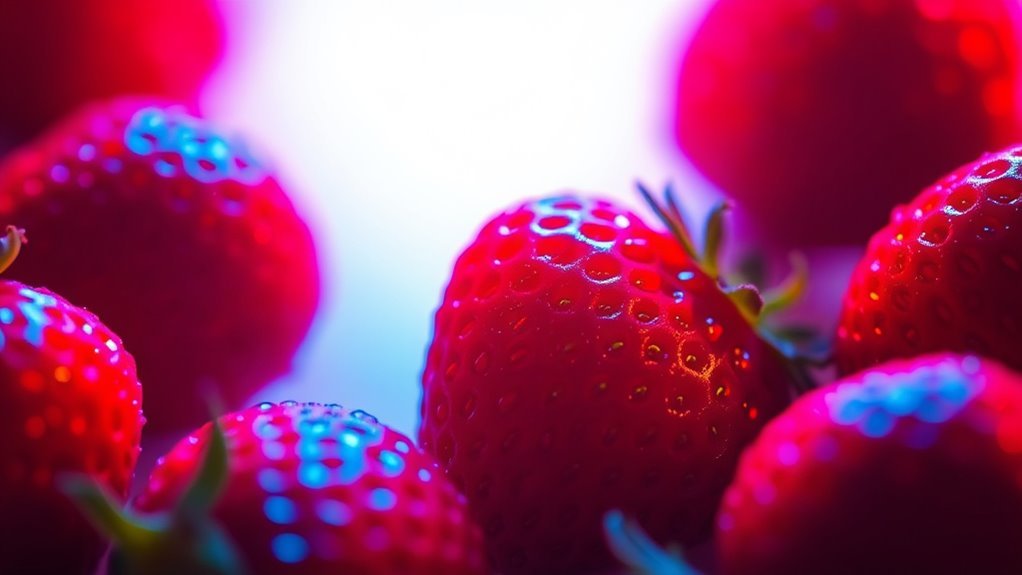
Understanding how different light spectra influence strawberry sweetness can help growers optimize their crops. The way light affects plant growth and fruit development directly impacts strawberry flavor, especially sweetness, which is a key quality trait for consumers. When you manipulate the light spectrum effects—particularly the balance between red and blue light—you can substantially influence how sweet your strawberries become. Researchers and experienced growers have found that adjusting the red-to-blue light ratio can enhance certain physiological processes that lead to increased sugar accumulation, ultimately improving fruit flavor.
Red light is essential for promoting photosynthesis, the process by which plants convert light into energy. It encourages lush vegetative growth and influences flowering and fruit production. Blue light, on the other hand, plays a fundamental role in leaf expansion, stomatal opening, and overall plant health. It also affects secondary metabolites, which are compounds that can influence taste and aroma. When you optimize the red-to-blue light ratio, you’re practically guiding the plant’s energy use and metabolic pathways to favor sugar production and accumulation, key components of strawberry flavor.
Optimizing red and blue light ratios enhances strawberry flavor by boosting sugar production and plant health.
If you rely too heavily on red light, your plants might produce larger but less flavorful strawberries because excessive red promotes vegetative growth at the expense of fruit quality. Conversely, increasing blue light can boost sugar content and enhance the fruit’s sweetness, as blue light stimulates pathways that lead to higher sugar synthesis. The ideal ratio often involves a careful balance—enough red light to support fruit development and energy production, but sufficient blue light to enhance flavor compounds and sweetness. Studies show that a higher proportion of blue light relative to red can improve strawberry flavor by increasing sugar levels, making the fruit taste sweeter and more appealing.
You can customize your grow setup by adjusting LED light ratios or using specific light treatments during critical growth phases. This targeted approach helps in fine-tuning the light spectrum effects on your strawberries, leading to better flavor quality. Keep in mind that environmental factors like temperature and nutrient availability also interact with light spectrum effects, so a holistic approach yields the best results. Additionally, luminous efficiency of different light spectra can influence how effectively plants utilize the light, impacting flavor development. By understanding how different light spectra influence strawberry flavor, you gain the ability to produce sweeter, more flavorful fruit consistently. Ultimately, controlling the red-to-blue light ratio empowers you to refine your cultivation practices, ensuring your strawberries not only look great but also taste exceptional.

Grow Lights for Indoor Plants, Four Head LED Grow Light with Full Spectrum, Red White Spectrum for Indoor Plant Lamp, Adjustable Gooseneck, Suitable for Vegetation
Multiple usage: You can put it on the balcony, living room, office, greenhouse, you can use it for…
As an affiliate, we earn on qualifying purchases.
As an affiliate, we earn on qualifying purchases.
Frequently Asked Questions
How Does Light Ratio Affect Strawberry Plant Growth Stages?
You can influence strawberry plant growth stages by adjusting light ratios, which affect photosynthesis efficiency and flowering timing. A higher blue light ratio boosts photosynthesis, promoting healthier leaves and faster growth. Red light encourages flowering and fruit development. By balancing red and blue light, you refine growth stages, improve flowering timing, and increase fruit quality. Proper light management ensures your strawberries develop ideally throughout each stage.
Can Red and Blue Light Ratios Influence Strawberry Disease Resistance?
Ever wondered if light ratios can boost strawberry disease resistance? They do, by influencing plant health and immunity. Adjusting red and blue light ratios can enhance natural defenses, potentially reducing reliance on genetic modification or pest control. A well-balanced light environment helps strawberries develop stronger, more resilient tissues. So, wouldn’t optimizing light conditions be a smart step to protect your crop naturally, rather than solely relying on genetic or chemical methods?
What Are the Economic Impacts of Adjusting Light Ratios in Strawberry Farms?
You should consider the economic impacts of adjusting light ratios by conducting a cost-benefit analysis. Changing light ratios might increase yields or fruit quality, boosting market pricing, but could also raise energy costs. If the benefits outweigh expenses, your farm profits grow. However, if costs are too high, it might not be worth the investment. Balancing these factors helps you optimize profitability while maintaining sustainable practices.
Do Different Strawberry Varieties Respond Differently to Light Ratios?
Oh, just what you needed—another variable to complicate your strawberry harvest. Different varieties do respond differently to light ratios, showcasing variety-specific responses and cultivar sensitivity. You might find that some cultivars thrive under certain conditions, while others struggle. So, tailoring light ratios to each strawberry variety isn’t just helpful; it’s essential for optimizing growth and sweetness. Don’t assume one size fits all—your strawberries will thank you with better flavor.
How Do Environmental Factors Interact With Light Ratios to Affect Sweetness?
Environmental factors like soil moisture and nutrient availability interact with light ratios to influence strawberry sweetness. When soil moisture is ideal, plants absorb nutrients more effectively, enhancing their response to specific light conditions. Adequate nutrients boost sugar production, while drought or nutrient deficiencies can hinder this process, regardless of light ratios. You should monitor and adjust these factors to maximize sweetness, ensuring the plants get the right balance of light, water, and nutrients.

LBW Plant Grow Light, Red Blue Spectrum Grow Light for Indoor Plants,270 LEDs Growing Lamp with 4/8/12H Timer, 3 Lighting Modes, 10 Dimmable Levels, 2 Pack
Extra Red Blue Spectrum Grow Lamp: These plant lights have new red and blue light beads based on…
As an affiliate, we earn on qualifying purchases.
As an affiliate, we earn on qualifying purchases.
Conclusion
Think of growing strawberries like tuning an orchestra; red and blue lights are your instruments. When you balance them just right, sweetness becomes the harmonious melody everyone enjoys. Too much red or blue, and the tune falters. By mastering this light ratio, you become the conductor of your strawberry’s flavor symphony, guiding it to reach its sweetest crescendo. Remember, in this garden, harmony between colors cultivates the sweetest fruit.

zyzykeji LED Grow Lights (2 Packs), 2 Heads Red Blue White Full Spectrum Plant Light with Clamp for Indoor Plants & Seed Starting, 10-Level Dimmable, Auto On Off, Timing 4 6 12Hrs
【Red, Blue & White Full Spectrum Grow Light】 : zyzykeji grow light for indoor plants is composed of…
As an affiliate, we earn on qualifying purchases.
As an affiliate, we earn on qualifying purchases.

Grow Light Bulbs, Briignite LED Grow Light Bulb A19 Bulb, Full Spectrum Grow Light Bulb, Plant Light Bulbs E26 Base, 11W Grow Bulb 100W Equivalent, Grow Light for Indoor Plants, Seed Starting, 2Pack
Full Spectrum & Natural Light: A19 full spectrum grow light appears 4000K white to the eye but has…
As an affiliate, we earn on qualifying purchases.
As an affiliate, we earn on qualifying purchases.