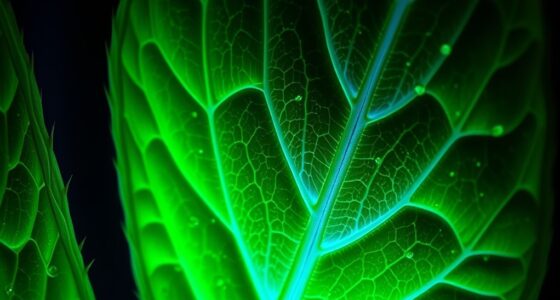
Plants see light through special molecules called light receptors, like phytochromes, cryptochromes, and phototropins. These receptors detect specific wavelengths such as red, blue, and far-red light, activating signals that influence how your plants grow. They control processes like seed germination, stem elongation, and leaf development, helping plants adapt efficiently. If you want to discover more about how plants interpret and respond to their light environment, keep exploring these fascinating mechanisms.
Key Takeaways
- Plants detect light through specialized receptors called phytochromes, cryptochromes, and phototropins.
- Phytochromes respond mainly to red and far-red light, triggering developmental changes.
- Cryptochromes and phototropins sense blue light, influencing growth, flowering, and orientation.
- Light receptors activate signaling pathways that regulate seed germination, stem elongation, and leaf expansion.
- These mechanisms enable plants to interpret environmental light cues and adapt their growth accordingly.
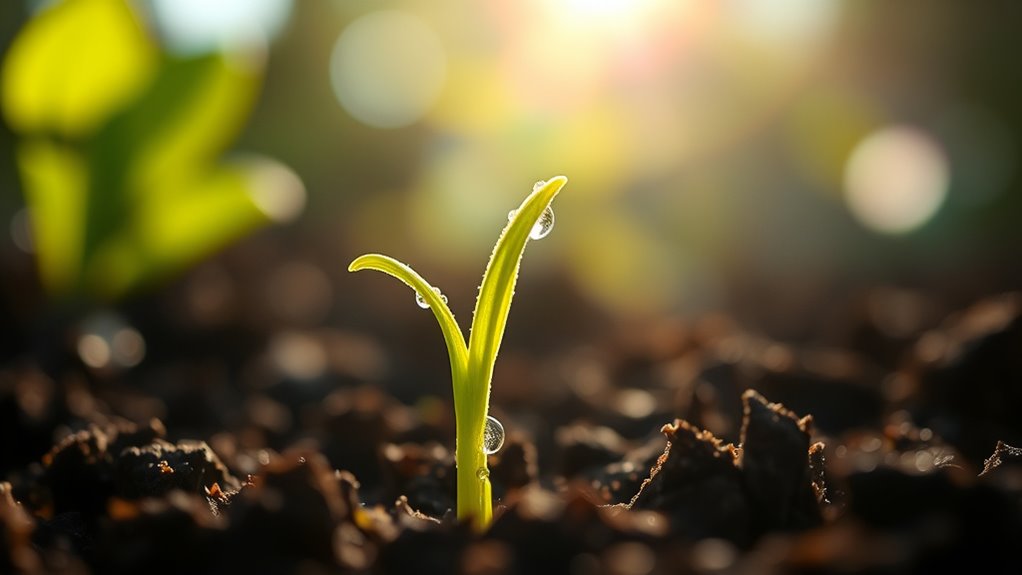
Photomorphogenesis is the process by which plants develop and change in response to light signals. As you observe a seedling breaking through the soil, it’s because your plant is actively sensing and responding to light cues. This process relies on specialized molecules known as light receptors, which detect different wavelengths of light and trigger a cascade of developmental regulation. These receptors are like the plant’s sensory organs, allowing it to interpret its environment and adjust growth accordingly.
When light hits a plant, the light receptors—such as phytochromes, cryptochromes, and phototropins—become activated. Each type of receptor is tuned to specific parts of the light spectrum, enabling the plant to distinguish between sunlight, shade, or even night. For example, phytochromes respond mainly to red and far-red light, which helps your plant gauge whether it’s in full sun or under a canopy. Cryptochromes, on the other hand, are sensitive to blue light and influence processes like seedling growth and flowering. Phototropins detect blue light and guide the plant’s orientation toward the light source, optimizing photosynthesis.
Once these light receptors detect signals, they initiate a series of responses that regulate plant development. This developmental regulation includes seed germination, stem elongation, leaf expansion, and the formation of chloroplasts—key steps for establishing a healthy, photosynthetically capable plant. For instance, in low light conditions, your plant might elongate its stem to seek out more light, a response driven by the activation of specific light receptors and the subsequent signaling pathways. Conversely, in abundant light, your plant will focus on expanding its leaves and strengthening its structure.
Light receptors guide seed germination, stem growth, leaf expansion, and chloroplast formation for healthy plant development.
This light-dependent regulation is tightly controlled; it ensures your plant allocates resources efficiently, promoting growth when conditions are favorable and conserving energy when they aren’t. The process is rapid, allowing your plant to adapt quickly to changing light environments, whether it’s a shift in the sun’s position or passing clouds. This precise control of development through light perception is essential for the plant’s survival, health, and reproductive success.
In essence, your plant doesn’t just passively grow; it actively perceives and interprets light signals through its light receptors. This intricate sensing system enables it to adjust its growth patterns, optimize photosynthesis, and ensure it thrives in its environment. Without these mechanisms, plants wouldn’t be able to respond to their surroundings as effectively, highlighting the importance of light receptors in the broader process of photomorphogenesis and developmental regulation.
As an affiliate, we earn on qualifying purchases.
Frequently Asked Questions
How Do Plants Distinguish Different Light Wavelengths?
You can see that plants distinguish different light wavelengths through specialized photoreceptors that detect specific parts of the light spectrum. These photoreceptors, like phytochromes and cryptochromes, enable wavelength detection by absorbing particular wavelengths, such as red or blue light. When light hits these receptors, they trigger responses that influence growth and development, allowing plants to adapt to their environment effectively.
What Role Do Plant Photoreceptors Play in Light Sensing?
You might think plant photoreceptors just passively detect light, but they actively control growth through photoreceptor signaling. These specialized proteins sense specific light wavelengths and trigger light perception mechanisms that influence processes like seed germination and flowering. By investigating how these receptors work, you see they’re essential for plants to adapt to their environment. Without them, plants couldn’t respond properly to changing light conditions, impacting their survival and development.
Can Photomorphogenesis Be Manipulated for Agricultural Benefits?
Yes, you can manipulate photomorphogenesis for agricultural benefits through genetic modification. By altering plant photoreceptors, you can optimize crop traits like growth rate, flowering time, and stress tolerance. This targeted approach helps improve yields and resource efficiency. With careful manipulation, you’ll enable crops to adapt better to environmental conditions, ultimately enhancing agricultural productivity and sustainability.
How Does Light Influence Plant Flowering and Seed Germination?
You might think light just helps plants grow, but it actually controls flowering and seed germination too. Light-dependent flowering occurs when plants detect specific light cues, triggering them to bloom at the right time. Similarly, seed germination hinges on triggers like red or far-red light, signaling favorable conditions. By understanding these light influences, you can manipulate planting schedules and improve crop yields, ensuring healthier plants and better harvests.
Are There Environmental Factors That Affect Plant Light Perception?
You should know that environmental factors like light pollution and shade avoidance can affect how plants perceive light. Light pollution from artificial sources can disrupt their natural light cycles, impacting growth and flowering. Shade avoidance triggers plants to grow taller or change leaf orientation to reach better light, which influences their development. These factors can alter plant behavior, affecting overall health and reproductive success.
As an affiliate, we earn on qualifying purchases.
Conclusion
So, next time you complain about the sun’s rays bothering your picnic, remember—plants have been secretly spying on it for millions of years. They’ve mastered the art of “seeing” light and turning it into a beautiful, life-sustaining display. Maybe we should take a leaf out of their book — literally — and learn to interpret the signals around us instead of blindly chasing the dark. After all, plants seem to have the whole “light” thing figured out.
As an affiliate, we earn on qualifying purchases.
As an affiliate, we earn on qualifying purchases.