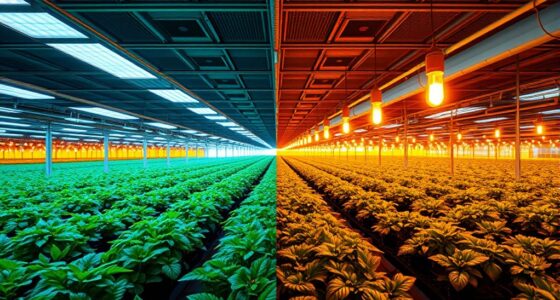
Using spectral filters in greenhouses allows you to control specific wavelengths of light that reach your plants, helping optimize growth, flowering, and health. You can select materials that block UV rays or infrared while transmitting targeted light spectrum efficiently. Durable filters withstand environmental factors, ensuring long-lasting performance. Properly chosen filters improve light quality, intensity, and distribution, reducing energy costs. Exploring different filter options lets you fine-tune your greenhouse environment for better yields—continue exploring to discover how to choose the best options for your crops.

Get the latest gadgets delivered free with Prime
- Fast, free delivery on millions of items
- Prime Video, Amazon Music and more included
- Member-only deals all year
Key Takeaways
- Spectral filters selectively transmit or block specific wavelengths, optimizing light conditions for plant growth and development.
- Material choice impacts the filter’s spectral transmission, durability, and environmental stability in greenhouse settings.
- Proper filter use can enhance plant health, improve productivity, and reduce energy costs by controlling light quality and intensity.
- Filters enable targeted light spectrum delivery, supporting crop-specific needs like vegetative growth or flowering.
- Easy integration and adjustable filter systems allow dynamic light management, adapting to changing crop requirements over time.
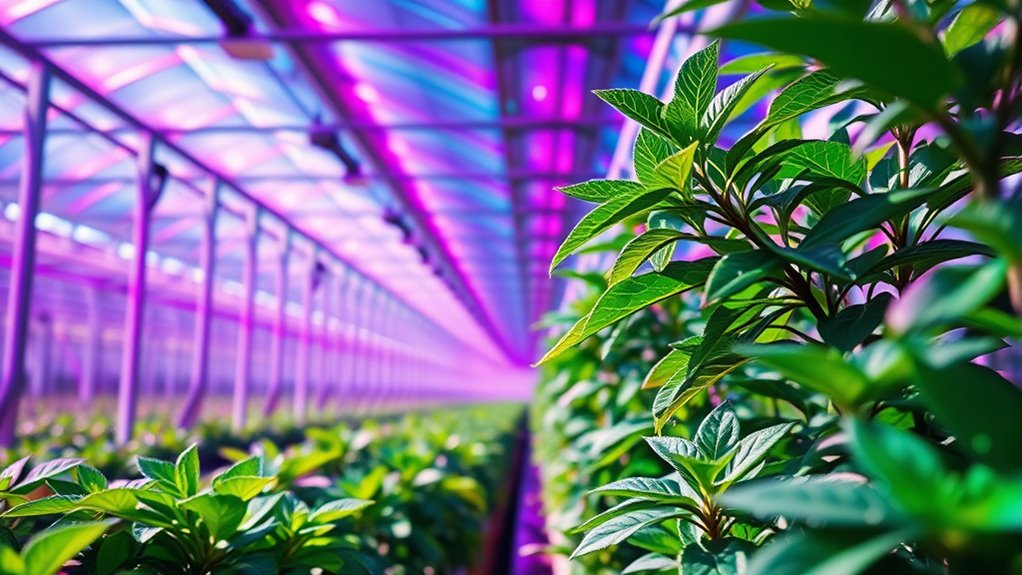
Spectral filters are transforming greenhouse cultivation by controlling the specific wavelengths of light that reach plants. When you implement spectral filters, you gain the ability to fine-tune the light spectrum that enters your greenhouse, enabling you to optimize plant growth conditions precisely. Light spectrum optimization becomes a central goal, as different crops respond uniquely to various wavelengths. For example, blue light promotes vegetative growth, while red light encourages flowering and fruiting. By selecting the right filters, you can enhance these responses, leading to healthier, more productive plants. The key to achieving this lies in careful filter material selection. Not all materials transmit or block light equally; some allow specific wavelengths to pass through while blocking others. Your choice of filter material directly influences the spectrum your plants receive, so understanding their spectral transmission properties is vital.
When choosing filter material, consider the spectral characteristics of the material itself. For instance, certain optical filters made from polymers or specialized glass can block UV rays or infrared light, which might otherwise cause damage or unnecessary heat buildup. Conversely, some materials are designed to transmit specific wavelengths with high efficiency, guaranteeing your plants get the exact light they need. You should also think about durability and environmental stability, as greenhouse conditions involve moisture, temperature fluctuations, and exposure to sunlight. Selecting a filter material that withstands these factors without degrading guarantees long-term performance and cost-effectiveness.
Moreover, the process of light spectrum optimization involves more than just blocking or passing specific wavelengths. You need to take into account how the filter will influence the overall light quality, intensity, and distribution inside your greenhouse. Proper filter material selection enables you to control these parameters, minimizing unwanted effects like excessive heat or light pollution. This targeted approach allows for better energy utilization, reducing reliance on supplemental lighting and lowering operational costs.
In addition, integrating spectral filters into your greenhouse system requires thoughtful planning. You might choose filters that can be easily adjusted or swapped out as your crop needs change or as you experiment with different light conditions. This flexibility ensures you can continually refine your light spectrum optimization strategy for maximum crop yield and quality. Ultimately, the success hinges on understanding your plants’ specific light requirements and selecting the right filter materials that can deliver those wavelengths effectively. By leveraging filter material selection, you can precisely tailor your greenhouse lighting for optimal plant health and productivity. When you master this aspect of greenhouse management, you unlock a new level of control over plant growth, making spectral filters an invaluable tool in modern horticulture.
spectral filters for greenhouses
As an affiliate, we earn on qualifying purchases.
As an affiliate, we earn on qualifying purchases.
Frequently Asked Questions
How Do Spectral Filters Impact Plant Disease Resistance?
Spectral filters enhance plant disease resistance by manipulating the light spectrum, which can boost plant immune responses and suppress plant pathogens. By selectively filtering specific wavelengths, you can promote healthy growth and reduce disease incidence. Light spectrum manipulation helps in plant pathogen suppression, making your greenhouse environment less hospitable for harmful microbes. This targeted approach supports stronger plants and healthier crops, ultimately improving yield and quality.
Can Spectral Filters Be Customized for Specific Plant Varieties?
Did you know that customizing spectral filters can boost plant growth by up to 20%? Yes, you can tailor spectral filters for specific plant varieties by adjusting their customization options to target plant-specific wavelengths. This precision allows you to optimize light conditions, enhancing photosynthesis and overall health. By selecting the right filter settings, you give your plants exactly what they need, making your greenhouse more efficient and productive.
What Is the Lifespan of Typical Spectral Filters in Greenhouses?
You can expect spectral filters in greenhouses to last about 5 to 10 years, depending on filter degradation and environmental factors. Regular maintenance schedules help extend their lifespan by checking for damage, dirt buildup, or fading. Proper cleaning and timely replacements ensure peak light transmission, supporting plant growth. Keep an eye on signs of wear, and follow manufacturer guidelines to maximize your filters’ longevity and maintain the best growing conditions.
Are Spectral Filters Cost-Effective for Small-Scale Greenhouse Operations?
Spectral filters can be cost-effective for small-scale greenhouses because they save space and boost plant productivity. You’ll want to do a detailed cost analysis, weighing initial material durability against long-term benefits. While upfront costs might seem steep, the durable filters last years, reducing replacement expenses. With careful calculation, spectral filters prove to be a savvy, sustainable solution that enhances growth while staying within your budget.
How Do Spectral Filters Influence Greenhouse Energy Efficiency?
Spectral filters can boost your greenhouse’s energy efficiency by optimizing light transmission, ensuring your plants get the right wavelengths without excess heat. They reduce the need for cooling and artificial lighting, saving energy costs. Look for filters with high durability, so they withstand environmental conditions over time without degrading. This combination helps you maintain ideal growing conditions efficiently while minimizing energy consumption and operational expenses.
As an affiliate, we earn on qualifying purchases.
Conclusion
So, after all this talk about spectral filters, it’s amusing to think that the real secret to thriving greenhouses isn’t some high-tech gadget, but simply understanding nature’s nuances. You might spend a fortune on filters, yet a little sunlight and common sense often do more than fancy equipment. Ironically, in the quest for perfection, sometimes the simplest solutions—like good airflow and proper watering—are the most effective. Who knew?
adjustable light spectrum filters
As an affiliate, we earn on qualifying purchases.
As an affiliate, we earn on qualifying purchases.
polymer optical filters for plants
As an affiliate, we earn on qualifying purchases.
As an affiliate, we earn on qualifying purchases.
Halloween Picks
halloween
As an affiliate, we earn on qualifying purchases.