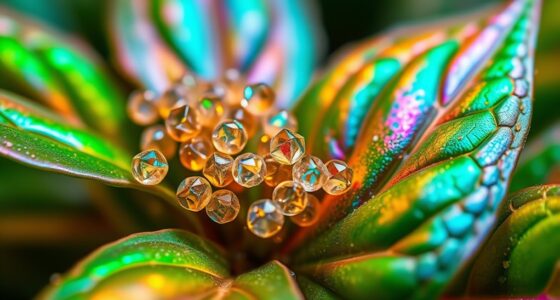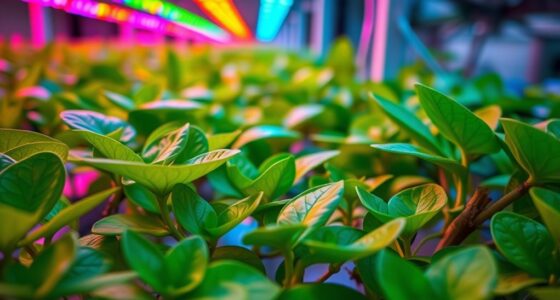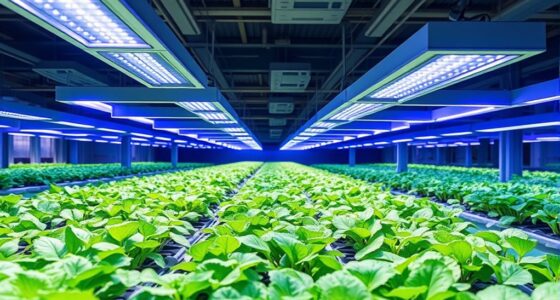
When your plants are exposed to UV light, they activate natural defense systems by turning on specific genes and producing protective compounds like flavonoids. These substances act as natural sunscreens, shielding your plants from UV damage and boosting resilience against environmental stresses. UV exposure also encourages the development of healthier, stronger plants that can better resist pests and diseases. Stay with us to discover how understanding this process can improve your plant care strategies.
Key Takeaways
- UV light triggers gene expression that activates plant defense pathways and produces protective compounds.
- UV exposure stimulates flavonoid biosynthesis, which absorbs UV rays and shields plant tissues.
- Flavonoids act as antioxidants, neutralizing free radicals generated by UV radiation.
- UV-induced defenses strengthen plant resilience against UV damage, pests, and environmental stresses.
- Controlled UV exposure enhances overall plant health by reinforcing natural protective mechanisms.

Ultraviolet (UV) light plays a essential role in activating and enhancing plant defense mechanisms. When your plants are exposed to UV radiation, it triggers a series of molecular responses that help them adapt and survive stressful conditions. One of the key responses is UV-induced gene expression, where specific genes are turned on or off in response to UV exposure. This process allows plants to produce protective compounds and reinforce their defenses against potential damage from UV rays and other environmental stresses. As you observe your plants under UV light, you’ll notice that they become more resilient, thanks to these genetic adjustments that bolster their overall health.
UV light activates plant defenses by triggering gene expression, boosting resilience and overall health.
A primary outcome of UV exposure is the stimulation of flavonoid biosynthesis. Flavonoids are a group of plant secondary metabolites that serve multiple protective functions. They act as natural sunscreens, absorbing harmful UV radiation and preventing it from penetrating deeper into plant tissues. By increasing flavonoid production, your plants create a chemical barrier that shields their essential cells from UV damage. This process is not random; it’s a finely tuned response driven by UV signals that activate specific genes involved in flavonoid biosynthesis pathways. These pathways involve enzymes that convert basic building blocks into complex flavonoid molecules, which then accumulate in the plant tissues, particularly in the epidermis and leaf surfaces. flavonoid biosynthesis is a crucial process that enhances plant resilience against UV stress.
As the flavonoid levels rise, your plants gain enhanced protection against oxidative stress—an inevitable consequence of UV exposure. Flavonoids also serve as antioxidants, neutralizing free radicals that can harm cellular components like DNA, proteins, and lipids. This antioxidant activity is indispensable for maintaining cellular integrity under UV stress. Furthermore, the increased flavonoid content can influence other defense mechanisms, such as attracting beneficial insects or deterring herbivores, contributing to a more exhaustive defense strategy.
Understanding how UV light influences gene expression and flavonoid biosynthesis empowers you as a gardener or researcher to optimize plant health. By controlling UV exposure, you can stimulate these natural defense pathways, promoting stronger, healthier plants capable of resisting pests, diseases, and environmental challenges. In essence, UV light isn’t just an environmental factor; it’s a critical signal that activates internal plant defenses, helping your plants adapt and thrive in their environment. Recognizing these processes allows you to harness UV light’s potential, ensuring your plants develop robust protective mechanisms naturally.

4K Time Lapse Camera Outdoor Construction Plant Weather Life, Manual Focus, IP66 Waterproof, 6 Month Battery Life, 32GB TF Card Included
【Upgrade to 4K Ultra HD】Our advanced mini time-lapse camera now captures sharper, more detailed footage than ever—perfect for...
As an affiliate, we earn on qualifying purchases.
Frequently Asked Questions
How Does UV Light Influence Plant Growth Rates?
UV light can enhance your plant’s growth rates by activating plant photoreceptors that regulate growth processes. When exposed, UV light triggers these photoreceptors, prompting your plants to produce more protective compounds and improve overall development. However, too much UV light may harm your plants, so finding the right balance is key. Proper exposure stimulates growth and strengthens your plants’ defenses, leading to healthier, more vigorous plants over time.
Can UV Exposure Damage Plants or Reduce Yield?
Yes, UV exposure can cause UV damage to plants, which may lead to reduced yield. Excessive UV rays can harm plant tissues, impair photosynthesis, and weaken overall health. You should monitor UV levels and shield sensitive crops with shading or UV filters when necessary. By managing UV exposure, you’ll help prevent yield reduction and ensure healthier plant growth, maximizing your harvest outcomes.
Are Certain Plant Species More Resilient to UV Radiation?
You might think only tough plants handle UV radiation, but surprisingly, some species excel due to their UV resistance. Their secret lies in plant adaptation, which enables them to thrive under intense sunlight. These resilient plants develop protective features like thicker leaves or specialized pigments. So, yes, certain plants are more resilient, turning what seems like vulnerability into a remarkable example of nature’s clever plant adaptation.
How Do Plants Repair Uv-Induced Cellular Damage?
You can repair UV-induced cellular damage through DNA repair mechanisms, which identify and fix damaged DNA strands, restoring normal function. Additionally, you activate antioxidant responses that neutralize harmful reactive oxygen species generated by UV exposure. These processes work together to protect your plant cells from lasting harm, ensuring they recover efficiently and maintain health despite UV stress.
What Role Does UV Light Play in Plant-Microbe Interactions?
Ever wonder how UV light influences plant-microbe interactions? It plays a vital role in UV signaling, helping plants detect and respond to microbial presence. UV exposure can stimulate plants to produce defense compounds, shaping microbial adaptation and community structure. This dynamic exchange enhances plant resilience against pathogens and fosters beneficial relationships, demonstrating that UV light isn’t just harmful but also essential in modulating these complex interactions.

Time Lapse Camera, Rechargeable Outdoor Timelapse Camera, Up to 180 Days Standby Battery, IP66 Water-Resistant, for Construction, Weather, Plant Growth, Vlog Recording, 32GB SD Card Included
1080P Clarity & Built-in Flash:Equipped with an advanced chip, starlight lens, and 1/2.7” CMOS sensor, this outdoor time...
As an affiliate, we earn on qualifying purchases.
Conclusion
You’ve learned that UV light triggers plant defense mechanisms, helping them resist pests and diseases. Notably, studies show that plants exposed to UV-B radiation can increase their production of protective compounds by up to 50%. This highlights how UV light isn’t just harmful but also crucial for activating natural defenses. So, next time you see sunlight, remember it’s not just essential for growth—it’s also a powerful signal that keeps plants healthy and resilient.
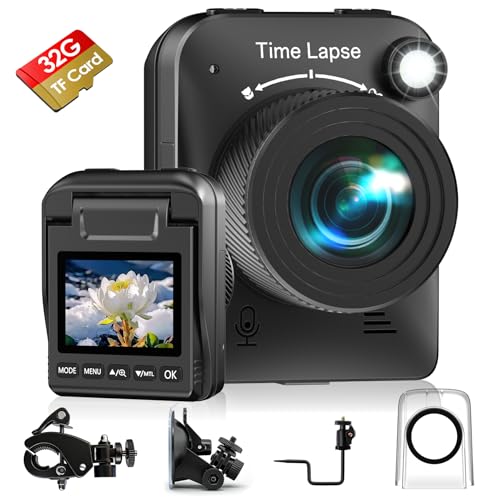
Time Lapse Camera, 4K Timelapse Outdoor Construction Camera with 3 Mount, Waterproof Housing, SD Card for Construction Sites, House Building, Plant Growth
【Powerful 4K】 Timelapse camera 4k equipped with advanced chip & fill light can capture images clearly even in...
As an affiliate, we earn on qualifying purchases.

ATLI 1080P Time Lapse Camera FHD APP Control Timelapse Video Camera Remote Access with Memory Card for Indoor Flower Plants Weather Cooking Artist (Red)
✅ Automatic Time-lapse Video Creation: ATLI time lapse camera allows you to effortlessly create time lapse videos without...
As an affiliate, we earn on qualifying purchases.