To decode light bulb labels like a pro, start by checking the Kelvin (K) temperature for color: lower values (2700K) give warm, yellowish light ideal for cozy spaces, while higher (5000K) produce cool, bluish tones suited for work areas. Look at lumens for brightness, not wattage. Pay attention to socket types, symbol cues, and energy efficiency marks. Mastering these details helps you pick the perfect bulb. If you keep exploring, you’ll discover even more ways to optimize your lighting choices.
Key Takeaways
- Kelvin measures the color temperature of light, with warm tones around 2700K and cool tones near 5000K, influencing ambiance.
- Color labels (yellow for warm, blue for cool) and symbols like ENERGY STAR indicate light quality and energy efficiency.
- Understanding lumens (brightness) versus wattage helps select bulbs that are both bright and energy-efficient.
- Different bulb bases (E26, G9, GU10) and adapters ensure compatibility with various fixtures and allow customization.
- Reading labels carefully ensures optimal lighting for space function, mood, and energy savings.
Understanding Color Temperature and Kelvin Scale
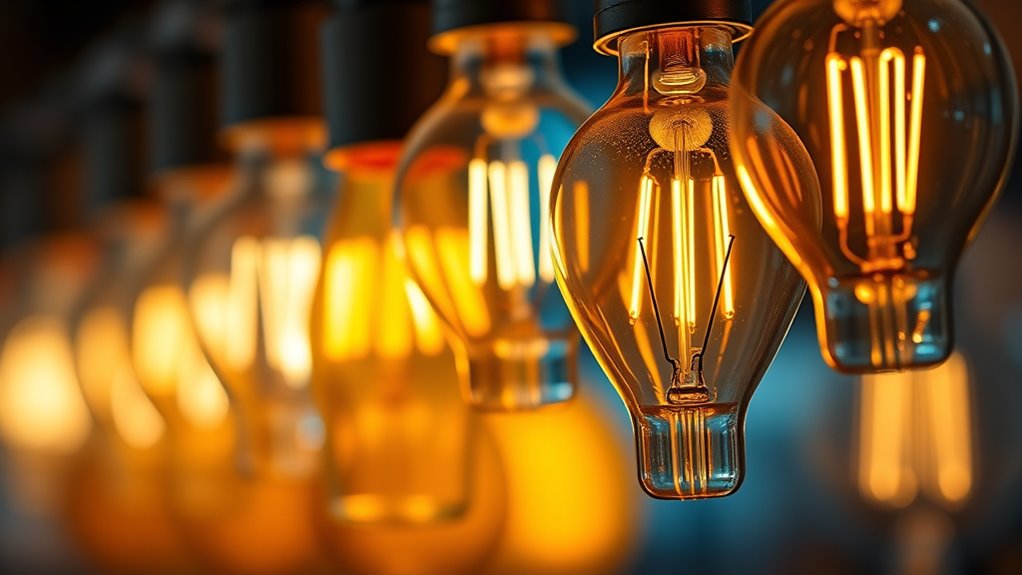
Have you ever wondered why some lights appear warm and cozy while others seem cool and clinical? It all comes down to color temperature, measured in Kelvin. Lower Kelvin values, like 2700K, produce warm, yellowish light that creates a comfortable atmosphere. Higher Kelvin ratings, such as 5000K, emit a cooler, bluish light that feels more energetic. Understanding the Kelvin scale helps you choose bulbs that improve color rendering—the ability to see true colors—and enhance visual comfort. When selecting lighting, consider the environment: cozy spaces benefit from warmer tones, while work areas demand cooler, more stimulating light. By grasping how Kelvin influences light quality, you can create an inviting or functional ambiance that suits your needs perfectly. Additionally, knowing about lighting specifications can help you better understand how different bulbs impact your space.
How Wattage Affects Brightness and Energy Use

Wattage directly influences both the brightness of a light bulb and how much energy it consumes. When doing a wattage comparison, you’ll notice that higher wattage bulbs generally produce more light, but they also use more energy. For example, a 60-watt bulb is brighter than a 40-watt bulb, but it consumes more electricity. However, wattage isn’t the only factor in brightness; energy efficiency plays a key role. Modern LED bulbs, for instance, provide the same brightness as traditional bulbs at a much lower wattage, making them more energy-efficient. Choosing bulbs with lower wattage but high energy efficiency can save you money on electricity bills without sacrificing brightness. Always consider both wattage and energy efficiency to select the best bulb for your needs. Additionally, understanding optimal angles for pinball machines can help maximize gameplay performance and longevity.
Lumens: The True Measure of Light Output

While wattage indicates how much energy a bulb uses, it doesn’t directly reveal how bright the light will appear. That’s where lumens come in—they measure the actual light output. Higher lumens mean brighter illumination, helping you choose the right bulb for your needs. For instance, a 60-watt incandescent produces about 800 lumens, while energy-efficient LEDs can do the same with fewer watts. Keep in mind, bulbs with higher lumens can contribute to light pollution if used outdoors unnecessarily, impacting your bulb lifespan and the environment. Here’s a quick comparison:
| Brightness | Typical Usage |
|---|---|
| 450 lumens | Bedroom, living room |
| 800 lumens | Kitchen, home office |
| 1600 lumens | Outdoor security lighting |
Interpreting Color Symbols and Labels on Bulb Packaging

When you look at bulb packaging, color codes and label symbols help you understand the light quality and purpose. Recognizing these symbols makes it easier to choose the right bulb for your space. Let’s explore how to interpret these markings effectively. Additionally, understanding the different light bulb labels can assist in selecting energy-efficient options that suit your needs.
Understanding Color Codes
Understanding color codes on bulb packaging helps you quickly identify the bulb’s key features, such as brightness, color temperature, and energy efficiency. Manufacturers use specific color coding and label symbols to convey this information at a glance. For example, a yellow label might indicate warm light, while blue suggests cool light. These color codes streamline your selection process, saving time and reducing confusion. Here’s a quick guide:
| Color Code | Feature | Typical Use |
|---|---|---|
| Red | High Energy Efficiency | Long-lasting bulbs |
| Green | Eco-Friendly | Environment-conscious |
| Blue | Cool White Light | Workspaces, task lighting |
Additionally, understanding lighting terminology can help you choose the right bulb for your space and needs.
Recognizing Label Symbols
Have you ever noticed the various symbols and color markings on bulb packaging and wondered what they mean? Recognizing these symbols helps you choose the right bulb for your needs. Look for icons indicating energy efficiency, such as a leaf or “ENERGY STAR” badge, signaling lower electricity use. Lifespan indicators, often represented by a clock or hourglass, show how long the bulb lasts before needing replacement. Color-coded labels can reveal color temperatures, like warm white or daylight. Additional symbols might include voltage ratings, dimmability, or compatibility with fixtures. These symbols quickly communicate important features, saving you time and ensuring you select a bulb suited for your space. Understanding these labels empowers you to make smarter, more informed choices for your lighting needs. Cookie management options also enhance your browsing experience by allowing you to customize your preferences.
Types of Light Bulb Bases and Fittings

Understanding the different types of light bulb bases and fittings helps you choose the right bulb for your fixtures. You’ll find common socket types, base size variations, and specialty fittings that require adapters. Knowing these options guarantees your bulbs fit securely and work safely in any setup. Additionally, selecting appropriate lighting accessories can enhance the safety and efficiency of your lighting system.
Common Socket Types
There are several common socket types used for light bulbs, each designed to fit specific fixtures and provide ideal electrical contact. Choosing the right socket guarantees socket compatibility and proper fixture matching. Visualize these types:
- Edison Screw (E26/E27): The standard for most household bulbs, fitting into screw-in sockets.
- Bayonet Cap (BC): Twisted into place, common in Europe and outdoor fixtures.
- GU10: Twist-lock base for spotlights and track lighting.
- GU24: Push-in base used in energy-efficient fixtures.
- Bi-pin (G4, G5.3): Small pins fitting into delicate or specialty fixtures.
- Understanding socket standards is essential for ensuring safety and proper installation.
Understanding these types helps you select the correct socket for your bulb, preventing mismatches and ensuring safe, reliable lighting.
Base Size Variations
Different light bulbs come with various base sizes and fittings to match specific fixtures, guaranteeing compatibility and proper function. The base size refers to the diameter of the bulb’s bottom, like the common E26 or E12 bases. The base shape also matters; some bases are screw-in types, while others are pin-based or bayonet fittings. For example, standard household bulbs typically use an E26 or E27 base, which are similar but differ slightly in size depending on your region. Specialty fixtures may require smaller or larger base sizes, such as G4 or G9 bases. Knowing your bulb’s base size and shape helps you select the right replacement, avoid mismatches, and ensure your fixture works safely and efficiently. Always check the base specifications when shopping for bulbs. Additionally, understanding light bulb bases can help you choose the most energy-efficient and long-lasting options for your needs.
Specialty Fittings and Adapters
Are you aware that specialty light bulb bases and adapters can enhance your lighting options by fitting fixtures that standard bulbs can’t? These specialty fittings, adapters, and converters let you use different bulb types in unconventional sockets, expanding your choices. Imagine:
- Converting a candelabra base into a standard screw socket
- Using adapters to connect bulbs for vintage or decorative fixtures
- Customizing lighting with specialized connectors for unique fixtures
- Transitioning from one base type to another without rewiring
- Enhancing compatibility between LED, halogen, or incandescent bulbs
- Understanding cookie preferences can help you manage your online privacy while exploring various lighting options. These tools are perfect for DIY projects or upgrading existing fixtures. By understanding and utilizing specialty fittings, you can ensure your bulbs fit securely and work efficiently, giving you more control over your lighting setup.
Comparing Incandescent, LED, and CFL Bulbs
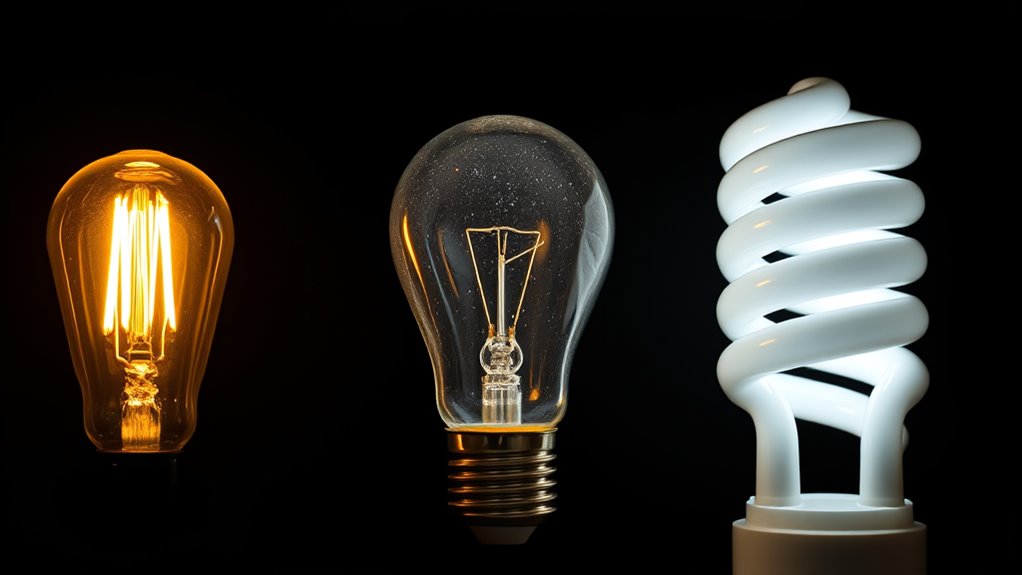
Have you ever wondered how incandescent, LED, and CFL bulbs compare regarding efficiency and lifespan? Incandescent bulbs are less efficient and have a shorter bulb lifespan, typically around 1,000 hours. They often lack dimming compatibility with modern dimmers. CFL bulbs use less energy and last about 8,000 to 10,000 hours, but some struggle with dimming compatibility and contain mercury, requiring careful disposal. LED bulbs are the most efficient, lasting up to 25,000 hours, and generally offer excellent dimming compatibility. They consume less power for the same brightness and are more durable. If you’re looking for longevity and energy savings, LEDs are your best bet. Consider your needs for dimming and lifespan when choosing between these options to make an informed decision.
Tips for Choosing the Right Bulb for Different Spaces

Choosing the right bulb for a space depends on how you’ll use that area and what you need it to do. Consider the function, ambiance, and compatibility with your fixtures. For instance, if you want adjustable lighting, look for bulbs with dimming compatibility to set the mood. In bedrooms or living rooms, warm color temperatures create coziness, while cooler tones suit workspaces. If you want convenience, opt for smart bulb features like remote control or scheduling. Visualize your space:
Choose bulbs that match your space’s function, ambiance, and smart features for optimal performance and comfort.
- A cozy reading nook with warm, dimmable bulbs
- A bright, energizing kitchen with cool white LEDs
- A calming bedroom with adjustable smart bulbs
- A high-traffic hallway with long-lasting, energy-efficient bulbs
- A modern living room with color-changing smart bulbs
Matching the bulb to your space ensures paramount performance and atmosphere.
Common Mistakes to Avoid When Reading Light Bulb Labels

Reading light bulb labels correctly can make a big difference in ensuring your lighting choices meet your needs. One common mistake is overlooking the importance of energy efficiency ratings, which help you choose bulbs that save money and reduce environmental impact. Another mistake is ignoring lifespan indicators, leading you to buy bulbs that burn out too quickly or last longer than expected. Don’t assume wattage alone tells the full story; check the lumens for brightness and the labels for energy consumption. Also, avoid misreading Kelvin temperature values, which affect color appearance. By paying close attention to these details, you prevent purchasing bulbs that don’t match your space or budget, ensuring your lighting is both effective and efficient.
Frequently Asked Questions
How Does Kelvin Temperature Affect the Ambiance of a Room?
The color temperature of your light bulbs directly affects your room’s atmosphere. Cooler Kelvin temperatures (above 5000K) emit a bluish light, creating a bright, energetic vibe perfect for workspaces. Warmer temperatures (around 2700K) produce a yellowish glow, making your space feel cozy and inviting. By choosing the right Kelvin temperature, you set the mood and ambiance, influencing how comfortable and welcoming your room feels.
Can Bulb Labels Indicate Lifespan or Durability?
Bright bulbs boast better durability, but labels often lack clear clues about light bulb longevity. You should scrutinize durability indicators like rated hours or lifespan estimates, which hint at how long your bulb will last. While some labels mention durability, many don’t, so it’s wise to research brands or reviews for insights. Ultimately, understanding these indicators helps you choose bulbs that last longer, saving time and money.
Are There Safety Tips for Reading Light Bulb Labels?
When reading light bulb labels, safety precautions are essential. Always handle bulbs carefully to avoid breakage, and turn off the power before changing them. Use proper tools if needed, and interpret labels carefully to understand wattage, voltage, and safety ratings. This helps prevent electrical hazards and guarantees proper installation. Remember, clear label interpretation keeps you safe while choosing the right bulb for your needs.
How Do I Convert Kelvin to Fahrenheit or Celsius?
To convert Kelvin to Fahrenheit or Celsius, start with the color temperature you see on the bulb label. For Celsius, subtract 273.15 from the Kelvin value. For Fahrenheit, first convert Kelvin to Celsius, then multiply by 9/5 and add 32. Remember, this temperature conversion helps you understand the warmth or coolness of light, making it easier to choose bulbs that match your desired ambiance or lighting needs.
Do Different Brands Have Standardized Labeling Practices?
You might wonder if different brands follow consistent labeling standards. While some brands aim for brand consistency, labeling practices can vary widely due to different standards or regional regulations. This means you may see slight differences in how temperature or wattage info is displayed. Always check the label carefully, regardless of the brand, to guarantee you’re getting the correct bulb for your needs.
Conclusion
By mastering light bulb labels, you’ll naturally select the perfect bulbs for your space, often discovering that understanding these details reveals more about your preferences than you expected. As you decode color temperatures or compare lumens, it’s like uncovering a hidden language that makes your choices feel intuitive. Sometimes, it’s in these small details that you find a surprising harmony—light, energy, and ambiance aligning effortlessly, just as you’d hoped without even realizing it.