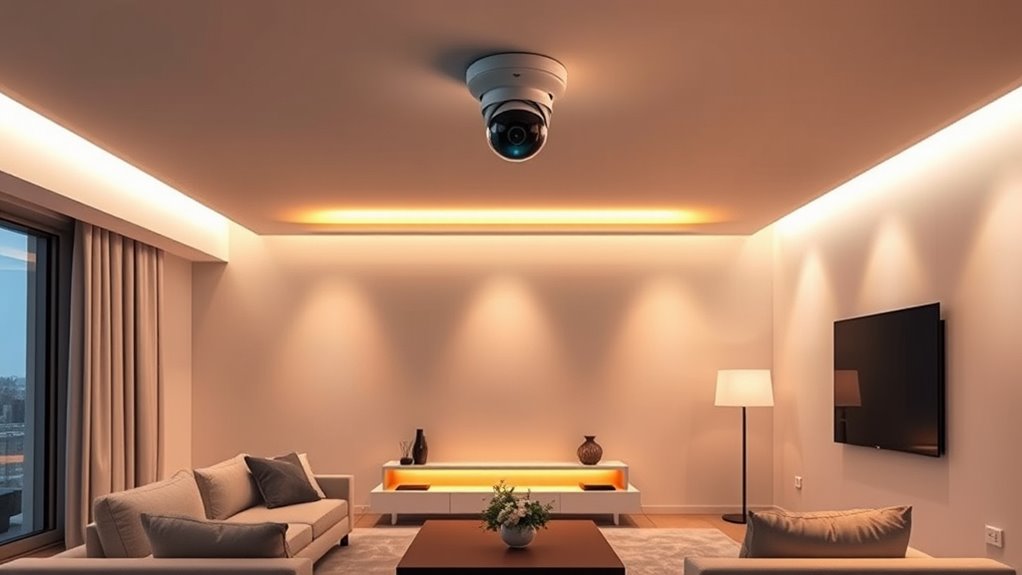

Integrating smart lighting with security systems allows you to automate lights based on motion detection, making your home safer and more energy-efficient. When motion sensors detect activity, lights turn on or adjust, deterring intruders and saving electricity. You can customize lighting schedules and control everything remotely via your smartphone. This seamless integration enhances safety, convenience, and sustainability. Keep exploring to discover how to set up and optimize these intelligent systems for your home.
Key Takeaways
- Combine motion sensors with smart lighting to automatically illuminate areas upon detecting movement for enhanced security and convenience.
- Use automation to program lights to turn on at specific times or in response to security events, increasing energy efficiency.
- Enable remote monitoring and control via mobile devices for real-time updates and adjustments to lighting and security settings.
- Set customized lighting scenarios around the property to deter intruders and simulate occupancy when away.
- Integrate security alerts with lighting responses to create a comprehensive, responsive home security system.
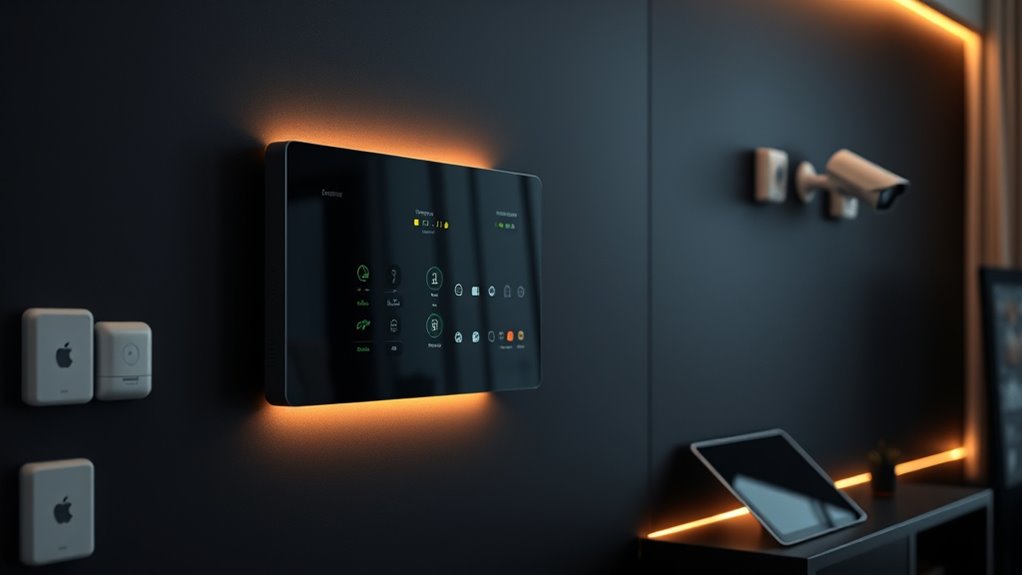
Smart lighting and security systems are increasingly working together to enhance home safety and convenience. When you integrate these technologies, you create a smart environment that reacts dynamically to your daily routines, making your home safer and more efficient. One of the fundamental ways this integration works is through motion sensors, which are vital in both security and energy management. Motion sensors detect movement in a designated area, triggering lights to turn on automatically when someone enters a room or approaches your property. This not only deters potential intruders by giving the impression that someone’s home but also guarantees you don’t have to fumble for switches in the dark. As a result, your home becomes more secure and accessible.
Motion sensors enhance security and energy efficiency by automatically activating lights when movement is detected.
Beyond security, motion sensors play a vital role in energy efficiency. When integrated with smart lighting, they help reduce unnecessary energy consumption by ensuring lights are only on when needed. For instance, if no motion is detected in a room for a certain period, the lights automatically turn off, saving electricity and reducing your utility bills. This seamless automation means you don’t have to worry about leaving lights on by mistake, and you gain peace of mind knowing your home is using energy wisely. Plus, the system can be programmed to adjust based on your habits—dimming lights or turning them off during certain hours, further enhancing energy savings. Additionally, data from regional divorce statistics can inform homeowners about the importance of home security during transitional times.
By connecting smart lighting with security systems, you also gain the ability to customize lighting scenarios for different situations. For example, you can set your porch lights to turn on at dusk and off at dawn, or program specific motion zones around your property for enhanced security. When someone approaches, the lights can brighten gradually, providing a welcoming glow while also alerting you to activity outside. This not only boosts your home’s safety but adds a layer of convenience, especially during nighttime or when you’re away. Smart security and lighting systems can also sync with your mobile device, allowing you to monitor and control lighting remotely, giving you peace of mind wherever you are.
In essence, integrating smart lighting with security systems offers a balanced mix of safety, convenience, and energy efficiency. Motion sensors act as the backbone of this synergy, detecting activity and triggering appropriate responses that protect your home and save energy. With this setup, you turn your house into a responsive, efficient, and secure space—making everyday living simpler and more secure.

Under Cabinet Lighting, 14.7" Rechargeable Motion Sensor Light Indoor, 2 Pack Magnetic Dimmable Closet Lights, Wireless Under Counter Lights for Kitchen, Stairs,Hallway
Upgraded Motion Sensor Under Cabinet Lights: Setting the under cabinet lights on motion sensor mode, they auto-on when…
As an affiliate, we earn on qualifying purchases.
As an affiliate, we earn on qualifying purchases.
Frequently Asked Questions
Can Smart Lighting Reduce Overall Home Security Costs?
Yes, smart lighting automation can reduce your home security costs. By using security integration, your lights can automatically turn on when you’re away, simulating occupancy and deterring intruders. This reduces the need for costly security cameras or patrols. Plus, smart lighting systems are energy-efficient, lowering your utility bills. You save money while enhancing security, making your home safer and more affordable to maintain.
How Do Smart Lights Interact With Existing Security Cameras?
Smart lights interact seamlessly with your security cameras by utilizing motion detection, alerting you instantly when movement occurs. For example, when your camera detects motion, your smart lights can turn on remotely, illuminating dark areas and deterring intruders. You can control these interactions through remote control apps, ensuring you stay connected and in charge no matter where you are. This integration enhances your home’s security, making it smarter and more responsive.
Are Smart Lighting Systems Vulnerable to Hacking?
Smart lighting systems can be vulnerable to hacking due to Wi-Fi vulnerabilities, which hackers exploit to gain access. To protect yourself, make sure your smart lights have regular firmware updates, as these patch security flaws. Use strong, unique passwords and secure your Wi-Fi network with encryption. By staying vigilant and updating your devices, you reduce the risk of hacking and keep your smart lighting system safe.
What Are the Best Brands for Integrated Smart Lighting and Security?
Think of choosing brands like selecting a sturdy bridge for your home; you want reliability. For integrated smart lighting and security, brands like Ring, Philips Hue, and Samsung SmartThings stand out. They offer excellent brand compatibility and user interfaces that are intuitive, like a well-lit path. These brands seamlessly connect your lighting and security, making your smart home both safe and easy to manage, like a trusted friend watching over you.
How Does Smart Lighting Impact Energy Consumption During Security Events?
Smart lighting can reduce energy consumption during security events by using motion detection to activate only when needed. When movement is detected, lights turn on immediately, then dim or turn off after a set period of inactivity. This targeted approach enhances energy efficiency, ensuring lights aren’t left on unnecessarily. As a result, you save energy and lower utility bills while maintaining effective security, making your system both smart and eco-friendly.

WiFi Door Alarm System, Wireless DIY Smart Home Security System, with Phone APP Alert, 8 Pieces-Kit (Alarm Siren, Door Window Sensor, Remote), Work with Alexa, for House, Apartment, by tolviviov
WIFI Network: WIFI connection, Only works on 2.4GHz WiFi network, does NOT support 5GHz WiFi networks.
As an affiliate, we earn on qualifying purchases.
As an affiliate, we earn on qualifying purchases.
Conclusion
By integrating smart lighting with your security system, you boost both safety and convenience. Did you know that homes with smart security lighting see a 20% reduction in break-ins? When you sync your lights to detect motion or set schedules, you create an unpredictable environment for intruders while enjoying effortless control. Embrace this smart combo to protect your home and make everyday living easier—you’ll be surprised how simple security can be.

Tuffenough Solar Outdoor Lights 2500LM 210 LED Security Lights with Remote Control,3 Heads Motion Sensor Lights, IP65 Waterproof,270° Wide Angle Flood Wall Lights with 3 Modes(2 Packs)
【Remote Control & 3 Lighting Modes】:Each solar motion sensor light is equipped with wireless remote control.You can choose…
As an affiliate, we earn on qualifying purchases.
As an affiliate, we earn on qualifying purchases.

BTF-LIGHTING 5in1 WB5 2.4GHz Tuya WiFi PWM LED Controller Compatible with Alexa/Google Home/Smart Life/Tuya Smart APP Control for Dimming CCT RGB RGBW RGBCCT LED Strip Work with WR01RF WR02RF etc
【5 in 1 Tuya WiFi PWM Controller】WB5=C01W+C02W+C03W+C04W+C05W. C01W=Single Color, C02W=CCT(Dual White), C03W=RGB, C04W=RGBW, C05W=RGB+CCT. This Controller supports PWM…
As an affiliate, we earn on qualifying purchases.
As an affiliate, we earn on qualifying purchases.