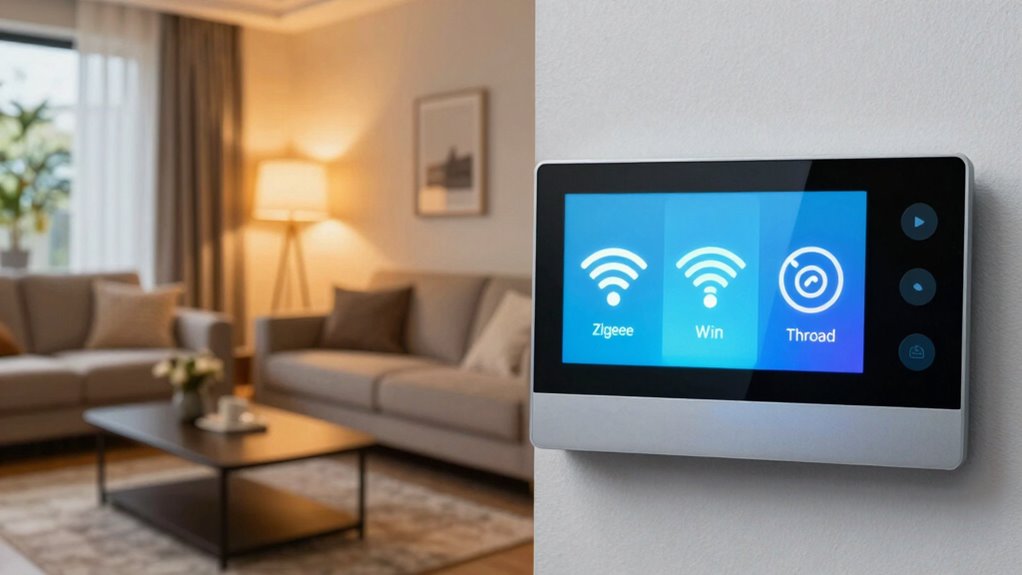

If you’re choosing between Zigbee, Wi-Fi, and Thread for smart lighting, consider your needs for range, power, and compatibility. Zigbee offers energy efficiency and strong mesh networking, perfect for extensive coverage. Wi-Fi provides high-speed connectivity and easy setup but consumes more power. Thread balances security, low latency, and reliable mesh connections, ideal for integrated smart homes. Want a clearer picture of which protocol suits your setup? Keep exploring to find the best fit.

Get the latest gadgets delivered free — and shop member deals
- Fast, free delivery on millions of items
- Access to Prime Big Deal Days deals on October 6–7
- Prime Video, Amazon Music and more included
Key Takeaways
- Zigbee offers low power consumption, strong mesh networking, and reliable coverage, ideal for energy-efficient smart lighting over large areas.
- Wi-Fi provides high-speed, straightforward setup, suitable for bandwidth-intensive smart lighting features like remote control and streaming.
- Thread emphasizes secure, low-latency mesh connections, making it a good choice for scalable, future-proof smart lighting ecosystems.
- Cost and infrastructure needs vary, with Zigbee and Thread requiring hubs, while Wi-Fi devices typically connect directly to existing networks.
- Compatibility and ecosystem support influence ease of integration, device selection, and long-term reliability for smart lighting systems.
As an affiliate, we earn on qualifying purchases.
What Are Zigbee, Wi-Fi, and Thread?
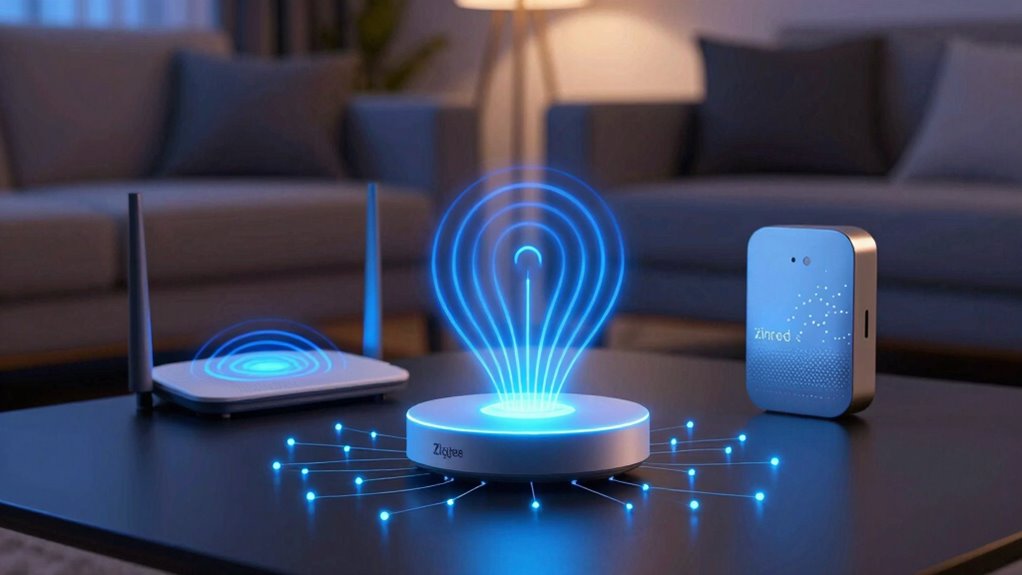
Ever wondered how smart home devices communicate seamlessly? It all comes down to the protocols they use, like Zigbee, Wi-Fi, and Thread. Zigbee specializes in low-power device integration, creating a reliable mesh network that connects your smart lights, sensors, and switches efficiently. Wi-Fi, on the other hand, offers high-speed connectivity familiar to most users, making device setup straightforward through a user interface you already know. Thread focuses on secure, low-latency connections tailored for smart homes, allowing devices to communicate directly without relying heavily on a central hub. Each protocol impacts how your devices interact and how simple it is to manage them. Understanding these differences helps you choose the right technology for a seamless, user-friendly smart home experience. Additionally, a protocol like Zigbee’s mesh networking can enhance the connectivity of multiple devices without overwhelming your bandwidth. As you explore new frontiers in digital content, consider how these protocols can redefine your smart home landscape.
As an affiliate, we earn on qualifying purchases.
How Do These Protocols Differ in Performance?

When comparing network speed and latency, you’ll notice Zigbee and Thread prioritize low power over speed, while Wi-Fi offers faster data transfer. Reliability and stability also differ: Wi-Fi can handle more traffic but may experience interference, whereas Zigbee and Thread are designed for consistent, low-interference connections. Understanding these differences helps you choose the right protocol for your specific performance needs. Additionally, smart thermostat setup can improve your home’s energy efficiency, making it essential to consider your overall tech ecosystem. Furthermore, creative AI applications can enhance the functionality of these smart devices, making it essential to consider your overall tech ecosystem. Proper door swings and layout can also enhance the effectiveness of your smart home devices, making it essential to consider your overall tech ecosystem.
Network Speed and Latency
Understanding how Zigbee, Wi‑Fi, and Thread differ in performance begins with their network speed and latency. Wi‑Fi offers the highest bandwidth, supporting rapid data transfer suitable for streaming or large file updates, but it has higher latency, which can delay responses in smart lighting systems. Zigbee and Thread prioritize low latency for quick command execution, making them ideal for real-time control. When it comes to bandwidth requirements, Zigbee and Thread are more efficient, handling simple commands with less data, but they may struggle with high data loads. Interference resilience varies: Zigbee operates on the 2.4 GHz band, prone to congestion, while Thread uses similar frequencies but employs mesh networks to enhance stability. Wi‑Fi’s broader channels can reduce interference impacts but may still be affected in crowded environments.
Reliability and Stability
Reliability and stability are critical factors that profoundly influence the performance of Zigbee, Wi-Fi, and Thread in smart home networks. Interference issues can considerably impact signal stability, causing disconnections or inconsistent operation. Wi-Fi, especially in crowded environments, often faces interference from other devices like Bluetooth or microwaves, leading to signal drops and reduced dependability. Zigbee, operating on the 2.4 GHz band, benefits from mesh networking, which enhances stability by rerouting signals around obstacles or interference sources. Thread also uses mesh technology, providing strong reliability in complex setups. Overall, Zigbee and Thread typically offer greater stability in interference-prone environments, while Wi-Fi’s performance may fluctuate under heavy network congestion. Your choice depends on your network’s environment and stability needs. Additionally, maintaining good piercing care and hygiene can help ensure optimal performance in various settings.
Thread compatible smart home devices
As an affiliate, we earn on qualifying purchases.
As an affiliate, we earn on qualifying purchases.
Which Protocol Offers Better Range and Reliability?
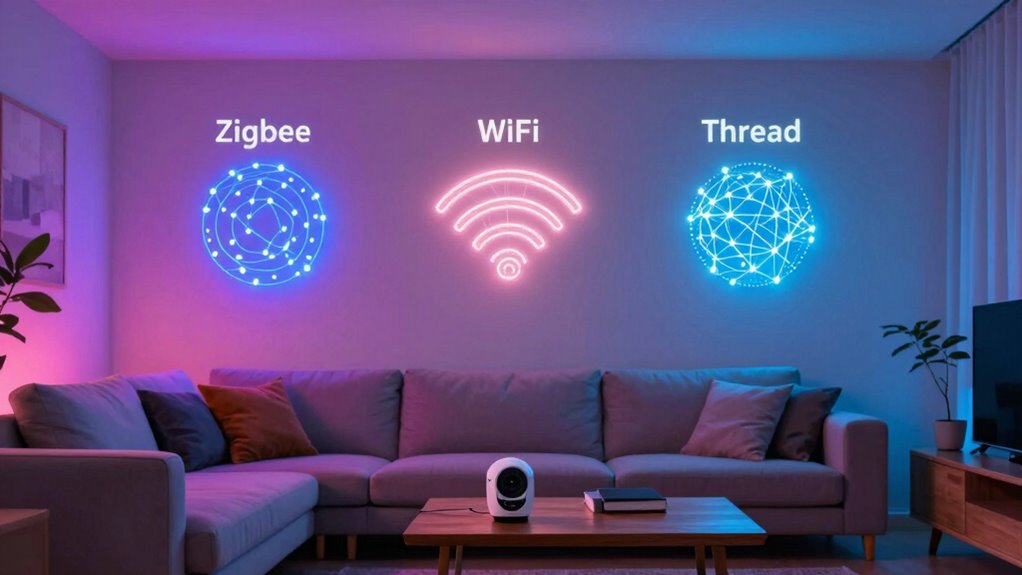
Have you ever wondered which protocol delivers the best range and dependability for your smart home devices? Zigbee typically offers solid signal penetration, allowing it to pass through walls and obstacles better than Wi-Fi, which can struggle with interference issues in crowded networks. Thread also provides reliable communication with a mesh network design, extending its reach and maintaining stability even when some nodes go offline. Wi-Fi generally has the shortest effective range and can be affected by interference from other wireless devices, impacting its reliability. If you need a solution with consistent coverage and fewer interference issues, Zigbee and Thread often outperform Wi-Fi. Their mesh capabilities help maintain a stable connection across larger areas, making them better choices for dependable, long-range smart lighting control. Additionally, advancements in nanotech fabrication are opening new avenues for improving the efficiency and performance of these communication protocols, especially in areas related to art and culture integration. Understanding smart home integration can also be crucial in selecting the right technology for your smart home, as effective solutions enhance user satisfaction and longevity. Engaging in toddler social skills development can also benefit families by fostering a more connected home environment.
As an affiliate, we earn on qualifying purchases.
How Do Power Consumption and Energy Efficiency Compare?

When comparing power consumption and energy efficiency among Zigbee, Wi-Fi, and Thread, Zigbee typically stands out as the most energy-efficient option. Its low power requirements support better energy savings, making it ideal for battery-powered smart lighting. Zigbee’s efficient power management allows devices to stay connected with minimal energy drain, extending battery life and reducing overall energy use. Additionally, effective automation strategies can further enhance energy conservation across smart lighting systems. Implementing gear care tips can also lead to a more sustainable and efficient use of energy in connected devices. Regular maintenance, such as filter cleaning, can significantly improve the performance and longevity of smart devices. Wi-Fi, on the other hand, consumes considerably more power due to higher data throughput and constant connectivity, which can lead to increased energy costs over time. Thread offers a middle ground, providing better energy efficiency than Wi-Fi but generally less optimized than Zigbee. Understanding Stoic wisdom can also inspire a mindful approach to energy consumption, encouraging us to live with virtue and intention. Your choice depends on balancing energy savings with other factors like range and compatibility, but for energy-conscious setups, Zigbee remains the top contender. Additionally, understanding halal traditions can inspire energy-efficient practices that resonate across cultures.
What About Setup, Compatibility, and Ecosystem Support?
Setting up your smart devices can vary considerably depending on the protocol you choose, and compatibility plays a key role in guaranteeing a smooth experience. With Zigbee, device installation often involves connecting to a dedicated hub, which acts as a central controller, and the user interface may be limited but reliable. Wi-Fi devices usually offer straightforward setup through smartphone apps, leveraging existing networks for seamless integration. Thread devices tend to require compatible border routers, and their setup can be more involved but offers strong ecosystem support. Interestingly, privacy policies are essential for ensuring user rights when integrating smart devices, as they outline how data is handled. Compatibility depends on whether devices support common standards within each protocol, affecting the range of products you can add. Overall, choosing a protocol aligned with your existing ecosystem simplifies setup, improves user interface experiences, and guarantees better long-term compatibility. Additionally, utilizing AI tools can streamline the setup process by providing automated guidance and support for device integration. A well-organized home environment can significantly enhance the effectiveness of smart lighting by reducing clutter and improving accessibility. Moreover, considering battery capacity can ensure that your smart lighting remains operational during power outages, enhancing overall reliability.
Is My Smart Lighting Secure and Private?
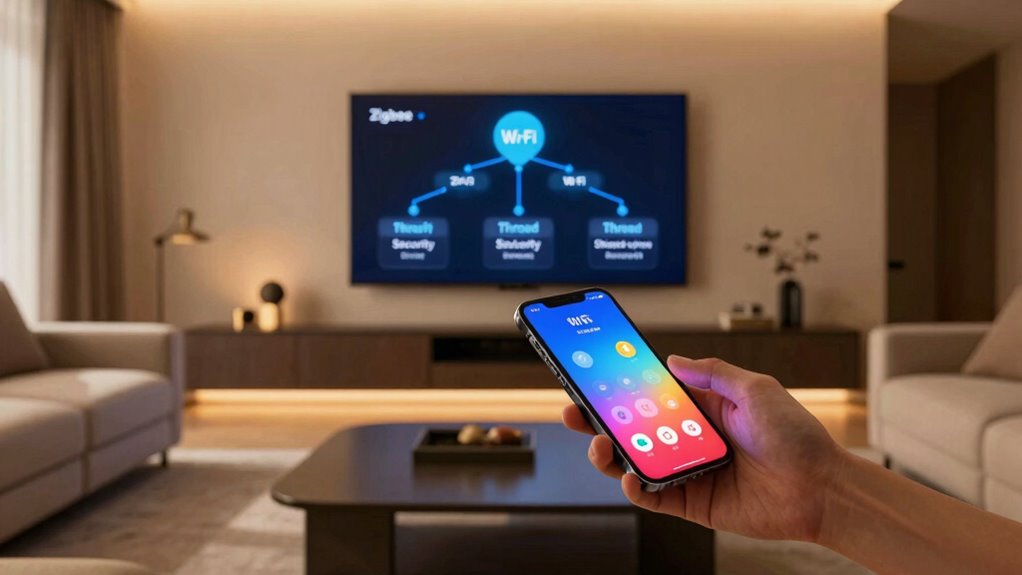
As you consider the setup and compatibility of your smart lighting, security and privacy become increasingly important. Different protocols implement varying encryption standards to protect your data, making it harder for hackers to intercept or manipulate signals. Zigbee, for example, uses AES-128 encryption, ensuring your commands and data stay private. Wi-Fi devices often rely on WPA3, which offers robust security for your network traffic. Thread also emphasizes strong encryption and secure networking practices. However, privacy isn’t just about encryption—it’s about how your data is handled. Look for devices that prioritize data privacy, avoid sharing your information unnecessarily, and offer firmware updates to patch vulnerabilities. Ensuring your smart lighting system is secure helps keep your home safe and your personal information private. Additionally, personalized intervention strategies can enhance user experience by adapting to individual needs and security preferences. Maintaining a secure network is crucial, as hive health can be compromised by external threats, just as a beehive’s stability can be affected by environmental factors. Understanding the importance of cutting-edge technology can also empower users to make informed decisions about their smart home devices.
How Much Do Devices and Infrastructure Cost?
The cost of devices and infrastructure varies considerably depending on the protocol you choose for your smart lighting system. Device affordability plays a big role, with Wi-Fi bulbs often being cheaper upfront but potentially costing more in energy and bandwidth. Zigbee devices tend to be slightly more expensive initially but are designed to be low power and long-lasting. Thread devices usually fall in a similar price range but may require compatible hubs, which add to infrastructure costs. Infrastructure costs also differ: Wi-Fi setup might need a strong home network, while Zigbee and Thread often require dedicated hubs or gateways. Overall, your budget and existing home setup influence the total costs, helping you decide which protocol offers the best value for your smart lighting needs.
How to Choose the Best Connectivity for Your Smart Home
Choosing the right connectivity for your smart home depends on how you prioritize factors like cost, reliability, and compatibility with existing devices. If you want seamless smart home integration, consider protocols that work well with your current setup. For a smoother user experience, opt for a connectivity option that offers stable connections and easy setup. Zigbee often excels in device compatibility and low power consumption, making it ideal for smart lighting. Wi-Fi provides broad coverage and high data rates, suitable for bandwidth-intensive tasks. Thread offers reliable mesh networking with excellent security, perfect for expanding your smart home ecosystem. Ultimately, your choice should match your priorities—whether convenience, performance, or cost—and guarantee your devices work harmoniously to enhance your overall user experience.
Frequently Asked Questions
Can These Protocols Integrate With Existing Smart Home Systems?
Yes, these protocols can integrate with your existing smart home systems, enhancing device compatibility. Zigbee and Thread often work with popular hubs that support voice control, making it easy to manage your lights hands-free. Wi-Fi devices typically connect directly to your network, offering seamless integration. Make sure your devices support your chosen protocol to maximize compatibility, enabling smooth voice control and effortless control of your smart lighting setup.
How Scalable Are Zigbee, Wi-Fi, and Thread Networks?
You’ll find that Zigbee and Thread are highly scalable because they use mesh topology, allowing devices to connect directly with each other and expand easily. Zigbee excels in low power consumption, making it suitable for battery-powered devices, while Wi-Fi networks can be less scalable due to higher power demands and limited mesh capabilities. Thread also offers good scalability with efficient power use, ideal for growing smart home setups.
Are There Differences in Firmware Updates Across Protocols?
Firmware updates across protocols vary wildly—sometimes it feels like they change faster than your favorite playlist! Zigbee, Wi-Fi, and Thread each have different approaches to firmware security and update frequency. Zigbee tends to update less often but prioritizes security, while Wi-Fi updates are more frequent, enhancing security but risking compatibility issues. Thread strikes a balance with regular updates focused on security, keeping your smart lighting both safe and reliable.
Which Protocol Is Best for Outdoor Smart Lighting?
For outdoor smart lighting, choose Zigbee because it offers better wireless range and lower power consumption. Zigbee’s mesh network allows signals to extend over large areas, ideal for outdoor spaces. Its low power use means lights stay on longer without frequent battery changes or power drain. Wi-Fi may offer higher bandwidth but drains more power and has shorter range outdoors. Thread is also a good option but less widely adopted for outdoor lighting.
How Do These Protocols Handle Interference From Other Devices?
Radio frequency and signal interference are like relentless bullies trying to disrupt your smart lighting. Zigbee, operating on the crowded 2.4 GHz band, uses channels to dodge interference, making it surprisingly resilient. Wi-Fi, also on 2.4 GHz or 5 GHz, can get overwhelmed when many devices compete, causing disruptions. Thread uses a mesh network with multiple pathways, dramatically reducing interference effects, ensuring your lights stay bright and responsive no matter what chaos surrounds them.
Conclusion
Choosing the right protocol depends on your specific needs and priorities. Zigbee, Wi-Fi, and Thread each have strengths, but there’s no one-size-fits-all answer—think of it like finding the right key for your lock. Remember, “The best way to predict the future is to create it,” so consider your home’s ecosystem and your long-term goals when making your choice. With a little planning, you’ll light the way to a smarter, more connected home.
Fall Picks
fall essentials
As an affiliate, we earn on qualifying purchases.