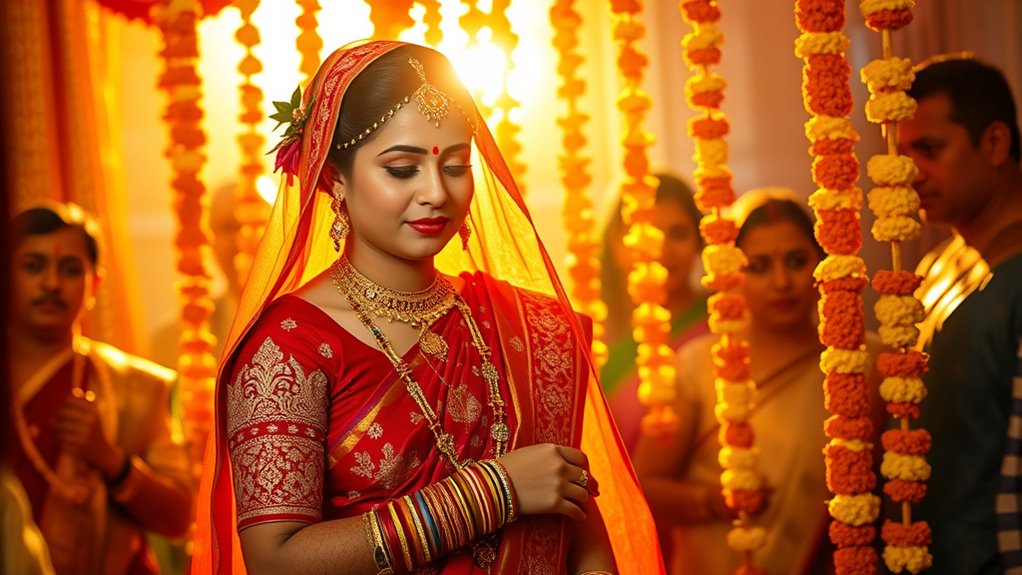

In Indian weddings, color superstitions vary by region, influencing your choice of attire and decor. Red is seen as highly auspicious, symbolizing love and prosperity, so it’s often chosen for the bride’s outfit. Black is typically avoided because it’s considered inauspicious, while yellow or gold represents purity and new beginnings. Different regions also have unique beliefs about other colors, shaping the overall celebration. If you keep exploring, you’ll uncover more about these vibrant cultural traditions.
Key Takeaways
- Red is considered highly auspicious for weddings, symbolizing love, prosperity, and strength, especially in Northern India.
- Black is generally viewed as inauspicious and often avoided in wedding decor to ward off evil spirits.
- White signifies purity and spirituality but can also represent mourning, influencing its use in wedding colors.
- Bright colors like orange, maroon, and pink are popular in Western India, associated with energy, stability, and romance.
- Regional beliefs influence color choices, with some areas avoiding specific colors due to superstitions about bad luck or negative energy.
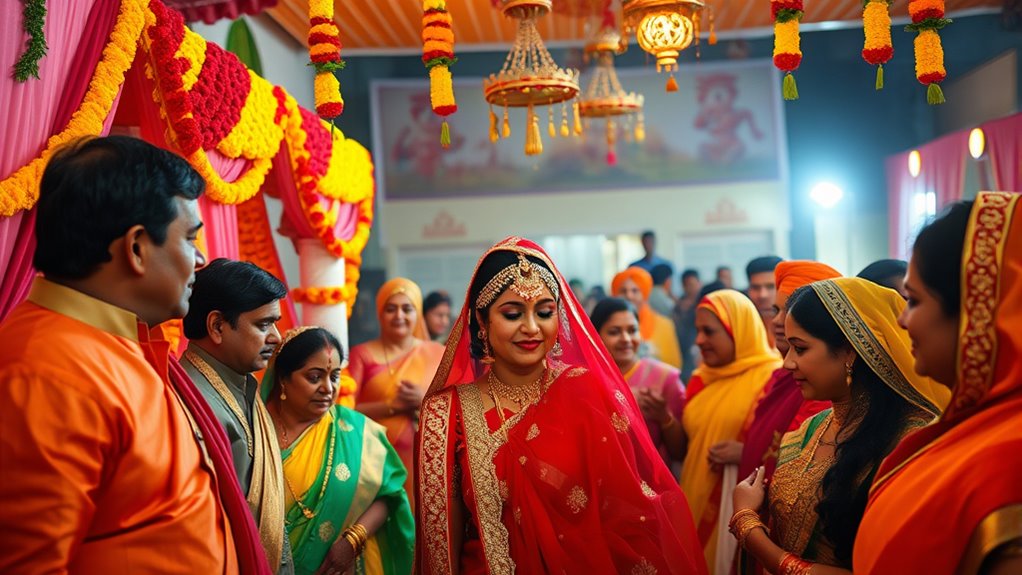
Indian weddings are vibrant celebrations filled with rich traditions, and color choices play a significant role in shaping their symbolism. When you select the hues for the ceremony, you’re not just choosing aesthetic appeal—you’re also embracing centuries-old beliefs about what those colors represent. Traditional color meanings vary across regions, making each wedding unique. In northern India, red is considered the most auspicious color, symbolizing love, strength, and prosperity. It’s common for brides to wear a red saree or lehenga, as it’s believed to bring good fortune and ward off evil spirits. In southern parts of India, bright yellow or gold is often favored, representing purity, fertility, and new beginnings. These colors reflect regional beliefs and cultural nuances, adding depth to the celebration.
Moving to eastern India, particularly Bengal, white is traditionally associated with purity and spirituality, often worn during religious ceremonies. However, in some regions, white can also symbolize mourning, so the context of its use matters greatly. Western Indian weddings, especially in Gujarat and Rajasthan, tend to feature vibrant shades like orange, maroon, and pink. Orange signifies energy and enthusiasm, while maroon is linked to stability and strength. Pink, on the other hand, is associated with romance and harmony. These regional variations aren’t just aesthetic preferences—they’re deeply rooted in local superstitions and cultural histories. For example, in some areas, certain colors are believed to ward off evil or bring luck, influencing the color palette chosen for the entire wedding.
In Bengal, white symbolizes purity but can also represent mourning, depending on the context.
You might notice that color superstitions extend beyond the bride’s attire. Decorations, floral arrangements, and even the wedding venue are carefully curated to align with regional beliefs about auspicious colors. In parts of India where black is considered inauspicious, you won’t see it used in wedding decor, while in others, it might be incorporated deliberately to ward off negative energies. Blue and green also carry different meanings depending on the region—green often symbolizes fertility and growth, but in some areas, it’s associated with superstition or negativity. Understanding these regional color variations helps you appreciate the cultural depth behind the wedding’s visual elements and assures respectful observance of local customs. Additionally, these color choices often align with traditional ritual practices that are essential to the ceremony’s success.
In essence, the choice of colors in Indian weddings is more than just a visual delight. It’s a reflection of regional traditions, superstitions, and cultural values. When you plan your wedding colors, you’re participating in a time-honored practice that connects you to the history and beliefs of the community. Recognizing the regional color variations allows you to honor traditions authentically and create a celebration that’s both beautiful and meaningful.
red bridal lehenga
As an affiliate, we earn on qualifying purchases.
As an affiliate, we earn on qualifying purchases.
Frequently Asked Questions
How Do Color Superstitions Vary Across Different Indian Regions?
You’ll find regional color symbolism varies across India, influencing wedding traditions. In Punjab, bright colors like red and yellow dominate, reflecting joy and prosperity, often seen in regional wedding attire. South Indian weddings emphasize gold and red, symbolizing wealth and fertility. North Indian brides wear red for love and passion, while Bengali brides favor white and red. These regional differences shape the vibrant tapestry of Indian wedding customs.
Are There Specific Colors Reserved for Certain Wedding Rituals?
Like a painter choosing the perfect hue, you’ll find specific colors reserved for wedding rituals, symbolizing deeper meanings. Color symbolism guides your choices in ritual attire, with reds for prosperity, whites for purity, and yellows for auspicious beginnings. These colors set the tone, distinguishing each ritual’s significance. Wearing the right shade helps honor tradition, making your wedding a vibrant tapestry woven with cultural meaning and respect for age-old customs.
What Are the Historical Origins of Color Superstitions in Indian Weddings?
You’re curious about the historical origins of color superstitions in Indian weddings. These beliefs stem from historical symbolism, where colors represented various virtues and deities, influencing wedding customs. Over time, cultural evolution shaped specific color associations, like white for purity or red for prosperity. These superstitions have persisted through generations, blending tradition with cultural significance, making colors an integral part of wedding rituals and beliefs today.
Do Modern Couples Still Follow Traditional Color Superstitions?
You might think traditions fade like whispers in the wind, but many modern couples still embrace color superstitions, valuing their cultural significance. They believe color symbolism can influence their future happiness and harmony. While some opt for contemporary choices, others hold onto these age-old beliefs, blending tradition with modernity. This mix reflects the enduring importance of cultural significance in Indian weddings, where colors continue to carry powerful meaning and blessings.
How Do Color Choices Influence Wedding Auspiciousness in Different Communities?
You should know that color choices greatly influence wedding auspiciousness across communities. Different regions hold symbolic color meanings, shaping their preferences for certain hues. For example, some communities favor red for prosperity, while others prefer white for purity. Your regional color preferences reflect local traditions and beliefs, affecting how your wedding is perceived. By understanding these cultural nuances, you can select colors that honor your heritage and bring good luck to your celebration.
yellow wedding decor
As an affiliate, we earn on qualifying purchases.
As an affiliate, we earn on qualifying purchases.
Conclusion
As you step into the vibrant world of Indian weddings, remember that colors are more than just shades—they’re the whispers of ancient beliefs and hopes. Wearing red or white isn’t just about style; it’s like carrying a piece of tradition’s heartbeat. Let these colors be your lucky stars, guiding your journey through love and new beginnings. Embrace the hues, and watch your wedding bloom into a beautiful tapestry woven with superstition and joy.
maroon saree for weddings
As an affiliate, we earn on qualifying purchases.
As an affiliate, we earn on qualifying purchases.
traditional Indian wedding colors
As an affiliate, we earn on qualifying purchases.
As an affiliate, we earn on qualifying purchases.