In ancient rituals and ceremonies, light symbolized divine presence, spiritual awakening, and transformation. You’ll see firelighting, candles, and lamps used to connect humans with higher powers and mark significant moments like births or harvests. Light also served as a metaphor for wisdom, hope, and renewal, creating sacred spaces that unite communities. If you want to explore how these luminous symbols shaped spiritual practices across cultures, there’s more to discover ahead.
Key Takeaways
- Light symbolizes divine presence, spiritual enlightenment, and acts as a bridge between earthly and divine realms in ancient rituals.
- Ritual firelighting was a sacred act representing purification, transformation, and divine connection across various cultures.
- Flames and illumination in ceremonies serve as tangible symbols of divine energy, wisdom, and spiritual awakening.
- Lighting practices unify communities, reinforce spiritual beliefs, and mark significant life or seasonal transitions.
- The contrast of light and shadow in rituals emphasizes sacred versus mundane, fostering sacred presence and inner insight.

Throughout history, light has played a vital role in shaping ancient rituals and ceremonies, symbolizing everything from divine presence to spiritual enlightenment. As you explore these traditions, you’ll notice how symbolic illumination often acts as a bridge between the earthly and the divine, transforming ordinary spaces into sacred domains. Ritual firelighting, in particular, exemplifies this connection, where the act of igniting a fire isn’t merely functional but deeply symbolic. When you light a fire in a ritual context, you’re not just providing illumination; you’re actively participating in a sacred process that signifies purification, transformation, and the presence of higher powers.
In many ancient cultures, fire was considered a gift from the gods, imbued with divine energy that could carry prayers and offerings to the heavens. Your role in ritual firelighting becomes a conduit for communication between the human and spiritual worlds. The flickering flames serve as a tangible representation of divine illumination, guiding spirits or ancestors, and reinforcing communal bonds through shared sacred acts. The act of lighting a fire often marks significant moments—births, harvests, or spiritual transitions—highlighting its role as a powerful symbol of renewal and continuity. You might notice how, during these ceremonies, the fire’s glow creates an atmosphere charged with spiritual significance, transforming simple acts into meaningful rituals. Physical sensations play a crucial role in these practices, as they help participants connect more deeply with the spiritual energy present.
Symbolic illumination extends beyond firelighting. Light, in many traditions, is associated with enlightenment, wisdom, and divine truth. When you participate in these rituals, the illumination becomes a visual metaphor for inner awakening. The radiant glow of lamps, torches, or candles is deliberately used to evoke clarity and divine insight, helping participants connect with higher realities. These lights often serve as focal points, drawing attention inward and fostering a sense of sacred presence. As you observe or take part in these ceremonies, you can feel how the interplay of light and shadow emphasizes the contrast between the mundane and the sacred, reinforcing the spiritual purpose behind the rituals.
Throughout history, these acts of lighting—whether through ritual firelighting or symbolic illumination—have unified communities and reinforced their spiritual beliefs. The enduring power of light in ancient rituals reminds you that, across cultures and epochs, illumination remains a universal symbol of hope, divine connection, and enlightenment. Your understanding of these traditions highlights how essential light has been in guiding spiritual journeys, transforming simple acts into profound expressions of faith and cultural identity.
ritual candles for ceremonies
As an affiliate, we earn on qualifying purchases.
As an affiliate, we earn on qualifying purchases.
Frequently Asked Questions
How Did Ancient Cultures Source Their Ceremonial Lighting Materials?
You learn that ancient cultures sourced their ceremonial lighting materials from natural resources like oil from plants, animals, or minerals, and wax from bees or other insects. They used ritual illumination techniques such as torches, oil lamps, and candles to create sacred atmospheres. These ancient lighting sources helped set the tone for ceremonies, symbolizing divine presence and spiritual enlightenment, while also demonstrating their resourcefulness and connection to nature.
Were There Any Specific Colors of Light Associated With Particular Rituals?
You’ll find that specific colors of light played a significant role in ritual lighting traditions, symbolizing different meanings. For example, red often represented energy or life, while white signified purity or spiritual connection. These symbolic color meanings guided how ancient cultures used light in ceremonies, creating atmospheres that reinforced the ritual’s purpose. By choosing particular colors, they enhanced the spiritual experience and communicated deeper cultural or spiritual messages.
Did Ancient Civilizations Use Light to Communicate or Send Signals?
Yes, ancient civilizations used light to communicate or send signals. They relied on symbolic illumination through ritual fires, torches, or lanterns to convey messages or mark important events. These lights often carried symbolic meaning, representing divine presence or guiding spirits. By carefully controlling the brightness and timing of ritual fires, they could send signals across distances or communicate specific messages during ceremonies and rituals.
How Did Lighting Techniques Evolve Across Different Ancient Societies?
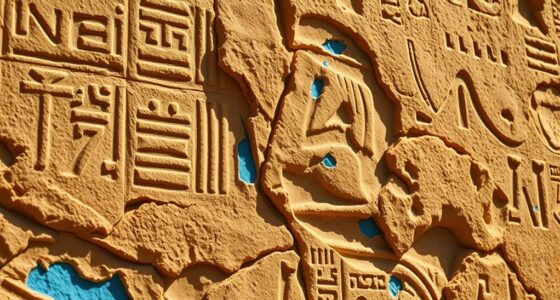
You notice how ancient illumination and ritual lighting techniques evolved uniquely across civilizations, shaping their spiritual expressions. In Egypt, you see hieroglyphs illuminated with oil lamps, emphasizing divine connection. In Greece, you observe torches and oil lamps used during ceremonies, reflecting societal values. Meanwhile, in China, lanterns symbolize guidance and hope. These diverse lighting methods reveal how different societies adapted illumination to serve their rituals and cultural identities over time.
Are There Archaeological Findings That Directly Depict Ancient Lighting Methods?
Yes, archaeological findings do directly depict ancient lighting methods, revealing historical illumination techniques. You’ll find wall paintings, engravings, and artifacts like clay lamps and torch holders that showcase how societies used fire for rituals. These discoveries highlight the ritual significance of light, emphasizing its role in spiritual ceremonies. Such artifacts help you understand how ancient people valued light, not just practically but also as a crucial part of their cultural and religious practices.
sacred lamps for spiritual practices
As an affiliate, we earn on qualifying purchases.
As an affiliate, we earn on qualifying purchases.
Conclusion
As you explore ancient rituals, you realize light is like a guiding star, illuminating paths through mystery and tradition. It connects you to those who came before, shining brightly in ceremonies that shaped cultures. Just as a candle’s flame brings warmth and clarity, light in rituals reveals deeper meanings and spiritual truths. Embrace this timeless glow, for it’s a beacon that continues to inspire and connect us across centuries and civilizations.
firelighting kits for rituals
As an affiliate, we earn on qualifying purchases.
As an affiliate, we earn on qualifying purchases.
decorative torches for outdoor ceremonies
As an affiliate, we earn on qualifying purchases.
As an affiliate, we earn on qualifying purchases.