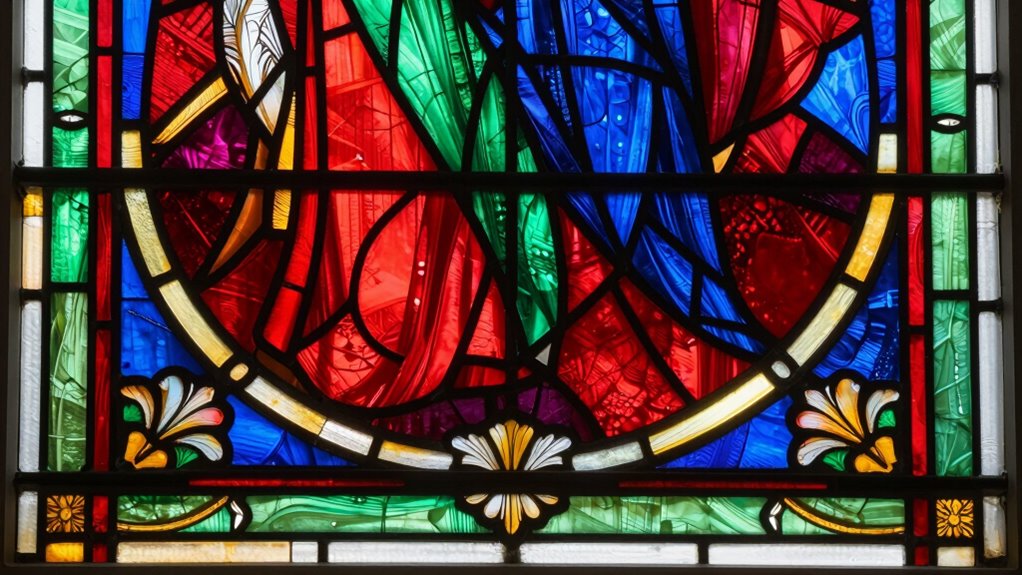

Medieval artisans mastered a chemical trick by carefully adding minerals and metallic compounds like copper, cobalt, gold leaf, and iron during glass melting, controlling temperature, and layer techniques to create vibrant, lasting colors. They used chemical reactions to produce deep blues, reds, purples, and yellows that resisted fading over centuries. Understanding these methods reveals how they achieved intense, durable hues—staying bright through time. If you’re curious about the secrets behind their colorful mastery, there’s more to explore.

Get the latest gadgets delivered free — and shop member deals
- Fast, free delivery on millions of items
- Access to Prime Big Deal Days deals on October 6–7
- Prime Video, Amazon Music and more included
Key Takeaways
- Medieval artists used metallic compounds like cobalt, manganese, and gold to produce vibrant, durable stained glass colors through controlled chemical reactions.
- Gold leaf applied during glassmaking created luminous, long-lasting yellow and red hues resistant to fading over centuries.
- The precise temperature control during firing fused pigments into the glass, ensuring color stability and brilliance.
- Metallic oxides and mineral pigments were carefully layered and processed to achieve specific symbolic colors and artistic effects.
- Modern chemistry helps analyze, replicate, and preserve these ancient vibrant colors through advanced understanding of pigment reactions.
As an affiliate, we earn on qualifying purchases.
How Medieval Artists Created Vibrant Stained Glass Colors
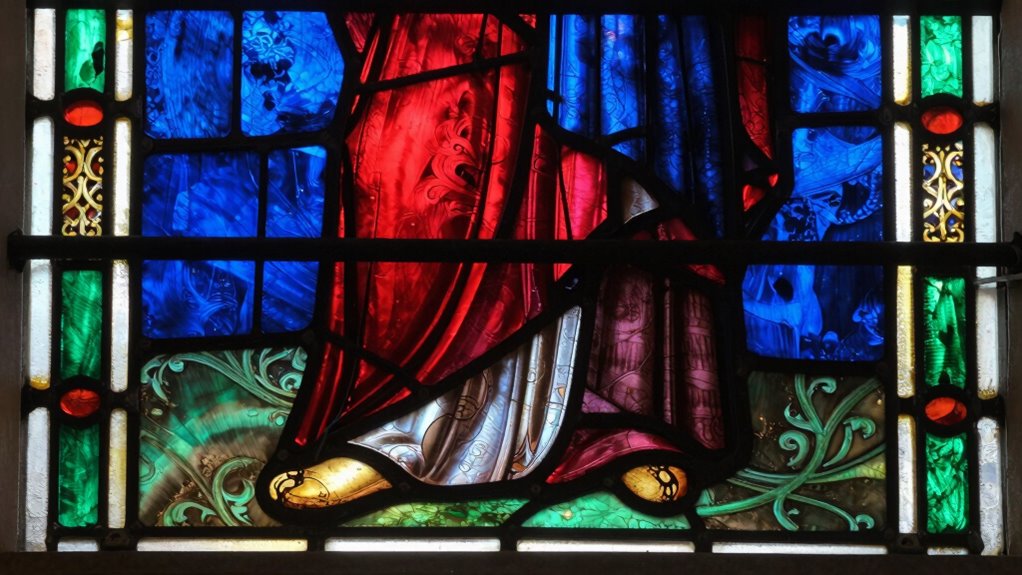
Medieval artists achieved their vibrant stained glass colors through a combination of innovative techniques and natural materials. Their medieval craftsmanship involved carefully selecting minerals and metallic compounds, then applying precise methods to produce rich, lasting hues. They used copper oxides for reds and greens, cobalt for deep blues, and gold leaf for luxurious reds and purples. These techniques allowed them to create striking visual effects that conveyed artistic symbolism, enhancing storytelling and spiritual meaning within stained glass windows. The craftsmanship required skill, patience, and an understanding of how different materials interacted. By mastering these natural materials, medieval artisans transformed simple glass into masterpieces filled with vibrant color and symbolic depth, elevating stained glass from mere decorative craft to an essential storytelling medium in sacred spaces. Additionally, much like modern artists, they had to be mindful of gear care techniques to ensure the longevity and vibrancy of their creations. This dedication to craftsmanship mirrors the eco-friendly practices seen in contemporary backyard designs, where artisans strive to harmonize beauty with sustainability. In their quest for vibrancy, these artists also explored digital content formats, allowing them to document and share their techniques with future generations. Furthermore, the collaborative efforts between artisans and co-parenting strategies helped maintain the cultural significance of stained glass art across generations. To achieve these vibrant outcomes, they often relied on color accuracy to ensure the rich hues were faithfully represented in their designs.
As an affiliate, we earn on qualifying purchases.
The Chemistry of Minerals and Metallic Compounds in Glass
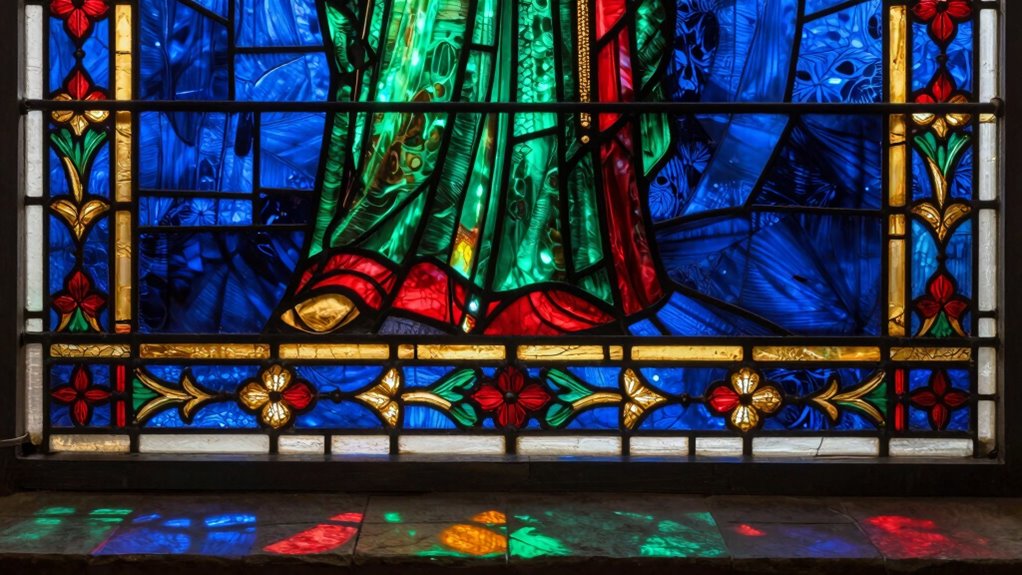
The vibrant colors in stained glass result from specific minerals and metallic compounds that interact with glass at the chemical level. Historically, pigment origins trace back to natural minerals like cobalt, manganese, and iron, which medieval artisans carefully incorporated into their recipes. These compounds produce distinct hues once fused into the glass during firing. Modern glazing techniques build upon this knowledge, using precise chemical formulations to achieve consistent, vivid colors. Understanding the chemistry of minerals and metallic compounds helps explain why certain elements create particular shades—cobalt yields rich blues, while manganese produces purples and browns. This chemical insight allowed artisans to manipulate glass colors with greater control, blending ancient pigment origins with modern methods to refine and expand the palette used in stained glass artistry. Additionally, safety tips for handling glass during the crafting process are essential to prevent accidents. The significance of cultural celebrations can also influence the themes and colors chosen in stained glass artwork, reflecting the community’s values and traditions. For example, the use of non-toxic cleaning solutions is critical for maintaining the integrity of these delicate artworks during restoration. Furthermore, the artistry of stained glass parallels the innovative brewing methods used in coffee, showcasing how traditional techniques can yield vibrant results in different mediums. This artistry resonates with the growing demand for eco-friendly options in various creative fields, emphasizing sustainability in both glass and textile applications.
As an affiliate, we earn on qualifying purchases.
How Copper and Silver Create Reds and Blues in Stained Glass

How Copper and Silver Create Reds and Blues in Stained Glass
Copper and silver ions play an essential role in producing the vibrant reds and blues seen in stained glass. When copper undergoes oxidation, it transforms into a reddish hue, giving glass its fiery, warm tone. Proper skin care can enhance the appearance of your complexion, similar to how these metals enhance the glass’s color. In sustainable textile care, understanding metallic ion reactions helps us recognize how materials can be treated to maintain their aesthetic qualities. Additionally, the intricacies of regional flavors in both coffee and tea can provide insights into how natural elements influence artistic expressions. Silver tarnishing, caused by reactions with sulfur compounds, results in a deep blue surface. Imagine:
Copper and silver ions create stunning reds and blues in stained glass through oxidation and tarnishing processes.
- Copper particles reacting with oxygen, forming a thin layer of copper oxide—bright red in color.
- Silver reacting with sulfur, creating a dark silver sulfide coating—giving the glass its rich blue shade.
- The glass absorbing these metallic compounds, locking in those vivid reds and blues.
- Artists carefully controlling metal exposure to achieve precisely the desired hue.
These processes showcase how medieval artisans mastered chemistry, turning simple metallic ions into stunning colors through copper oxidation and silver tarnishing. Understanding these chemical processes can enhance our appreciation of the artistry involved in stained glass creation.
stained glass color pigments set
As an affiliate, we earn on qualifying purchases.
As an affiliate, we earn on qualifying purchases.
Gold and Iron: Unique Shades in Medieval Stained Glass
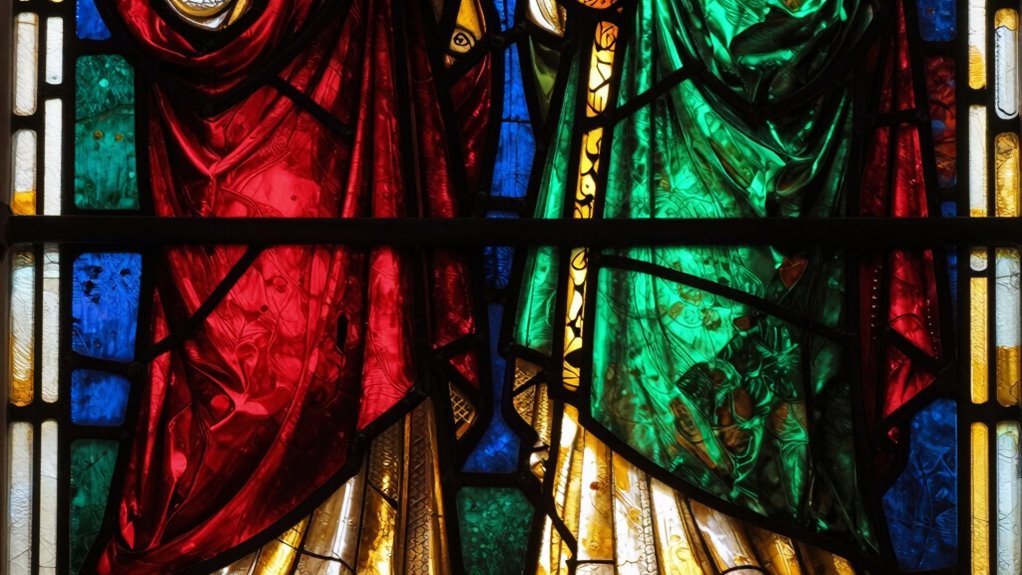
Gold and Iron: Unique Shades in Medieval Stained Glass****
Gold and iron create distinctive shades in medieval stained glass that captivate the eye. Medieval craftsmanship used these metals to produce rich, symbolic colors that conveyed deeper meanings. Gold, often applied as a thin leaf, adds luminous yellows and warm hues, symbolizing divine light and purity in religious art. Iron, when heated or treated, yields deep browns, blacks, and sometimes reddish tones, emphasizing contrast and emotional intensity. These colors weren’t just decorative—they carried significant art symbolism, illustrating spiritual concepts or social hierarchy. Artists mastered the chemistry behind these materials, ensuring vibrant, durable shades. Furthermore, the use of cryptid mysteries in storytelling parallels how artists infused their work with layers of meaning. Additionally, the reliance on stair proportions in architectural design reflects a similar mastery of technical knowledge and artistry. The impact of indoor air quality on the preservation of stained glass highlights the importance of maintaining a stable environment for these historical artworks. The careful selection of materials, much like the use of necessary cookies, ensures that the final product not only captivates but also endures over time. Your appreciation of this craftsmanship reveals how medieval artisans combined material science and artistic intent, transforming simple metals into powerful storytelling tools within stained glass windows. Understanding couple finances can also empower modern partnerships to navigate shared financial goals, much like how these artists navigated their creative and technical challenges.
How Artists Added Color During Glass Melting

Adding color during glass melting involves carefully introducing metal oxides or other compounds into the molten glass. You might imagine the artist sprinkling powdered materials into a glowing, bubbling pool. Historically, they used specific oxides to create distinct hues:
- Copper oxide for vibrant reds and greens
- Cobalt for deep blues
- Manganese to darken or mute shades
- Gold chloride for rich reds and purples
These choices led to the stunning historical color variations seen in medieval stained glass. Today, some artists turn to modern dye alternatives, which can produce similar colors without altering the glass melting process. This delicate addition of compounds during melting allowed medieval artisans to craft a spectrum of vivid, enduring hues.
Controlling Color Intensity and Transparency in Medieval Glass
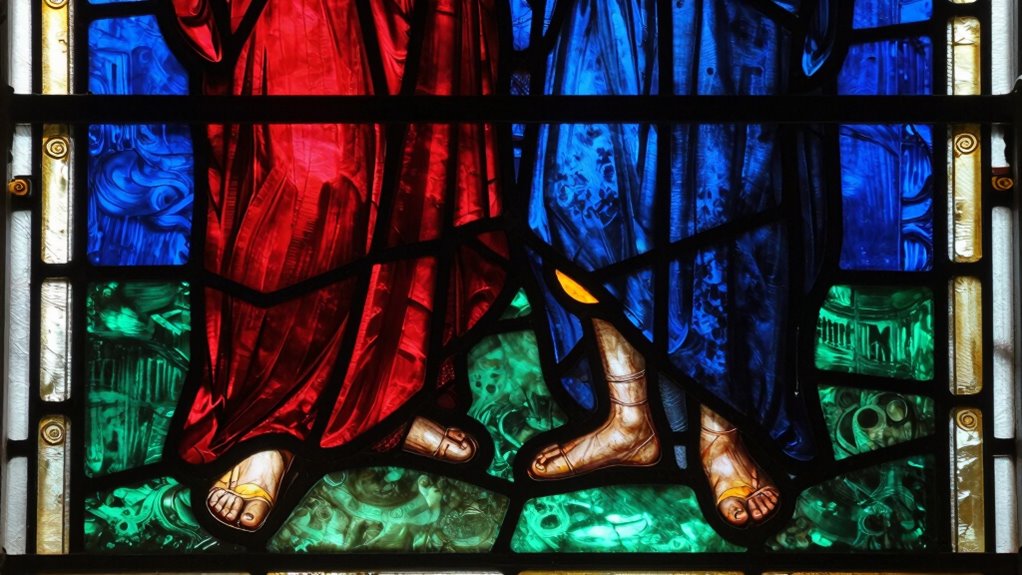
You can influence the color intensity and transparency of medieval glass by adjusting the amount of metal oxides added during melting. Mastering these techniques helps you create the desired balance between vibrant hues and see-through qualities. Understanding these methods allows you to control how light interacts with your stained glass pieces. Additionally, embracing inner strength through the mastery of these techniques can lead to a more intentional artistic practice. Regular maintenance of your tools, similar to the air purifier maintenance practices, enhances your ability to achieve consistent results. Incorporating synthetic lubricants in your work process can further improve the longevity and performance of the tools you use. Proper heat buffering during the melting process also ensures even color distribution and prevents scorching. Utilizing pre-swim nutrition can enhance your stamina, enabling you to work longer on your glass creations.
Techniques for Color Control
Controlling color intensity and transparency in medieval glass required precise techniques to achieve the desired visual effects. Artists used specific methods to adjust hue and clarity. First, they layered glass pieces with varying thicknesses, affecting transparency—thicker sections appear more opaque. Second, they added metallic oxides, like gold or silver, to intensify colors based on historical dye sources. Third, controlling the firing temperature altered how pigments bonded, influencing brightness and depth. Fourth, they manipulated the glass’s surface through polishing or acid etching to refine transparency and create subtle variations. These techniques allowed artists to evoke cultural symbolism through vibrant, meaningful colors, while mastering the delicate balance of visual impact and durability. Additionally, the careful selection of specific methods for color control ensured that each piece resonated with its intended message and aesthetic appeal.
Balancing Transparency and Intensity
Balancing transparency and intensity in medieval glass was a delicate craft that required precise techniques to achieve the desired visual harmony. Artists used color blending carefully to control how vibrant or muted a hue appeared, ensuring the glass didn’t become overly opaque or too transparent. By adjusting the concentration of metal oxides, they manipulated how much light got reflected or absorbed, influencing color strength. Light reflection played a pivotal role, as it determined how much light passed through the glass, affecting its transparency. Skilled artisans knew how to layer or dilute colors to create subtle transitions and depth. This mastery over transparency and intensity allowed stained glass windows to glow vibrantly while maintaining clarity, creating a mesmerizing interplay of light and color that still captivates today.
Why Medieval Stained Glass Colors Last and How They Stay Bright
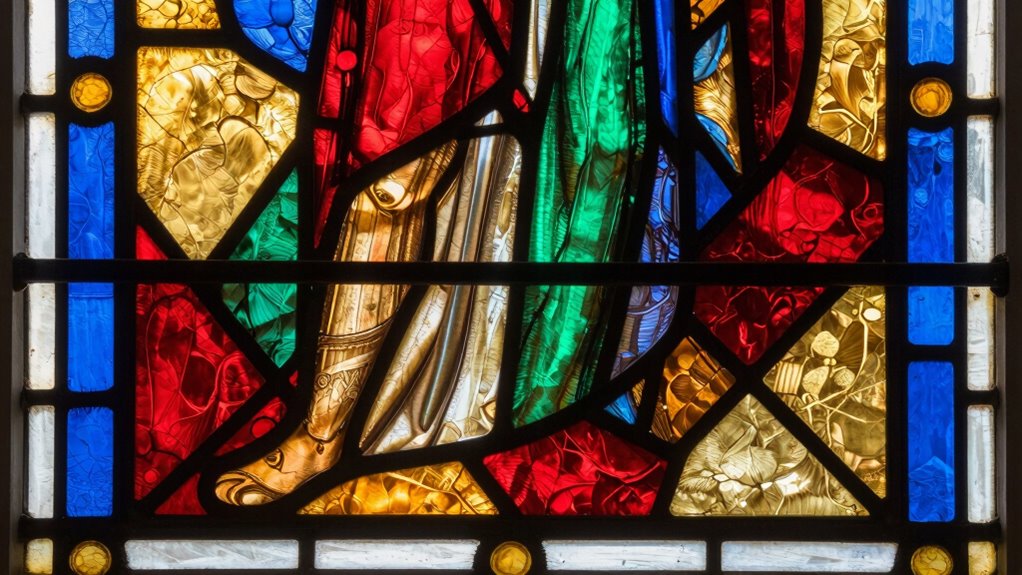
Medieval stained glass colors have endured for centuries because of the unique materials and techniques used by artisans of the time. Their lasting brightness results from skilled chemical processes that guaranteed color stability and vibrancy. You can picture:
Medieval stained glass colors persist through unique materials and techniques ensuring vibrant, enduring brilliance.
- Gold leaf infused into glass, creating rich reds and warm hues that resist fading.
- Stable mineral pigments like cobalt and manganese, which lock in their color over time.
- Proper firing techniques that fuse pigments into the glass, ensuring durability for cultural symbolism.
- Careful cleaning and maintenance in historical preservation efforts, which protect these artworks from environmental damage. These methods not only preserve the visual brilliance but also uphold the cultural significance of stained glass, allowing viewers to connect with history and tradition through luminous, enduring colors.
Common Mistakes in Historical Glass Coloring and How to Avoid Them
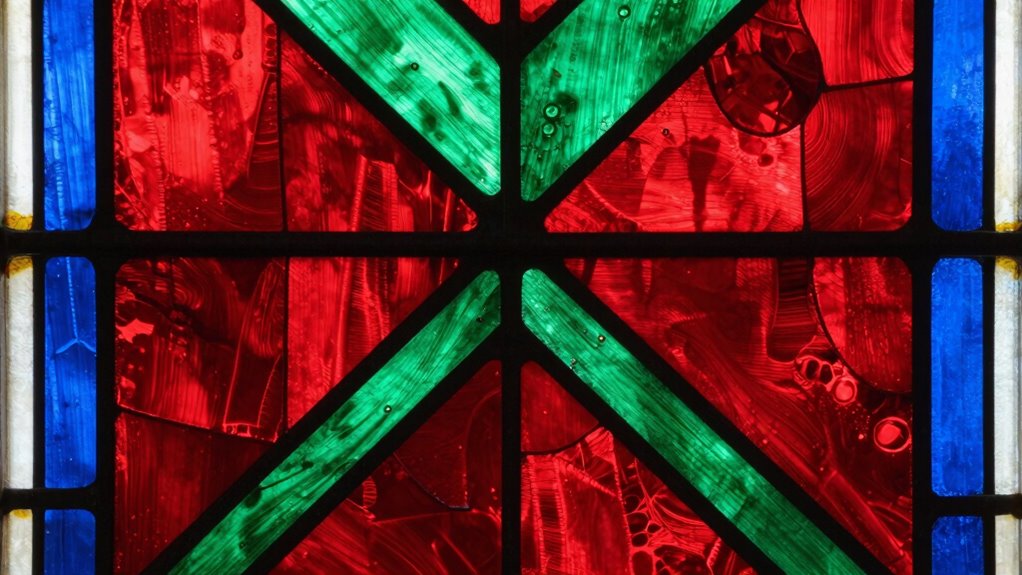
Many mistakes in historical glass coloring stem from misunderstandings of traditional techniques or the use of unsuitable materials. Relying on incorrect historical pigment sources can lead to colors that fade or change over time, compromising the artwork’s authenticity. Preservation challenges also arise when modern restorers or artists use incompatible materials, causing deterioration or damage to the original glass. To guarantee these issues, study authentic pigment sources and their chemical properties, ensuring accurate replication. Properly researching the chemistry behind historic dyes helps maintain the glass’s original vibrancy and stability. Additionally, understanding how different pigments interact with glass and environment ensures long-lasting colors. By respecting traditional methods and materials, you can preserve the integrity and beauty of medieval stained glass for future generations.
How Modern Chemistry Inspires New Stained Glass Art
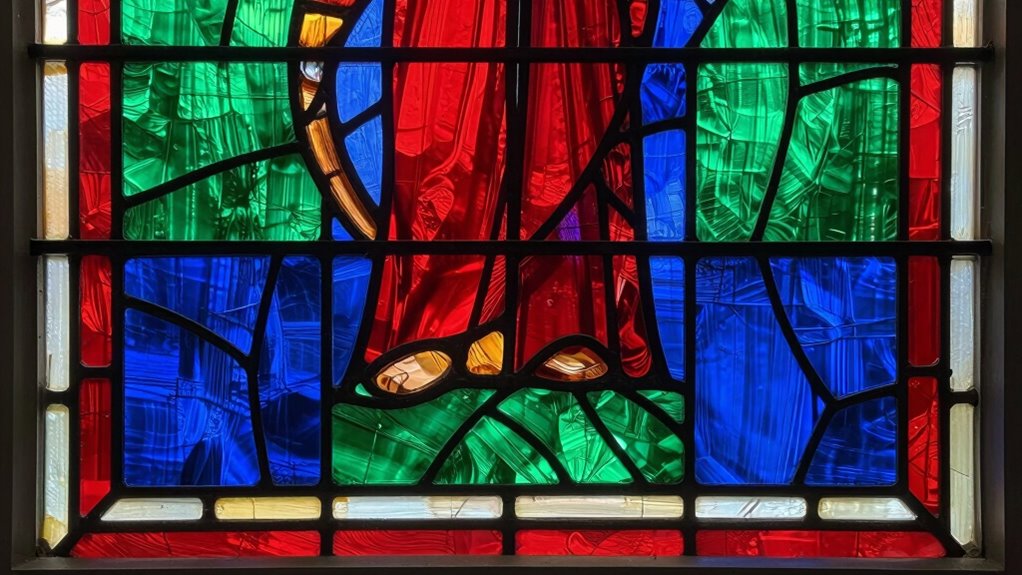
Modern chemistry has revolutionized stained glass art by providing artists with new tools and materials to push creative boundaries. With advances like historical pigment analysis, you can identify original colors and replicate ancient hues more accurately. Modern conservation techniques help preserve delicate glass pieces, allowing for the integration of innovative designs without risking damage. Chemists develop vibrant, stable dyes and coatings that weren’t possible centuries ago. Imagine:
Modern chemistry enables precise color replication and preservation, inspiring innovative and durable stained glass artistry.
- Using chemical insights to recreate medieval reds and blues with modern stability.
- Applying protective coatings that prevent fading over centuries.
- Analyzing old fragments to inspire fresh, authentic color palettes.
- Combining traditional craftsmanship with cutting-edge chemistry to craft stunning, durable stained glass masterpieces. These innovations open new horizons, blending historical authenticity with contemporary artistic expression.
Frequently Asked Questions
How Did Medieval Artisans Source Their Mineral and Metallic Pigments?
You source your mineral pigments from natural mineral sources like ochre, malachite, and cinnabar, which provide vibrant colors. Medieval artisans carefully extracted and processed these minerals to create the desired pigment composition. They often ground the minerals into powders and mixed them with a binding agent. This skillful sourcing and preparation of mineral sources allowed them to produce the rich, durable colors seen in stained glass masterpieces.
Were There Regional Differences in Stained Glass Color Techniques?
You’ll find that regional glazing techniques shimmer like a mosaic of cultural color symbolism across medieval Europe. Artists adapted their methods to local materials and traditions, creating distinctive hues and patterns unique to each area. From vibrant reds in France to cooler blues in England, these regional differences reflect deep cultural influences. Such variations made stained glass a vibrant tapestry, telling stories not just through images but through the very colors that danced in sunlight.
How Did Medieval Artists Ensure Color Consistency Across Large Windows?
You can see that medieval artists guaranteed color consistency across large windows through the process of glass fusion and by using pigment stability. They carefully mixed mineral-based pigments into molten glass, which fused the colors uniformly. This method helped prevent fading and color variation over time. By mastering these techniques, artists maintained vibrant, consistent hues throughout expansive stained glass windows, creating stunning, cohesive artworks that have endured for centuries.
What Tools Did Medieval Artists Use to Apply and Manipulate Glass Colors?
Imagine you’re working on a grand cathedral window, using glass painting techniques. You’d employ fine brushes to carefully apply pigments, which you prepared through meticulous pigment preparation. Medieval artists used tools like quills, brushes, and metal spatulas to manipulate glass colors, blending and layering them. These tools helped them achieve precise details and vibrant hues, ensuring the colors remained consistent and stunning across expansive windows, showcasing their skill and understanding of chemistry.
How Did Religious Symbolism Influence Color Choices in Stained Glass?
You notice that religious symbolism deeply influences color choices in stained glass, as each hue carries specific spiritual meanings. For example, blue represents heaven and divine wisdom, while red symbolizes sacrifice and love. Medieval artists intentionally select colors based on these color symbolism principles to evoke spiritual feelings and convey religious stories. This thoughtful use of color enhances the viewer’s connection to the sacred themes depicted in the stained glass.
Conclusion
Just like a master chef blends ingredients to craft a perfect dish, medieval artists mixed minerals and metals to create vibrant stained glass. Their chemistry tricks turned simple glass into glowing works of art that stand the test of time. By understanding their secrets, you can appreciate how each color is a masterpiece of science and skill. So, next time you see stained glass, remember it’s a colorful symphony, where chemistry and artistry dance together beautifully.
Fall Picks
fall essentials
As an affiliate, we earn on qualifying purchases.