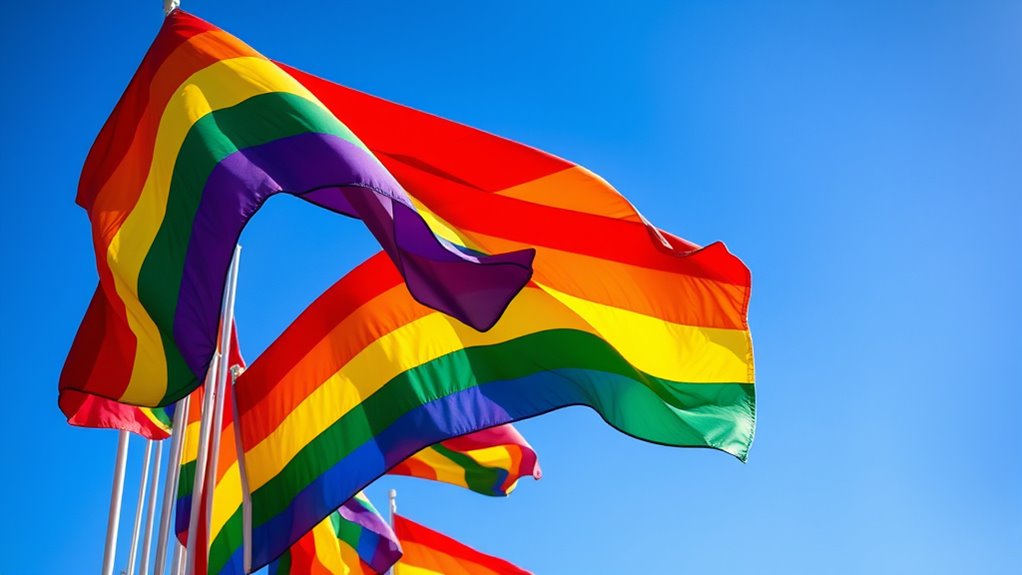

Rainbow flags have become powerful symbols of identity by representing diversity, pride, and the ongoing struggle for equality within the LGBTQ+ community. Created by Gilbert Baker in 1978, each color in the flag has a specific meaning, like pink for sex and green for nature. Over time, the flag’s vibrant stripes have come to symbolize unity, resilience, and hope. To discover how these colors shaped a global movement, keep exploring their fascinating history and significance.
Key Takeaways
- Gilbert Baker designed the rainbow flag in 1978, assigning specific meanings to each color to symbolize aspects of the LGBTQ+ community.
- The original eight colors represented different values, such as pink for sex and blue for art, later simplified for broader use.
- The vibrant colors serve as a visual unifying symbol of diversity, inclusion, and pride within the LGBTQ+ movement.
- Over time, the rainbow flag evolved from a hope symbol to a powerful icon of activism and resistance.
- Its widespread visibility at pride events and social media reinforces its role as a universal emblem of love and equality.

Rainbow flags are powerful symbols of diversity, inclusion, and pride within the LGBTQ+ community. When you see a rainbow flag flying, you’re witnessing more than just colorful stripes; you’re witnessing a history rooted in activism, hope, and the ongoing fight for equal rights. The history origins of the rainbow flag trace back to 1978, when artist and activist Gilbert Baker designed it to serve as a vibrant emblem of unity and visibility. Baker’s inspiration came from the desire to create a symbol that could be easily recognized and carry a message of hope. Originally, the flag featured eight colors, each representing different aspects of the community—pink for sex, red for life, orange for healing, yellow for sunlight, green for nature, turquoise for magic and art, indigo for serenity, and violet for spirit. Over time, the design was simplified to six colors, making it easier to produce and more widely adopted. Today, the rainbow flag’s cultural significance goes beyond its visual appeal; it stands as a *testament* to resilience, acceptance, and the ongoing struggle for LGBTQ+ rights worldwide. You can see it at pride parades, in front of businesses, or on social media profiles, as a reminder that every individual deserves respect and recognition, regardless of their sexual orientation or gender identity. Its vibrant colors serve as a universal language, transcending borders and cultures, uniting people under a shared banner of love and equality. The adoption of the rainbow flag marked a turning point in LGBTQ+ history, transforming a symbol of hope into an icon of activism. It challenged societal norms and gave voice to those who had long been marginalized. The flag’s cultural significance is deeply rooted in the collective memory of protests, victories, and ongoing efforts to achieve equal rights. As a symbol, it has persisted through decades of change, inspiring new generations to stand proud and be visible. Whether fluttering on a flagpole or worn as a pin, the rainbow flag embodies the enduring spirit of community and self-acceptance. Its colorful stripes remind you that diversity is beautiful and that everyone deserves to live authentically. *In essence*, the rainbow flag is more than just fabric; it is a powerful cultural emblem that encapsulates history, hope, and the ongoing pursuit of equality for all. Recognizing its origins and significance helps you understand why it remains a *vital* symbol in the fight for human rights and acceptance worldwide.

Rainbow Pride Flag 3×5 Outdoor-LGBTQ Flags Pride Flag Sewn Stripes Vivid Color Heavy Duty Flags with 2 Brass Grommets
Durable Polyester Fabric: Made from 100% polyester material for long-lasting use and bright colors.
As an affiliate, we earn on qualifying purchases.
As an affiliate, we earn on qualifying purchases.
Frequently Asked Questions
How Did Rainbow Flags Originate in Different Cultures Globally?
You might wonder how rainbow flags originate in different cultures worldwide. They often carry deep cultural symbolism and historical significance. In many societies, colors represent various aspects of life, spirituality, or social identity. For example, some cultures see rainbows as divine messages or symbols of hope. These diverse origins highlight how colors serve as powerful symbols, uniting communities and expressing shared values across different cultural contexts.
What Are the Variations of Rainbow Flags Used Across Communities?
You’ll find that variations of rainbow flags express different aspects of LGBTQ pride and community. Some flags incorporate additional stripes or symbols to highlight specific identities, like the transgender or bisexual communities. Others may add unique colors to represent diversity or cultural heritage. These variations serve as powerful community expressions, allowing individuals to showcase their unique identities while celebrating LGBTQ pride through a shared, colorful symbol.
How Have Rainbow Flags Influenced Legal Rights and Policies?
You see that symbols like rainbow flags have really pushed for legal reforms and policy changes. They’ve raised awareness and fostered acceptance, encouraging lawmakers to recognize LGBTQ+ rights officially. When you support or display a rainbow flag, you’re helping to influence positive legal shifts, promoting equality in marriage laws, anti-discrimination policies, and more. This visibility drives societal change, making policies more inclusive and protecting diverse communities.
What Symbolism Is Behind Each Color in the Rainbow Flag?
Did you know that each color in the rainbow flag carries psychological symbolism and historical significance? You see, red represents life, symbolizing energy and passion. Orange reflects healing, while yellow stands for sunlight and positivity. Green signifies nature and growth, blue embodies serenity and harmony, and purple symbolizes spirit and community. These colors combine to create a powerful visual statement, fostering pride and unity within the LGBTQ+ community worldwide.
How Are Rainbow Flags Incorporated Into Mainstream Fashion and Art?
You see rainbow flags in mainstream fashion and art through bold prints, accessories, and streetwear, making your style more vibrant and inclusive. Fashion trends now often feature rainbow patterns, while artists incorporate these colors into their work to promote diversity and acceptance. By embracing these colorful symbols, you join a broader movement of artistic expression that celebrates identity, visibility, and community, making a powerful statement in everyday life.
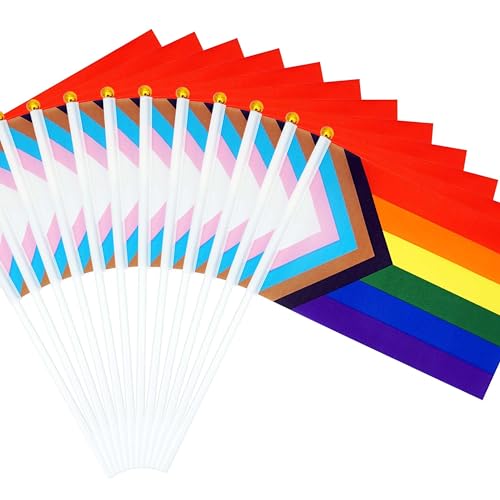
12 Pcs Progress Pride Flags Decorations LGBTQ Accessories Gay Pride Month Flag Rainbow Flags Stuff Hand Held Stick Small Flags Bulk for Party Parade Rainbow Festival
🌈【High Quality Flags】Our Progress Pride Flags are made of high quality polyester and white plastic rods. They are…
As an affiliate, we earn on qualifying purchases.
As an affiliate, we earn on qualifying purchases.
Conclusion
Now that you understand how rainbow flags transformed symbols of pride and identity, you might wonder—what’s next? As these colors continue to inspire change and unity worldwide, the story isn’t finished. Will new shades emerge to represent even more voices? The future of rainbow flags could hold surprises you haven’t imagined. One thing’s certain: their vibrant hues will keep shining, reminding us that the fight for acceptance is far from over.

Gay Heartbeat Pride Rainbow Flag LGBTQ T-Shirt
LGBTQ Pride design. Gay Heartbeat Pride Rainbow Flag LGBTQ
As an affiliate, we earn on qualifying purchases.
As an affiliate, we earn on qualifying purchases.

Desert Cactus Rainbow Lapel Pin Enamel Gay LGBT (Waving Flag Pin)
Premium Quality – Crafted from quality metal with a smooth enamel finish, each pin showcases a vibrant state…
As an affiliate, we earn on qualifying purchases.
As an affiliate, we earn on qualifying purchases.