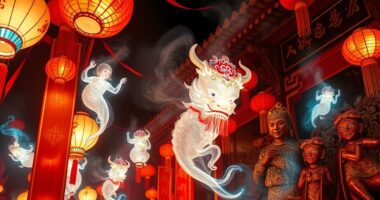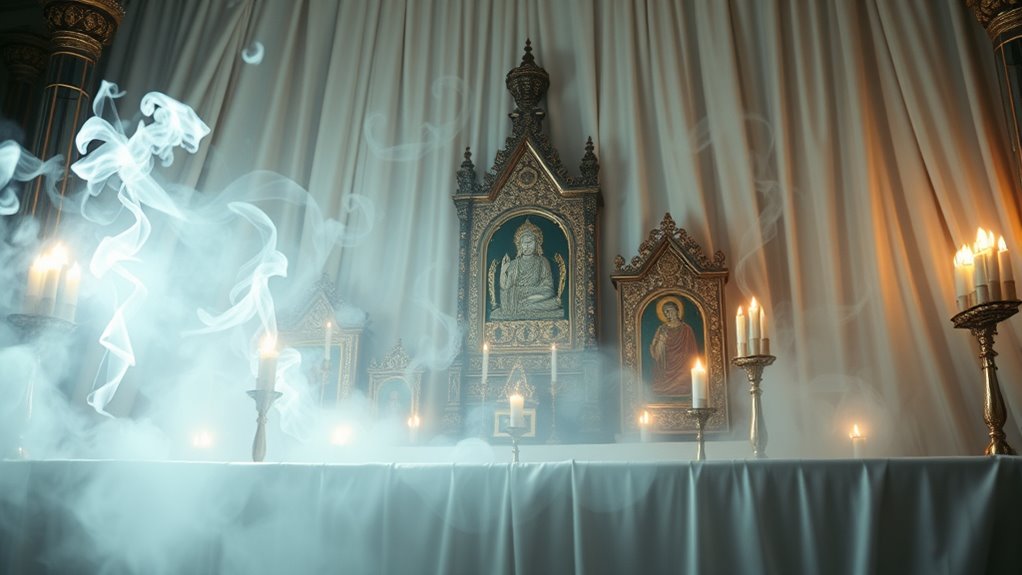

White in religious rituals symbolizes purity, spiritual renewal, and transcendence across cultures. It acts as a universal language that elevates the soul, representing cleansing and divine connection. Whether through garments, powders, or symbols, white helps create sacred spaces and focuses attention on spiritual transformation. Its luminous presence fosters unity and renewal. Exploring further reveals how white’s spectral significance unites diverse traditions in the pursuit of enlightenment and divine harmony.
Key Takeaways
- White symbolizes spiritual purity, transcendence, and divine connection across diverse religious traditions.
- It serves as a visual language conveying spiritual renewal, cleansing, and enlightenment universally.
- White in rituals facilitates access to sacred realms, fostering focus, unity, and inner clarity.
- Its luminous quality enhances the ritual experience, emphasizing transformation and spiritual elevation.
- White’s spectral presence embodies humanity’s ongoing pursuit of divine illumination and spiritual enlightenment.

White has long held a powerful place in rituals across cultures, symbolizing purity, transcendence, and connection to the spiritual sphere. Its presence in ceremonies acts as a visual language that communicates a depth of meaning beyond words. When you see white in a ritual setting, you’re witnessing a universal symbol of spiritual symbolism—an emblem that signifies cleansing, renewal, and the pursuit of spiritual clarity. This color’s luminous quality makes it ideal for ritual purification, a process through which individuals seek to shed impurities—both physical and spiritual—and prepare themselves for deeper spiritual experiences.
White symbolizes purity, renewal, and spiritual clarity, serving as a universal language in rituals worldwide.
In many traditions, white is the color of choice during rites of passage, such as initiation, baptism, or spiritual rebirth. When you participate in or observe these rituals, the white garments, powders, or candles serve as a powerful reminder of transformation. They symbolize leaving behind the old self and stepping into a purified state of being. The act of ritual purification often involves cleansing with water, incense, or symbolic white objects, reinforcing the idea that purity isn’t merely physical but also a spiritual state that elevates the soul. The color white acts as a conduit for this transformation, making the process more profound and universally understood.
You’ll notice white’s role in rituals across diverse cultures. In Christian traditions, white robes and vestments are worn during sacraments and celebrations to signify holiness and divine grace. In Hindu ceremonies, white flowers and garments symbolize spiritual purity and devotion. Indigenous cultures might use white feathers or powders in ceremonial practices to invoke spiritual protection or symbolize the presence of ancestors. These diverse yet interconnected uses of white highlight its role as a universal language of spiritual symbolism that transcends cultural boundaries.
When you engage in or witness rituals where white is prominent, you’re experiencing more than just a color choice—you’re observing a sacred act of ritual purification. It’s about creating a space where the spiritual domain can be accessed more clearly, free from the clutter of worldly impurities. White acts as a visual anchor, guiding your focus toward transcendence and inner clarity. Its spectral significance in rituals isn’t just symbolic but also functional, helping to elevate the spiritual experience and foster a sense of unity, renewal, and divine connection. Essentially, white’s luminous presence in rituals continues to resonate because it embodies humanity’s timeless desire for spiritual purification and enlightenment.
Frequently Asked Questions
How Does White Color Influence Spiritual Experiences During Rituals?
White color influences your spiritual experiences during rituals by symbolizing visual purity and fostering emotional serenity. When you wear or see white, it helps clear your mind of distractions, allowing you to focus deeply. This color elevates your sense of sacredness and inner peace, making your ritual more meaningful. As a result, white guides you toward a pure, tranquil state, enhancing your connection with the divine or spiritual dimension.
Are There Cultural Variations in White’s Spectral Significance Across Religions?
You’ll find that cultural variations greatly influence white’s spectral significance across religions. In some cultures, white symbolizes ritual purity and is worn as cultural attire during sacred ceremonies. In others, it may represent mourning or spiritual renewal. These differences shape how white enhances spiritual experiences, emphasizing its role in expressing cultural identity and sacredness during rituals. Recognizing these nuances helps you appreciate white’s diverse symbolic meanings worldwide.
What Psychological Effects Does White Evoke During Sacred Ceremonies?
During sacred ceremonies, white evokes feelings of purity and spectral silence, creating a calming and reverent atmosphere. You may feel a sense of clarity, peace, and spiritual connection as white symbolizes innocence and divine presence. This color helps you focus inward, reducing distractions and heightening your awareness of the sacred. Its spectral significance fosters a tranquil environment that encourages reflection, fostering a deep emotional and psychological bond with the spiritual experience.
How Has the Symbolism of White Evolved Historically in Religious Contexts?
You might notice that white’s historical origins trace back to ancient cultures where it symbolized purity and divinity. Over time, this color’s symbolism evolution reflects shifting religious beliefs and societal values, from representing spiritual enlightenment to mourning. Coincidentally, as religions spread and adapted, white’s significance transformed, highlighting its enduring role in rituals. You see how white continues to symbolize new meanings, blending tradition with contemporary interpretations across different spiritual contexts.
Does White Color Have Any Association With Supernatural or Spectral Entities?
You might notice that white often appears in stories of ghostly apparitions and spectral illumination, suggesting an association with supernatural entities. The color’s brightness and purity can evoke a sense of the otherworldly, making it a common choice to depict spirits or spectral phenomena. White’s luminous quality enhances its ghostly reputation, symbolizing the ethereal and mysterious nature of spectral entities that seem to glow or shimmer in the darkness.
Conclusion
You now see how white’s spectral power in rituals is nothing short of extraordinary—it’s the color that commands the universe’s deepest secrets. Its pure glow can transform grief into hope and fear into reverence, wielding an almost supernatural influence over spirits and souls alike. White’s significance isn’t just symbolic; it’s a force that shapes destinies and awakens divine energies. Embrace its luminous essence, for it holds the key to revealing the cosmos’ most profound mysteries.