
TL;DR

Get the latest gadgets delivered free with Prime
- Fast, free delivery on millions of items
- Prime Video, Amazon Music and more included
- Member-only deals all year
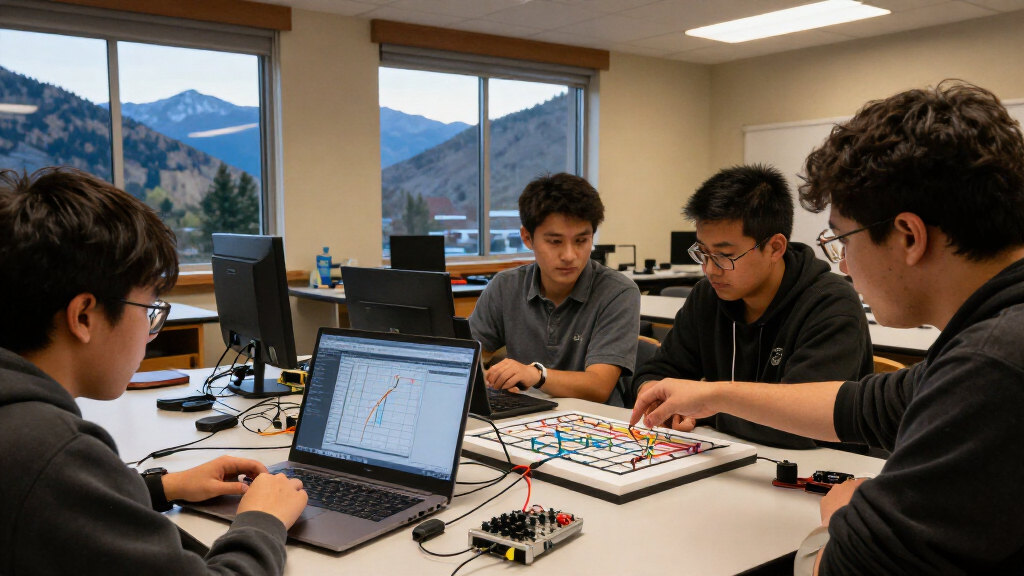
Google says students from Colorado joined its second annual Colorado Impact Hackathon, held at the company’s Boulder offices with CU Boulder and the Colorado Energy Office. The winning projects focused on solar panel planning, battery support during wildfire-related shutoffs and predictive grid hardening; details about implementation and student participation were not provided.
Colorado students presented projects addressing electric-grid challenges at Google’s second annual Colorado Impact Hackathon, held at the company’s Boulder offices in partnership with the University of Colorado Boulder and the Colorado Energy Office. Google said the winning entries proposed ways to help homeowners plan solar installations, maintain power during wildfire shutoffs and identify where grid infrastructure could be strengthened.
Google’s report identifies three winning projects. SolarSnap, which placed first, is described as an AI app that uses a phone camera to help homeowners find an ideal setup for solar panels. Google did not provide information about whether the app is available to the public, how it assesses a property or what data it uses.
Grid Watch took second place. Google describes it as an AI-managed battery network intended to keep power on during wildfire shutoffs while reducing electricity costs. Third-place project Grid Guard offers predictive capabilities for targeted grid hardening, according to the company. The report does not detail the teams’ technical methods, prototypes or test results.
Google said the hackathon brought together students, public leaders and technologists around the question of how to create a clean, secure and resilient electric grid in Colorado. Colorado Attorney General Phil Weiser and CU Boulder Vice Chancellor for Sustainability Andrew Mayock spoke at the event about innovation and the state’s clean-energy future, the report said.
Student Ideas for Grid Resilience
The projects focus on different points in the energy system: household adoption of solar, backup power during planned wildfire-related shutoffs, and decisions about where to reinforce grid infrastructure. Those aims connect the hackathon’s challenge to practical concerns for Colorado residents and energy providers, including service continuity during wildfire risk and the cost and planning of clean-energy upgrades.
The concepts are not evidence of deployed solutions. Google’s account describes competition entries and their intended functions, but gives no independent evaluation of their performance, cost, feasibility or potential effects on electricity customers. The event’s immediate significance is that it gave student teams a platform to propose approaches to grid challenges in collaboration with university and state partners.
Products Worth Considering

Jackery HomePower 3000 Portable Power Station with Two 200W Solar Panels

EcoFlow Smart Home Panel 2 Whole-Home Backup System Hub

Anker SOLIX S2000 Portable Power Station, 2,010Wh, 1,500W
As an affiliate, we earn on qualifying purchases.
A Second Boulder Hackathon
Google said this was the second annual Colorado Impact Hackathon and that it took place at the company’s Boulder offices. CU Boulder and the Colorado Energy Office partnered on the event. The report frames the challenge around a clean, secure and resilient electric grid, and cites wildfire risks and energy backlogs as issues the projects were meant to address.
The source is a Google blog post dated October 29, 2026, authored by John Tribbia, a senior staff data scientist. It is a company account of the event and its results. It does not provide a participant count, a full list of teams, judging criteria, project development timelines or comments from the winning student teams.
“How can we create a clean, secure, and resilient electric grid in Colorado?”
— Google’s event report
Projects Await Further Detail
Google’s report does not say whether any winning project will receive funding, enter further development or be tested with utilities or residents. It also does not identify the students or teams behind the entries, explain how judges selected the winners, or provide evidence that the concepts have been tested in real-world conditions.
It is also unclear what the projects would require to operate. The report gives no technical information about SolarSnap’s recommendations, Grid Watch’s battery network or Grid Guard’s predictions, and it does not quantify possible costs, savings or reliability gains. Those outcomes should be treated as goals described by the project concepts, not as established results.
Development Plans Not Announced
Google has not announced a follow-up schedule or next milestone for the winning entries. Any assessment of their practical impact will depend on whether the teams or partners develop, test or deploy the concepts and release details about their performance. Further information from Google, CU Boulder, the Colorado Energy Office or the project teams could clarify whether the hackathon ideas will move beyond the competition.
Key Questions
What was the Colorado Impact Hackathon?
Google described it as its second annual hackathon, held at its Boulder offices in partnership with CU Boulder and the Colorado Energy Office. Students worked on ideas for a clean, secure and resilient Colorado electric grid.
Which project won first place?
SolarSnap placed first. Google described it as an AI app that uses a phone camera to help homeowners identify an ideal solar-panel setup.
What were the other winning projects?
Grid Watch placed second with a proposed AI-managed battery network for wildfire shutoffs and electricity costs. Grid Guard, in third place, was described as offering predictive capabilities for targeted grid hardening.
Are the projects available or proven to work?
Google’s report does not say whether the projects are publicly available, tested or ready for deployment. It provides descriptions of their intended functions, but no performance results or implementation plans.
Source: blog.google