
TL;DR

Get the latest gadgets delivered free with Prime
- Fast, free delivery on millions of items
- Prime Video, Amazon Music and more included
- Member-only deals all year
Nord Quantique co-founder and CEO Julien Camirand Lemire described the company’s approach to quantum error correction using microwave photons stored in superconducting cavities. The interview covers its reported GKP and Tesseract code demonstrations, a four-qubit system expected to enter operation in 2026, and a long-term target of error rates between 10^-7 and 10^-9 by 2032. The demonstrations and targets are company-reported; the interview does not provide independent validation or a detailed performance dataset.
Nord Quantique co-founder and CEO Julien Camirand Lemire described the company’s strategy for quantum error correction using microwave photons held in superconducting cavities, an approach intended to encode error-correcting redundancy within a single cavity rather than relying only on large numbers of separate physical qubits. In an interview published by The Quantum Insider on October 31, 2026, he discussed the company’s reported code demonstrations, a four-qubit system planned to begin operating this year, and a target of reaching 10^-7 to 10^-9 error rates by 2032.
Lemire said Nord Quantique, founded in 2020 and based in Sherbrooke, Quebec, is developing hardware around bosonic codes. The method stores information in microwave photons inside superconducting resonators, also called cavities. Because several photons can occupy a cavity, the company’s approach seeks to use that physical system to supply redundancy for error correction without adding a large number of separate qubits for every logical qubit.
He described the company’s work on GKP grid-state codes and the Tesseract code. According to Lemire, Nord Quantique demonstrated a GKP qubit in 2024 and reported a Tesseract-code demonstration in 2025. He said the GKP work addressed both X and Z error types, and that the company’s quantum error-correction gain had more than doubled since 2024. The interview does not include the underlying measurements or define the comparison used for that gain.
Lemire also said a four-qubit system was entering operation in 2026 and set out a company roadmap targeting error rates between 10^-7 and 10^-9 by 2032. Those figures are future goals, not achieved results. The interview presents them as Nord Quantique’s plans and does not specify the precise error metric, operating conditions or milestones used to assess progress toward them.
Reducing the Cost of Error Correction
Quantum error correction is a central scaling problem: physical qubits are noisy, and useful computations require methods to detect and correct errors. Conventional approaches can require substantial overhead in additional physical qubits. Lemire said that overhead can range from 100 to 1,000 qubits in some approaches, although the interview does not tie that range to a particular architecture or calculation.
If Nord Quantique can demonstrate reliable error correction with fewer physical components, its strategy could affect the hardware resources needed to build larger quantum systems. Assessing that possibility depends on whether the encoded information can be protected well enough to support computation as systems grow. The interview does not provide performance data or comparisons under specified conditions to establish such an advantage.
Products Worth Considering

Amazon Kindle Scribe (64GB) with Premium Pen, Metallic Jade
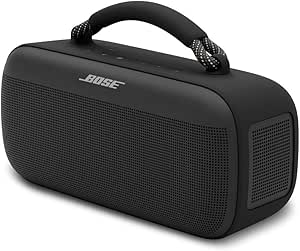
Bose SoundLink Max Bluetooth Speaker

Bose SoundLink Flex Bluetooth Speaker (2nd Gen), Black
As an affiliate, we earn on qualifying purchases.
From Sherbrooke to Bosonic Codes
Nord Quantique emerged from the quantum research ecosystem in Sherbrooke, Quebec, and Lemire said the company also has offices in Montreal. He credited the regional ecosystem with supporting a capital-efficient approach to building the company, but the interview does not provide financial figures or a direct comparison with other hardware developers.
The company’s bosonic-code approach is distinct from the cat-qubit strategy Lemire discussed in relation to Alice & Bob. He characterized the latter as suppressing one type of error, while Nord Quantique uses grid-state codes intended to address multiple error types. These are descriptions from the company’s CEO; the interview does not offer a side-by-side technical evaluation. More broadly, the discussion reflects a field-wide challenge: increasing qubit counts alone does not remove noise or the resource demands of fault-tolerant operation.
“The thing that you need for quantum error correction is a form of redundancy.”
— Julien Camirand Lemire, Nord Quantique co-founder and CEO, in The Quantum Insider interview
Performance Evidence Still Needed
The interview offers a company account of its demonstrations and roadmap, but it does not provide enough technical detail to independently assess the reported results. Missing information includes the experimental data behind the claimed more-than-doubling of quantum error-correction gain since 2024, the baseline and measurement definition for that comparison, and how the GKP and Tesseract demonstrations performed under specified conditions.
It is also unclear from the interview what operating status the four-qubit system had reached by publication, what tasks it can run, and whether the 2032 error-rate targets refer to a particular physical or logical error measure. The discussion does not establish that the approach will scale to a fault-tolerant quantum computer or outperform competing systems in practical workloads.
Four-Qubit System and 2032 Targets
The near-term milestone described by Lemire is the four-qubit system planned to enter operation in 2026. The next useful evidence will include details on its capabilities, measured errors and how the cavity-based encoding performs in operation. The interview does not give a specific launch date or identify a publication schedule for those results.
Nord Quantique’s longer-term benchmark is its stated goal of reaching 10^-7 to 10^-9 error rates by 2032. Progress toward that range will need to be evaluated against defined metrics and disclosed test conditions. Until further technical results are available, the demonstrations, claimed improvement and roadmap should be understood as statements from the company’s CEO rather than independently verified outcomes.
Key Questions
What is Nord Quantique developing?
The company is developing quantum hardware using bosonic codes, which encode information in microwave photons stored in superconducting cavities.
What does “one cavity, one error-corrected qubit” mean?
It describes the goal of using multiple photons within one cavity to provide redundancy for encoding and correcting a qubit, rather than depending solely on many separate physical qubits. The interview does not establish that a general-purpose, fault-tolerant qubit has been achieved.
What demonstrations did Lemire cite?
Lemire cited a GKP grid-state demonstration in 2024 and a Tesseract-code demonstration in 2025. The interview does not include the measurements needed to evaluate those results independently.
Has Nord Quantique reached its 2032 error-rate target?
No. The range of 10^-7 to 10^-9 by 2032 is a future company target, not a reported achieved result.
When is the four-qubit system expected to operate?
Lemire said the system was entering operation in 2026. The interview does not specify an exact date or describe its operating performance.
Source: thequantuminsider.com