TL;DR
LG’s OLED TVs suit viewers who want deep blacks, precise contrast, and strong gaming features, especially for films and darker rooms. LG’s QNED Mini LED models offer an LCD alternative that may suit brighter spaces, while exact brightness, refresh rate, HDR support, and HDMI features vary by model and size. Compare the exact specification sheet and your room before choosing.
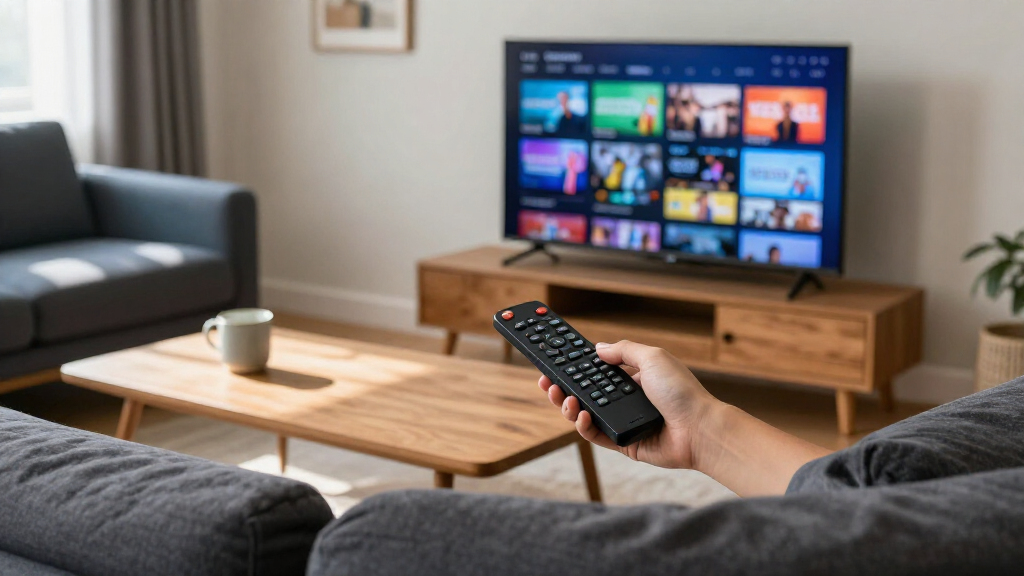
A television can look brilliant at noon and washed out by sunset if its screen does not suit your room. That is why choosing among the best LG smart TVs starts with where you watch, what you watch, and which devices you connect.

Get the latest gadgets delivered free with Prime
- Fast, free delivery on millions of items
- Prime Video, Amazon Music and more included
- Member-only deals all year
LG is known for its OLED televisions, but its lineup also includes premium LCD models and more affordable 4K sets. You will see OLED and QNED in the same product family, alongside changing processor names, gaming features, and webOS versions. The labels help you narrow the field; the exact model specifications tell you what you are actually buying.
This guide explains how to compare picture technology, gaming support, smart features, and sound. It also looks at a QNED92A model from the supplied product brief that may be discontinued or unavailable, without treating that status as certain. You will get a practical way to compare listed alternatives, spot feature gaps, and choose a screen that works in your home.
Start with your room: OLED’s pixel-level control suits dark-scene viewing, while QNED Mini LED models belong on the shortlist for some bright spaces.
Treat the QNED84B as a specification comparison for the QNED92A, not proof of identical performance; the supplied brief lists different HDR support.
Check HDMI ports, VRR, ALLM, and supported refresh rates for the exact screen size and the console or PC you own.
Measure viewing distance, stand footprint, and wall clearance before choosing between 65 and 75 inches.
Verify essential apps and consider your static-screen habits before choosing a smart platform or OLED set.
Choose OLED for dark scenes, or QNED for a brighter-room shortlist
The best LG smart TVs split into two broad display choices: OLED gives each pixel its own light, while QNED refers to LG LCD models. OLED can show very dark blacks and sharp contrast, which makes it a strong fit for films after dark; QNED models may be a better place to start if your room has a lot of daylight. The result depends on the particular model and your viewing conditions.
Think of OLED as a room full of individual lamps you can switch off one by one. In a night scene, a star can remain bright against a nearly black sky without the whole panel glowing. That precision often matters more than a generic “4K” label when you watch moody films or play games in a dim room.
QNED is an LCD route, and the lineup includes premium LCD models such as Mini LED sets. In a sunny family room where the screen faces large windows, an LCD model may be worth comparing for its brightness and reflection handling. Do not assume every QNED set is brighter or better than every OLED; panel design and measured performance differ by model.
There is a tradeoff: OLED’s pixel-level light control is a picture-quality strength, while an LCD set can make more sense for some bright spaces and viewing habits. If your television spends much of the day showing cartoons, news banners, or a computer desktop, factor those long sessions into the decision as well. LG includes OLED care features, but your habits and the manufacturer’s guidance still matter.
Room first, panel second: write down when you watch, where windows sit, and whether lamps reflect on the screen before comparing model names.
Products Worth Considering

Jackery Fridge Guard 1024Wh Backup Power Station with Mount

Bose SoundLink Plus Portable Bluetooth Speaker, Black

Logitech MX Mechanical Wireless Illuminated Keyboard, Tactile Quiet, Graphite
As an affiliate, we earn on qualifying purchases.
Compare the QNED92A with current LG alternatives without guessing
The QNED92A in the supplied brief is a 65-inch 4K Mini LED model with a listed 120Hz refresh rate, Dolby Vision and HDR10, HDMI 2.1, VRR, FreeSync, Xbox Cloud Gaming, and Dolby Atmos. The brief flags it as possibly discontinued or unavailable, so treat it as a reference point and check current official listings in your market. A replacement with similar listed specifications is a useful lead, not a guarantee of equal picture quality.
The same brief names the QNED84B as the closest specification match. It lists 4K Mini LED, an α8 AI Processor 4K Gen3, refresh rates up to 144Hz with VRR, HDR10 Pro, and webOS with Google Gemini. Its HDR entry differs from the QNED92A’s listed Dolby Vision and HDR10, so a shopper who prioritizes Dolby Vision should verify what the exact regional model supports.
The LG C5 OLED is another comparison point, but it changes display technology. The brief lists a 65-inch 4K OLED evo with an Alpha 9 AI Processor Gen8, up to 144Hz, Dolby Vision, Dolby Atmos, NVIDIA G-Sync, AMD FreeSync Premium, and webOS 25. If you mostly watch films in a darker room, that OLED tradeoff may appeal; if you specifically want Mini LED, the C5 is not a like-for-like display replacement.
The listed C6 OLED evo also differs from the QNED92A by using OLED. The Sony BRAVIA XR A80K is a 75-inch comparison in the brief, with Google TV, Dolby Vision, Dolby Atmos, DTS:X, and 120Hz. It is a different brand and size, so it can help you compare platforms or screen scale, but it cannot serve as a direct substitute for a 65-inch LG. Product names and specs can vary by market and model year.
| Model in the brief | Display and listed rate | Useful comparison point |
|---|---|---|
| LG QNED92A | Mini LED, 4K, 120Hz | Reference set; availability may vary |
| LG QNED84B | Mini LED QNED, 4K, up to 144Hz | Closest listed spec overlap; HDR format differs |
| LG C5 OLED evo | OLED, 4K, up to 144Hz | OLED picture and gaming comparison |
| Sony BRAVIA XR A80K | 4K HDR, 120Hz | 75-inch, Google TV alternative |
| LG C6 OLED evo | OLED evo, 4K | Another LG OLED option; verify exact specs |
Use the table as a shortlist, not a ranking. If a retailer page calls one model a successor, open the manufacturer’s specification sheet and compare the feature you care about most. For example, a console player might care more about HDMI 2.1 inputs and VRR than the processor generation, while a film fan may put Dolby Vision higher on the list.
Check gaming features against your console and PC
Many higher-tier LG smart TVs list gaming features such as HDMI 2.1, high refresh rates, VRR, and ALLM, but you must confirm them for the exact model and screen size. VRR can help reduce visible tearing when a game’s frame rate changes; ALLM can switch the TV to a lower-latency mode when a compatible console is active. Those labels matter only if the TV’s ports and your device support the same functions.
Imagine connecting a console, a PC, and an eARC soundbar to one television. You need enough suitable HDMI ports for the devices you use at once, and you may need to choose which one gets the most capable connection. A model can advertise a high refresh rate while still having port limits or resolution restrictions worth checking in its specification sheet.
The product brief lists the QNED92A with HDMI 2.1, VRR, FreeSync, and Xbox Cloud Gaming. The QNED84B entry lists up to 144Hz with VRR, AMD FreeSync Premium, ALLM, Motion Booster 288, Game Optimizer, and Game Dashboard. The C5 entry lists NVIDIA G-Sync, AMD FreeSync Premium, VRR, and Game Optimizer. These are model-specific claims from the brief; verify them against current official product information before purchase.
If you play mostly slower single-player games from a couch, strong contrast and a responsive mode may matter more than chasing the largest refresh-rate number. If you play competitive PC games, ask whether the TV supports your target resolution and refresh rate over the port you plan to use. A quick check of the PC’s output settings and the TV’s input specs can save an expensive mismatch.
- Write down your devices: list consoles, PC, streaming box, and audio gear.
- Check each HDMI input: confirm which ports support the refresh rate, VRR, and eARC functions you need.
- Match the feature names: compare the TV’s supported formats with your console or graphics card.
- Confirm the screen size variant: features can differ within a model family.
This process turns a broad “good for gaming” claim into a concrete fit check. If your console supports 4K at 120Hz but the selected TV configuration does not, the family name will not fix the mismatch.
Pick the right screen size before you compare processors
The right LG TV size is the one that fits your viewing distance, furniture, and wall—not the biggest number you can fit on a product page. A 65-inch set can feel immersive in a medium living room, while a 75-inch model may suit a larger space or viewers sitting farther back. Sit in your usual seat and check the screen’s width, stand depth, and wall clearance before ordering.
For example, imagine your sofa sits across a narrow room and a doorway opens beside the TV stand. A 75-inch screen may dominate the view and block a walkway even if it looks tempting in a showroom. Measure the wall and the set’s full stand footprint, then use painter’s tape to mark the screen corners. The blue outline gives you a better sense of scale than a diagonal measurement.
Placement changes the experience, too. A television mounted too high can make a long film feel like a front-row seat at a tennis match, while glare from a nearby window can flatten dark scenes. Check the viewing angle from the seats you use most, and note whether sunlight hits the screen at your usual viewing time.
Also check the number and location of HDMI ports, USB ports, and the power connection. A wall-mounted TV may hide side-facing connections more easily than rear-facing ones, especially when the mount sits close to the wall. If you expect to add a console later, leave a port available now instead of planning around today’s setup alone.
Size is a practical decision with picture consequences. A larger panel makes subtitles and game details easier to see from across the room, but it can also reveal poor-quality streams or compressed video more clearly. If you mostly watch older broadcast clips, keep that in mind when judging how much of the screen you need.
Choose a processor and HDR format for what you actually watch
LG’s image processors handle jobs such as upscaling, motion processing, and picture adjustments, but a newer processor name does not tell you everything about the resulting image. The supplied comparison lists an Alpha 8 AI Processor Gen2 in the QNED92A, an α8 AI Processor 4K Gen3 in the QNED84B, an Alpha 9 AI Processor Gen8 in the C5, and an a11 AI Processor Gen 3 in the C6. Treat these as model identifiers, then look for independent measurements of the exact TV if picture performance is a priority.
Upscaling matters when your source is below 4K. If you watch a decades-old sitcom through a streaming service, the TV must enlarge a softer image to fill the screen. Good processing can make edges look cleaner, though it cannot create detail that the original video never captured. A crisp native 4K nature documentary and a grainy old recording will not look identical on the same panel.
HDR support is another detail to match to your library. The brief lists Dolby Vision and HDR10 for the QNED92A, HDR10 Pro for the QNED84B, and Dolby Vision for the C5. If most of your films use Dolby Vision, that difference deserves a closer look; if your main use is general broadcast television, it may matter less than brightness, screen size, or viewing angle.
HDR is like adding a wider paint box to a picture, but the TV still needs enough control over light to make those colors and bright highlights convincing. A format logo alone does not tell you how bright the panel gets or how well it handles reflections. Check exact measurements from independent reviews and official specifications, especially if you watch in a room flooded with daylight.
Model generations move quickly, and a processor label can be more memorable than a meaningful performance difference. For instance, a shopper choosing between a previous-generation premium OLED and a newer entry-level LCD should compare observed contrast, brightness, motion, and HDR handling—not assume the newer chip wins every scene. Date-sensitive claims about model generations should be checked against current manufacturer pages and reviews.
Treat webOS as part of the TV, then check your must-have apps
webOS is LG’s smart TV platform, with streaming apps, a home screen, voice features, and smart-home functions that vary by model and region. The product brief lists webOS for the QNED92A, webOS with Google Gemini for the QNED84B, and webOS 25 for the C5. Interface details, app catalogs, and voice features can change over time, so confirm the services you use before buying.
Think of the smart platform as the front door to your viewing routine. If you switch between a local broadcaster’s app, a sports service, and a family streaming account every evening, an easy-to-find app matters more than a clever voice feature you rarely use. Search the TV’s current app support page for your country and the exact service names.
For example, a household that relies on a niche sports app should check whether it works on the TV itself or requires a streaming box. That answer may affect the HDMI ports you need and whether you want to control everything with one remote. A small box tucked beside the TV can be a practical fix, but it adds another device and cable.
Voice features and smart-home connections can be useful when they fit your setup. You might ask the TV to open a streaming app or connect it with compatible home devices, but support can vary by region, account, and product year. Do not infer that one model has every feature because another set in the same brand family does.
A smart platform also has a lifespan separate from the panel. App support and interface updates may evolve, and a television you plan to keep for years may benefit from an external streaming device later. That is not a reason to reject webOS; it is a reminder to prioritize the screen and inputs you need today while keeping future flexibility in mind.
Budget for sound, placement, and long-term use
Built-in TV speakers are convenient, but a soundbar or external audio system can make dialogue clearer and add more weight to explosions, music, and room-filling effects. The product brief lists Dolby Atmos for the QNED92A and C5, virtual 5.1 surround for the QNED84B, and Dolby Atmos plus DTS:X for the Sony A80K. These format labels do not guarantee the same sound from every set; speaker design and room acoustics still matter.
Picture a film night in a room with bare floors and a large window. Voices can sound thin, while action scenes bounce around the room. A soundbar with HDMI eARC may be a useful addition, but check that the television has the connection you need and that your chosen audio equipment supports the formats you plan to use.
OLED care is another long-term consideration. OLED panels can develop persistent image retention under some patterns of prolonged static content, such as leaving a bright news ticker or game interface in the same place for many hours. Built-in care features are designed to reduce risk, but they do not mean you can ignore the manufacturer’s guidance or your usage habits.
If your TV mostly plays varied films and shows, your pattern differs from a shop display running the same logo all day. If it will serve as a computer monitor with a fixed taskbar for long workdays, consider that use before selecting OLED. No simple promise covers every household; your hours, brightness settings, and on-screen content all play a part.
Finally, compare the total setup rather than the panel in isolation. You may need a wall mount, a longer HDMI cable, a soundbar, or a streaming box. A previous-generation premium model can be a better value than a newer entry-level set when its features match your needs, but verify current local model specifications and pricing before deciding.
Frequently Asked Questions
Which LG TV is best overall?
There is no single best LG TV for every room. A premium OLED can suit you if you value deep blacks, contrast, and gaming features, while a QNED LCD model may better fit a bright space or different budget. Compare the exact screen size and model specifications.
Is LG OLED worth the extra cost?
OLED can be worth it if you watch films in a darker room and care about black levels, contrast, and wide viewing angles. Those strengths may matter less if your TV sits in direct sunlight or mostly plays casual daytime content. Compare the full setup cost as well as the panel.
Is OLED or QNED better?
OLED offers pixel-level light control and excellent blacks, while QNED is LG’s branding for certain LCD TVs. QNED may suit some brighter rooms, but performance varies substantially by model. Match the panel to your lighting and viewing habits rather than relying on the label alone.
Do all LG TVs have HDMI 2.1 and 120Hz?
No. HDMI 2.1 capability and refresh rates depend on the specific model and can vary by screen size. Check the official specification sheet for the inputs you plan to use, along with the supported resolution and refresh rate for each device.
Are LG TVs good for gaming?
Many higher-tier LG models list features such as VRR, ALLM, and high refresh rates. The feature set is not identical across the lineup, so check port support and compatibility with your console or graphics card. A high refresh-rate label alone does not establish that every input supports your preferred mode.
Can OLED suffer burn-in?
OLED can develop persistent image retention under certain usage patterns, particularly with long-running static images. LG’s care features aim to reduce the risk, but they cannot guarantee it will never happen. If you plan to leave a desktop taskbar or news ticker on screen for long periods, factor that use into your choice.
Conclusion
Choose your LG TV by matching the panel to the room, the ports to your devices, and the screen size to your seating. If you are replacing a QNED92A, compare the exact QNED84B and OLED alternatives against the features you rely on; a similar product name does not promise the same HDR, gaming, or picture performance.
Measure the wall, check the specification sheet, and then picture your next film night: the right screen should make the room disappear and leave only the story glowing.