TL;DR

Get the latest gadgets delivered free with Prime
- Fast, free delivery on millions of items
- Prime Video, Amazon Music and more included
- Member-only deals all year
A new episode of The Quantum Kid’s Kai Asks series uses a violin to explain how researchers calibrate superconducting qubits. The comparison illustrates why each qubit needs individual settings, why those settings can drift, and why larger quantum computers will require more calibration work and trained staff.
A new episode of The Quantum Kid’s Kai Asks series explains how researchers tune superconducting quantum computers, using a violin to show why each qubit needs individually calibrated settings. In the episode, Quantum Machines education and workforce development manager Kristina Callaghan describes a routine that must be repeated as device parameters drift—a practical challenge that grows as quantum processors add qubits.
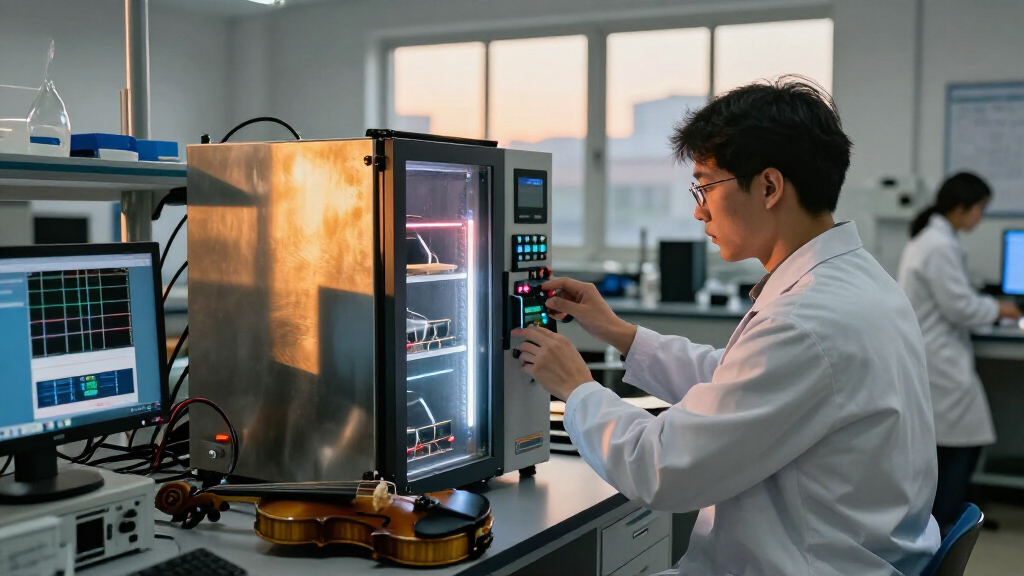
The episode begins with 10-year-old host Kai playing his violin before asking Callaghan how scientists tune qubits. The analogy centers on differences between instruments: just as strings need individual adjustments to sound at the intended pitch, superconducting qubits can behave differently because of small variations introduced during fabrication. Each has its own resonant frequency, or characteristic “note.”
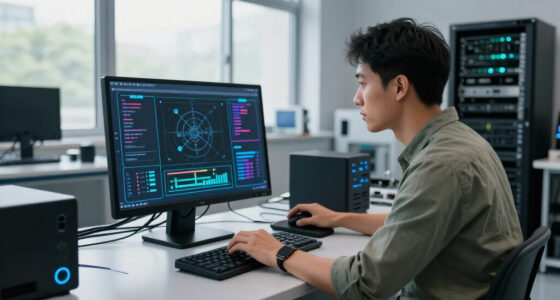
Researchers use microwave pulses to control qubits, so they need to identify the appropriate frequencies and pulse settings for each device. The process can begin with spectroscopy, in which researchers sweep a signal across frequencies and look for a response from a qubit or its readout resonator. They can then run experiments such as Rabi oscillations to determine the pulse duration or strength needed to change a qubit’s state.
Calibration also involves refining readout, measuring how long a qubit retains its state, and adjusting the gates used in quantum algorithms. The report says these parameters can drift over hours or days, making calibration a recurring task rather than a one-time setup. As processors grow from a handful of qubits to hundreds, the work becomes harder to manage and increasingly calls for automation.
Calibration Work Grows With Qubit Counts
Public discussion of quantum computing often emphasizes processor size and algorithms, but calibration is part of making a machine operate reliably. Each qubit added can bring additional measurements and settings to find and maintain. The episode makes that behind-the-scenes work more accessible by connecting it to a familiar task: tuning an instrument before playing.
The workforce implications are practical. The report says that as quantum computers move from research laboratories toward data centres, more people will be needed to operate and maintain them. Callaghan’s role includes developing training through university and community-college partnerships. According to the report, students in programmes she helped design have run calibration experiments on real qubits, including some with no prior coding experience.
The analogy is useful for explaining the basic idea, but it is not a complete account of quantum calibration. Actual procedures involve measurement, control systems, and device-specific experiments. The episode’s central point is that reliability depends on repeated technical work, not only on building a processor with more qubits.
quantum computer calibration tools
As an affiliate, we earn on qualifying purchases.
As an affiliate, we earn on qualifying purchases.
From Violin Strings to Microwave Pulses
The Quantum Kid’s Kai Asks is a short-form educational series in which Kai puts questions to an expert. The October 9 report describes the episode as a short explanation of calibration featuring Callaghan, whose job at Quantum Machines focuses on quantum education and workforce development. The series is produced by Tesseract Quantum, a Swiss non-profit focused on quantum education.
In the violin comparison, tightening or loosening a string changes its pitch, while temperature and humidity can affect how well it stays in tune. In a superconducting quantum computer, the corresponding challenge is not adjusting a physical string: researchers characterize a qubit’s response and set the control signals accordingly. The shared ideas are that devices differ, precision matters, and settings can change over time.
The report describes spectroscopy and Rabi experiments as steps in a broader calibration process. The measurements help researchers determine how a particular system responds and how to operate it. Repeating them is part of managing drift; the analogy should not be taken to mean that quantum devices drift for the same reasons as violins.
microwave pulse generator for qubits
As an affiliate, we earn on qualifying purchases.
As an affiliate, we earn on qualifying purchases.
Automation and Staffing Remain Open
The report does not provide measurements of how much calibration time a processor requires, how workload changes with a specific increase in qubit count, or how much of the process current systems can automate. It also gives no timetable for when quantum computers will move broadly into data centres. The workforce discussion describes training activity and anticipated demand, but does not quantify the number of technicians or engineers needed.
The episode is an educational explanation, not a new experimental result or a report of a particular processor reaching a performance milestone. The source does not provide independent evaluations of the training programmes or evidence that the violin analogy covers every calibration challenge across different quantum hardware designs.
superconducting qubit calibration kit
As an affiliate, we earn on qualifying purchases.
As an affiliate, we earn on qualifying purchases.
Training and Automation in Focus
The immediate next step for readers is the episode itself, which the report presents as an accessible introduction to qubit calibration. For the field, the issues raised are ongoing: researchers must keep refining calibration routines as devices drift, while hardware teams work on managing the larger workload associated with scaling.
Callaghan’s education work is aimed at preparing technicians and engineers through partnerships with universities and community colleges. The report does not identify a specific upcoming programme milestone or release date for further episodes. It leaves open how quickly automation and workforce training will meet the needs of larger processors and data-centre operations.
As an affiliate, we earn on qualifying purchases.
Key Questions
What does qubit calibration mean?
Qubit calibration is the process of finding and maintaining the control settings that let researchers operate a particular qubit as intended. It can include identifying its resonant frequency and adjusting microwave pulses and readout settings.
Why does each superconducting qubit need its own settings?
The report says small fabrication differences mean that each qubit can behave somewhat differently and have its own resonant frequency. Researchers measure each device rather than assuming all qubits respond identically.
Why must calibration be repeated?
Parameters can drift over hours or days, according to the report. Repeating calibration helps researchers check and update settings rather than relying on a single initial adjustment.
How does calibration affect quantum-computing jobs?
As processors grow, there are more qubits and settings to characterize and maintain. The report says this increases the workload and may make automation and trained technicians more important.
Is the violin comparison a technical description of calibration?
It is an educational analogy, not a full technical account. It illustrates that devices differ, precise tuning matters, and settings can change; actual calibration uses experiments such as spectroscopy and Rabi measurements.
Source: rss
Columbus Day / Indigenous Peoples' Day Picks
long weekend sales
As an affiliate, we earn on qualifying purchases.