

Gewerkton has entered beta with a voice-first platform designed to turn activity on construction sites into structured evidence, reports and coordinated project data. A public beta is planned for fall 2026.
Tech News · Gewerkton Beta
Construction records begin with a voice
Gewerkton enters beta with a platform that turns activity on site into structured evidence, reports and coordinated project data—without making every workflow begin at a desk.
One platform · three connected lines
Field
Voice-first site capture for evidence, defects, daywork reports, takt and portal access.
Speech → structured site record
Studio
A browser workspace to use an existing model—or create one when the project has none.
Plans + models → shared reference
Cloud
The coordination layer connecting Field, Studio and third-party project systems.
Capture → wider project environment
Global scope, regional control
content languages
Multilingual handling runs from initial capture through to the report, including Chinese, Korean and Vietnamese crews.
AI providers
Customers bring their own keys, choose the provider and avoid tying the construction workflow to one AI vendor.
Provider region and data location remain choices
Organisations can select regional AI services and deploy through an EU cloud or on their own infrastructure.
German commercial foundation
Deep integrations cover GAEB, REB, XRechnung and DATEV, while the architecture targets projects across Europe, the US and Asia.
An agent-built beta
A solo founder directs coding agents using Codex and Claude, with verification through negative controls and mutation tests.
“On site, what counts is what’s proven.”
Born in the German market but built for global use, Gewerkton combines construction documentation and defect management with commercial integrations, multilingual workflows and a choice of regional AI providers. Its three connected product lines are Field, Studio and Cloud, covering site capture, browser-based planning and modelling, and coordination between project systems.
The German foundation is visible in integrations for GAEB, REB, XRechnung and DATEV. Gewerkton describes this as its deepest commercial integration, while its broader architecture is aimed at projects operating across Europe, the US and Asia. The platform supports content in 27 languages and lets organisations select AI providers by region, including providers in the EU, US, Asia and mainland China.
The central idea is captured in the company’s marketing line: “On site, what counts is what’s proven.” In practice, the product is intended to help teams preserve what happened, where it happened and how it was recorded, without making the site team begin every workflow at a desk.

Tonfarb 136GB Digital Voice Recorder with Playback,9775 Hours Audio Record
- High-Quality PCM Recording: 1536 kbps HD audio capture
- Automatic Noise Reduction: Reduces background noise effectively
- Voice-Activated Recording: Records only during speech
As an affiliate, we earn on qualifying purchases.
As an affiliate, we earn on qualifying purchases.
Three product lines under one brand
Gewerkton divides the platform into three product lines rather than presenting it as a single oversized application. Field handles work at the construction site. Studio provides a browser workspace for plans and models. Cloud connects the operational and data layers between the two, as well as third-party systems.
Gewerkton Field is the voice-first construction site app. Its workflows cover dictation to evidence, defects, daywork reports, takt and portal access. The emphasis on speech reflects the conditions of site work, where documenting an instruction, change or issue can otherwise compete with the physical task at hand.
Field is not presented merely as a transcription tool. Voice capture sits at the beginning of structured construction workflows: an observation can become evidence, a defect or a report rather than remaining an isolated recording. Original audio can also support instructions on projects with long durations and numerous change orders.
Gewerkton Studio is the browser workspace for plans and models. Where a model already exists, teams can work with it in the browser. Where no model exists, the site team can create one there. That distinction matters for projects that need a shared spatial or operational reference but do not begin with a complete model.
Gewerkton Cloud handles operations and model or data coordination between Field, Studio and third parties. It is the connecting layer of the product family, carrying information from site capture into the wider project environment and coordinating it across the platform’s browser and field components.
All three lines are part of the current beta. Gewerkton is in beta now, and its public beta is planned for fall 2026. That status is important: the product scope is defined, but this is still a beta-stage platform rather than a finished general release.
![Construction Project Management & Estimating for Beginners: [2 in 1] From Estimates to Execution - Mastering Project Bids, Estimating Techniques and Management Essentials for New Professionals](https://m.media-amazon.com/images/I/511FzD120CL._SL500_.jpg)
Construction Project Management & Estimating for Beginners: [2 in 1] From Estimates to Execution – Mastering Project Bids, Estimating Techniques and Management Essentials for New Professionals
As an affiliate, we earn on qualifying purchases.
As an affiliate, we earn on qualifying purchases.
Designed around different construction environments
The intended deployment fields range from distributed renewable-energy sites to housing, industrial plants and tunnels. These environments share a need for reliable site records, but the practical demands differ considerably.
Wind farms and renewable-energy projects
Wind farms and other renewable projects often involve distributed sites and crews that rotate between locations. Gewerkton’s proposed role includes field acceptance and offline capture in dead zones, allowing activity to be recorded where connectivity is absent. That makes the field workflow relevant to work spread across large areas rather than concentrated in one continuously connected building.

Data centres and industrial plants
Data centres and industrial plants bring many trades together in parallel under tight deadlines. For these projects, the platform can turn decisions made in meetings into task lists sorted by trade. The value is less about storing another set of meeting notes and more about moving decisions into the operational structure used by the people expected to act on them.
Housing and building construction
For housing and conventional building construction, the stated workflows are more familiar but no less consequential: defects recorded with a photograph and deadline, dictated daywork reports, and a signature made on the device available at handover. Together, these features address recurring site tasks that frequently move between paper, messaging, photographs and separate reporting systems.
Infrastructure and tunnels
Infrastructure and tunnel projects can run for long periods and accumulate many change orders. Gewerkton positions original audio as backing for recorded instructions, retaining the source alongside the resulting documentation. The same voice-first approach that makes capture quicker on site also provides an original record from which structured information was produced.

AI Language Translator Device, 2026 Upgraded No WiFi Needed, 150 Languages Online/Offline/Group/Phone Translation Device, 5.5" Screen Two Way Real-Time Voice Translator for Travel Business Learning
- 5.5" IPS Touch Screen: Large, easy-to-use display
- Offline Translation Support: Translates 21 languages without internet
- Compact and Portable: Includes lanyard and protective case
As an affiliate, we earn on qualifying purchases.
As an affiliate, we earn on qualifying purchases.
Multilingual work from capture to report
Cross-border construction teams are a central part of Gewerkton’s global positioning. The platform is designed for EU, US and APAC participants working on the same project, with each person operating in their own language while the evidence original remains unambiguous.
For projects in Asia, the stated scope includes Chinese, Korean and Vietnamese crews, with multilingual handling from initial capture through to the report. The aim is not simply to translate a finished document at the end of a workflow. Language support begins when information is recorded and continues as it becomes structured project material.
Gewerkton supports 27 content languages. That language coverage is paired with regional control over AI services and data location, addressing projects whose participants, infrastructure and information requirements span several jurisdictions.
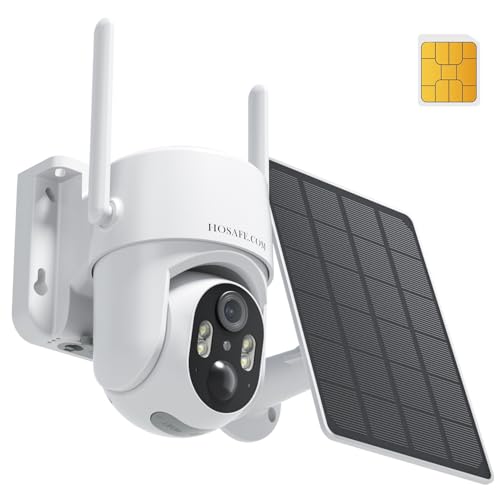
HOSAFE.COM 4G LTE Cellular Security Camera No Internet Needed,2K Solar No WiFi Security Camera Outdoor Wireless with SIM Card Jobsite, 360 Live View, Motion Detection, Free Cloud Storage(Need Apply)
- Built-in SIM Card: Pre-installed 4G LTE SIM card included
- Wireless Solar-Powered: Completely wire-free design
- PTZ & 2K HD Night Vision: 270° pan and 90° tilt capabilities
As an affiliate, we earn on qualifying purchases.
As an affiliate, we earn on qualifying purchases.
Bring-your-own AI and regional choice
The platform’s BYO-AI model supports 13 AI providers. Customers bring their own keys and select a provider region, with EU, US and Asian choices, including mainland China. Gewerkton presents this as a route away from vendor lock-in: the construction workflow is not tied to one AI provider or one provider region.
Data residency follows a similarly explicit choice. Organisations can use an EU cloud or run the system on their own infrastructure. For projects in Asia, residency can therefore be selected alongside the language and AI-provider configuration rather than treated as an unrelated setting.
This combination is one of the more distinctive elements of the beta. The German integrations are specific, extending into established commercial formats and systems, while language, provider and deployment choices widen the intended operating area. Gewerkton is not hiding its market of origin, but neither is it limiting the platform to that origin.
A tracker-free public presence
The same regional and infrastructure concerns appear in the product’s marketing site. It runs in 27 languages with zero trackers, no cookie banner and a fully egress-free architecture. Those are characteristics of the site itself, separate from the beta product, but they reinforce the broader emphasis on controlling where data goes.
The company has also assembled a media bank containing more than 51 self-produced clips and posters. That gives the still-emerging platform a sizeable body of its own explanatory material without changing the essential status of the software: it remains in beta, with the public beta scheduled for fall 2026.
Built by a solo founder and a fleet of agents
Gewerkton is being built by a solo founder directing a fleet of coding agents using Codex and Claude. In one night, that fleet shipped 21 software packages. The packages were verified with negative controls and mutation tests, methods intended to test whether checks fail when they should and whether tests detect deliberately introduced changes.
The development model is unusual, particularly alongside the breadth of the proposed platform. Field, Studio and Cloud cover different parts of construction work, while the language, infrastructure and AI-provider options add another layer of scope. The beta will be the practical setting in which that scope is exercised before the planned public beta.
What is available now, and what comes next
What ships now is the beta-stage Gewerkton product family: Field for voice-first site capture and operational workflows, Studio for browser-based plans and models, and Cloud for coordination between those products and third parties. The platform includes 27 content languages, a BYO-AI approach spanning 13 providers, regional provider selection, and a choice between EU cloud deployment and an organisation’s own infrastructure.
What has not happened yet is the public beta. That is planned for fall 2026. Until then, Gewerkton should be read as an ambitious beta entering the construction technology market with a clearly defined proposition: capture work by voice, preserve the original evidence, structure it for project use, and coordinate it across sites, models and systems.