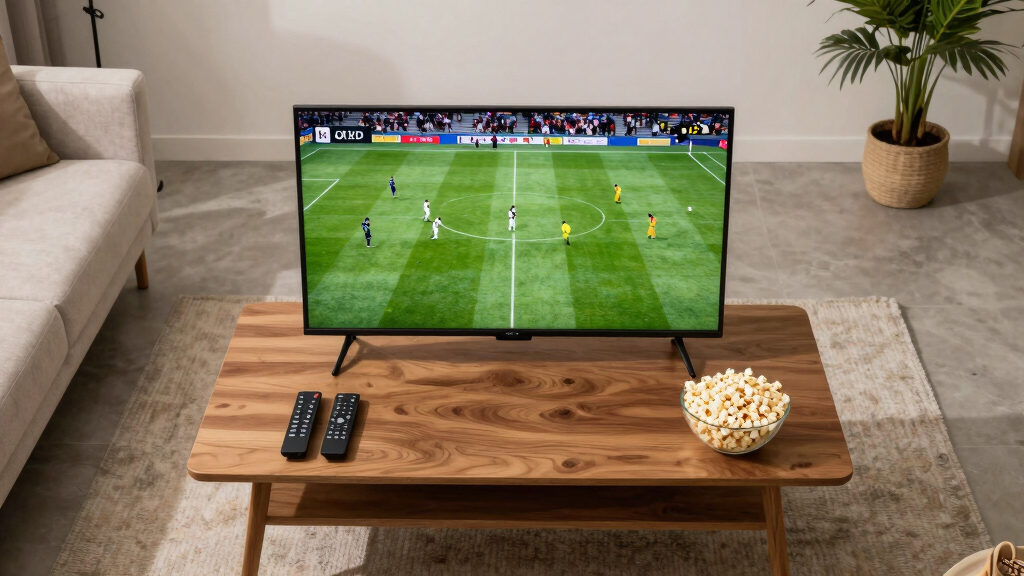

The LG 55-inch OLED evo C6 is my best overall pick among 4K OLED TVs for World Cup viewing because it balances motion handling, contrast, viewing angles, and a practical screen size. The Samsung S95F is better for bright daytime rooms, while the LG C5 offers stronger value for buyers willing to choose an older generation. The main tradeoffs are screen size versus price, glossy contrast versus reflection control, and premium brightness versus features that have little effect on live football. One listed model, the Samsung M70H, uses Mini LED rather than OLED, so I treat it as a bright-room alternative instead of a true category match. Continue reading for the full ranking logic, buying priorities, and buyer-specific recommendations.
Complete the kit



Key Takeaways
- The LG C6 is the best-balanced choice, pairing OLED viewing angles and contrast with a mainstream 55-inch size that suits more rooms than the 42-inch and 77-inch options.
- The Samsung S95F is the bright-room specialist, while the LG G5 is the stronger premium fit for buyers who prefer Dolby Vision and a wall-focused design.
- The LG C5 offers the clearest value route because its sports-friendly fundamentals matter more than paying extra for every new AI or gaming feature.
- Screen size changes the experience more than small specification gains: the Samsung S85F and Panasonic Z8 make sense for large groups, while the 42-inch C6 is built for close seating.
- The Samsung M70H is not an OLED TV; it belongs in this comparison only as a Mini LED alternative for rooms where sustained brightness matters more than perfect black levels.
| Samsung 55-Inch Class Mini LED M70H Series Smart TV |  | Best Bright-Room OLED Alternative | Screen Size: 55 inches | Display Technology: Mini LED | Resolution: 4K | VIEW LATEST PRICE | See Our Full Breakdown |
| LG 55-Inch Class OLED evo AI 4K C6 Series Smart TV |  | Best Overall | Screen Size: 55 inches | Resolution: 4K | Processor: a11 AI Processor Gen 3 | VIEW LATEST PRICE | See Our Full Breakdown |
| Samsung 77-Inch Class OLED 4K S85F Series Smart TV |  | Best for Large Watch Parties | Screen Size: 77 inches | Resolution: 4K | Series: S85F | VIEW LATEST PRICE | See Our Full Breakdown |
| LG 55-Inch Class OLED evo G5 Series 4K Smart TV |  | Best Premium Pick | Screen Size: 55 inches | Resolution: 4K | Processor: Alpha 11 AI Processor Gen 2 | VIEW LATEST PRICE | See Our Full Breakdown |
| LG 42-Inch Class OLED evo AI 4K C6 Series Smart TV |  | Best Compact Pick | Screen Size: 42 inches | Display Technology: OLED | Resolution: 4K | VIEW LATEST PRICE | See Our Full Breakdown |
| Samsung 65-Inch Class OLED S95F 4K Smart TV (2025 Model) |  | Best Overall for Bright Rooms | Screen Size: 65 inches | Model Year: 2025 | Processor: NQ4 AI Gen3 | VIEW LATEST PRICE | See Our Full Breakdown |
| Samsung 65-Inch Class OLED S90F 4K Smart TV (2025 Model) |  | Best Balanced Samsung Pick | Screen Size: 65 inches | Resolution: 4K | Processor: NQ4 AI Gen3 | VIEW LATEST PRICE | See Our Full Breakdown |
| LG 65-Inch Class OLED evo AI 4K C5 Series Smart TV |  | Best for Sports and Gaming | Screen Size: 65 inches | Resolution: 4K | Display Technology: OLED evo | VIEW LATEST PRICE | See Our Full Breakdown |
| Panasonic Z8 Series 77-inch OLED 4K Ultra HD Smart Fire TV |  | Best Big-Screen Match-Day Pick | Screen Size: 77 inches | Resolution: 4K Ultra HD | Processor: HCX Pro AI Processor MKII | VIEW LATEST PRICE | See Our Full Breakdown |
| Sony 65 Inch BRAVIA XR OLED 4K HDR Smart Google TV (K-65XR80M2) |  | Best for Film Fans Who Watch Football | Screen Size: 65 inches | Display Technology: QD-OLED | Resolution: 4K HDR | VIEW LATEST PRICE | See Our Full Breakdown |
| 4K OLED TVs for World Cup viewing | Screen Size | Resolution | Refresh Rate | Processor |
|---|---|---|---|---|
| Samsung 55-Inch Class Mini LED | 55 inches | 4K | 120Hz | — |
| LG 55-Inch Class OLED evo AI 4 | 55 inches | 4K | 165Hz | a11 AI Processor Gen 3 |
| Samsung 77-Inch Class OLED 4K | 77 inches | 4K | — | NQ4 AI Gen2 |
| LG 55-Inch Class OLED evo G5 S | 55 inches | 4K | Up to 165Hz | Alpha 11 AI Processor Gen 2 |
| LG 42-Inch Class OLED evo AI 4 | 42 inches | 4K | 120Hz | — |
| Samsung 65-Inch Class OLED S95 | 65 inches | — | 164Hz | NQ4 AI Gen3 |
| Samsung 65-Inch Class OLED S90 | 65 inches | 4K | 144Hz | NQ4 AI Gen3 |
| LG 65-Inch Class OLED evo AI 4 | 65 inches | 4K | 144Hz | Alpha 9 AI Processor Gen8 |
| Panasonic Z8 Series 77-inch OL | 77 inches | 4K Ultra HD | 144Hz | HCX Pro AI Processor MKII |
| Sony 65 Inch BRAVIA XR OLED 4K | 65 inches | 4K HDR | — | XR Processor with AI |
More Details on Our Top Picks
Samsung 55-Inch Class Mini LED M70H Series Smart TV
I place the Samsung M70H here as the lineup’s deliberate OLED alternative. Its Mini LED brightness and 120Hz panel suit daytime World Cup parties, where sunlight and fast camera pans can expose a dimmer or slower display. Soccer Mode also gives viewers a dedicated match-focused preset. Compared with the LG OLED evo C6, the M70H cannot reproduce the same pixel-level blacks, so dark-room contrast and uniformity are less convincing. Software-based dimming may also produce less precise control around bright score graphics. In return, buyers get Samsung TV Plus, Gaming Hub, and more than 2,700 free channels. I see this as a practical choice for bright shared spaces, though account requirements and reliance on current software make it less straightforward than a basic television.
Pros:- Bright Mini LED highlights remain suitable for daytime football viewing
- 120Hz refresh rate supports smoother fast-paced motion
- Soccer Mode provides a dedicated match-viewing preset
- Samsung TV Plus offers access to more than 2,700 free channels
Cons:- It is a Mini LED television rather than an OLED model
- Software-based dimming may show less precise contrast around bright objects
- Several features require internet access, current software, and a Samsung account
Best for: Households hosting afternoon matches in bright living rooms that value high brightness, smooth motion, and free streaming channels over perfect OLED blacks
Not ideal for: Dark-room movie viewers seeking pixel-level black control—the Mini LED panel and software-based dimming cannot fully match OLED
- Screen Size:55 inches
- Display Technology:Mini LED
- Resolution:4K
- Refresh Rate:120Hz
- HDR:Mini LED HDR
- Color Technology:Pure Spectrum Color
- Special Mode:Soccer Mode
- Dimming Technology:Supreme Mini LED Dimming
Our verdict“I recommend the M70H for bright-room match parties, but OLED-focused buyers should choose the LG C6 for stronger black levels.”
LG 55-Inch Class OLED evo AI 4K C6 Series Smart TV
I rank the LG OLED evo C6 as the best overall choice because it balances match-day scale, OLED contrast, and unusually strong gaming performance. The 55-inch screen is large enough for most living rooms without demanding the space required by Samsung’s 77-inch S85F. Its Perfect Black technology and Brightness Booster help separate players from shaded grass and preserve detail during evening fixtures, while Dolby Atmos adds width to crowd sound. Compared with the LG G5, the C6 lacks the flagship model’s stated brightness gain and gallery-style design, but it should be the more balanced option for viewers who do not need a wall-focused installation. The 165Hz refresh rate and 0.1ms response time mainly add value for gaming; broadcast football will not use that full ceiling. Price and advanced setup remain the main reservations.
Pros:- OLED black levels produce strong field and stadium contrast
- Brightness Booster supports more convincing highlights
- 165Hz refresh rate and 0.1ms response time suit gaming between matches
- Dolby Vision and Dolby Atmos support cinematic viewing
Cons:- High-end picture and gaming features are likely to carry a premium price
- Configuring G-Sync, FreeSync, and other gaming settings can be complex
- Its 55-inch size may overwhelm very small rooms
Best for: Football fans wanting a versatile 55-inch OLED for group viewing, films, and high-refresh gaming in a typical living room
Not ideal for: Budget buyers or viewers who only watch broadcast television and would gain little from the advanced gaming hardware
- Screen Size:55 inches
- Resolution:4K
- Processor:a11 AI Processor Gen 3
- HDR:Dolby Vision and HDR10
- Sound:Dolby Atmos
- Refresh Rate:165Hz
- Response Time:0.1ms
- Gaming Support:NVIDIA G-Sync and AMD FreeSync Premium
- Smart Platform:webOS 2026
Our verdict“I see the C6 as the strongest all-rounder for buyers who want excellent football viewing without stepping up to the G5’s flagship positioning.”
Samsung 77-Inch Class OLED 4K S85F Series Smart TV
I give the Samsung S85F the large-group role because its 77-inch OLED screen makes formations, passes, and score graphics easier to follow from seats across a spacious room. Compared with the 55-inch LG C6, this model prioritizes shared scale over compact versatility. The NQ4 AI Gen2 processor can upscale lower-resolution feeds, while Color Booster Pro and Pantone-validated color target a lively, realistic pitch. Object Tracking Sound Lite with Dolby Atmos also offers a more spatial presentation than the LG 42-inch C6’s basic 2.0-channel system. The tradeoff is commitment: a 77-inch screen needs ample wall space and a suitable viewing distance, and the high-end price may be difficult to justify outside frequent group events. Buyers seeking the LG G5’s stated brightness lift or documented 165Hz gaming support have clearer reasons to choose that model instead.
Pros:- Large 77-inch OLED screen gives distant viewers a clearer view
- NQ4 AI Gen2 processing upscales lower-resolution match feeds
- Pantone-validated color and Color Booster Pro support realistic color reproduction
- Object Tracking Sound Lite with Dolby Atmos adds spatial crowd sound
Cons:- The 77-inch size demands generous wall space and viewing distance
- High-end pricing may be excessive for occasional match viewing
- Its advanced processing and smart features may involve a learning curve
Best for: Football hosts with a large room who regularly seat several viewers far from the screen
Not ideal for: Apartment dwellers and solo viewers—the 77-inch panel requires substantial space and may not justify its higher cost
- Screen Size:77 inches
- Resolution:4K
- Series:S85F
- Model Year:2025
- Processor:NQ4 AI Gen2
- Sound:Object Tracking Sound Lite with Dolby Atmos
- Color Technology:Color Booster Pro
- Design:Contour Design
Our verdict“I would choose the S85F for a roomy World Cup gathering where screen size matters more than compact placement or flagship gaming specifications.”
LG 55-Inch Class OLED evo G5 Series 4K Smart TV
I reserve the premium position for the LG OLED evo G5. Its stated 45% brightness increase over previous models addresses a familiar OLED concern during sunlit afternoon fixtures, while perfect blacks retain separation in shaded stands and night matches. Compared with the LG C6, the G5 places more emphasis on brightness, wall-mounted styling, and long-term ownership; its five-year panel warranty supports that premium case. Four HDMI 2.1 inputs, refresh rates up to 165Hz, and a 0.1ms response time also make it the stronger hub for several modern game systems. Those extras do not make every football broadcast look better, since results still depend on source quality. The One Wall Design also makes the most visual sense when mounted, which adds installation work. I rank it below the C6 for value, but above it for buyers seeking flagship presentation.
Pros:- Stated 45% brightness increase supports daytime match viewing
- Perfect black levels preserve strong stadium contrast
- Four HDMI 2.1 inputs and up to 165Hz refresh rate suit gaming systems
- Five-year panel warranty adds reassurance at the premium tier
Cons:- Premium pricing makes it harder to justify than the LG C6
- One Wall Design is best realized through wall installation
- Picture gains can vary with the quality of the broadcast source
Best for: Design-conscious football fans with bright living rooms who want a wall-mounted flagship OLED and multiple HDMI 2.1 connections
Not ideal for: Value-focused viewers or renters who cannot wall-mount the television and will not use its high-refresh gaming hardware
- Screen Size:55 inches
- Resolution:4K
- Processor:Alpha 11 AI Processor Gen 2
- Brightness:Up to 45% brighter than previous models
- HDR:Dolby Vision
- Sound:Dolby Atmos
- Refresh Rate:Up to 165Hz
- HDMI Inputs:4 HDMI 2.1
- Panel Warranty:5 years
Our verdict“I recommend the G5 to buyers willing to pay more for brighter OLED presentation, wall-first styling, and extensive gaming connectivity.”
LG 42-Inch Class OLED evo AI 4K C6 Series Smart TV
I make the 42-inch LG OLED evo C6 the compact pick for bedrooms, offices, and small apartments where a 55- or 77-inch screen would dominate the room. It retains self-lit OLED pixels, Dolby Vision, and a 0.1ms response time, so downsizing does not mean surrendering deep blacks or responsive play. Compared with the 55-inch C6, however, its 120Hz refresh rate is lower, and the smaller picture is less satisfying for a crowd watching from several seats. That distinction matters more for group viewing than for normal broadcast motion. The 2.0-channel audio system is another compromise; Dolby Atmos processing cannot provide the physical scale of a fuller speaker setup. At 22.3 pounds, mounting still requires suitable hardware. I favor it for close-range personal viewing, not as the centerpiece of a large World Cup party.
Pros:- Compact 42-inch size fits bedrooms, offices, and small apartments
- Self-lit OLED pixels provide deep blacks and precise contrast
- Dolby Vision supports compatible HDR content
- 120Hz refresh rate and 0.1ms response time also suit gaming
Cons:- The small screen is less engaging for group viewing
- 120Hz refresh rate trails the 55-inch C6 and G5 models
- The 2.0-channel audio system may need external speakers for room-filling crowd sound
Best for: Apartment residents, bedroom viewers, and desk-based gamers watching matches from a short distance
Not ideal for: Hosts planning large World Cup gatherings—the 42-inch screen and 2.0-channel audio lack the scale needed for a crowd
- Screen Size:42 inches
- Display Technology:OLED
- Resolution:4K
- Refresh Rate:120Hz
- HDR Formats:HDR10, Dolby Vision, and Hybrid Log Gamma
- Response Time:0.1ms
- Audio:2.0-channel with Dolby Atmos
- Smart System:webOS 26
- Weight:22.3 pounds
Our verdict“I recommend the 42-inch C6 for close-range viewers who want OLED quality in a small room rather than a television built for a packed watch party.”
Samsung 65-Inch Class OLED S95F 4K Smart TV (2025 Model)
I rank the Samsung S95F highest for daytime World Cup parties because its Glare Free screen tackles reflections that can wash out darker OLED pictures. The NQ4 AI Gen3 processor also upscales lower-resolution broadcasts, while the 164Hz panel and Motion Xcelerator keep quick passes and camera pans looking controlled. Compared with the Samsung S90F, it offers a higher refresh ceiling and stronger reflection handling, making it the more convincing choice for sunny living rooms. That advantage carries a premium, and buyers may spend time adjusting its many processing options. Its brightness-focused design may also use more power than less aggressive OLED sets. I would choose it for mixed lighting and large groups, but the S90F offers much of the same Samsung experience for buyers who do not need maximum motion headroom or specialized glare control.
Pros:- Glare Free screen reduces reflections during daytime matches
- 164Hz refresh capability provides ample motion headroom for sports and gaming
- NQ4 AI Gen3 processing improves lower-quality broadcast feeds
- Pixel-level blacks preserve strong contrast around players and stadium lighting
Cons:- Premium positioning makes it harder to justify for viewers who mainly watch at night
- Extensive AI and motion settings may require careful setup
- High-brightness operation may increase power consumption
Best for: Football hosts watching afternoon matches in bright living rooms where windows and overhead lights create distracting reflections
Not ideal for: Budget-focused nighttime viewers who can get similar OLED contrast from the Samsung S90F without paying for advanced glare control
- Screen Size:65 inches
- Model Year:2025
- Processor:NQ4 AI Gen3
- Refresh Rate:164Hz
- HDR:HDR Pro
- Motion Technology:Motion Xcelerator
- Reflection Control:Glare Free
- Audio:Dolby Atmos
Our verdict“The S95F is my first choice for bright-room World Cup gatherings where reflection control and polished motion matter more than price.”
Samsung 65-Inch Class OLED S90F 4K Smart TV (2025 Model)
The Samsung S90F is my balanced pick for buyers who want Samsung’s current OLED processing without stepping up to the S95F’s more specialized bright-room package. Its 144Hz refresh rate gives fast football movement plenty of room to remain fluid, while NQ4 AI Gen3 upscaling can clean up compressed streams and broadcasts on the 65-inch screen. Pro HDR+ also adds punch to uniforms and floodlit pitches. Compared with the Samsung S95F, however, it lacks the same stated Glare Free advantage and has a lower refresh ceiling, so it is less compelling opposite large windows. Setup can still feel dense because several AI and motion controls compete for attention. I place it behind the S95F for daytime viewing, yet ahead for buyers seeking a less feature-heavy alternative with strong sports motion.
Pros:- 144Hz panel supports smooth football action and gaming
- NQ4 AI Gen3 processor upscales compressed or lower-resolution broadcasts
- Pro HDR+ produces bright highlights and deep OLED contrast
- 65-inch screen suits shared viewing without requiring a very large room
Cons:- No stated Glare Free screen like the Samsung S95F
- Advanced picture controls may be confusing during initial setup
- Premium features can place it beyond entry-level OLED budgets
Best for: Samsung-focused buyers watching evening matches who want capable motion processing without paying for the S95F’s flagship reflection control
Not ideal for: Households with strong daylight directly facing the screen, where the Samsung S95F is better equipped to control reflections
- Screen Size:65 inches
- Resolution:4K
- Processor:NQ4 AI Gen3
- HDR:Pro HDR+
- Refresh Rate:144Hz
- Upscaling:AI neural networks
- Voice Assistant:Alexa Built-in
Our verdict“The S90F makes sense for evening-match viewers who want Samsung’s polished OLED processing but can skip the S95F’s stronger daylight features.”
LG 65-Inch Class OLED evo AI 4K C5 Series Smart TV
I would put the LG OLED evo C5 at the front of the sports-and-gaming crossover category. Its 144Hz refresh rate and 0.1ms response time support clean controller response after the match, while four HDMI 2.1 inputs leave room for multiple consoles and other sources. For World Cup viewing, self-lit pixels give night matches deep blacks, and Brightness Booster helps the pitch remain lively in brighter rooms. Compared with the Samsung S90F, the C5 provides a broader named gaming package through G-Sync, FreeSync Premium and VRR, plus Dolby Vision support for compatible films and streams. The Samsung may appeal more to buyers who favor its AI upscaling approach. The C5’s menus and gaming controls also create a learning curve, and its premium price is excessive for households that never connect a console. Its strength is connection flexibility, not pure simplicity or lowest-cost sports viewing.
Pros:- 144Hz refresh rate and 0.1ms response time suit both football and gaming
- Four HDMI 2.1 inputs accommodate several high-bandwidth devices
- OLED evo panel combines deep blacks with Brightness Booster
- Dolby Vision, Dolby Atmos, VRR, G-Sync and FreeSync provide broad format support
Cons:- Premium price is difficult to justify for viewers who do not game
- Large collection of picture and gaming options adds a learning curve
- Samsung S95F offers more clearly defined reflection control for demanding bright rooms
Best for: Households sharing one 65-inch OLED between World Cup broadcasts, current-generation consoles and Dolby Vision streaming
Not ideal for: Non-gamers seeking a simple sports-only television, since much of its cost and complexity comes from advanced gaming hardware
- Screen Size:65 inches
- Resolution:4K
- Display Technology:OLED evo
- Processor:Alpha 9 AI Processor Gen8
- HDR:Dolby Vision, HDR10
- Refresh Rate:144Hz
- Response Time:0.1ms
- Gaming Support:NVIDIA G-Sync, AMD FreeSync Premium, VRR
- HDMI Inputs:4 HDMI 2.1
Our verdict“The C5 is my pick for buyers who want one well-connected OLED for football, consoles and Dolby Vision entertainment.”
Panasonic Z8 Series 77-inch OLED 4K Ultra HD Smart Fire TV
The Panasonic Z8 Series earns its place through scale: a 77-inch picture makes player positioning and off-ball movement easier to follow from several seats. That gives it a stronger group-viewing case than the 65-inch LG C5, while the 144Hz panel and HCX Pro AI Processor MKII are well matched to rapid pans across the pitch. Dolby Vision, HDR10+ and HLG also provide wider HDR compatibility than many rivals. Built-in Fire TV keeps streaming access centralized, though its recommendation-led interface will not suit everyone. The large panel demands more wall space and viewing distance, and its premium pricing buys size as much as picture technology. Its 360 Soundscape Pro system is appealing for stadium atmosphere, but a dedicated sound system may still offer better separation. I recommend it when room-filling scale outranks compact placement, simple menus and budget restraint.
Pros:- 77-inch OLED screen makes tactical movement easier to follow across a large seating area
- 144Hz refresh rate supports fluid sports and gaming motion
- Dolby Vision, HDR10+, HDR10 and HLG offer broad HDR compatibility
- 360 Soundscape Pro and Dolby Atmos strengthen the sense of stadium scale
Cons:- Large dimensions require substantial wall space and viewing distance
- Premium pricing partly reflects screen size rather than sports-specific benefits
- Fire TV’s recommendation-heavy interface may feel busy to some viewers
Best for: Families and football-party hosts with a large room, wide seating arrangement and enough viewing distance for a 77-inch screen
Not ideal for: Apartment dwellers or small-room viewers who cannot accommodate a 77-inch panel or justify its premium price
- Screen Size:77 inches
- Resolution:4K Ultra HD
- Processor:HCX Pro AI Processor MKII
- HDR Formats:HDR10, HDR10+, Dolby Vision, HLG
- Refresh Rate:144Hz
- Sound:Dolby Atmos, 360 Soundscape Pro
- Gaming Features:HDMI 2.1, VRR, AMD FreeSync Premium, NVIDIA G-SYNC
- Smart Platform:Fire TV
Our verdict“The Panasonic Z8 is the standout choice for spacious rooms where a 77-inch OLED can turn World Cup matches into a convincing group event.”
Sony 65 Inch BRAVIA XR OLED 4K HDR Smart Google TV (K-65XR80M2)
I see the Sony BRAVIA XR OLED as the choice for film-focused households that also want a capable World Cup screen. Its QD-OLED panel and AI-powered XR Processor prioritize rich color, deep blacks and detailed image processing, while studio-calibrated modes add appeal after the tournament ends. Compared with the LG C5, Sony lists fewer dedicated gaming specifications, so console owners get a clearer hardware case from LG’s 144Hz support, VRR features and four HDMI 2.1 inputs. Sony counters with Google TV, Apple AirPlay 2 and Google Cast, making shared streaming and phone-to-screen playback easier across mixed-device homes. Dolby Vision, Dolby Atmos, IMAX Enhanced and DTS:X broaden its movie credentials. The tradeoff is a premium price and an extensive interface that may overwhelm buyers seeking quick setup. I rank it for cinematic versatility, not maximum sports value or gaming-first performance.
Pros:- QD-OLED panel delivers deep blacks and vivid color
- XR Processor with AI enhances detail across varied sources
- Google TV, AirPlay 2 and Google Cast support mixed-device households
- Dolby Vision, Dolby Atmos, IMAX Enhanced and DTS:X broaden movie support
Cons:- Premium price is difficult to justify for sports-only viewing
- Advanced picture and smart-platform options can complicate setup
- Gaming specifications are less extensive than the LG C5 data provided
Best for: Movie enthusiasts in mixed Android and Apple households who want strong World Cup picture processing from the same 65-inch screen
Not ideal for: Competitive console players who would benefit more from the LG C5’s clearly specified 144Hz, VRR and multi-port HDMI 2.1 package
- Screen Size:65 inches
- Display Technology:QD-OLED
- Resolution:4K HDR
- Processor:XR Processor with AI
- HDR Format:Dolby Vision
- Audio Formats:Dolby Atmos, DTS:X
- Smart Platform:Google TV
- Casting Support:Apple AirPlay 2, Google Cast
- Design:Ultra Slim
Our verdict“The Sony BRAVIA XR is my choice for film lovers who want polished World Cup viewing without making gaming hardware the main priority.”

How We Picked
I ranked these TVs around the demands of live World Cup viewing, giving the most weight to motion clarity, screen uniformity, viewing angles, reflection control, and brightness during daytime matches. I also examined how screen size affects group viewing, how clearly each platform presents live-TV and streaming apps, and whether the price buys a visible football benefit. Features aimed mainly at high-frame-rate gaming received less weight because most match broadcasts will not use 120Hz or 144Hz signals.
The ordering rewards a balanced sports experience rather than the most expensive specification sheet. The LG C6 leads because it combines broad appeal with few major compromises, while the Samsung S95F and LG G5 rank as more specialized premium choices. Older models such as the LG C5 can deliver better value, and the 77-inch sets gain ground for group viewing but lose flexibility in smaller rooms. I placed the Mini LED Samsung M70H outside the core OLED recommendations because its panel technology does not match the roundup category.
| 4K OLED TVs for World Cup viewing | HDR |
|---|---|
| Samsung 55-Inch Class Mini LED | Mini LED HDR |
| LG 55-Inch Class OLED evo AI 4 | Dolby Vision and HDR10 |
| Samsung 77-Inch Class OLED 4K | — |
| LG 55-Inch Class OLED evo G5 S | Dolby Vision |
| LG 42-Inch Class OLED evo AI 4 | — |
| Samsung 65-Inch Class OLED S95 | HDR Pro |
| Samsung 65-Inch Class OLED S90 | Pro HDR+ |
| LG 65-Inch Class OLED evo AI 4 | Dolby Vision, HDR10 |
| Panasonic Z8 Series 77-inch OL | — |
| Sony 65 Inch BRAVIA XR OLED 4K | — |
Factors to Consider When Choosing 4K OLED TVs For World Cup Viewing
Choosing a World Cup TV is less about chasing every premium badge and more about matching the panel to the room, audience, and broadcast source. I would prioritize the factors below before paying for processing labels or gaming specifications that may add little to live football.
Prioritize Clean Motion Over Headline Refresh Rates
Football exposes weak motion handling through fast pans, long passes, and players moving against detailed grass. A 120Hz-class panel gives the TV more flexibility when displaying common broadcast frame rates, but a 144Hz claim mainly benefits compatible gaming hardware. Processing quality matters because aggressive motion smoothing can create halos around players or make the ball briefly disappear. I would look for adjustable motion controls rather than relying on a single sports preset. Start with low de-blur or interpolation settings and raise them only if camera pans appear choppy. Paying more for cleaner processing can make sense, but paying only for the highest refresh-rate number rarely improves a standard live feed.
Match Brightness And Reflection Control To Kickoff Time
Daytime matches place different demands on a TV than evening viewing. OLED delivers excellent contrast and wide viewing angles, yet direct sunlight or a bright window can wash out darker areas and produce visible reflections. A brighter premium OLED may hold color and highlights better, while an effective screen coating can matter more than a small peak-brightness advantage. The Samsung S95F suits this situation better than many glossy OLED alternatives, though its screen treatment may alter perceived black levels in strong ambient light. Curtains and careful placement can make a midrange OLED look better than a costly model facing an uncovered window. If the room stays very bright all day, the Mini LED M70H alternative may be more practical despite not delivering OLED black levels.
Choose Screen Size Around The Farthest Seat
A larger screen makes the ball, player spacing, and on-screen graphics easier to follow from across the room. The 77-inch Samsung S85F and Panasonic Z8 are natural group-viewing choices, but they require enough distance for lower-quality feeds to remain convincing. A 65-inch model is often the middle ground for a typical living room, while 55 inches suits smaller seating areas and tighter budgets. The 42-inch LG C6 works best from a close desk, bedroom, or compact apartment position rather than as the center of a crowded watch party. Measure viewing distance and cabinet width before comparing panel generations. Moving up one size can produce a bigger match-day improvement than paying for a newer processor at the same size.
Check The Broadcast Source Before Paying For HDR
Not every World Cup stream or channel will arrive in 4K HDR, and availability can vary by broadcaster, app, subscription, and region. A TV cannot restore detail that was removed by a compressed feed, although good upscaling can reduce rough edges around players and field markings. Dolby Vision support is useful for films and compatible streaming content, but it should not decide a football purchase unless the chosen broadcaster actually uses it. Samsung models omit Dolby Vision, while the listed LG, Sony, and Panasonic options provide broader format support. I would confirm the planned service, supported resolution, and device compatibility before match day. A stable high-bandwidth connection and a reliable app can have more impact than another HDR logo.
Budget For Sound And Group Usability
Thin TVs have limited space for speakers, so even an expensive OLED may make commentary sound smaller than expected. A soundbar can improve speech clarity and stadium atmosphere, especially when several people are talking in the room. Check whether the stand leaves enough clearance for one and whether the TV supports the preferred audio return connection. Platform speed also matters during a tournament because slow app launches and cluttered menus become irritating across many matches. The best interface is often the one household members already understand, whether that is webOS, Google TV, Fire TV, or Samsung’s platform. I would reserve part of the budget for audio, mounting, and connectivity instead of spending the full amount on the panel alone.
Treat Static Graphics Sensibly
Scoreboards, channel logos, and news tickers remain fixed during broadcasts, which is why image retention still enters the OLED discussion. Current OLED sets include pixel shifting and panel-care routines designed to reduce this risk, and varied household viewing lowers repeated exposure to the same graphics. Avoid pausing a bright scoreboard for hours or leaving the same sports channel running unattended every day. Let the television complete its automatic maintenance cycle instead of disconnecting power immediately after use. Buyers planning commercial-style, all-day sports playback may prefer Mini LED or should read the warranty language closely. For normal tournament viewing mixed with films, shows, and games, basic panel-care habits are usually a more measured response than rejecting OLED outright.
Frequently Asked Questions
Is OLED Bright Enough For Daytime World Cup Matches?
Yes, an OLED can work well during the day if the room has manageable windows and no direct sunlight striking the screen. For a bright living room, I would favor a higher-brightness model with strong reflection control, such as the Samsung S95F, over a basic glossy OLED. Curtains or blinds can produce a larger improvement than moving between two closely matched panel generations. If the space remains sunlit throughout every match, a bright Mini LED TV may be the safer fit despite weaker black levels and narrower viewing consistency.
Should I Buy A 65-Inch Or 77-Inch OLED For Group Viewing?
A 77-inch OLED makes players and score graphics easier to see from distant or side seating, so it has a clear advantage for larger gatherings. I would choose 65 inches when seating is closer, wall space is limited, or the larger model would force a drop to a weaker product tier. The Samsung S85F and Panasonic Z8 provide the scale suited to a dedicated watch-party room, while the 65-inch models offer more flexible placement. Use the farthest regular seat as the reference point, since size should serve the whole audience rather than only the central chair.
Does A 144Hz OLED Make Football Look Better Than A 120Hz Model?
Most live football broadcasts will not supply a 144Hz signal, so that number alone does not produce smoother matches. The larger gains come from clean frame-rate handling, restrained interpolation, and good source quality. A 144Hz model such as the Samsung S90F becomes more appealing when the same TV will also serve a gaming PC or compatible console. For sports-only buyers, I would favor better reflection control, processing, or a larger screen before paying extra for 144Hz gaming capability.
Is Burn-In A Serious Risk During A Month-Long Tournament?
A month of varied match viewing is different from displaying the same sports channel for years at commercial operating hours. Modern OLED protection systems and automatic maintenance reduce risk, though no emissive panel is completely immune to uneven wear. I would keep panel protection features enabled, avoid maximum brightness when it is unnecessary, and switch off static paused images. Buyers who expect daily, all-day use with the same scoreboard or ticker should examine warranty coverage or choose Mini LED for added peace of mind.
Is A New 2026 OLED Worth More Than A Discounted 2025 Model?
A newer model is worth the premium when it brings a visible gain in brightness, reflection handling, processing, or the exact size required. It is harder to justify when the changes focus on AI labels, gaming speed, or interface updates that do not improve the planned broadcast source. The LG C5 represents the value case, while the C6 makes sense for buyers who want the newer all-round package and can accept the price gap. I would compare the final sale prices because discount size can change the ranking more than the model year itself.
Conclusion
For most buyers, I recommend the 55-inch LG OLED evo C6 as the best overall because its size, OLED viewing angles, motion capabilities, and format support create the most balanced World Cup package. The 65-inch LG C5 is my best-value choice when discounted, while the Samsung S95F is the premium pick for bright rooms and the LG G5 suits premium buyers who want Dolby Vision and wall-friendly styling. Beginners should start with the Samsung S90F or LG C5, both of which offer strong sports fundamentals without requiring the highest tier of spending. For specific needs, choose the 42-inch C6 for compact rooms, the Samsung S85F or Panasonic Z8 for 77-inch group viewing, and the Sony BRAVIA XR for buyers prioritizing processing and Google TV. The Samsung M70H only makes sense as a non-OLED bright-room alternative, not as a direct match for shoppers committed to OLED contrast.