

The best graph database software in this lineup is Neo4j Graph Database because it is the only entry presented as a deployable database rather than a learning resource. Graph Databases in Action is my standout companion for applied learning, while Neo4j for Beginners offers the gentlest route into graph concepts and Cypher. The central choice is whether you need software to run now, a practical implementation guide, or a specialist reference for modeling, knowledge graphs, or analytics. Buyers must also weigh vendor-specific instruction against broader material that transfers across platforms. Continue reading for my full breakdown of where each option fits and why most of these entries support a software decision rather than replace the software itself.
Complete the kit



Key Takeaways
- Neo4j Graph Database ranks first because it is the lineup’s only clear deployable platform; the other 11 entries are books or technical references.
- Graph Databases in Action is my best-value learning pick because its applied scope is broader than the narrower Neo4j modeling and engineering titles.
- Neo4j for Beginners offers the easiest starting point, while Graph Database Engineering with Neo4j is better reserved for readers planning production-scale systems.
- Building Knowledge Graphs favors implementation, whereas Knowledge Graphs: Fundamentals, Techniques, and Applications serves readers who want a more academic foundation.
- Graph Algorithms is the strongest specialist choice for analytics with Spark and Neo4j, while Managing and Mining Graph Data places more weight on theory and research depth.
| The Practitioner’s Guide to Graph Data: Applying Graph Thinking and Graph Technologies to Solve Complex Problems |  | Best for Graph Strategy | Product type: Practitioner guide | Primary topic: Graph data and graph technologies | Core approach: Graph thinking | VIEW LATEST PRICE | See Our Full Breakdown |
| Graph Databases: New Opportunities for Connected Data |  | Best Conceptual Introduction | Product type: Graph database book | Primary topic: Connected data | Coverage: Use cases and graph technology benefits | VIEW LATEST PRICE | See Our Full Breakdown |
| Managing and Mining Graph Data (Advances in Database Systems, 40) |  | Best for Researchers | Product type: Technical reference book | Series: Advances in Database Systems | Series volume: 40 | VIEW LATEST PRICE | See Our Full Breakdown |
| Building Knowledge Graphs: A Practitioner’s Guide |  | Best for Knowledge Graph Projects | Product type: Practitioner guide | Primary topic: Knowledge graphs | Project stages: Design and implementation | VIEW LATEST PRICE | See Our Full Breakdown |
| Neo4j Graph Database |  | Best Overall Software | Product type: Graph database platform | Data focus: Highly connected data | Modeling tools: Included | VIEW LATEST PRICE | See Our Full Breakdown |
| Graph Databases |  | Best Conceptual Foundation | Product type: Technical book | Primary topic: Graph database fundamentals | Design coverage: Graph database design | VIEW LATEST PRICE | See Our Full Breakdown |
| Graph Database Engineering with Neo4j: Designing, Querying, and Scaling Connected Data Systems for Intelligent Applications |  | Best for Neo4j Scaling | Product type: Technical book | Database platform: Neo4j | Core coverage: Designing, querying, and scaling | VIEW LATEST PRICE | See Our Full Breakdown |
| Neo4j for Beginners: Learn Graph Databases with Real-World Use Cases |  | Best for Beginners | Product type: Beginner technical book | Database platform: Neo4j | Query language: Cypher | VIEW LATEST PRICE | See Our Full Breakdown |
| Graph Database Modeling with Neo4j | 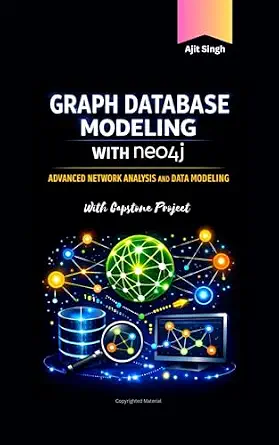 | Best for Data Modeling | Product type: Technical book | Database platform: Neo4j | Primary focus: Graph database modeling | VIEW LATEST PRICE | See Our Full Breakdown |
| Graph Databases in Action |  | Best Applied Workflow Guide | Product type: Technical book | Technology focus: Graph databases | Modeling coverage: Graph data modeling | VIEW LATEST PRICE | See Our Full Breakdown |
| Knowledge Graphs: Fundamentals, Techniques, and Applications |  | Best Theory Companion | Product type: Educational reference book | Primary subject: Knowledge graphs | Coverage: Fundamentals, techniques, and applications | VIEW LATEST PRICE | See Our Full Breakdown |
| Graph Algorithms: Practical Examples in Apache Spark and Neo4j |  | Best Algorithm Workbook | Product type: Practical technical book | Primary subject: Graph algorithms | Database platform: Neo4j | VIEW LATEST PRICE | See Our Full Breakdown |
| graph database software | Product type |
|---|---|
| The Practitioner’s Guide to Gr | Practitioner guide |
| Graph Databases: New Opportuni | Graph database book |
| Managing and Mining Graph Data | Technical reference book |
| Building Knowledge Graphs: A P | Practitioner guide |
| Neo4j Graph Database | Graph database platform |
| Graph Databases | Technical book |
| Graph Database Engineering wit | Technical book |
| Neo4j for Beginners: Learn Gra | Beginner technical book |
| Graph Database Modeling with N | Technical book |
| Graph Databases in Action | Technical book |
| Knowledge Graphs: Fundamentals | Educational reference book |
| Graph Algorithms: Practical Ex | Practical technical book |
More Details on Our Top Picks
The Practitioner’s Guide to Graph Data: Applying Graph Thinking and Graph Technologies to Solve Complex Problems
When I rank resources around the best graph database software, I place The Practitioner’s Guide to Graph Data highest for teams that must decide whether graph technology fits their problem before selecting a platform. Its graph-thinking approach connects relationship-based modeling with practical business scenarios, making it more decision-focused than the academically oriented Managing and Mining Graph Data. It also covers a broader problem-solving framework than Building Knowledge Graphs, which concentrates on one application category. The tradeoff is limited implementation depth: readers seeking substantial code, query examples, or deployment guidance may outgrow it quickly. This is a strategy guide rather than software, so it will not replace platform documentation or hands-on training. I recommend it for framing projects, not for learning a specific database.
Pros:- Connects graph concepts to practical problem-solving scenarios
- Helps teams identify suitable graph database use cases
- Accessible to both technical practitioners and project leaders
- Covers graph thinking beyond a single database platform
Cons:- Offers limited detailed implementation examples
- Does not teach one graph database platform end to end
- Edition and publication details are absent from the supplied product data
Best for: Technical leads and solution architects evaluating where graph databases could solve relationship-heavy business problems
Not ideal for: Developers seeking detailed query examples, installation instructions, or production deployment guidance
- Product type:Practitioner guide
- Primary topic:Graph data and graph technologies
- Core approach:Graph thinking
- Application focus:Solving complex problems
- Audience:Practitioners and technical readers
- Platform scope:Technology-agnostic
- Technical depth:Conceptual and practical guidance
Our verdict“Choose this when defining a graph strategy matters more than learning a particular software package.”
Graph Databases: New Opportunities for Connected Data
I see Graph Databases: New Opportunities for Connected Data as the clearest starting point for data professionals who need to understand why connected data calls for a different database model. Compared with Managing and Mining Graph Data, it emphasizes use cases and business benefits rather than algorithms and system implementation. The Practitioner’s Guide to Graph Data offers a wider graph-thinking framework, while this book stays closer to database management and analysis. That narrower scope makes the material easier to approach, but it also limits its value for readers ready to build production systems. The supplied information does not identify detailed examples, exercises, or platform coverage, leaving its hands-on depth unclear. I would use it to build conceptual literacy before moving to Neo4j Graph Database or a platform-specific guide.
Pros:- Explains the value of graph databases for connected data
- Covers multiple data management and analysis use cases
- More approachable than an algorithm-heavy academic reference
- Useful for building a shared vocabulary across data teams
Cons:- Hands-on exercises and implementation depth are unclear
- Does not serve as a deployable graph database product
- No user ratings or detailed content breakdown are supplied
Best for: Data analysts, developers, and database professionals who need an accessible introduction to connected-data use cases
Not ideal for: Engineers who already understand graph fundamentals and need code, benchmarking, or production architecture guidance
- Product type:Graph database book
- Primary topic:Connected data
- Coverage:Use cases and graph technology benefits
- Data activities:Management and analysis
- Audience:Data professionals and developers
- Learning orientation:Conceptual
- Platform scope:No specific platform identified
Our verdict“Pick this as an introductory bridge from traditional data management to graph database concepts.”
Managing and Mining Graph Data (Advances in Database Systems, 40)
For readers comparing graph database software at an architectural or research level, I rank Managing and Mining Graph Data as the strongest technical reference in this group. Its treatment of algorithms, data management, and system implementations goes deeper than Graph Databases: New Opportunities for Connected Data, which is better suited to conceptual orientation. It can also help experienced practitioners evaluate how systems handle graph workloads rather than accepting feature claims at face value. That depth comes with a high barrier: casual readers and first-time graph developers may find the material too theoretical, and it is not a step-by-step guide to Neo4j or another commercial platform. As volume 40 in Advances in Database Systems, it reads more like a specialist reference than a quick buying aid. I favor it for rigorous study, not rapid onboarding.
Pros:- Provides in-depth coverage of graph data management
- Includes algorithms and system implementation material
- Supports architecture-level evaluation of graph workloads
- Relevant to both researchers and advanced practitioners
Cons:- Technical density may overwhelm casual or beginning readers
- Does not provide a simple path into one commercial platform
- Available product data does not describe exercises or companion code
Best for: Database researchers, graduate-level readers, and senior engineers studying graph algorithms and system design
Not ideal for: Beginners who want a guided setup, approachable tutorials, or immediate application development
- Product type:Technical reference book
- Series:Advances in Database Systems
- Series volume:40
- Primary topic:Graph data management and mining
- Technical coverage:Algorithms and system implementations
- Audience:Researchers and practitioners
- Difficulty level:Advanced
Our verdict“Choose this when research depth and system mechanics matter more than speed of learning.”
Building Knowledge Graphs: A Practitioner’s Guide
I recommend Building Knowledge Graphs: A Practitioner’s Guide for teams whose software search is tied to semantic search, enterprise knowledge, or connected information products. Its design-and-implementation focus is more targeted than The Practitioner’s Guide to Graph Data, which explores graph thinking across a wider range of problems. It is also more application-oriented than Managing and Mining Graph Data, avoiding an emphasis on research algorithms. This specialization is both its advantage and its limit: buyers seeking fraud detection, network analysis, or a broad graph database survey may find the knowledge-graph lens too narrow. The supplied description offers little detail about code, tooling, or platform coverage, so I would not treat it as a substitute for Neo4j documentation. It earns its place by helping practitioners shape a specific graph application rather than compare database products directly.
Pros:- Centers on the design and implementation of knowledge graphs
- Connects core concepts with practitioner-oriented guidance
- More focused than a general graph technology overview
- Suitable for professionals planning knowledge-driven applications
Cons:- Knowledge-graph specialization limits broader database coverage
- Tooling and platform details are not identified in the supplied data
- May require separate resources for coding and production deployment
Best for: Data architects and engineering teams planning enterprise knowledge graphs or semantic information applications
Not ideal for: Buyers focused on general graph analytics, fraud detection, or a direct comparison of database platforms
- Product type:Practitioner guide
- Primary topic:Knowledge graphs
- Project stages:Design and implementation
- Coverage:Concepts and development techniques
- Audience:Professionals and practitioners
- Application scope:Knowledge graph development
- Platform scope:No specific platform identified
Our verdict“Select this when a knowledge graph is the planned outcome and platform selection is only one part of the project.”
Neo4j Graph Database
I place Neo4j Graph Database first for buyers who need an actual graph database platform rather than educational material. Its combination of connected-data modeling, querying, and visualization supports the full path from exploring relationships to building applications, while The Practitioner’s Guide to Graph Data stops at broader methods and project thinking. Compared with Building Knowledge Graphs, Neo4j also applies beyond one use case, making it the more flexible software choice for developers and data scientists. The cost of that capability is a steeper learning curve: teams must understand graph modeling and a graph-oriented query workflow before they can work efficiently. The supplied listing omits edition, licensing, deployment, and package details, so buyers will need current vendor information before committing. Even with that gap, it is the only direct software pick in this batch.
Pros:- Purpose-built for complex relationships and connected data
- Combines data modeling, querying, and visualization capabilities
- Useful across software development and data science workflows
- Broader application scope than the knowledge-graph-only guide
Cons:- Graph modeling and query concepts create a steep learning curve
- Supplied product data omits licensing and deployment options
- Teams may need separate training material for effective adoption
Best for: Development and data science teams building applications around complex, highly connected datasets
Not ideal for: Beginners wanting a guided learning resource or buyers who need licensing and deployment details from the listing alone
- Product type:Graph database platform
- Data focus:Highly connected data
- Modeling tools:Included
- Query tools:Included
- Visualization tools:Included
- Primary users:Developers and data scientists
- Core workloads:Relationship management and analysis
Our verdict“Choose Neo4j when the goal is to build with graph software now and the team can accommodate a meaningful learning curve.”
Graph Databases
I rank Graph Databases as the strongest foundation for readers who need to understand connected-data systems before choosing a platform. Its coverage of graph models, database design, implementation, and querying explains why graph technology suits relationship-heavy problems, while practical examples connect theory to development work. Compared with Graph Databases in Action, this book places more weight on underlying concepts and less on an applied workflow. That breadth also creates its main limitation: buyers seeking detailed Neo4j instruction will get more targeted guidance from Graph Database Engineering with Neo4j. The absence of detailed technical specifications and reader feedback makes the depth harder to judge before purchase. I would choose it for building durable knowledge, not for copying a ready-made production recipe.
Pros:- Covers graph database design, implementation, applications, and querying
- Builds a useful conceptual base for software evaluation
- Addresses both developer and data-science perspectives
- Uses practical examples to connect concepts with real problems
Cons:- Provides fewer platform-specific instructions than the Neo4j-focused books
- Lacks detailed technical specifications
- No customer ratings or reviews are available to indicate reader reception
Best for: Developers and data scientists evaluating graph technology who need a broad grounding in data models, design, querying, and applications
Not ideal for: Neo4j teams seeking platform-specific deployment steps, scaling guidance, or ready-to-run implementation material
- Product type:Technical book
- Primary topic:Graph database fundamentals
- Design coverage:Graph database design
- Implementation coverage:Graph database implementation
- Query coverage:Graph querying techniques
- Application coverage:Graph database use cases
- Intended audience:Developers and data scientists
- Learning aids:Practical examples
Our verdict“This is my pick for readers who want a broad graph-database foundation before committing to a specific platform.”
Graph Database Engineering with Neo4j: Designing, Querying, and Scaling Connected Data Systems for Intelligent Applications
I place Graph Database Engineering with Neo4j highest for teams moving beyond basic queries toward production architecture. Its emphasis on designing, querying, and scaling connected systems links technical choices to dependable intelligent applications. That makes it more operationally ambitious than Graph Database Modeling with Neo4j, which concentrates on schema and relationship design, and far more advanced than Neo4j for Beginners. The tradeoff is accessibility: prior graph-database knowledge is expected, so newcomers may struggle with the pace and terminology. The lack of sample code also means readers must translate the guidance into implementations themselves. I see this as a focused engineering reference for developers who already grasp graph concepts and need stronger architectural judgment, rather than a first lesson or a code-led tutorial.
Pros:- Connects Neo4j design choices with querying and system scaling
- Targets production-oriented connected-data applications
- Offers best-practice guidance for stronger architectural decisions
- Goes beyond the introductory scope of beginner-focused alternatives
Cons:- Requires prior graph-database knowledge
- Provides no sample code
- Its Neo4j focus offers less value to teams comparing multiple platforms
Best for: Neo4j developers and solution architects who already understand graph basics and need guidance for scalable intelligent applications
Not ideal for: First-time graph learners or developers who need copyable sample code alongside each engineering concept
- Product type:Technical book
- Database platform:Neo4j
- Core coverage:Designing, querying, and scaling
- Data focus:Connected data systems
- Application focus:Intelligent applications
- Instruction style:Engineering guidance and best practices
- Prerequisite level:Prior graph-database knowledge required
- Sample code:Not provided
Our verdict“I recommend this to experienced Neo4j teams that need architectural and scaling guidance more than introductory instruction or code samples.”
Neo4j for Beginners: Learn Graph Databases with Real-World Use Cases
I chose Neo4j for Beginners as the clearest starting point because it pairs step-by-step instruction with Cypher, graph modeling, and real-world use cases. Those elements help newcomers connect query syntax with the relationships they are trying to represent, while the data-science integration shows where graph work can lead. Compared with Graph Database Engineering with Neo4j, this book asks for less prior knowledge and offers a gentler learning path. It also covers more practical Neo4j ground than the concept-led Graph Databases. Experienced database professionals may find the material too basic, however, and readers planning large production systems will need a more advanced scaling resource afterward. My ranking reflects approachability rather than technical ceiling: this is the entry point, not the final reference for seasoned Neo4j engineers.
Pros:- Introduces Neo4j through step-by-step guidance
- Covers Cypher, graph modeling, and data-science integration
- Uses real-world use cases to explain practical outcomes
- Requires less background knowledge than the engineering-focused Neo4j title
Cons:- Offers limited depth for advanced database professionals
- Does not provide the scaling focus found in Graph Database Engineering with Neo4j
- Readers may need a second book for production-level architecture
Best for: Developers, analysts, and data students starting Neo4j who want guided lessons tied to recognizable use cases
Not ideal for: Experienced database professionals seeking advanced performance tuning, production architecture, or deep scaling material
- Product type:Beginner technical book
- Database platform:Neo4j
- Query language:Cypher
- Modeling coverage:Graph modeling
- Data-science coverage:Data-science integration
- Learning format:Step-by-step guidance
- Examples:Real-world use cases and practical examples
- Experience level:Beginner
Our verdict“This is my first choice for newcomers who want an approachable route from graph concepts to practical Neo4j work.”
Graph Database Modeling with Neo4j
I give Graph Database Modeling with Neo4j the modeling specialist role because it concentrates on the decisions that shape a useful graph: entities, relationships, design principles, and reusable patterns. Its practical examples and Neo4j focus make abstract modeling choices easier to connect with data-project needs. Compared with Neo4j for Beginners, it offers a narrower but more focused path for readers who already know they need better graph structures. Graph Database Engineering with Neo4j remains the stronger choice for scaling whole systems, since this title centers on modeling rather than end-to-end operations. Missing edition and publication details also make its currency difficult to gauge. I would pick it for analysts and developers whose main problem is designing the graph correctly, while infrastructure teams should pair it with a production-engineering resource.
Pros:- Concentrates on Neo4j graph-modeling techniques
- Explains design principles and best practices
- Includes practical examples for real data projects
- Can support both newer practitioners and experienced users refining their models
Cons:- Covers a narrower slice of graph engineering than the scaling-focused Neo4j book
- Edition and publication-date information are unavailable
- Offers less value to readers working outside the Neo4j ecosystem
Best for: Neo4j developers and data architects who need practical guidance for designing entities, relationships, and graph structures
Not ideal for: Infrastructure teams seeking end-to-end deployment, scaling, and operational guidance rather than data-model design
- Product type:Technical book
- Database platform:Neo4j
- Primary focus:Graph database modeling
- Method coverage:Design principles and best practices
- Learning aids:Practical examples
- Intended audience:Beginners and experienced users
- Project focus:Practical data projects
Our verdict“I favor this book for Neo4j practitioners who need to improve graph design before tackling broader production engineering.”
Graph Databases in Action
I rank Graph Databases in Action as the best applied workflow guide because it connects modeling, querying, and analysis within one practical learning path. Real-world examples help developers see how graph structures support data-management decisions, giving this book a stronger action-oriented angle than the more conceptual Graph Databases. It is also broader in subject than Graph Database Modeling with Neo4j, which is the sharper choice when Neo4j schema design is the main concern. Its drawbacks affect self-directed learners: technical prerequisites are unclear, the subject matter may overwhelm beginners, and no sample code or datasets are provided. That reduces the ability to reproduce examples directly. I would choose it for technically confident readers who want applied coverage across the graph workflow, while new learners will find Neo4j for Beginners easier to follow.
Pros:- Links graph modeling, querying, and analysis in one workflow
- Uses practical, real-world examples
- Serves both software developers and data professionals
- Provides a broader applied focus than a modeling-only guide
Cons:- Technical prerequisites are not clearly defined
- The material may be complex for beginners
- No sample code or datasets are provided
Best for: Developers and data professionals with database fundamentals who want an applied path through modeling, querying, and graph analysis
Not ideal for: Complete beginners or hands-on learners who depend on supplied code and datasets to reproduce each example
- Product type:Technical book
- Technology focus:Graph databases
- Modeling coverage:Graph data modeling
- Query coverage:Graph data querying
- Analysis coverage:Graph data analysis
- Learning aids:Practical real-world examples
- Intended audience:Developers and data professionals
- Included code and datasets:Not provided
Our verdict“I recommend this to technically confident readers who want practical graph-workflow guidance and can create their own exercises.”
Knowledge Graphs: Fundamentals, Techniques, and Applications
I rank Knowledge Graphs: Fundamentals, Techniques, and Applications as the Best Theory Companion because it explains the ideas behind graph-based data work without promoting one vendor. For architects comparing graph database software, its coverage of representation, reasoning, machine learning, and data management provides a vendor-neutral conceptual framework for judging platform capabilities. It is broader and more academic than Building Knowledge Graphs: A Practitioner’s Guide, while Graph Database Engineering with Neo4j is better for implementation details tied to a working database. That distinction explains its lower placement in a software roundup: it sharpens selection criteria but cannot be deployed, benchmarked, or queried. I recommend it to buyers seeking conceptual depth; anyone needing setup guidance or an operational tool should choose a software-focused title or Neo4j itself.
Pros:- Connects knowledge-graph fundamentals with machine learning and data management
- Offers a vendor-neutral basis for comparing graph-platform capabilities
- Covers both underlying techniques and practical applications
- Useful for developing evaluation criteria before choosing software
Cons:- Provides a conceptual resource rather than executable graph database software
- Academic breadth may be dense for readers seeking a quick implementation path
- Supplied product information does not identify edition or publisher details
Best for: Data architects, researchers, and machine-learning leads who need a vendor-neutral foundation before selecting knowledge-graph software
Not ideal for: Developers seeking installation instructions, production code, or a deployable graph database because this is an educational book
- Product type:Educational reference book
- Primary subject:Knowledge graphs
- Coverage:Fundamentals, techniques, and applications
- Related discipline:Machine learning
- Data focus:Data management
- Content approach:Conceptual coverage with practical applications
- Software platform:No specific platform identified
- Identifier:ASIN 0262045095
Our verdict“I would choose this book for theory-led platform research, but not as a substitute for software trials or implementation guidance.”
Graph Algorithms: Practical Examples in Apache Spark and Neo4j
I place Graph Algorithms: Practical Examples in Apache Spark and Neo4j ahead of theory-first companions when the goal is learning how graph computations map to real systems. Its hands-on algorithm examples connect Apache Spark and Neo4j with implementation and optimization, making the material more actionable than Knowledge Graphs: Fundamentals, Techniques, and Applications for data scientists building pipelines. Compared with Neo4j for Beginners, however, it assumes more graph and engineering literacy and divides attention between two platforms instead of guiding a newcomer through one database. I rank it as the Best Algorithm Workbook, not a software winner: readers gain reusable processing patterns, but no deployable product, current feature comparison, or managed-service guidance. Teams focused on schema design, access controls, or administration will find Graph Database Engineering with Neo4j more relevant.
Pros:- Links graph algorithms to practical implementation and optimization work
- Covers both Neo4j and Apache Spark rather than a single processing environment
- Uses real-world applications to explain why particular algorithms matter
- Targets the workflow needs of data scientists and engineers
Cons:- Platform-specific examples offer less help to teams using other graph technologies
- Algorithm coverage leaves deployment, security, and database administration underexplored
- A book cannot replace benchmarking software against a buyer’s own graph workloads
Best for: Data scientists and data engineers who want implementation-oriented graph algorithm examples spanning Neo4j and Apache Spark
Not ideal for: Database administrators and first-time graph users who need deployment, security, schema-design, or basic query guidance
- Product type:Practical technical book
- Primary subject:Graph algorithms
- Database platform:Neo4j
- Processing platform:Apache Spark
- Instruction style:Practical examples
- Technical focus:Graph implementation and optimization
- Application coverage:Real-world graph-processing use cases
- Intended audience:Data scientists and engineers
- Identifier:ASIN 1492047686
Our verdict“I would pick this for applied graph analytics training across Spark and Neo4j, while choosing another resource for database selection or operations.”

How We Picked
I ranked these entries by fit with software-buying intent, followed by practical usefulness, learning accessibility, production relevance, and the breadth of problems each option addresses. A deployable platform received priority over books because readers searching for the best graph database software usually need technology they can evaluate or adopt. Among the learning resources, I favored titles that help buyers move from data modeling to implementation over those limited to theory or one narrow task. I also weighed how clearly each resource serves a defined audience, from new users to engineers building scaled systems.
My ordering gives added weight to querying, schema design, deployment, scaling, and maintenance because those areas shape long-term success after a prototype works. General graph concepts scored well when they transfer across tools, while vendor-specific books ranked higher when their guidance supports a clear Neo4j adoption path. Advanced references earned specialist positions rather than broad recommendations because their depth can become extra cost and complexity for teams that only need application-level guidance. This method keeps the ranking tied to buyer outcomes instead of treating every title as an interchangeable graph resource.
Factors to Consider When Choosing Best Graph Database Software
Choosing among these options starts with separating a working database platform from the books that teach graph design, querying, and analytics. I would use the following factors to define the software requirement first, then select a learning resource that closes a specific knowledge gap. That approach prevents a useful technical book from being mistaken for a software alternative and makes the total purchase easier to justify.
Separate Deployable Software From Learning Resources
The supplied lineup mixes one clear database product with 11 educational resources, so I would begin by deciding what the purchase must deliver. A deployable graph database stores data, executes queries, manages access, and supports running applications. A book can improve modeling or engineering decisions, but it cannot meet uptime, backup, security, or integration requirements. Treating both types as direct substitutes creates a category error before technical comparison begins. Buyers seeking an immediate platform should place Neo4j Graph Database on the software shortlist and view the remaining options as companions. Buyers still exploring the category may gain more value by choosing a broad guide before committing engineering time to a platform.
Match the Graph Model to the Questions You Need to Answer
Before choosing a platform or guide, I would write down the relationships the application must traverse and the queries users will run most often. Neo4j-centered resources lean toward property-graph modeling and Cypher, making them useful for applications built around paths, neighborhoods, recommendations, fraud patterns, or dependencies. Building Knowledge Graphs shifts attention toward creating a usable knowledge layer, while Knowledge Graphs: Fundamentals, Techniques, and Applications develops a broader conceptual base. A common mistake is selecting graph technology because the data contains relationships even when ordinary relational joins remain simple and predictable. I would favor a graph approach when multi-hop connections are central to the product rather than a side report. This test keeps architecture tied to actual query behavior.
Plan for Deployment and Operations Beyond the Prototype
A graph database that performs well in a demonstration can still create operational friction once data volume, traffic, and recovery demands grow. I would map requirements for hosting, backups, monitoring, access control, clustering, and disaster recovery before selecting a deployment route. Self-hosting offers more infrastructure control but places patching and incident response on the buyer’s team. A managed service can reduce that workload, though recurring charges and platform limits may narrow flexibility. A common mistake is comparing query syntax while ignoring who will keep the database available at 2 a.m. Paying more makes sense when reduced operational burden is worth more than the added service cost. For experiments and classroom projects, a simpler local setup may be enough.
Choose a Learning Curve Your Team Can Sustain
The real learning cost includes graph thinking, data modeling, query design, import workflows, and performance diagnosis. I would send a new learner toward Neo4j for Beginners before handing them Graph Database Engineering with Neo4j, which addresses a later stage of system maturity. Graph Databases in Action suits readers who learn through application patterns, while Graph Database Modeling with Neo4j targets teams whose main risk is a weak schema. Buying the most advanced book first often slows progress because readers lack the context to apply its advice. Teams with mixed skill levels may benefit from a shared introductory resource plus one specialist title owned by the lead engineer. That pairing can be more productive than asking every developer to work through the same dense reference.
Distinguish Transactional Graph Work From Graph Analytics
Some projects need rapid path queries inside an application, while others need large-scale analysis across an entire network. Graph Algorithms: Practical Examples in Apache Spark and Neo4j is the lineup’s clearest fit for centrality, community detection, similarity, and analytical workflows. Managing and Mining Graph Data provides stronger theoretical depth for readers studying algorithms, mining methods, and research concepts. A common mistake is assuming one database configuration will serve low-latency application queries and heavy analytical jobs equally well. If analytics drives the purchase, I would examine data movement, batch processing, memory demands, and Spark integration early. For a transactional application, modeling and query latency deserve more attention than an extensive algorithm library. The workload should dictate which specialist resource earns a place beside the database.
Calculate Value Across Software, Infrastructure, and Training
License or subscription price captures only one part of graph database ownership. I would include cloud resources, data migration, administrator time, monitoring, support, and developer training in the budget. A low-cost beginner book may prevent expensive modeling mistakes, while a dense academic volume can become wasted money if nobody has time to use it. Paying more for support, managed hosting, or advanced instruction is sensible when the project carries strict availability needs or a costly failure risk. Small teams should resist buying enterprise depth before their workload calls for it. I would judge value by the shortest credible path to a maintainable system, not by the longest feature list. This separates a useful premium purchase from unnecessary complexity.
Frequently Asked Questions
Is Neo4j Graph Database the only actual software in this roundup?
Yes, Neo4j Graph Database is the only entry clearly presented as deployable software in the supplied lineup. The remaining entries are books covering graph concepts, modeling, engineering, knowledge graphs, and algorithms. I would not treat those books as competing database platforms, even though they can shape which platform or architecture a buyer selects. Their value lies in reducing design and implementation mistakes before or during adoption. Buyers comparing multiple software vendors would need a wider platform shortlist beyond these 12 entries.
Should a beginner choose a general graph book or a Neo4j-specific guide?
I would choose based on whether the platform decision has already been made. Neo4j for Beginners makes sense when the reader plans to learn Cypher and build on Neo4j immediately. A broader title such as Graph Databases in Action is better when the goal is understanding graph application patterns before committing to one vendor. General material transfers more easily, while vendor-specific instruction provides a faster path to working queries. New teams can pair one broad guide with a short platform tutorial instead of buying several overlapping introductions.
When is a graph database a better choice than a relational database?
I would favor a graph database when the application repeatedly explores multi-hop relationships, changing connection patterns, or path-dependent questions. Fraud networks, recommendations, identity links, dependency maps, and network analysis are common examples. A relational database may remain the better choice when relationships are shallow, reporting is tabular, and joins are stable and easy to predict. The presence of connected data alone does not justify a graph migration. A small proof of concept using real queries and realistic data volume can expose whether graph traversal produces enough benefit to offset another database system.
Do I need a separate book for graph modeling if I already have a beginner guide?
A separate modeling book becomes useful when the team moves from tutorials to a schema that must support many query patterns. Beginner guides teach basic nodes, relationships, and queries, but production models require decisions about relationship direction, labels, properties, duplication, and query cost. Graph Database Modeling with Neo4j is more focused on those decisions than Neo4j for Beginners. I would add it when changing the model has started to slow development or produce inconsistent queries. For a small learning project, the beginner title is usually enough until the data design becomes a real constraint.
Which resource should I choose for knowledge graphs or graph analytics?
For an applied knowledge-graph project, I would choose Building Knowledge Graphs because its role is closer to implementation than broad academic study. Knowledge Graphs: Fundamentals, Techniques, and Applications better serves readers seeking theoretical grounding across methods and applications. For analytics involving Spark and Neo4j, Graph Algorithms is the more direct specialist pick. Managing and Mining Graph Data suits research-oriented readers who want deeper algorithmic and mining foundations. The right choice depends on whether the immediate output is a working knowledge graph, an analytical pipeline, or academic understanding.
Conclusion
For buyers who need an actual platform, my best overall recommendation is Neo4j Graph Database; none of the books in this lineup can replace deployable software. Graph Databases in Action is the best-value learning choice for readers who want practical breadth, while Neo4j for Beginners is my pick for newcomers who want a gentler start with one platform. Teams already committed to Neo4j should choose Graph Database Modeling with Neo4j when schema design is the main weakness or Graph Database Engineering with Neo4j when scaling and production architecture matter more.
For a premium, theory-heavy reference, I would select Managing and Mining Graph Data, though its academic depth is excessive for many application teams. Building Knowledge Graphs makes the most sense for applied knowledge-graph work, while Knowledge Graphs: Fundamentals, Techniques, and Applications fits readers seeking a broader scholarly foundation. For graph analytics, Graph Algorithms is the specialist recommendation because it connects algorithm concepts to Spark and Neo4j workflows. The best purchase is the one that matches the current bottleneck: software adoption, beginner learning, model design, production engineering, knowledge representation, or analytical processing.