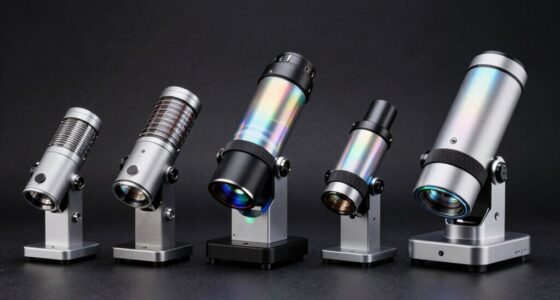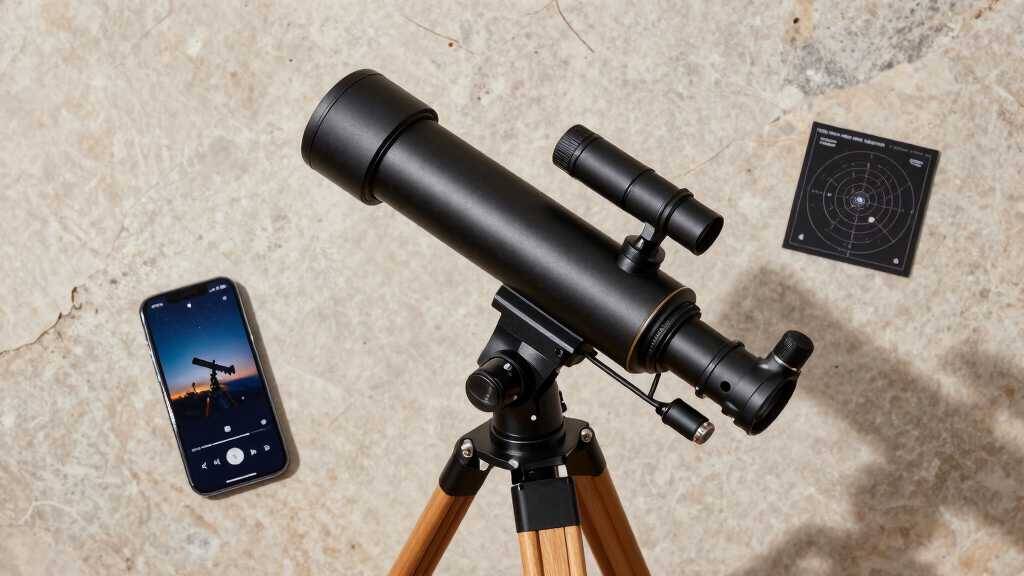

The Dwarflab Dwarf 3 is my best overall choice among the best telescopes for astrophotography because its automatic tracking, integrated camera, and portable design remove many of the barriers between setup and a finished image. The ZWO Seestar S30 Pro is the stronger beginner pick for app-guided operation, while the Celestron NexStar 8SE offers greater optical reach for lunar and planetary work. The main tradeoff is between the convenience of an all-in-one smart telescope and the flexibility, aperture, and added complexity of a traditional optical system. Portability, tracking accuracy, target choice, and the cost of a separate camera matter more than aperture alone. Continue reading for the full breakdown and buyer-specific recommendations.
Complete the kit



Key Takeaways
- Automatic tracking separated the leading choices: the Dwarf 3 and Seestar S30 Pro are more photography-ready than the manual StarSense Explorer models, even when those conventional telescopes have larger apertures.
- The Dwarf 3 earned the top position through balance, pairing a self-contained imaging workflow with better travel potential than the NexStar systems and more photographic capability than the manual beginner scopes.
- The NexStar 8SE is the premium specialist, not the easiest all-purpose choice. Its 8-inch optics favor detailed lunar and planetary imaging, but deep-sky work brings added equipment, alignment demands, and field-rotation limits.
- The NexStar 130SLT offers the strongest value for camera owners because it combines 130mm optics with computerized tracking, though its alt-azimuth mount is better for short exposures than long deep-sky sessions.
- The two identically named dual-screen smart telescopes rank cautiously because unclear seller, sensor, software, and warranty differences make them harder to judge than the established Dwarflab, ZWO, and Celestron options.
| Celestron StarSense Explorer 130AZ |  | Best Budget Pick for Lunar Imaging | Aperture: 130mm | Optical type: Reflector | Mount: Altazimuth tabletop Dobsonian | VIEW LATEST PRICE | See Our Full Breakdown |
| Dwarflab Dwarf 3 Smart Telescope |  | Best Overall for Portable Astrophotography | Weight: 3 lbs | Operating modes: AZ and EQ | Imaging resolution: 4K | VIEW LATEST PRICE | See Our Full Breakdown |
| Celestron NexStar 8SE Computerized Telescope |  | Best for Planetary Imaging | Aperture: 8 inches | Optical design: Schmidt-Cassegrain | Mount: Computerized GoTo | VIEW LATEST PRICE | See Our Full Breakdown |
| Celestron StarSense Explorer LT 80AZ |  | Best for First Moon Photos | Aperture: 80mm | Optical type: Refractor | Mount type: Altazimuth | VIEW LATEST PRICE | See Our Full Breakdown |
| Celestron StarSense Explorer DX 5-inch |  | Best Compact Traditional Telescope | Optical diameter: 130mm | Optical type: Schmidt-Cassegrain | Mount type: Altazimuth | VIEW LATEST PRICE | See Our Full Breakdown |
| Celestron StarSense Explorer LT 114AZ App-Enabled Telescope |  | Best Smartphone-Guided Starter | Aperture: 114mm | Optical design: Newtonian reflector | Mount: Manual altazimuth | VIEW LATEST PRICE | See Our Full Breakdown |
| Celestron NexStar 130SLT Computerized Telescope |  | Best Computerized Reflector | Aperture: 130mm | Optical design: Newtonian reflector | Control: Computerized | VIEW LATEST PRICE | See Our Full Breakdown |
| Smart Telescope with 4K Astrophotography Camera and Dual Screens |  | Best Standalone Display | Aperture: 80mm | Focal length: 300mm | Maximum magnification: Up to 350X | VIEW LATEST PRICE | See Our Full Breakdown |
| ZWO Seestar S30 Pro Smart Telescope |  | Best Automated Imaging | Telephoto sensor: Sony IMX585 | Wide-angle sensor: Sony IMX586 | Camera resolution: 4K dual cameras | VIEW LATEST PRICE | See Our Full Breakdown |
| Smart Telescope with 4K Astrophotography Camera and Dual Screens | | Best for Group Moon Viewing | Aperture: 80mm | Focal length: 300mm | Maximum magnification: Up to 350X | VIEW LATEST PRICE | See Our Full Breakdown |
| Celestron AstroMaster 70AZ Refractor Telescope |  | Best for Visual-First Beginners | Optical diameter: 70mm | Focal length: 700mm | Optical type: Refractor | VIEW LATEST PRICE | See Our Full Breakdown |
| Celestron NexStar 4SE Computerized Telescope |  | Best for Lunar and Planetary Imaging | Aperture: 4 inches (approximately 102mm) | Optical design: Maksutov-Cassegrain | Mount: Computerized GoTo | VIEW LATEST PRICE | See Our Full Breakdown |
| telescopes for astrophotography | Aperture | Warranty |
|---|---|---|
| Celestron StarSense Explorer 1 | 130mm | 2 years |
| Dwarflab Dwarf 3 Smart Telesco | — | — |
| Celestron NexStar 8SE Computer | 8 inches | 2 years |
| Celestron StarSense Explorer L | 80mm | 2 years |
| Celestron StarSense Explorer D | — | 2 years |
| Celestron StarSense Explorer L | 114mm | 2 years |
| Celestron NexStar 130SLT Compu | 130mm | — |
| Smart Telescope with 4K Astrop | 80mm | — |
| ZWO Seestar S30 Pro Smart Tele | — | — |
| Smart Telescope with 4K Astrop | 80mm | — |
| Celestron AstroMaster 70AZ Ref | — | 2 years |
| Celestron NexStar 4SE Computer | 4 inches (approximately 102mm) | 2 years |
More Details on Our Top Picks
Celestron StarSense Explorer 130AZ
I rank the Celestron StarSense Explorer 130AZ as the budget choice for photographing the Moon and other bright targets. Its 130mm reflector gathers more light than the StarSense Explorer LT 80AZ, revealing finer lunar detail and making visual observation of dimmer objects more rewarding. The app-guided locating system also removes much of the frustration associated with finding targets manually. Yet this remains a manual tabletop telescope, so objects drift through the frame and long-exposure imaging is impractical. A phone can capture satisfying lunar shots, but the Dwarflab Dwarf 3 is far better for automated tracking and processed deep-sky images. The tabletop base also needs a rigid, level surface; a shaky patio table can waste the optical advantage. I see this as an affordable visual telescope with casual imaging potential, rather than a complete astrophotography system.
Pros:- 130mm aperture captures more light than smaller beginner refractors
- StarSense guidance helps beginners locate imaging targets
- Simple tabletop Dobsonian base supports quick setup
- Smartphone dock makes basic lunar imaging accessible
Cons:- Manual tracking restricts exposure length and demands frequent repositioning
- Tabletop base depends on a separate rigid surface for stability
- Full navigation guidance requires a compatible smartphone
Best for: Budget-focused beginners who want app-guided observing and sharp smartphone photos of the Moon
Not ideal for: Deep-sky photographers seeking long exposures, since the manual tabletop mount does not track celestial motion
- Aperture:130mm
- Optical type:Reflector
- Mount:Altazimuth tabletop Dobsonian
- Tracking:Manual
- Navigation technology:StarSense
- Phone holder:Smartphone dock
- Compatibility:iPhone and Android
- Warranty:2 years
Our verdict“Choose this for affordable lunar snapshots and guided observing, but skip it if automated deep-sky imaging is the goal.”
Dwarflab Dwarf 3 Smart Telescope
The Dwarflab Dwarf 3 earns my overall spot because it addresses the hardest parts of entry-level astrophotography: tracking, capture, processing, and portability. At only 3 pounds, it is far easier to carry than the Celestron NexStar 8SE, while AZ and EQ modes make it more imaging-focused than any manual StarSense model here. Its 4K auto-tracking system and cloud-powered processing suit buyers who want shareable results without assembling a camera, adapter, and computer workflow. That convenience comes with boundaries. Dwarflab provides less optical detail in the supplied information than Celestron does, making direct aperture and focal-length comparisons difficult. It is also an app-dependent camera system, not the best choice for traditional eyepiece observing. I rank it highest for low-friction image capture, though the 8SE offers much greater visual light-gathering power.
Pros:- Three-pound body is easy to carry to darker locations
- AZ and EQ modes provide flexibility for different imaging sessions
- Automatic tracking reduces the difficulty of keeping targets framed
- Dual lenses support both astronomical and daytime photography
Cons:- Published product data gives limited detail about aperture and focal length
- App and cloud features create greater technology dependence
- Convenience-focused design provides less traditional observing flexibility than the NexStar 8SE
Best for: Travelers and first-time imagers who want automated tracking, app control, and a compact all-in-one capture workflow
Not ideal for: Traditional observers who prioritize eyepiece viewing or buyers who want fully documented optical specifications
- Weight:3 lbs
- Operating modes:AZ and EQ
- Imaging resolution:4K
- Tracking:Automatic
- Imaging system:Dual lenses
- Image processing:Cloud-powered
- Connectivity:USB-C
- Included accessories:Carrying bag, magnetic filters, pouch, and wipe cloth
Our verdict“This is my strongest choice for travelers who value automated image capture more than traditional telescope operation.”
Celestron NexStar 8SE Computerized Telescope
I give the Celestron NexStar 8SE the planetary-imaging role because its 8-inch aperture can resolve finer lunar and planetary detail than the 130mm StarSense Explorer DX 5-inch. The automated GoTo mount and 40,000-plus-object database also make repeated target acquisition easier than with Celestron’s manual StarSense mounts. This is the strongest traditional telescope in the group for buyers who want serious visual observing alongside short-exposure planetary capture. It is not a ready-made imaging package, however: a suitable camera and adapters add cost, while the mount is better matched to short planetary videos than lengthy deep-sky exposures. The larger optical tube and mount are also less travel-friendly than the three-pound Dwarflab Dwarf 3. I place it behind that smart telescope for general accessibility, but its superior light gathering and expandable camera potential make it the more capable specialist tool.
Pros:- Eight-inch aperture supports detailed lunar and planetary capture
- Automated GoTo mount finds and follows selected targets
- SkyAlign streamlines computerized alignment
- Large object database supports broad observing sessions
Cons:- A camera and imaging adapters must be added for astrophotography
- Standard mount is less suitable for long deep-sky exposures than a dedicated equatorial setup
- Bulkier and more involved to transport than compact smart telescopes
Best for: Planetary photographers who want a large-aperture visual telescope and are comfortable adding a dedicated camera and adapters
Not ideal for: Frequent travelers or beginners wanting an all-in-one deep-sky imaging system with automatic processing
- Aperture:8 inches
- Optical design:Schmidt-Cassegrain
- Mount:Computerized GoTo
- Alignment technology:SkyAlign
- Object database:40,000+ objects
- Warranty:2 years
Our verdict“Pick the NexStar 8SE for high-detail planetary work and strong visual performance, provided you accept extra imaging gear and setup.”
Celestron StarSense Explorer LT 80AZ
I reserve the Celestron StarSense Explorer LT 80AZ for newcomers who want their first recognizable Moon photos without learning computerized alignment. The 80mm refractor is straightforward to aim, and StarSense guidance makes finding bright targets less confusing. Compared with the StarSense Explorer 130AZ, it has less light-gathering ability and will show fewer faint details, but its refractor design avoids reflector collimation and suits quick backyard sessions. The main limitation is its manual altazimuth mount: it cannot hold a target steady for long exposures, and careful handling is needed when positioning a phone or camera. The Dwarflab Dwarf 3 is the better route to automatic deep-sky imaging, while this model favors direct viewing with occasional snapshots. I include it for its gentle learning curve, not for advanced photographic growth.
Pros:- StarSense guidance reduces the difficulty of locating beginner-friendly targets
- 80mm refractor supports clear lunar and bright-planet viewing
- Manual controls are approachable for short backyard sessions
- Two-year warranty includes access to US-based support
Cons:- Small aperture limits faint-object imaging compared with the 130mm and 8-inch models
- Manual altazimuth mount prevents long tracked exposures
- Smartphone dependence reduces the appeal for device-free observing
Best for: Families and first-time observers who want guided target finding and simple smartphone pictures of the Moon
Not ideal for: Buyers planning tracked deep-sky exposures or detailed imaging of faint galaxies and nebulae
- Aperture:80mm
- Optical type:Refractor
- Mount type:Altazimuth
- Mount operation:Manual
- Compatibility:iPhone and Android
- Guidance technology:StarSense Sky Recognition
- Warranty:2 years
Our verdict“Buy this for a simple first step into Moon photography, not as a platform for long-exposure deep-sky work.”
Celestron StarSense Explorer DX 5-inch
The Celestron StarSense Explorer DX 5-inch is my compact traditional pick for buyers who want a folded optical design rather than a digital smart telescope. Its 130mm Schmidt-Cassegrain optics package useful aperture into a shorter tube, while StarBright XLT coatings support bright lunar and planetary views. Against the StarSense Explorer 130AZ reflector, the DX is more compact and avoids reliance on a tabletop base, but it does not solve the central imaging problem: both use manual mounts. That means frequent reframing and short exposures rather than sustained deep-sky capture. The NexStar 8SE supplies motorized GoTo operation and substantially more aperture, though it is larger and more expensive. I favor the DX 5-inch for portable visual astronomy with occasional imaging; buyers focused mainly on finished photographs will gain more from the Dwarflab Dwarf 3 and its automatic tracking.
Pros:- Compact Schmidt-Cassegrain design provides 130mm aperture without a long optical tube
- StarBright XLT coatings support bright, high-contrast views
- StarSense app guidance simplifies finding photographic targets
- Conventional optics preserve direct eyepiece observing
Cons:- Manual mount limits exposure length and requires repeated reframing
- Provides less light gathering and automation than the NexStar 8SE
- Best app-guided operation depends on a compatible smartphone
Best for: Apartment dwellers and space-conscious beginners who want app-guided observing plus occasional lunar or planetary snapshots
Not ideal for: Long-exposure photographers who need motorized tracking, or buyers expecting an integrated camera system
- Optical diameter:130mm
- Optical type:Schmidt-Cassegrain
- Mount type:Altazimuth
- Tracking:Manual
- Optical coatings:StarBright XLT
- Navigation technology:StarSense
- Phone holder:Smartphone dock
- Compatibility:iPhone and Android
- Warranty:2 years
Our verdict“Choose the DX 5-inch when compact traditional optics matter more than motorized tracking or all-in-one image capture.”
Celestron StarSense Explorer LT 114AZ App-Enabled Telescope
I place the Celestron StarSense Explorer LT 114AZ in the beginner slot because its app-guided navigation removes much of the frustration of locating targets manually. Its 114mm Newtonian optics gather enough light for lunar, planetary, and brighter deep-sky imaging, while the simple mount keeps setup approachable. Compared with the Celestron NexStar 130SLT, however, it lacks motorized tracking and gives up 16mm of aperture. That matters for astrophotography: keeping a target centered requires frequent hand corrections, making this better for smartphone snapshots and short exposures than stacked long-exposure work. The StarSense guidance is easier to learn than computerized alignment, but navigation depends on a compatible phone. I rank it as an accessible first telescope, not a dedicated imaging platform.
Pros:- StarSense app makes celestial targets easier to locate
- 114mm aperture provides useful light gathering for a starter telescope
- Simple setup suits new users
- Two-year warranty adds purchase protection
Cons:- Manual tracking makes longer astrophotography sessions difficult
- Altazimuth movement is poorly suited to long-exposure imaging
- Navigation relies on a compatible smartphone
Best for: First-time telescope owners who want app-guided target finding and plan to photograph the Moon or bright planets with a smartphone
Not ideal for: Deep-sky imagers seeking long exposures, since the manual altazimuth mount cannot track targets automatically
- Aperture:114mm
- Optical design:Newtonian reflector
- Mount:Manual altazimuth
- Navigation:StarSense Explorer app
- Phone compatibility:iPhone and Android
- Warranty:2 years
Our verdict“Choose this for guided visual astronomy and occasional smartphone photos, but skip it if automated imaging is the main goal.”
Celestron NexStar 130SLT Computerized Telescope
The Celestron NexStar 130SLT earns its position by pairing a useful 130mm aperture with computerized locating and tracking. Compared with the Celestron StarSense Explorer LT 114AZ, its SkyAlign system and 4,000-object database reduce manual searching and help hold targets in view for lunar, planetary, and short-exposure captures. The larger mirror also gathers more light, giving faint targets a modest advantage. I would still treat this as a bridge between visual observing and serious astrophotography rather than a finished imaging rig. Alignment adds setup time, and an altazimuth tracking system produces field rotation during long exposures. Its compact form is easier to transport than the Celestron NexStar 8SE, but the smaller aperture gives up detail and reach. This is the stronger choice for buyers who want automated convenience without premium pricing.
Pros:- Computerized tracking is more photography-friendly than a manual mount
- 130mm aperture gathers more light than the StarSense LT 114AZ
- SkyAlign simplifies computerized setup
- Compact optical tube is relatively easy to transport
Cons:- Alignment must be completed before automated locating works well
- Altazimuth tracking introduces field rotation in long exposures
- The 4,000-object database is smaller than those in higher-tier GoTo systems
Best for: Beginners and intermediate observers who want computerized target locating for lunar, planetary, and short-exposure imaging
Not ideal for: Advanced deep-sky photographers who need equatorial tracking for long, rotation-free exposures
- Aperture:130mm
- Optical design:Newtonian reflector
- Control:Computerized
- Alignment technology:SkyAlign
- Object database:More than 4,000 celestial objects
- Included software:Starry Night
- Form factor:Compact and portable
Our verdict“This is the batch’s strongest traditional reflector for buyers who want automated finding and short-exposure imaging in a portable package.”
Smart Telescope with 4K Astrophotography Camera and Dual Screens
This 80mm smart telescope stands apart through dual screens that allow real-time viewing and capture without making a phone the only display. That gives it a clearer role than the Celestron StarSense Explorer LT 114AZ for families or small groups sharing the view. The 4K camera and starlight-grade sensor are more relevant to imaging than the advertised 350X ceiling, since magnification alone does not guarantee useful detail. Compared with the ZWO Seestar S30 Pro, this model offers a larger stated aperture and built-in viewing screens but lacks the same clearly documented GoTo, automatic tracking, filters, and computational imaging tools. Setup may also feel less polished for newcomers, while the six-hour battery creates a firm session limit. I rank it for screen-first live observation, not for buyers seeking the most automated deep-sky workflow.
Pros:- Dual screens support shared real-time observation
- 4K camera records photos and video
- 80mm aperture is generous for a portable digital refractor
- Up to 512GB storage support accommodates large media collections
Cons:- Setup may be demanding for a first-time smart-telescope owner
- Six-hour battery life can cut short overnight sessions
- High price is difficult to justify if the dual displays are rarely used
Best for: Families, astronomy clubs, and field observers who want two built-in screens for shared lunar or planetary viewing
Not ideal for: Buyers seeking a mature, highly automated deep-sky imaging system with documented GoTo and stacking tools
- Aperture:80mm
- Focal length:300mm
- Maximum magnification:Up to 350X
- Sensor:Starlight-grade
- Camera resolution:4K
- Storage support:Up to 512GB
- Battery capacity:4500mAh
- Battery life:Up to 6 hours
- Diopter adjustment:+/-4
Our verdict“Pick this when built-in shared viewing matters more than the automated imaging ecosystem offered by the Seestar S30 Pro.”
ZWO Seestar S30 Pro Smart Telescope
I rank the ZWO Seestar S30 Pro highest among these smart imaging options because it addresses the full capture workflow rather than focusing only on camera resolution. Its GoTo control, automatic tracking, scheduled imaging, noise reduction, and built-in filters reduce the manual work between choosing a target and saving a usable image. Compared with the Smart Telescope with 4K Astrophotography Camera and Dual Screens, the Seestar lacks built-in shared displays but offers far stronger imaging automation. Dual 4K cameras also support both telephoto and wide-angle compositions, while mosaic stitching broadens its reach for larger subjects. The tradeoff is a more feature-dense app and extra processing choices that may initially confuse an absolute beginner. Its closed digital system also offers less room for optical experimentation than the Celestron NexStar 130SLT. For convenient results, though, this has the clearest astrophotography focus.
Pros:- GoTo and automatic tracking streamline target acquisition
- Dual 4K cameras cover telephoto and wide-angle compositions
- Built-in filters and noise reduction support cleaner captures
- Scheduled imaging and mosaic stitching expand creative options
Cons:- Dense app features may take absolute beginners time to learn
- High-resolution imaging can consume the 128GB storage quickly
- Closed smart-telescope design allows less hardware customization
Best for: Beginners and enthusiasts who want automated GoTo, tracking, and computational imaging in one portable app-controlled system
Not ideal for: Hands-on hobbyists who want interchangeable eyepieces, cameras, and optical components for a custom imaging rig
- Telephoto sensor:Sony IMX585
- Wide-angle sensor:Sony IMX586
- Camera resolution:4K dual cameras
- Storage:128GB
- Lens:4-element apochromatic
- Tracking:Automatic with GoTo
- Imaging features:AI scene recognition and mosaic stitching
- Protection:Built-in anti-dew system
- Connectivity:App-controlled
Our verdict“Choose the Seestar S30 Pro for the most automated route from target selection to processed astrophotography.”
Smart Telescope with 4K Astrophotography Camera and Dual Screens
I see this dual-screen 80mm refractor as a group-friendly lunar imaging option: several people can follow the live view while the 4K camera records photos or video. Compared with the Celestron StarSense Explorer LT 114AZ, it sacrifices some light-gathering aperture but avoids requiring every observer to peer through an eyepiece. Its 300mm focal length also supports a wider view than long-focus planetary telescopes. Yet I rank it below the similarly named Smart Telescope with 4K Astrophotography Camera and Dual Screens, ASIN B0GDXNS3GG, because that listing supplies clearer details about its sensor, runtime, and diopter adjustment. The 350X claim should not drive the purchase; atmospheric conditions, sensor performance, and tracking matter more. Limited accessory compatibility and potentially involved setup make this less flexible than the Celestron NexStar 130SLT, but the shared display experience remains appealing.
Pros:- Dual screens make live observation easier to share
- 4K camera supports direct photo and video capture
- 80mm aperture balances portability and light gathering
- Up to 512GB external storage supports extended recording
Cons:- Accessory compatibility is more limited than a conventional telescope system
- Setup may be complicated for inexperienced users
- The supplied data does not identify automatic tracking or GoTo capability
Best for: Families and outreach hosts who want to show live Moon views on built-in screens while recording 4K media
Not ideal for: Equipment-focused astrophotographers who need broad accessory compatibility, automated GoTo details, and a clearly documented sensor
- Aperture:80mm
- Focal length:300mm
- Maximum magnification:Up to 350X
- Camera resolution:4K
- Display:Dual screens
- Battery capacity:4500mAh
- Battery life:Up to 6 hours
- Maximum external storage:512GB
Our verdict“Buy this for shared lunar viewing and 4K recording, but favor the Seestar S30 Pro when imaging automation is the priority.”
Celestron AstroMaster 70AZ Refractor Telescope
I place the Celestron AstroMaster 70AZ here for beginners who want to learn the sky before buying a dedicated imaging setup. Its 70mm coated refractor produces accessible views of the Moon, bright planets, and larger star clusters, while the manual alt-azimuth mount keeps setup simple. Compared with the Celestron NexStar 4SE, however, it lacks motorized tracking, GoTo guidance, and a wedge, so long-exposure astrophotography is not a realistic goal. A phone adapter or suitable camera attachment can support basic lunar snapshots, but buyers must position and track targets manually. I see the included eyepieces, adjustable tripod, and Starry Night software as a useful starter package, especially for mixed daytime and nighttime viewing. Its low imaging ceiling keeps it below computerized models despite its approachable design.
Pros:- Simple manual controls make setup approachable for new observers
- 70mm coated refractor works for both celestial and terrestrial viewing
- Two eyepieces provide useful starting magnifications
- Starry Night software helps beginners identify and plan targets
Cons:- Manual alt-azimuth mount prevents reliable long-exposure tracking
- 70mm aperture limits faint-object detail and imaging potential
- Camera or smartphone attachment must be purchased separately
Best for: First-time telescope owners who mainly want visual observing and occasional smartphone photos of the Moon
Not ideal for: Buyers planning tracked planetary captures or long-exposure deep-sky imaging, because the manual alt-azimuth mount cannot follow targets automatically
- Optical diameter:70mm
- Focal length:700mm
- Optical type:Refractor
- Eyepieces:20mm and 10mm
- Mount type:Manual alt-azimuth
- Tripod:Adjustable full-height tripod
- Weight:10.8 lbs
- Warranty:2 years
Our verdict“Choose this as an inexpensive visual-learning telescope with limited lunar snapshot potential, not as a serious tracked imaging platform.”
Celestron NexStar 4SE Computerized Telescope
I rank the Celestron NexStar 4SE as the focused choice for buyers interested in photographing the Moon and planets. Its 4-inch Maksutov-Cassegrain optics favor sharp, high-contrast views, while SkyAlign and the 40,000-plus-object database reduce the time spent locating targets. Unlike the AstroMaster 70AZ, the motorized GoTo mount can follow objects for imaging, and the built-in wedge adds basic equatorial capability. The NexStar 8SE gathers far more light, making that model better for greater planetary detail and dimmer targets, but the 4SE is smaller and less demanding to transport. Its aperture remains restrictive for deep-sky work, and the computerized mount needs a dependable power source. I would also expect a learning curve around alignment and camera setup. Portability and automated tracking define its appeal.
Pros:- Maksutov-Cassegrain optics deliver high-contrast lunar and planetary detail
- SkyAlign simplifies computerized alignment
- GoTo mount tracks targets and accesses a database of more than 40,000 objects
- Built-in wedge supports basic equatorial positioning for imaging
Cons:- 4-inch aperture limits faint deep-sky imaging and fine detail
- Computerized tracking depends on an external or battery power source
- Alignment and camera configuration may frustrate complete beginners
Best for: Space-conscious beginners and intermediate users who want automated tracking for lunar and bright-planet imaging
Not ideal for: Deep-sky photographers seeking strong light-gathering performance, since the 4-inch aperture and mount impose imaging limits
- Aperture:4 inches (approximately 102mm)
- Optical design:Maksutov-Cassegrain
- Mount:Computerized GoTo
- Alignment system:SkyAlign
- Object database:40,000+ objects
- Equatorial feature:Built-in wedge
- Mount power:Powered operation required
- Warranty:2 years
Our verdict“Pick the NexStar 4SE for portable, guided lunar and planetary imaging, but move to a larger tracked telescope for serious deep-sky work.”

How We Picked
I weighted astrophotography readiness more heavily than raw aperture. My ranking examined tracking and GoTo capability, optical suitability for likely targets, camera integration, setup time, portability, software quality, build stability, and the effort required to produce a usable image. I also compared the complete ownership cost, including cameras, adapters, power supplies, filters, and mount upgrades. A telescope moved higher when its features translated directly into more reliable image capture, rather than merely improving visual observation.
I favored the Dwarf 3 and Seestar S30 Pro for their streamlined imaging workflows, then gave specialized credit to the NexStar 8SE, 130SLT, and 4SE for optical reach and system flexibility. The StarSense Explorer models remain appealing visual-first choices, but smartphone-assisted object finding does not replace motorized tracking. The AstroMaster 70AZ sits lower because its simple manual mount limits photographic growth, while the duplicated generic smart-telescope listings lose ground through uncertain support and unclear differentiation. This ordering reflects how easily each option can capture its intended targets, how much extra equipment it needs, and whether its compromises match a recognizable buyer type.
Factors to Consider When Choosing Best Telescopes For Astrophotography
I would start by deciding whether the goal is easy image production or a system that can grow. Smart telescopes reduce alignment, capture, and processing work, while conventional models offer interchangeable cameras and broader visual use. The better route depends on preferred targets, patience for setup, storage space, and willingness to buy supporting equipment.
Choose Between a Smart Scope and a Modular System
The first split is between an all-in-one smart telescope and a conventional optical tube, mount, and camera combination. A smart scope handles plate solving, tracking, image stacking, and basic processing through one app, which makes it easier to capture deep-sky objects without learning several pieces of software. A conventional system demands more setup but leaves room to change cameras, filters, focusers, and mounts as skills grow. I would choose the integrated route for travel, casual sessions, or fast sharing. I would choose a modular telescope for specialized planetary work, visual observing, or a long-term equipment path. The common mistake is buying large optics before accounting for the mount and camera needed to use them photographically.
Treat the Mount as Part of the Imaging System
Motorized tracking keeps a target on the sensor, but not every tracking mount supports the same exposure length. An alt-azimuth mount follows an object across the sky while allowing the image field to rotate during longer captures. That limitation is manageable for the Moon, planets, and short stacked exposures, yet it becomes restrictive for faint nebulae and galaxies. I rank dependable tracking above extra aperture when the intended use is photography. Long-exposure deep-sky work is better served by an equatorial mount or a compatible wedge, though both add setup time and expense. A steady tripod also protects detail from vibration and wind. In this lineup, the NexStar models track automatically, while the StarSense Explorer app mainly helps with finding targets.
Match Focal Length and Aperture to the Target
The right optical design depends on what the telescope will photograph most often. Short focal lengths make wide nebulae, star fields, and large galaxies easier to frame while placing fewer demands on tracking accuracy. Longer focal lengths enlarge planets and lunar features but magnify vibration, atmospheric turbulence, and guiding errors. Aperture helps collect light and resolve fine detail, yet a large telescope on a modest mount can be less productive than a smaller, well-tracked instrument. A faster focal ratio can shorten exposure demands, while a slower system may need more capture time or additional optics. I would match the equipment to one primary target class before paying for size. No model in this roundup is equally strong at wide-field nebulae, compact galaxies, and high-magnification planetary imaging.
Account for the Full Capture and Processing Workflow
A telescope purchase covers only part of the job when the system lacks an integrated camera. Traditional models may require a dedicated astronomy camera or compatible mirrorless camera, plus adapters, focusing aids, capture software, and image-processing tools. Smart scopes fold most of those tasks into one interface, but they offer less control over sensor choice and optical upgrades. I give extra credit to systems that reduce the number of failure points between alignment and a saved image. Buyers often focus on resolution labels such as 4K without checking sensor size, cooling, file access, stacking controls, or app reliability. I would favor a transparent imaging ecosystem over a vague resolution claim, since software support can shape the useful life of the telescope.
Calculate the Real Cost of Ownership
The sticker price can hide a large gap between an affordable telescope and an affordable imaging setup. A conventional model may need a camera, power source, adapters, filters, dew control, and a sturdier mount before it performs as expected. Smart scopes bundle more of that cost, although proprietary batteries and limited repair paths create different ownership risks. I would reserve part of the budget for power and dew management because both can end a session regardless of optical quality. Premium aperture is worth paying for when planetary detail or visual observing is the priority, but it brings more weight and tighter alignment demands. I lower the ranking of generic smart telescopes when warranty coverage and software maintenance are unclear. Established support and replacement-part access can be more valuable than a longer feature list.
Frequently Asked Questions
Should I Buy a Smart Telescope or a Traditional Telescope for Astrophotography?
I would choose a smart telescope when simple setup, portability, and automated image stacking matter most. It is the easier route for wide-field deep-sky images and casual sessions, especially without an existing camera or mount. A traditional telescope makes more sense for interchangeable equipment, visual observation, and specialized lunar or planetary capture. That flexibility comes with more cables, alignment work, software, and accessory costs. In this roundup, the Dwarf 3 and Seestar S30 Pro favor convenience, while the NexStar models offer a broader upgrade path.
Can an Alt-Azimuth GoTo Mount Capture Deep-Sky Images?
Yes, but I would keep expectations tied to short exposures and live stacking. An alt-azimuth mount tracks a target while the field slowly rotates, limiting the length of individual frames before stars begin to distort. Stacking many brief images can still produce pleasing results on bright nebulae, clusters, and some galaxies. Longer focal lengths make tracking errors more visible, so the NexStar 8SE is less forgiving than a compact wide-field smart scope. Serious long-exposure work eventually points toward an equatorial mount or wedge.
Is an 8-Inch Telescope Automatically Better Than a Small Smart Telescope?
No, because aperture and photographic usability solve different problems. The NexStar 8SE gathers more light and resolves finer lunar and planetary detail than the compact smart models, but it is heavier and needs a separate camera. The Dwarf 3 can reach a finished stacked image with far less setup, even though its smaller optics cannot match the 8SE on fine planetary detail. I would choose the larger telescope for high-magnification targets and mixed visual use. I would choose the smaller automated system for travel and wide-field imaging.
Do I Need to Buy a Separate Camera for These Telescopes?
The Dwarf 3, Seestar S30 Pro, and dual-screen smart models include their own imaging hardware, so they do not require a separate astronomy camera. The Celestron optical telescopes need a compatible camera or smartphone adapter for image capture. Smartphone setups can work for the Moon and bright planets, but they are limited for faint deep-sky objects. A dedicated planetary camera pairs well with the NexStar 8SE or 4SE, while broader deep-sky ambitions may also require mount changes. I would compare the complete imaging cost, not just the telescope price.
Which Telescope Is Best If I Want Both Visual Observing and Photography?
I would favor the Celestron NexStar 8SE when visual observing and detailed lunar or planetary imaging carry equal weight. Its aperture shows more through an eyepiece than the compact smart scopes, and its GoTo mount makes target acquisition easier than a fully manual setup. The NexStar 130SLT is the more affordable mixed-use choice, though its reflector design and mount require greater patience for imaging. Smart telescopes are stronger at automated capture but generally provide a screen-based observing experience rather than a traditional eyepiece view. The StarSense Explorer DX 5-inch also suits visual-first buyers who only plan occasional short-exposure or smartphone photography.
Conclusion
For most buyers, I recommend the Dwarflab Dwarf 3 as the best overall telescope because it offers the strongest balance of automatic tracking, integrated imaging, portability, and low setup friction. The Celestron NexStar 130SLT is my best-value pick for someone who already owns a camera or wants both visual and photographic use. Beginners who want the app to manage alignment and capture should choose the ZWO Seestar S30 Pro. Buyers seeking premium lunar and planetary detail should move to the Celestron NexStar 8SE, accepting the added camera, weight, and setup demands.
For a compact planetary system, I would choose the NexStar 4SE; for visual-first observing with occasional smartphone images, the StarSense Explorer DX 5-inch is the better fit. The StarSense Explorer 130AZ, LT 114AZ, LT 80AZ, and AstroMaster 70AZ make more sense for learning the sky and capturing basic lunar images than for sustained deep-sky photography. I would place both generic dual-screen smart telescopes behind the Dwarf 3 and Seestar until their seller identity, sensor details, software support, and warranties are clear. The final choice should follow the intended target: smart scope for convenient deep-sky capture, NexStar 8SE for premium planetary work, and NexStar 130SLT for adaptable value.