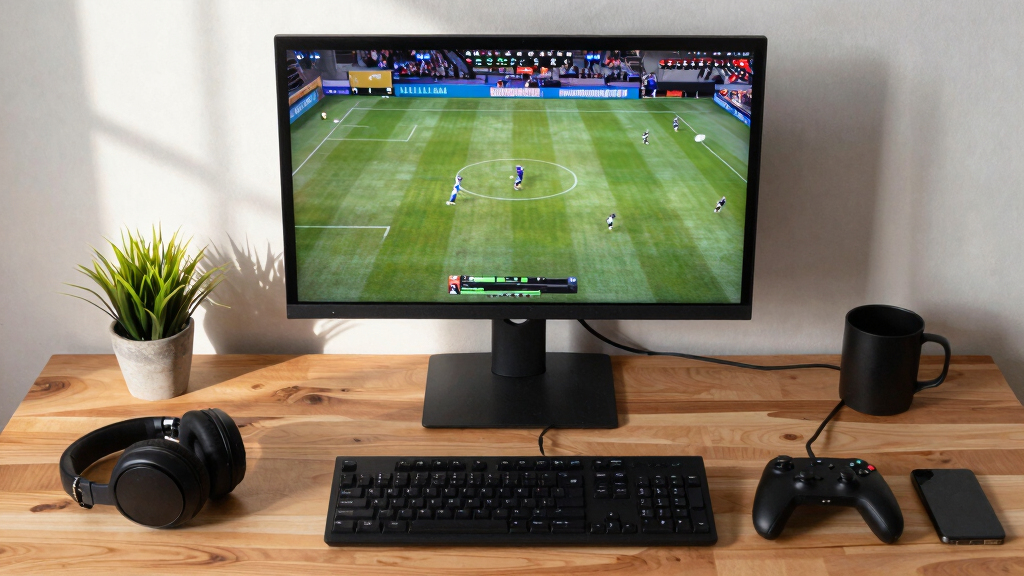

The Samsung Odyssey G5 G50F is my best overall gaming monitor for sports viewing because its 32-inch QHD Fast IPS panel balances sharp detail, broad viewing angles, and smooth 180Hz motion. The Acer 27-inch Full HD IPS monitor is my value pick, while the ViewSonic VX3418C-2K suits buyers who want a more immersive ultrawide screen. The main choice is between IPS viewing angles and VA contrast, followed by screen size, resolution, and whether an ultrawide shape fits regular 16:9 broadcasts. Refresh rates above 120Hz are useful for gaming, but they offer limited extra value when the sports source runs at 50 or 60 frames per second. Continue reading for the full breakdown of which models suit solo viewing, shared rooms, gaming, and tighter budgets.

Get the latest gadgets delivered free with Prime
- Fast, free delivery on millions of items
- Prime Video, Amazon Music and more included
- Member-only deals all year
Complete the kit



Key Takeaways
- The Samsung Odyssey G5 G50F leads the ranking because QHD resolution and a Fast IPS panel make more sense for mixed sports viewing and gaming than the 32-inch FHD panels elsewhere in the lineup.
- The Acer 27-inch Full HD IPS model offers the strongest value: its 120Hz refresh rate covers sports streams comfortably without charging for 240Hz or 280Hz performance that broadcasts rarely use.
- The ViewSonic VX3418C-2K is the premium ultrawide choice, but its 21:9 shape can place black bars beside standard 16:9 sports coverage.
- The 32-inch FHD models trade clarity for speed; the SANSUI 240Hz and KTC 240Hz or 280Hz monitors favor competitive gaming more than close-range sports viewing.
- Panel type separated the leading Samsung models: I favor the G50F’s Fast IPS panel for group seating, while the curved G55C is better suited to a centered viewer seeking stronger perceived contrast.
| SANSUI 24-Inch Curved Gaming Monitor |  | Best Compact Pick | Screen Size: 24 inches | Resolution: 1920 x 1080 (Full HD) | Panel Type: VA | VIEW LATEST PRICE | See Our Full Breakdown |
| Samsung 32-Inch Odyssey G55C |  | Best Big-Screen Immersion | Screen Size: 32 inches | Resolution: 2560 x 1440 (QHD) | Refresh Rate: 165Hz | VIEW LATEST PRICE | See Our Full Breakdown |
| Samsung 27-Inch Odyssey G5 G53F |  | Best Overall | Screen Size: 27 inches | Resolution: 2560 x 1440 (QHD) | Panel Type: IPS | VIEW LATEST PRICE | See Our Full Breakdown |
| SANSUI 32-Inch 240Hz Curved Gaming Monitor |  | Best for Competitive Gamers Who Watch Sports | Screen Size: 32 inches | Resolution: 1920 x 1080 (Full HD) | Refresh Rate: 240Hz | VIEW LATEST PRICE | See Our Full Breakdown |
| Acer KB272 27-Inch Full HD IPS Monitor |  | Best Value for Shared Viewing | Screen Size: 27 inches | Resolution: 1920 x 1080 (Full HD) | Panel Type: IPS | VIEW LATEST PRICE | See Our Full Breakdown |
| KTC 32 Inch Curved Gaming Monitor, 280Hz, FHD, HDR, Adaptive-Sync, VESA Compatible |  | Best for Motion Clarity | Screen Size: 32 inches | Resolution: 1920 × 1080 (FHD) | Refresh Rate: 280Hz | VIEW LATEST PRICE | See Our Full Breakdown |
| SANSUI 34-Inch Curved Gaming Monitor UWQHD 3440 × 1440P 200Hz 1500R |  | Best High-Refresh Ultrawide | Screen Size: 34 inches | Resolution: 3440 × 1440 (UWQHD) | Refresh Rate: 200Hz | VIEW LATEST PRICE | See Our Full Breakdown |
| Sceptre 24-inch Curved Gaming Monitor 1080p 75Hz with HDMI, VGA, Built-in Speakers, VESA Mount |  | Best Budget Compact Pick | Screen Size: 24 inches | Resolution: 1920 × 1080 | Refresh Rate: 75Hz | VIEW LATEST PRICE | See Our Full Breakdown |
| ViewSonic VX3418C-2K 34 Inch Ultrawide Curved Gaming Monitor, 1440p, 180Hz, 1ms, FreeSync Premium, HDR10 |  | Best Overall | Display Size: 34 inches | Resolution: 3440 × 1440 | Aspect Ratio: 21:9 | VIEW LATEST PRICE | See Our Full Breakdown |
| Samsung 27-inch Essential S3 (S36GD) Series FHD Curved Computer Monitor |  | Best Everyday Hybrid | Screen Size: 27 inches | Resolution: Full HD (FHD) | Aspect Format: 16:9 | VIEW LATEST PRICE | See Our Full Breakdown |
| KTC 32-Inch 240Hz Curved Gaming Monitor |  | Best Big-Screen Value for Fast Action | Screen Size: 32 inches | Resolution: 1920 x 1080 (FHD) | Refresh Rate: 240Hz | VIEW LATEST PRICE | See Our Full Breakdown |
| Samsung 27-Inch Odyssey G3 G30D |  | Best Ergonomic 27-Inch Pick | Screen Size: 27 inches | Resolution: FHD | Refresh Rate: 180Hz | VIEW LATEST PRICE | See Our Full Breakdown |
| Samsung 32-Inch Odyssey G5 G50F |  | Best Overall | Screen Size: 32 inches | Resolution: 2560 x 1440 (QHD) | Panel Type: Fast IPS | VIEW LATEST PRICE | See Our Full Breakdown |
| Acer Nitro KG241Y Sbiip 23.8-Inch Gaming Monitor |  | Best Compact Pick | Screen Size: 23.8 inches | Resolution: 1920 x 1080 | Panel Type: VA | VIEW LATEST PRICE | See Our Full Breakdown |
| Sceptre 34-Inch Curved Ultrawide WQHD Monitor |  | Best for Multiview Sports | Screen Size: 34 inches | Resolution: 3440 x 1440 (WQHD) | Panel Type: VA | VIEW LATEST PRICE | See Our Full Breakdown |
| gaming monitors for sports viewing | Resolution | Refresh Rate | Screen Size | Response Time |
|---|---|---|---|---|
| SANSUI 24-Inch Curved Gaming M | 1920 x 1080 (Full HD) | 160Hz | 24 inches | 1ms |
| Samsung 32-Inch Odyssey G55C | 2560 x 1440 (QHD) | 165Hz | 32 inches | 1ms MPRT |
| Samsung 27-Inch Odyssey G5 G53 | 2560 x 1440 (QHD) | 200Hz | 27 inches | 1ms MPRT |
| SANSUI 32-Inch 240Hz Curved Ga | 1920 x 1080 (Full HD) | 240Hz | 32 inches | 1ms MPRT |
| Acer KB272 27-Inch Full HD IPS | 1920 x 1080 (Full HD) | Up to 120Hz | 27 inches | 1ms VRB |
| KTC 32 Inch Curved Gaming Moni | 1920 × 1080 (FHD) | 280Hz | 32 inches | — |
| SANSUI 34-Inch Curved Gaming M | 3440 × 1440 (UWQHD) | 200Hz | 34 inches | 1ms |
| Sceptre 24-inch Curved Gaming | 1920 × 1080 | 75Hz | 24 inches | — |
| ViewSonic VX3418C-2K 34 Inch U | 3440 × 1440 | 180Hz | — | 1ms MPRT |
| Samsung 27-inch Essential S3 | Full HD (FHD) | 100Hz | 27 inches | — |
| KTC 32-Inch 240Hz Curved Gamin | 1920 x 1080 (FHD) | 240Hz | 32 inches | 1ms |
| Samsung 27-Inch Odyssey G3 G30 | FHD | 180Hz | 27 inches | 1ms |
| Samsung 32-Inch Odyssey G5 G50 | 2560 x 1440 (QHD) | 180Hz | 32 inches | 1ms (GtG) |
| Acer Nitro KG241Y Sbiip 23.8-I | 1920 x 1080 | 165Hz | 23.8 inches | 1ms (VRB) |
| Sceptre 34-Inch Curved Ultrawi | 3440 x 1440 (WQHD) | 180Hz | 34 inches | 1ms |
More Details on Our Top Picks
SANSUI 24-Inch Curved Gaming Monitor
The SANSUI 24-inch curved monitor earns its place as my compact pick for viewers who also play fast games. Its 160Hz refresh rate provides ample motion headroom, while the 3000:1 contrast ratio should give night games and dark arenas more depth than the Acer KB272 can produce. The tradeoff is viewing flexibility: the Acer’s IPS panel is better suited to friends watching from different angles, and the SANSUI’s 1500R curve works best from a centered seat. Compared with the Samsung Odyssey G5 G53F, this model also sacrifices QHD detail and screen area. I see it as a strong fit for a small desk or bedroom, but the tilt-only stand and missing speakers mean buyers may need a mount and separate audio.
Pros:- 160Hz refresh rate provides smooth motion for gaming and high-frame-rate video
- 3000:1 contrast ratio adds depth to dark uniforms, stadium scenes, and night games
- Compact 24-inch footprint suits bedrooms and smaller desks
- HDMI 2.0 and DisplayPort 1.4 support modern gaming connections
Cons:- Full HD resolution offers less fine detail than the QHD Samsung models
- Tilt-only stand lacks height and swivel adjustment
- No built-in speakers for streaming games without separate audio
Best for: Solo viewers with small desks who split their time between sports streams and high-refresh competitive games
Not ideal for: Groups watching from off-center seats, since the curved VA display is geared toward one centered viewer
- Screen Size:24 inches
- Resolution:1920 x 1080 (Full HD)
- Panel Type:VA
- Refresh Rate:160Hz
- Response Time:1ms
- Curvature:1500R
- Brightness:300 nits
- Ports:1 x HDMI 2.0, 1 x DisplayPort 1.4, audio jack
Our verdict“This is my compact choice for a centered solo viewer who values smooth gaming and strong contrast over QHD sharpness.”
Samsung 32-Inch Odyssey G55C
I rank the Samsung Odyssey G55C highest for viewers who want a game to fill their field of vision without moving to an ultrawide format. Its 32-inch QHD screen shows finer scoreboard text and field detail than the similarly sized SANSUI 240Hz model, which stretches Full HD across 32 inches. The 1000R curvature and HDR10 support favor a close, centered seat, making this more like a personal sports station than a living-room display. Although its 165Hz ceiling trails the SANSUI’s 240Hz rate, that difference matters more in competitive gaming than sports video. The Samsung Odyssey G5 G53F offers a faster IPS panel and easier group viewing, but on a smaller 27-inch canvas. My main reservations are the aggressive curve, large desk footprint, and higher price.
Pros:- 32-inch QHD display balances large presentation with sharper detail than 32-inch Full HD models
- 165Hz refresh rate and 1ms MPRT support clean fast-motion gaming
- 1000R curve creates an enveloping view from a close central seat
- HDR10 expands contrast handling in compatible games and sports streams
Cons:- Aggressive curvature is less accommodating for multiple viewers
- Large screen requires substantial desk depth
- Costs more than basic Full HD alternatives
Best for: Desk-based viewers who sit close, watch sports alone, and want a large QHD screen for immersive gaming afterward
Not ideal for: Families or groups watching from several angles, because the strong 1000R curve favors a centered position
- Screen Size:32 inches
- Resolution:2560 x 1440 (QHD)
- Refresh Rate:165Hz
- Response Time:1ms MPRT
- Curvature:1000R
- HDR:HDR10
- Adaptive Sync:AMD Radeon FreeSync
- Eye Care:Supported
Our verdict“This is my pick for a solo viewer seeking a large, immersive QHD screen rather than the widest viewing angles or highest refresh rate.”
Samsung 27-Inch Odyssey G5 G53F
The Samsung Odyssey G5 G53F takes my top spot because it offers the most balanced mix of sports-friendly clarity, shared viewing, and serious gaming speed. Its QHD resolution keeps score graphics and distant players sharper than on the Full HD Acer KB272, while the IPS panel and wide viewing angles make it a better choice than the curved Samsung G55C when friends are gathered around. A 200Hz refresh rate is more than sports broadcasts require, yet it adds value for fast PC games and gives this model more gaming headroom than the G55C’s 165Hz panel. There are compromises: 27 inches feels less cinematic than a 32-inch screen, and HDR10 alone does not establish strong HDR brightness. It is also likely to demand a stronger graphics card and a larger budget than the Full HD picks.
Pros:- QHD resolution renders scoreboards, text, and distant action with strong clarity
- IPS panel provides vibrant color and broad viewing angles for shared watching
- 200Hz refresh rate offers the most gaming headroom among these Samsung models
- FreeSync Premium reduces tearing during variable-frame-rate gaming
Cons:- 27-inch screen is less enveloping than the 32-inch Odyssey G55C
- QHD gaming places a heavier load on the graphics card
- HDR10 support comes without a stated peak-brightness figure
Best for: Sports fans who watch with one or two other people and want QHD sharpness plus high-end gaming speed in a manageable size
Not ideal for: Buyers seeking a television-like 32-inch presentation or running a gaming PC that struggles at 1440p
- Screen Size:27 inches
- Resolution:2560 x 1440 (QHD)
- Panel Type:IPS
- Refresh Rate:200Hz
- Response Time:1ms MPRT
- HDR:HDR10
- Adaptive Sync:AMD FreeSync Premium
- Gaming Features:Black Equalizer and Auto Source Switch+
Our verdict“This is my best all-round choice for buyers who want sports-friendly IPS viewing and QHD detail without giving up competitive gaming speed.”
SANSUI 32-Inch 240Hz Curved Gaming Monitor
The SANSUI 32-inch 240Hz monitor is my specialist pick for competitive players who also want sports on a large screen. Its 240Hz refresh rate outpaces the Samsung Odyssey G55C and G53F, giving high-frame-rate games a smoother feel when paired with capable hardware. Sports streams rarely exploit that full ceiling, so the headline speed should not outweigh the main compromise: Full HD is relatively coarse at 32 inches. The QHD Odyssey G55C will show cleaner score graphics and finer field detail at the same size. SANSUI counters with a 3500:1 contrast ratio, 125% sRGB coverage, and a gentler 1500R curve. I would choose it for gaming first and sports second, especially since the missing speakers, USB ports, and flexible stand controls add setup costs.
Pros:- 240Hz refresh rate delivers exceptional gaming motion when the PC can supply enough frames
- 32-inch curved screen creates a large, focused presentation
- 3500:1 contrast ratio supports richer dark scenes
- 100 x 100mm VESA compatibility provides mounting flexibility
Cons:- Full HD resolution has low pixel density for a 32-inch screen
- Sports broadcasts gain little from the full 240Hz ceiling
- No built-in speakers or USB ports
Best for: Competitive PC gamers who want a large curved screen for solo sports viewing between high-frame-rate matches
Not ideal for: Viewers who sit close and prioritize crisp broadcast detail, because Full HD appears less refined across 32 inches
- Screen Size:32 inches
- Resolution:1920 x 1080 (Full HD)
- Refresh Rate:240Hz
- Response Time:1ms MPRT
- Curvature:1500R
- Brightness:300 nits
- Contrast Ratio:3500:1
- VESA Mount:100 x 100mm
Our verdict“This makes the most sense for competitive gamers who want sports on a big screen but can accept softer Full HD detail.”
Acer KB272 27-Inch Full HD IPS Monitor
I see the Acer KB272 as the sensible value choice for casual sports watching with family or friends. Its IPS panel provides more consistent color from side seats than the curved VA-based SANSUI 24-inch model, while the larger 27-inch surface makes split-screen statistics and game coverage easier to follow. The 120Hz refresh rate and Adaptive-Sync support also give it enough gaming ability for mainstream players, though the Samsung Odyssey G5 G53F is much better suited to competitive gaming with 200Hz and QHD resolution. Acer’s compromises are clear: Full HD looks less detailed at 27 inches, 250-nit brightness may struggle near sunny windows, and the HDMI-plus-VGA connection set omits DisplayPort. Still, for buyers who value wide viewing angles and approachable gaming performance over premium sharpness, this is my budget-minded choice.
Pros:- IPS panel offers broad viewing angles for small group viewing
- 120Hz refresh rate is smooth enough for mainstream gaming and sports playback
- Adaptive-Sync helps reduce tearing during gaming
- 99% sRGB coverage supports balanced, lively color
Cons:- Full HD resolution is less crisp than QHD on a 27-inch display
- 250-nit brightness may appear subdued in bright rooms
- No DisplayPort connection
Best for: Budget-conscious households that watch sports from multiple seats and play games casually at Full HD
Not ideal for: Competitive gamers and sunlit-room viewers who need higher refresh rates, QHD detail, or stronger brightness
- Screen Size:27 inches
- Resolution:1920 x 1080 (Full HD)
- Panel Type:IPS
- Refresh Rate:Up to 120Hz
- Response Time:1ms VRB
- Brightness:250 nits
- Color Coverage:99% sRGB
- Ports:HDMI and VGA
Our verdict“This is my value pick for households that favor shared IPS viewing and casual gaming over QHD sharpness and esports-level speed.”
KTC 32 Inch Curved Gaming Monitor, 280Hz, FHD, HDR, Adaptive-Sync, VESA Compatible
I rank the KTC 32 Inch Curved Gaming Monitor as the motion-focused pick because its 280Hz refresh rate is the fastest in this batch. That speed can make camera pans and rapid play easier to follow when a compatible PC supplies high-frame-rate sports streams or games. Compared with the Samsung Essential S3, the KTC offers far more gaming headroom and a larger, more enveloping screen. The 3500:1 contrast ratio also suits night games and darker rooms. Its weakness is pixel density: stretching 1080p across 32 inches produces a softer image than either 34-inch ultrawide here, especially for score graphics and text. I also would not choose it mainly for broadcast television, where source frame rates rarely exploit 280Hz. HDR10 support adds format compatibility, but no brightness figure is supplied to establish strong HDR impact.
Pros:- 280Hz refresh rate provides the highest motion ceiling in this batch
- 1500R curve fills more of a centered viewer’s field of vision
- 3500:1 contrast can give night games stronger dark-scene separation
- DisplayPort 1.4, dual HDMI ports, tilt adjustment, and VESA support aid setup flexibility
Cons:- 1080p resolution appears soft across a 32-inch panel
- Most sports broadcasts cannot take full advantage of 280Hz
- No built-in speakers or stated peak brightness
Best for: PC gamers who also watch fast sports from a centered seat and can feed the monitor very high frame rates
Not ideal for: Viewers prioritizing sharp scoreboards, 4K broadcasts, or shared couch viewing, since 32-inch 1080p looks relatively coarse
- Screen Size:32 inches
- Resolution:1920 × 1080 (FHD)
- Refresh Rate:280Hz
- Curvature:1500R
- Contrast Ratio:3500:1
- Color Gamut:128% sRGB
- HDR:HDR10
- Connectivity:2 × HDMI 2.0, 1 × DisplayPort 1.4, headphone jack
Our verdict“I recommend this KTC for buyers who value extreme gaming smoothness over the sharper sports presentation of a 1440p ultrawide.”
SANSUI 34-Inch Curved Gaming Monitor UWQHD 3440 × 1440P 200Hz 1500R
The SANSUI 34-Inch Curved Gaming Monitor earns this role by pairing a wide 3440 × 1440 canvas with a 200Hz refresh rate. I see it as the stronger choice than the KTC 32-inch for viewers who want sharper team graphics, more desktop space, and a panoramic presentation without giving up fast gaming. It also refreshes faster than the ViewSonic VX3418C-2K, while its stated 300-nit brightness is slightly higher. That makes it the performance-led ultrawide, though not automatically the safer all-around purchase: the ViewSonic adds FreeSync Premium, while SANSUI lists several gaming aids but no equivalent adaptive-sync certification in the supplied data. The 21:9-style screen may show side bars with 16:9 sports feeds, and reaching 200Hz requires suitable hardware. I would treat its 30-day return window as another factor for cautious buyers.
Pros:- 3440 × 1440 resolution keeps score graphics and fine field detail sharper than 32-inch FHD
- 200Hz refresh rate exceeds the ViewSonic ultrawide’s 180Hz ceiling
- 300-nit brightness and broad stated color coverage support a lively image
- Dual HDMI 2.1 inputs and DisplayPort 1.4 accommodate several sources
Cons:- Standard 16:9 sports feeds may display with vertical side bars
- A capable graphics card is needed to drive 3440 × 1440 at 200Hz
- No built-in speakers, and the money-back period is limited to 30 days
Best for: PC sports-game players who want ultrawide sharpness, a 200Hz ceiling, and room for a stream beside live statistics
Not ideal for: Console-first viewers or buyers who mostly watch 16:9 broadcasts and do not want unused space at the sides
- Screen Size:34 inches
- Resolution:3440 × 1440 (UWQHD)
- Refresh Rate:200Hz
- Response Time:1ms
- Curvature:1500R
- Brightness:300 nits
- Color Coverage:130% sRGB, 97% DCI-P3
- Inputs:2 × HDMI 2.1, 1 × DisplayPort 1.4
Our verdict“I favor this SANSUI for high-refresh ultrawide buyers who accept extra hardware demands and a less natural fit for ordinary 16:9 broadcasts.”
Sceptre 24-inch Curved Gaming Monitor 1080p 75Hz with HDMI, VGA, Built-in Speakers, VESA Mount
I place the Sceptre 24-inch Curved Gaming Monitor in the budget-compact slot because its built-in speakers, HDMI input, and small footprint create a simple sports setup for a bedroom or dorm. At 24 inches, 1080p also looks denser than it does on the 32-inch KTC, so score tickers and menus should appear cleaner at normal desk distance. The Sceptre cannot match that model’s motion performance, however: 75Hz is only a modest step above 60Hz, making this a casual viewing screen rather than a serious high-frame-rate gaming choice. Its 250 cd/m² brightness is better suited to controlled lighting than a sunlit room. I also see the 1800R curve as mild at this size; it adds some focus for one person but offers little benefit for a group watching from different angles.
Pros:- Compact 24-inch size fits shallow desks and small rooms
- 1080p resolution has better pixel density here than on larger FHD models
- Built-in speakers reduce the need for extra equipment
- HDMI, VGA, and VESA support suit both newer and older setups
Cons:- 75Hz refresh rate falls far behind every performance-focused model in this batch
- 250 cd/m² brightness may look muted in strong daylight
- Small curved screen is poorly suited to group sports viewing
Best for: Budget-conscious students or bedroom viewers who need a compact sports screen with speakers and legacy VGA support
Not ideal for: Competitive players, bright-room viewers, or groups who need a larger screen and much smoother motion
- Screen Size:24 inches
- Resolution:1920 × 1080
- Refresh Rate:75Hz
- Curvature:1800R
- Brightness:250 cd/m²
- Pixel Pitch:0.27156mm
- VESA Compatibility:Yes
- Lamp Life:30,000+ hours
Our verdict“I recommend the Sceptre as an inexpensive personal sports screen, not as a substitute for the faster and larger monitors in the lineup.”
ViewSonic VX3418C-2K 34 Inch Ultrawide Curved Gaming Monitor, 1440p, 180Hz, 1ms, FreeSync Premium, HDR10
The ViewSonic VX3418C-2K takes my top position because it balances sports detail, gaming speed, and motion control more convincingly than the other four picks. Its 3440 × 1440 ultrawide panel renders fine interface elements more cleanly than the FHD KTC and Samsung models, while 180Hz leaves ample headroom for sports games. Compared with the faster SANSUI 34-inch, the ViewSonic gives up 20Hz and 50 nits of stated brightness, but FreeSync Premium provides a clearer benefit when frame rates vary. The 4000:1 contrast ratio is also appealing for stadium scenes with bright highlights against dark stands. There are compromises: maximum refresh requires DisplayPort, the 250-nit brightness limits HDR10 impact, and 16:9 broadcasts may retain side bars. Its 31.81-inch width also asks for a substantial desk.
Pros:- 3440 × 1440 ultrawide resolution provides a detailed, spacious sports presentation
- 180Hz and 1ms MPRT support responsive play and smooth motion
- FreeSync Premium helps control tearing during fluctuating game frame rates
- 4000:1 contrast ratio can add depth to night matches and dark scenes
Cons:- DisplayPort is required for the maximum 180Hz refresh rate
- 250-nit brightness limits the visual force of HDR10 content
- Wide chassis occupies considerable desk space and 16:9 feeds may show side bars
Best for: PC gamers who want one wide monitor for sports games, live streams, statistics, and everyday multitasking
Not ideal for: Small-desk owners, bright-room viewers, or console users seeking a conventional 16:9 screen
- Display Size:34 inches
- Resolution:3440 × 1440
- Aspect Ratio:21:9
- Refresh Rate:180Hz
- Response Time:1ms MPRT
- Brightness:250 nits
- Contrast Ratio:4000:1
- Connectivity:HDMI 2.0, DisplayPort 1.4
Our verdict“I choose the ViewSonic as the best-balanced option for buyers who want sharp ultrawide sports viewing and dependable gaming motion in one display.”
Samsung 27-inch Essential S3 (S36GD) Series FHD Curved Computer Monitor
I assign the Samsung Essential S3 the everyday-hybrid role because its 27-inch, 16:9 format fits ordinary sports broadcasts more naturally than either 34-inch ultrawide. The 100Hz refresh rate offers smoother cursor movement and compatible gameplay than the 75Hz Sceptre, while Samsung’s Game Mode and eye-comfort features suit a screen shared between work, casual gaming, and long match days. It does not approach the KTC’s 280Hz motion ceiling, but many broadcast sources will not expose that gap. The bigger concern is resolution: Full HD at 27 inches lacks the fine detail of the ViewSonic’s 1440p panel, particularly at close range. HDMI and D-sub cover current and older devices, though DisplayPort is absent. I would also budget for external audio because built-in speakers are not listed.
Pros:- Conventional 16:9 shape displays most sports broadcasts without ultrawide side bars
- 100Hz refresh rate is smoother than the entry-level Sceptre’s 75Hz
- Eye-comfort features suit extended work sessions and long match days
- HDMI and D-sub support both current and legacy sources
Cons:- 1080p resolution is less crisp than 1440p at close viewing distances
- 100Hz ceiling is modest beside the dedicated gaming models
- No DisplayPort or stated built-in speakers
Best for: Home-office users who watch 16:9 sports, play casually, and want a familiar 27-inch screen for daily work
Not ideal for: High-refresh competitive gamers or detail-focused viewers who want 1440p, DisplayPort, or integrated audio
- Screen Size:27 inches
- Resolution:Full HD (FHD)
- Aspect Format:16:9
- Refresh Rate:100Hz
- Curve Radius:1800R
- Ports:HDMI and D-sub
- Gaming Feature:Game Mode
- Model Year:2024
Our verdict“I recommend the Samsung for mixed work and casual sports use when a straightforward 16:9 layout matters more than premium sharpness or extreme speed.”
KTC 32-Inch 240Hz Curved Gaming Monitor
I rank the KTC 32-Inch 240Hz Curved Gaming Monitor as the big-screen value pick for viewers who split their time between sports and competitive gaming. Its 32-inch 1500R curve creates a more enveloping view than the compact Acer Nitro KG241Y, while the 3500:1 contrast ratio should give night games and dark uniforms greater depth. The 240Hz ceiling is useful for high-frame-rate games, though it cannot add detail or frames to a typical sports broadcast. The main compromise is FHD resolution across 32 inches: score graphics and distant players will look softer than on the QHD Samsung Odyssey G5 G50F. I also miss built-in speakers and broader stand adjustments. This is better suited to viewing from several feet away than close-up desktop use.
Pros:- Large 32-inch curved screen creates an immersive view from a sofa or deep desk
- 3500:1 contrast ratio supports richer dark scenes than many IPS alternatives
- 240Hz refresh rate suits competitive gaming between sports broadcasts
- Two HDMI ports and DisplayPort accommodate several sources
Cons:- FHD resolution produces lower pixel density on the 32-inch panel
- 240Hz provides little benefit when the sports source is limited to 60Hz
- Tilt-only stand and no listed speakers reduce setup flexibility
Best for: Sports fans who want an affordable, curved 32-inch screen and also play high-frame-rate competitive games
Not ideal for: Close-range viewers who prioritize crisp scoreboards and fine field detail, since 1080p looks relatively coarse at 32 inches
- Screen Size:32 inches
- Resolution:1920 x 1080 (FHD)
- Refresh Rate:240Hz
- Response Time:1ms
- Contrast Ratio:3500:1
- Curvature:1500R
- Connectivity:2 x HDMI 2.0, DisplayPort 1.4, USB 2.0
- VESA Mount:100 x 100mm
Our verdict“I recommend this KTC for buyers prioritizing screen size and gaming speed over close-range sharpness and integrated audio.”
Samsung 27-Inch Odyssey G3 G30D
The Samsung Odyssey G3 G30D earns its place through flexibility rather than sheer size. Its height, swivel, tilt, and pivot adjustments make it easier to place a sports feed at a comfortable sightline, an advantage over the tilt-only Acer Nitro KG241Y and KTC 32-inch model. At 27 inches, FHD looks denser than it does on the 32-inch KTC, although the QHD Odyssey G5 G50F still delivers clearer player outlines and text. A 180Hz refresh rate and FreeSync make this a capable gaming companion, while Eye Saver Mode and flicker-free operation suit long tournament days. Black Equalizer and Virtual Aim Point add gaming utility but little to broadcast viewing. I would skip it if cinematic scale, HDR impact, or built-in sound matters more than desk comfort.
Pros:- Fully adjustable stand supports height, swivel, tilt, and pivot changes
- 27-inch size gives FHD imagery better pixel density than 32-inch 1080p models
- 180Hz refresh rate and 1ms response time support smooth gaming
- Eye Saver Mode and flicker-free technology suit extended viewing sessions
Cons:- FHD resolution cannot match the fine detail of QHD alternatives
- Gaming aids offer limited value for watching sports
- No built-in speakers are listed
Best for: Desk-based viewers who watch long matches, need precise screen positioning, and play fast PC games afterward
Not ideal for: Living-room viewers seeking a large cinematic screen or buyers wanting QHD detail and integrated speakers
- Screen Size:27 inches
- Resolution:FHD
- Refresh Rate:180Hz
- Response Time:1ms
- Adaptive Sync:AMD FreeSync
- Stand Adjustments:Height, swivel, tilt, and pivot
- Eye Comfort:Eye Saver Mode and Flicker-Free
- Gaming Features:Black Equalizer and Virtual Aim Point
Our verdict“I favor the Odyssey G3 for close-range viewers who value ergonomic control more than screen size or QHD sharpness.”
Samsung 32-Inch Odyssey G5 G50F
I place the Samsung Odyssey G5 G50F first because it balances sports-friendly size, clarity, motion handling, and viewing angles better than the other four options. The 32-inch QHD Fast IPS panel preserves finer scoreboard text and distant-player detail than the FHD KTC 32-inch model, without adopting the broadcast-mismatched 21:9 shape of the Sceptre ultrawide. Its wide viewing angles also make more sense when friends watch from seats around a room. A 180Hz refresh rate, 1ms GtG response, G-Sync compatibility, and FreeSync support cover serious gaming after the match. HDR10 adds format support, but the supplied data gives no brightness figure, so I would not expect television-grade HDR impact. It costs more than the FHD picks and requires a stronger GPU to drive QHD games at high frame rates.
Pros:- QHD resolution delivers sharper field detail and broadcast graphics than 32-inch FHD models
- Fast IPS panel offers wide viewing angles for shared sports watching
- 180Hz refresh rate and 1ms GtG response support fast gaming
- G-Sync compatibility and FreeSync support cover a broad range of gaming systems
Cons:- Higher price may put it beyond entry-level budgets
- QHD gaming at 180Hz places greater demand on the graphics card
- HDR10 support lacks a stated brightness specification
Best for: Buyers seeking one 32-inch monitor for group sports viewing, sharp 16:9 broadcasts, and high-refresh QHD gaming
Not ideal for: Budget shoppers or gamers whose graphics hardware cannot sustain high frame rates at 2560 x 1440
- Screen Size:32 inches
- Resolution:2560 x 1440 (QHD)
- Panel Type:Fast IPS
- Refresh Rate:180Hz
- Response Time:1ms (GtG)
- HDR:HDR10
- Adaptive Sync:G-Sync Compatible and AMD FreeSync
- Stand Adjustments:Height, pivot, tilt, and swivel
Our verdict“I recommend the Odyssey G5 G50F as the strongest all-round choice for sharp sports broadcasts and demanding PC gaming.”
Acer Nitro KG241Y Sbiip 23.8-Inch Gaming Monitor
The Acer Nitro KG241Y is my compact choice for a bedroom, dorm, or secondary sports screen. Its 23.8-inch size makes 1080p appear relatively crisp, and the VA panel should provide stronger dark-scene contrast than many entry-level IPS displays. FreeSync Premium, 165Hz operation, and a 1ms VRB mode also make it far more gaming-ready than the 75Hz Sceptre 24-inch curved model elsewhere in the lineup. Yet compactness works against spectacle: a football pitch or racing broadcast feels less expansive here than on the KTC 32-inch or Sceptre 34-inch ultrawide. The tilt-only stand is another meaningful restriction, especially on a cramped desk where height control would help. HDR readiness lacks detailed performance data, and there are no built-in speakers, so external audio and careful placement may be needed.
Pros:- Compact footprint fits small desks and secondary viewing stations
- FHD resolution remains reasonably sharp at 23.8 inches
- 165Hz refresh rate and FreeSync Premium support smooth gaming
- Three video inputs make source switching easier
Cons:- Small screen provides less sports spectacle and weaker long-distance visibility
- Stand supports tilt only, with no height or swivel adjustment
- No built-in speakers and limited HDR performance information
Best for: Dorm residents, bedroom viewers, and small-desk gamers who want crisp 1080p sports coverage in limited space
Not ideal for: Groups watching from across a room, since the 23.8-inch screen lacks the scale of 32-inch and ultrawide options
- Screen Size:23.8 inches
- Resolution:1920 x 1080
- Panel Type:VA
- Refresh Rate:165Hz
- Response Time:1ms (VRB)
- Color Coverage:72% NTSC
- Ports:1 x DisplayPort 1.2, 2 x HDMI 2.0
- VESA Mount:100 x 100mm
Our verdict“I recommend the Acer Nitro KG241Y when space is tight and gaming speed matters more than big-screen impact.”
Sceptre 34-Inch Curved Ultrawide WQHD Monitor
I give the Sceptre 34-Inch Curved Ultrawide the multiview role because its 3440 x 1440 canvas has room for a main event beside statistics, fantasy tools, or a second stream. That workspace is broader than the 16:9 Samsung Odyssey G5 G50F, while the 1500R curve and 180Hz refresh rate support immersive gaming when the broadcasts end. Its 99% sRGB rating and VA panel also promise useful color coverage and dark-scene depth. The catch is content fit: most sports feeds use 16:9, so a single full-screen broadcast may show side bars or require cropping. The Samsung G5 is the cleaner choice for standard television framing and shared off-angle viewing. Built-in 3W speakers simplify a desk setup, but dedicated speakers will deliver fuller commentary and crowd sound. WQHD ultrawide gaming also demands capable graphics hardware.
Pros:- Ultrawide resolution provides ample room for broadcasts, statistics, and fantasy tools
- 180Hz refresh rate and 1ms response time support fast gaming
- 1500R curvature creates an enveloping single-user view
- Built-in speakers and four video inputs simplify multi-source setups
Cons:- Most 16:9 sports broadcasts do not fill the ultrawide panel naturally
- 3440 x 1440 gaming requires stronger graphics hardware than FHD
- Built-in 3W speakers are unlikely to provide room-filling sports audio
Best for: Fantasy-sports players and multitaskers who want a game, live statistics, and another window visible together
Not ideal for: Viewers who mainly watch one 16:9 broadcast full-screen and dislike side bars, cropping, or ultrawide compatibility issues
- Screen Size:34 inches
- Resolution:3440 x 1440 (WQHD)
- Panel Type:VA
- Curvature:1500R
- Refresh Rate:180Hz
- Response Time:1ms
- Color Gamut:99% sRGB
- Connectivity:2 x DisplayPort, 2 x HDMI
- Built-in Speakers:Yes, 3W
Our verdict“I recommend this Sceptre to sports multitaskers who will use the extra width, not viewers seeking a conventional television-style frame.”
How We Picked
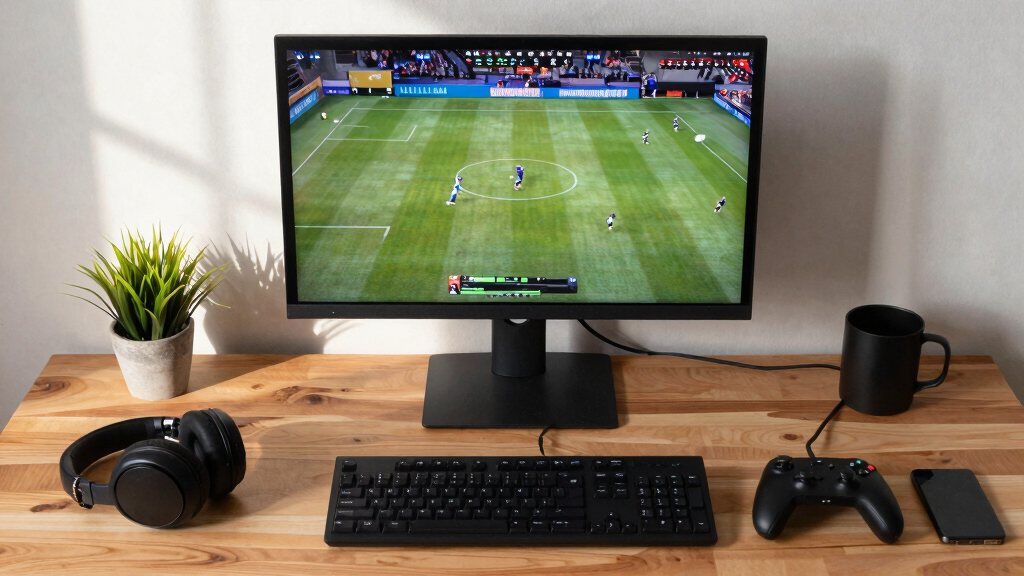
I ranked these monitors around the needs of someone who watches sports and also plays games. My heaviest weighting went to motion handling, resolution at the stated screen size, and viewing-angle consistency, since fast camera pans, score graphics, and off-center seating expose weaknesses quickly. I also compared refresh rate, adaptive-sync support, response-time claims, panel type, screen shape, stand adjustment, ports, and VESA support. A high refresh rate helped a model, but I did not reward 240Hz or 280Hz on its own when a sharper panel offered a better everyday sports image.
The final order reflects balanced usefulness rather than the largest specification. QHD IPS models ranked highly because they combine crisp detail with better shared viewing, while curved VA options gained ground for contrast and centered immersion. I placed 32-inch FHD monitors lower for sports because their lower pixel density becomes easier to see at desk distance, even when their gaming speed is excellent. I also treated HDR labels cautiously because HDR support does not confirm strong brightness or local dimming. Value was judged by whether each feature improves sports viewing, gaming, or both, rather than by the number of features printed on the box.
Factors to Consider When Choosing Gaming Monitors For Sports Viewing
I would start with screen size, resolution, and seating arrangement before comparing maximum refresh rates. Those choices shape the sports-viewing experience more than an unusually high gaming specification. The following factors explain where spending more helps and where a lower-priced monitor can deliver the better fit.
Match Resolution to Screen Size and Viewing Distance
I see resolution as a screen-size decision rather than a standalone badge. Full HD remains reasonable at 24 inches, especially from several feet away, but text, scoreboards, and player outlines can look coarse on a 32-inch panel viewed from a desk. At 27 or 32 inches, QHD provides a cleaner balance without the graphics demands of 4K gaming. A larger display does not automatically produce a better sports image if its pixels are more visible. Buyers watching from across a bedroom may tolerate 32-inch FHD better than buyers sitting an arm’s length away. I would pay for resolution before paying for refresh rates above 180Hz when sports viewing carries equal weight with gaming.
Do Not Overpay for Refresh Rate Alone
Refresh rate describes what the monitor can display, not what every broadcast supplies. Most live sports streams arrive at 50 or 60 frames per second, so a 120Hz monitor already has ample headroom and can show each 60fps frame evenly. Moving to 165Hz or 180Hz makes more sense when the same screen will handle fast PC or console games. The 240Hz and 280Hz options favor competitive gaming, where a capable computer can produce far more frames. They cannot create missing motion detail in a low-frame-rate stream, and video processing may matter more than the panel ceiling. I would treat extreme refresh rate as a gaming upgrade, not the main reason to buy a sports monitor.
Choose IPS or VA Around the Room
I favor IPS for sofas, shared rooms, and off-center seats because colors and brightness usually remain more consistent as viewers move sideways. VA panels often deliver deeper dark-scene contrast, which can help night games and stadium footage when viewed head-on. Their weakness is that some panels show darker motion smearing or a more visible image shift away from the center. A curved VA screen can feel engaging for one person at a desk, yet the curve is less useful for several people spread across a room. IPS glow may be visible during dark content, so it is not a perfect choice for every setting. I would choose the panel around seating and lighting before letting the curve decide the purchase.
Treat Ultrawide Screens as a Mixed-Use Choice
An ultrawide monitor creates more desktop space and a wider field of view in supported games, but most sports video remains 16:9 rather than 21:9. That mismatch commonly leaves vertical black bars unless the image is cropped or stretched. Cropping can remove score graphics or parts of the field, while stretching changes player proportions. Ultrawide makes the most sense when sports will share the screen with live statistics, chat, or another window. It is also attractive for racing and simulation games that support the format. I would not pay the ultrawide premium solely to make a standard broadcast appear larger.
Check the Features That Affect Daily Viewing
I would verify ports, stand movement, mounting support, and audio before buying. An adjustable stand or VESA mount helps align the screen with eye level and reduces reflections from room lighting. HDMI is the usual connection for streaming devices and consoles, while DisplayPort is often needed to reach the highest refresh rate from a PC. Built-in speakers simplify a small setup, but their sound rarely matches even a modest soundbar or powered speaker pair. HDR10 compatibility alone says little about impact; convincing sports HDR also needs strong brightness and useful contrast control. A common mistake is budgeting for the panel while forgetting an arm, speakers, adapter, or longer cable needed to make the setup comfortable.
Frequently Asked Questions
Is 120Hz Enough for Watching Live Sports?
Yes, I regard 120Hz as enough for most live sports because common 50fps and 60fps feeds fit cleanly within that refresh ceiling. It also gives menus, scrolling, and supported games smoother motion than a 60Hz or 75Hz display. A 165Hz or 180Hz monitor is worthwhile when gaming shares equal priority. I would reserve 240Hz or 280Hz for competitive players whose computers can supply those frame rates. The sports stream itself will not gain extra captured frames merely because the panel refreshes faster.
Is QHD Worth Paying For on a 32-Inch Sports Monitor?
I would usually choose QHD over Full HD at 32 inches, particularly when sitting at a desk. The added pixel density makes score text, field markings, and desktop content look cleaner. Full HD can still work from farther away or when a low price and very high gaming frame rate take priority. Streaming quality remains a limiting factor, so QHD cannot repair a heavily compressed feed. Within this lineup, the Samsung Odyssey G5 QHD models are more balanced mixed-use choices than the speed-focused 32-inch FHD alternatives.
Is a Curved Monitor Better for Watching Sports?
A curved monitor can improve centered, close-range viewing by making the outer edges feel less distant. I find that benefit more persuasive on 32-inch and 34-inch screens than on compact models. The drawback is that the shape favors one central seat and can look less natural to people sitting off-axis. Flat IPS models are usually easier to share with family or friends. I would choose a curve for solo immersion, not as a universal image-quality upgrade.
Will Sports Fill a 34-Inch Ultrawide Monitor?
Most sports coverage will not fill a 34-inch ultrawide without modification because the usual broadcast format is 16:9. A monitor can preserve the full image with black bars, crop the top and bottom, or stretch the picture across the panel. I prefer black bars because they retain scoreboards and correct proportions. The extra width still has value when placing statistics or a second stream beside the game. Buyers wanting a simple full-screen television-like presentation may be happier with a standard 16:9 QHD model.
Should I Choose IPS or VA for Sports and Gaming?
I would choose IPS for wider seating and mixed daytime use, which is why the Samsung Odyssey G5 G50F ranks first. VA is appealing for a centered viewer who values stronger dark-room contrast and an enveloping curved screen. Response behavior varies by model, but slower dark-pixel changes can make some VA panels show trails during rapid camera pans. IPS panels can show more glow in dim rooms, so the advantage is not absolute. For a shared sports screen, viewing-angle consistency usually matters more than the deeper blacks of VA.
Conclusion
For the best all-around balance, I recommend the Samsung Odyssey G5 G50F; its 32-inch QHD Fast IPS panel makes it the strongest choice for sports, group seating, and fast gaming. My best-value pick is the Acer 27-inch Full HD IPS 120Hz, which covers the refresh rate most sports viewers need without charging for extreme gaming speed. Buyers seeking a premium ultrawide workspace should choose the ViewSonic VX3418C-2K, while beginners wanting a straightforward, lower-speed setup can start with the Samsung Essential S3 27-inch 100Hz model. The Samsung Odyssey G5 G53F is my choice for a more compact QHD setup, and the curved G55C suits a solo viewer who favors contrast and immersion. Competitive players who also watch sports should look toward the KTC 280Hz or SANSUI 240Hz models, accepting that their 32-inch FHD resolution is the compromise. For most buyers, I would prioritize QHD clarity and suitable panel type ahead of the highest refresh-rate number.
Halloween Picks
halloween
As an affiliate, we earn on qualifying purchases.