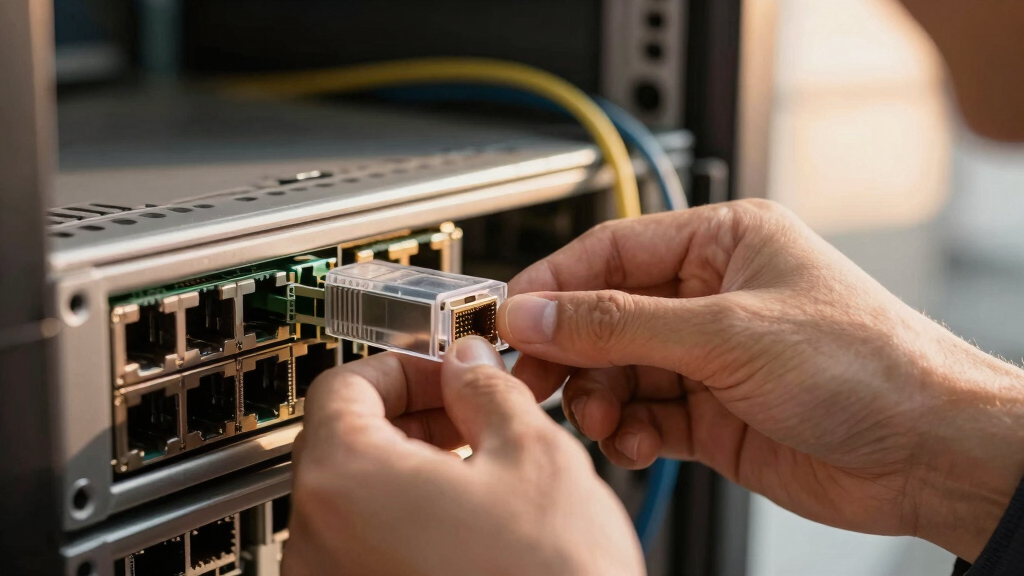

The best SFP+ modules are the ones that match your port, cable type, heat budget, and switch compatibility, and my top pick is the Cable Matters 2-Pack 10GBASE-SR SFP+ Module because it keeps the choice simple for short 10G fiber links while avoiding the heat penalty common with RJ45 adapters. The 10Gtek 10GBASE-T SFP+ RJ45 2-pack is the stronger value if you need copper over Cat6a, while the 10-Pack 10GBase-LR SFP+ module set makes more sense for multiple long single-mode runs. The biggest tradeoffs are SR versus LR fiber, copper convenience versus power draw, first-party coding versus lower-cost third-party modules, and true 10G SFP+ optics versus the Gigabit SFP modules also in this lineup. Keep reading for the full breakdown, including which picks I would choose for Omada networks, mixed-speed copper, bulk installs, and Gigabit-only fallback needs.

Get the latest gadgets delivered free — and shop member deals
- Fast, free delivery on millions of items
- Access to Prime Big Deal Days deals on October 6–7
- Prime Video, Amazon Music and more included
Key Takeaways
- Cable Matters 10GBASE-SR takes Best Overall because SR fiber gives the cleanest blend of 10G speed, low heat, broad switch support, and 300m reach for most rack and room-to-room links.
- Copper SFP+ modules are convenient but sit behind SR fiber in my ranking because 10GBASE-T adapters draw more power and run warmer, especially in dense switches.
- 10Gtek’s 2-pack beats the single TP-Link copper module on value, while TP-Link Omada SM5310-T wins when first-party fit matters more than price.
- LR optics only rise to the top for long single-mode runs or bulk deployments; the 10-pack is practical for campuses, not typical desktop-to-switch links.
- TP-Link SM331T, SM311LS, and H!Fiber 1.25G are useful Gigabit SFP options, but I rank them lower because they are not true 10G SFP+ upgrades.


More Details on Our Top Picks
10Gtek 10GBASE-T SFP+ to RJ-45 Transceiver, 10Gbe Copper Ethernet CAT.6a Module (30-Meter Reach), Pack of 2
I rank the 10Gtek 10GBASE-T SFP+ to RJ-45 highly because it gives buyers a direct path from an SFP+ port to familiar copper Ethernet without buying new fiber runs. Compared with the Cable Matters 2-Pack 10GBASE-SR, this is the easier fit for racks already wired with CAT.6a or CAT7, though it gives up the lower power profile and longer fiber-friendly layout of multimode optics. The 30-meter reach is enough for many home labs, small offices, and short rack-to-rack links, and the two-pack format makes paired switch-to-server upgrades simpler. The main caution is compatibility: it works with many Cisco, Fortinet, Meraki, Netgear, D-Link, and TP-Link environments, but buyers with HP-ProCurve, Arista, or Dell Force10 gear should skip it.
Pros:- 10Gbps copper connectivity over common CAT.6a or CAT7 cabling
- Two-pack suits paired switch, router, or server upgrades
- Broad listed compatibility with Cisco, Fortinet, Meraki, Netgear, D-Link, and TP-Link
- 30-meter reach covers many rack, closet, and room-to-room copper installs
Cons:- Excluded compatibility with HP-ProCurve, Arista, and Dell Force10 limits mixed-vendor use
- Copper 10G SFP+ modules can run warmer than many fiber modules
- No warranty or durability details are provided in the product data
Best for: Home lab and small-office buyers who need two 10Gbps RJ-45 SFP+ modules for short copper runs on compatible switches.
Not ideal for: HP-ProCurve, Arista, or Dell Force10 users, since the listed compatibility excludes those platforms.
- Data Rate:10Gbps
- Interface Type:RJ-45
- Module Type:SFP+ to RJ-45 transceiver
- Cable Type:CAT.6a/CAT7
- Reach:Up to 30 meters
- Compatibility:Cisco, Fortinet, Meraki, Netgear, D-Link, TP-Link
- Excluded Platforms:HP-ProCurve, Arista, Dell Force10
- Pack Quantity:2
Bottom line: Choose this if you want a practical two-module copper 10G upgrade and your switch brand is on the supported list.
10-Pack 10GBase-LR SFP+ Transceiver Module (Single-Mode LC, 1310nm, 10km)
The 10-Pack 10GBase-LR SFP+ Transceiver Module earns its place for buyers planning several long single-mode links at once. Against the Cable Matters 2-Pack 10GBASE-SR, this set is built for distance rather than short multimode runs: 10km reach makes it better for building-to-building fiber, campus layouts, or spread-out network closets. The 10-pack also changes the buying math; it can be efficient for installers and IT teams, but excessive for someone who only needs one server uplink. I also like that the data includes DDM monitoring, a 3-year warranty, and lifetime technical support, since diagnostics and support matter more when links are remote. The tradeoff is simple: this is less flexible for small purchases and requires the right single-mode LC fiber.
Pros:- 10km single-mode reach suits long interconnects and distributed network layouts
- Bulk 10-pack is efficient for multi-link deployments
- DDM support helps monitor module and link health
- 3-year warranty and lifetime technical support add purchase confidence
Cons:- Bulk quantity may be wasteful for small upgrades
- Requires single-mode LC duplex fiber rather than copper or multimode cabling
- No price is included in the provided data, making value harder to judge
Best for: IT teams, installers, and network admins building multiple 10Gbps single-mode fiber links across long distances.
Not ideal for: Home lab buyers or small offices that only need one or two modules, since the 10-pack can leave unused inventory.
- Speed:10Gbps
- Fiber Type:Single Mode LC Duplex
- Wavelength:1310nm
- Transmission Distance:Up to 10km
- Diagnostics:DDM support
- Compatibility:Cisco, Meraki, Ubiquiti, and other major brands
- Package Dimensions:8.62 x 6.77 x 0.75 inches
- Item Weight:9.6 ounces
- Support:3-year warranty with lifetime technical support
Bottom line: This is the right pick when the job calls for many long 10G single-mode links, not a one-off desktop upgrade.
TP-Link SM331T 1000Base-T RJ45 SFP Module
The TP-Link SM331T is not the pick for buyers chasing 10G SFP+ speed, which is exactly why its role is narrow and useful. Compared with the 10Gtek 10GBASE-T SFP+ to RJ-45 or the multi-rate 10GBASE-T SFP+ to RJ45 Transceiver, this TP-Link module tops out at gigabit, so it belongs in networks where the switch port is SFP and the endpoint is standard RJ-45 Ethernet. The upside is reach: 100-meter copper support is far more forgiving than the 30-meter 10G copper modules in this batch. Hot-swapping and plug-and-play setup make it friendly for maintenance windows, while the metal casing suits regular handling. The compromise is speed and scope: it is a 1000Base-T SFP module, not a fiber module or 10G upgrade.
Pros:- 100-meter copper reach is useful for longer RJ-45 runs
- Plug-and-play setup keeps installation simple
- Hot-swappable design supports maintenance without shutting down the network
- Durable metal casing is better suited to repeated handling than bare plastic housings
Cons:- Limited to 1Gbps, so it does not match the speed of SFP+ modules in this roundup
- Copper-only design offers no fiber path
- Small form factor can be fiddly in dense switch ports
Best for: Buyers with SFP switch ports who need dependable 1Gbps RJ-45 copper connectivity over longer Ethernet runs.
Not ideal for: Anyone building a 10Gbps SFP+ link, because this is limited to 1000Base-T gigabit operation.
- Brand:TP-Link
- Model Number:SM331T
- Standard:1000Base-T
- Interface:RJ45 SFP module
- Reach:Up to 100 meters
- Installation:Plug-and-play
- Serviceability:Hot-swappable
- Dimensions:2.65 x 0.54 x 0.54 inches
- Weight:0.704 ounces
Bottom line: Pick this when compatibility and 100-meter gigabit copper matter more than 10G performance.
10GBASE-T SFP+ to RJ45 Transceiver, 1/2.5/5/10G Multi-Rate Copper Module (2 Pack)
The 10GBASE-T SFP+ to RJ45 Multi-Rate Copper Module is the most adaptable copper option here because it can auto-negotiate 1G, 2.5G, 5G, and 10G. That makes it a better match than the fixed-speed 10Gtek 10GBASE-T SFP+ to RJ-45 for networks with mixed NAS boxes, desktops, access points, or switches that have not all moved to 10G. It keeps the same practical RJ-45 appeal and 30-meter CAT6a/CAT7 ceiling, so buyers still get easy copper integration without pulling fiber. Compared with the TP-Link SM331T, it has far more speed headroom, but it lacks the TP-Link’s 100-meter gigabit reach. The big limitation is vendor fit: HP/HPE switches are excluded, and 30 meters may be short for sprawling offices.
Pros:- Auto-negotiates across 1G, 2.5G, 5G, and 10G links
- Two-pack fits paired upgrades or redundant links
- Works with many open SFP+ devices from Cisco, Ubiquiti, Mikrotik, Meraki, and Netgear
- Hot-pluggable MSA design supports straightforward installation
Cons:- Not compatible with HP/HPE switches
- 30-meter cable limit is shorter than gigabit copper SFP options
- Copper SFP+ modules may run warmer than short-range fiber modules
Best for: Mixed-speed networks where one SFP+ module may need to link to 1G, 2.5G, 5G, or 10G RJ-45 devices.
Not ideal for: HP or HPE switch owners, or buyers who need copper runs longer than 30 meters.
- Data Rate:1G/2.5G/5G/10G auto-negotiation
- Interface:SFP+ to RJ45
- Cable Type:CAT6a/CAT7
- Reach:Up to 30m
- Compatibility:Cisco SFP-10G-T-S, Ubiquiti UF-RJ45-10G, Mikrotik S+RJ10, Meraki MA-SFP-10GB-T, Netgear AXM765
- Excluded Platform:HP/HPE switches
- Design:Hot-pluggable MSA
- Pack Quantity:2
Bottom line: This is the copper module I would choose for mixed-speed gear, provided the switch is compatible and the run is short.
Cable Matters 2-Pack 10GBASE-SR SFP+ to LC Multimode Fiber Transceiver Module (300m, for Cisco, HPE Aruba, Ubiquiti, and More)
The Cable Matters 2-Pack 10GBASE-SR is the strongest short-range fiber choice in this batch because it combines 10G-class speed, broad brand support, and low power consumption under 1W. Compared with the copper 10Gtek 10GBASE-T SFP+ to RJ-45, this module is better for dense racks where heat and latency matter, though it requires LC multimode fiber instead of common Ethernet cabling. Against the 10-Pack 10GBase-LR SFP+ Transceiver Module, it is the shorter-range, smaller-quantity buy: 300m over OM1-OM4 is plenty for many data rooms, but it is not made for 10km single-mode runs. I also value DDM/DOM diagnostics for visibility into link health. The catch is vendor locking, since proprietary SFP+ ports may reject it.
Pros:- Up to 11.3 Gb/s over multimode fiber for high-speed short links
- Sub-1W power use is helpful in dense switch deployments
- DDM/DOM diagnostics provide link and module visibility
- Supports many major brands including Cisco, HPE Aruba, Ubiquiti, TP-Link, Netgear, MikroTik, D-Link, and Supermicro
Cons:- 300m reach is short compared with 10km LR single-mode modules
- Requires multimode LC fiber rather than RJ-45 copper cabling
- May not work in proprietary vendor-locked SFP+ ports
Best for: Network buyers wiring short 10Gbps multimode fiber links between switches, servers, or NICs in racks or nearby rooms.
Not ideal for: Long-distance single-mode fiber installs or proprietary vendor-locked SFP+ environments that may reject third-party modules.
- Speed:10G, up to 11.3 Gb/s
- Reach:Up to 300m
- Fiber Type:Multimode OM1, OM2, OM3, OM4
- Wavelength:850 nm VCSEL
- Compatibility:Cisco, HPE Aruba, Ubiquiti, TP-Link, Netgear, MikroTik, D-Link, Supermicro
- Power Consumption:<1.0 W
- Diagnostics:DDM/DOM
- Dimensions:2.37 x 0.55 x 0.48 inches
- Weight:2.11 ounces
Bottom line: Choose this for efficient short-range 10G multimode fiber links where two modules are enough.
TP-Link Omada SM5310-T 10G Copper SFP+ Transceiver Module
I would rank TP-Link Omada SM5310-T as the copper SFP+ pick for buyers who need a 10G RJ45 handoff without replacing short copper runs. Compared with the TP-Link Omada SM5110-SR, it avoids fiber patching and works better where Cat6a already exists; compared with the 10Gtek 10GBASE-T SFP+ to RJ-45 Transceiver, it is less value-oriented but fits neatly into an Omada/TP-Link stack. The main limit is reach: full 10Gbps stops at 30 meters on Cat6a, while lower 2.5/1Gbps links can stretch farther on Cat5e. I would skip it for longer backbone runs, where single-mode or multi-mode fiber modules make more sense instead.
Pros:- 10Gbps over Cat6a for short copper SFP+ uplinks
- 2.5/1Gbps fallback up to 100 meters on Cat5e
- Hot-pluggable design supports changes without taking equipment offline
- Durable metal casing with broad SFP+ port support
Cons:- Full 10Gbps speed is limited to 30 meters
- Cat6a cabling is needed for maximum performance
- Single-module format lacks the spare-unit value of 2-pack options
Best for: I would point small-office admins with existing Cat6a runs and spare 10G SFP+ ports to this module.
Not ideal for: I would skip it for campus backbones or server rooms that need 10Gbps beyond 30 meters.
- Speed:10Gbps up to 30m; 2.5/1Gbps up to 100m
- Cable Type:Cat6a for 10G; Cat5e for lower speeds
- Media:Copper Ethernet
- Compatibility:Most 10G SFP+ ports on switches, routers, and media converters
- Casing:Durable metal
- Hot Pluggable:Yes
- ASIN:B0B12N5SJN
Bottom line: I would choose this for short copper 10G upgrades where replacing cable with fiber would be overkill.
TP-Link SM311LS Gigabit SFP Module, 1000Base-LX Single-Mode Fiber with LC/UPC Interface (Up to 10km)
I see TP-Link SM311LS as the best long-run gigabit option for TP-Link-heavy networks, not as a direct 10G SFP+ rival. Against the H!Fiber 1.25G Single Mode SFP LC Module 2 Pack, it trades broad multi-brand appeal for tighter alignment with JetStream switches and TP-Link media converters. It also reaches far beyond the TP-Link Omada SM5110-SR when distance matters, but at only 1.25Gbps it gives up the 10G speed that defines many picks in this roundup. The LC/UPC single-mode design is the right fit for building-to-building LAN extensions, yet it is a poor match for copper upgrades or multi-mode fiber closets. I would treat it as a distance-first gigabit tool.
Pros:- 20km single-mode reach for remote LAN extensions
- 1.25Gbps full-duplex data rate for gigabit infrastructure
- Plug-and-play fit with compatible TP-Link networking gear
- LC/UPC interface suits common single-mode fiber runs
Cons:- Not a 10G SFP+ module, so it cannot fill a high-speed uplink role
- Single-mode fiber only, which rules out multi-mode closets
- TP-Link-centered fit is narrower than broader third-party modules
Best for: I would point TP-Link JetStream or MC210CS/MC220L users who need a 1Gbps single-mode link across buildings to this module.
Not ideal for: I would skip it for buyers building 10G SFP+ uplinks or anyone wired with multi-mode fiber.
- Model Number:TL-SM311LS
- Standard:1000Base-LX
- Data Rate:1.25Gbps
- Wavelength:1310nm
- Interface:LC/UPC
- Fiber Type:9/125um single-mode fiber
- Max Distance:20km
- Dimensions:8.15 x 1.5 x 5.83 inches
- Weight:1.76 ounces
Bottom line: I would buy this only when long-distance gigabit fiber matters more than 10G speed.
H!Fiber 1.25G Single Mode SFP LC Module (2 Pack) – Compatible with Cisco, Meraki, Ubiquiti, and More
I would choose H!Fiber 1.25G Single Mode SFP LC Module 2 Pack when value means having two long-range optics ready for mixed-brand gear. Next to the TP-Link SM311LS, it offers broader listed compatibility across Cisco, Meraki, Ubiquiti, and Netgear, plus DDM monitoring for live link visibility. It still sits below the TP-Link Omada SM5110-SR on raw speed, so it is not the right answer for a 10G backbone. The 20km range and low <1.05W power draw make it appealing for remote switches, but the single-mode LC/UPC requirement narrows who can use it. Locked-down network platforms may also need exact transceiver coding.
Pros:- 2-pack format gives a spare or matched pair for link builds
- 20km single-mode reach suits long fiber runs
- DDM support helps monitor live transceiver status
- Listed compatibility covers Cisco, Meraki, Ubiquiti, Netgear, and more
Cons:- Gigabit-class speed only, not 10G
- Requires single-mode LC/UPC cabling
- Some locked-down switches may still require exact coding matches
Best for: I would point multi-vendor network admins who need two gigabit single-mode optics for remote switches to this pack.
Not ideal for: I would skip it for buyers who need 10G SFP+ throughput or who already have multi-mode fiber in place.
- Package Quantity:2 modules
- Data Rate:1.25Gb/s
- Wavelength:1310nm
- Distance Range:20km / 12.4 miles
- Interface Type:Duplex LC
- Fiber Type:Single-mode fiber with LC/UPC cables
- Power Consumption:<1.05W
- DDM Support:Yes
- Compatibility:Cisco GLC-LH-SMD, Meraki, Ubiquiti UniFi, Netgear, and more
Bottom line: I would choose this pack for budget-minded gigabit fiber links across mixed-brand networks.
TP-Link Omada SM5110-SR 10G SFP+ Transceiver Module
I would put TP-Link Omada SM5110-SR ahead of copper picks when the goal is clean short-range 10G over multi-mode fiber. Compared with the TP-Link Omada SM5310-T, it can run farther at 10G on 50/125um fiber and avoids the 30-meter Cat6a ceiling, but it demands the right fiber plant. It is also a more focused single-module choice than the Cable Matters 2-Pack 10GBASE-SR if a buyer wants TP-Link Omada alignment over bulk buying. The tradeoff is range: 300m is useful inside campuses and data rooms, while single-mode options like the H!Fiber 1.25G Single Mode SFP LC Module 2 Pack go much farther, albeit at gigabit speed.
Pros:- 10Gbps data rate for short fiber uplinks
- Up to 300m reach on 50/125um multi-mode fiber
- Hot-pluggable design supports flexible deployment
- SFP+ MSA and DDM support help with device fit and monitoring
Cons:- Short-range only, with a 300m ceiling on 50/125um fiber
- Drops to 33m on 62.5/125um fiber
- Requires multi-mode LC/UPC fiber rather than copper or single-mode runs
Best for: I would point Omada users and small data-room admins with existing multi-mode fiber to this short-range 10G module.
Not ideal for: I would skip it for long-distance single-mode runs or copper-only racks that lack LC fiber cabling.
- Data Rate:10Gbps
- Wavelength:850nm
- Port Type:LC/UPC
- Fiber Type:Multi-mode fiber
- Max Distance on 50/125um:300m
- Max Distance on 62.5/125um:33m
- Compatibility:SFP+ MSA
- DDM Support:Yes
- Hot Pluggable:Yes
Bottom line: I would pick this for fast, tidy 10G links inside the same rack area, data room, or building.
How We Picked
I ranked these modules by how well they answer the core buying problem behind best SFP+ modules: getting a stable 10G link without buying the wrong optic for the port, cable, or switch firmware. Native 10G options came first, with extra weight for thermal behavior, standards fit, reach, broad device support, and value per link. SR fiber earned a high placement because it is usually easier on switch power budgets than RJ45 copper, while LR fiber moved up only when its long reach creates a real advantage. I placed 1G SFP modules lower because they can be useful in the same hardware family, but they do not solve the same 10G upgrade problem.
The order also reflects how much risk a buyer takes on. First-party TP-Link Omada modules score well for ecosystem fit, while 10Gtek and Cable Matters compete harder on price per working link. Multi-rate copper gets credit for mixed 1/2.5/5/10G networks, but it loses points for heat, shorter reach, and switch-by-switch negotiation quirks. Bulk LR packs rise only for buyers wiring several single-mode runs; for a single home rack, that same pack can be more hardware than the job needs.
Factors to Consider When Choosing Best SFP+ Modules
I would start with the link, not the brand badge. The best choice changes quickly depending on whether the run is a short rack fiber patch, a long single-mode pull, a reuse of Cat6a copper, or a simple Gigabit port fill. This guide focuses on the decisions that prevent mismatches: speed class, fiber type, copper heat, switch coding, and how many links you need to build.
Start With Port Speed And Module Class
The biggest mistake in this category is treating every small transceiver as interchangeable. SFP and SFP+ can look alike, but a 1G SFP module will not turn a link into 10G. That is why the TP-Link SM331T, TP-Link SM311LS, and H!Fiber 1.25G picks sit below the true 10G SFP+ choices in my ranking. They can still be smart buys for older switches, uplinks to 1G gear, or low-cost single-mode runs. If the goal is a 10G switch upgrade, I would keep the shortlist to SR, LR, or 10GBASE-T SFP+ modules.
Choose SR Fiber For Short 10G Links
10GBASE-SR is the cleanest default for many 10G switch-to-switch and switch-to-server links because it is fast, cool-running, and widely supported. It uses multimode fiber, usually OM3 or OM4, which makes sense inside a rack, across a room, or through many small office cable paths. Compared with RJ45 copper modules, SR optics usually put less heat into the switch cage, which matters when several ports are filled at once. Compared with LR optics, SR is less suited to long building runs but usually cheaper and less fussy for short distances. That balance is why I put the Cable Matters 2-pack ahead of the more specialized long-range and copper options.
Use LR Fiber Only When The Distance Calls For It
10GBASE-LR is built for single-mode fiber and long reach, so it is a waste if the link is only a short patch between nearby switches. The upside is headroom: a 10km-rated module can support building-to-building, riser, or campus-style runs where SR fiber cannot go far enough. The downside is that LR optics and single-mode cabling can add cost, and very short LR links may need attention to receiver levels depending on the hardware. A 10-pack only makes sense when several links are planned and spares have real value. For a one-link home or lab install, I would usually buy a matched pair, not a bulk box.
Treat Copper SFP+ As A Convenience Tradeoff
10GBASE-T SFP+ is attractive because it lets an SFP+ switch talk to familiar RJ45 devices over Cat6a. The cost is heat, power draw, and shorter supported reach than fiber in many SFP+ cages. Multi-rate copper modules add another advantage because they can bridge 1G, 2.5G, 5G, and 10G devices when auto-negotiation works cleanly. That flexibility is why I separate the generic multi-rate 2-pack from the fixed 10G copper choices. I would use copper when replacing cabling is harder than managing heat, but I would avoid filling a fanless or tightly packed switch with RJ45 SFP+ modules.
Check Switch Coding Before Chasing The Lowest Price
Many SFP+ ports accept standards-based optics, but some switches warn about unsupported modules or limit features unless the module has the right coding. First-party modules like TP-Link Omada parts reduce that uncertainty for Omada buyers, which is why they rank higher for that ecosystem than their raw specs alone would suggest. Third-party options such as Cable Matters, 10Gtek, and H!Fiber can be better values when their compatibility list matches your switch. The risk is not just whether the link comes up; diagnostics, temperature reporting, and link speed negotiation can also vary. Before buying many modules at once, I would verify one pair in the exact switch model and firmware branch.
Buy The Number Of Links You Need, Plus Spares
Price per module can hide the real cost of a project. A 2-pack is often the sweet spot because most fiber links require a module at each end, while copper conversions may only need one adapter if the other side is RJ45. Bulk packs become worthwhile when the same optic will be repeated across a switch stack, but they are risky if the network has mixed switch brands or mixed cable types. Spare modules are useful because transceivers are small, easy to lose, and quick to swap during troubleshooting. I would rather buy a consistent batch for known links than mix many cheap modules that create a support puzzle later.
Frequently Asked Questions
Should I Buy SR, LR, Or RJ45 SFP+ Modules?
I would choose SR fiber for most short 10G links because it balances speed, heat, and cost better than the other formats. LR fiber is the right move when the cable is single-mode or the run is far beyond multimode reach. RJ45 SFP+ is best when replacing copper cabling would cost more than accepting extra heat and shorter reach. The wrong choice can still fit the port physically, so cable type matters as much as module speed. If the switch is already wired with Cat6a, copper may win; if the link is new, fiber is usually cleaner.
Can I Use A Gigabit SFP Module In An SFP+ Port?
Often, yes, but it depends on the switch and the link mode. An SFP+ port usually can run at 1G speed with a standard SFP module, but not every switch accepts every SFP code. That means a TP-Link SM311LS or H!Fiber 1.25G module can be useful for a Gigabit uplink, yet it will not create a 10G path. I rank those modules lower in this roundup for that reason, even though they may be the right answer for older equipment. I would check the switch datasheet for supported 1G operation before buying them for an SFP+ cage.
Are Third-Party SFP+ Modules Safe For Cisco, Ubiquiti, HPE Aruba, Or TP-Link Switches?
Third-party modules can work well, but the safe answer depends on the switch vendor’s module policy. Some switches accept a broad range of coded optics, while others display warnings, disable diagnostics, or need a command to allow unsupported modules. Cable Matters and 10Gtek are appealing because they often list multiple ecosystems, but I would still match the listing to the exact switch model. First-party TP-Link Omada modules cost more per link, yet they reduce guesswork for Omada users. For a larger purchase, I would buy one pair first and confirm link status, temperature reporting, and error counters.
Why Do 10GBASE-T SFP+ Modules Run Hotter Than Fiber Modules?
10GBASE-T has to convert the SFP+ electrical interface into copper Ethernet signaling, and that takes more power than most optical modules. More power becomes more heat, which can matter in compact switches, fanless units, or ports stacked tightly together. This does not make RJ45 modules bad; it makes them better for selective copper links than for filling every cage. Fiber modules avoid much of that heat and can be a calmer choice for dense 10G builds. I would check the switch’s SFP+ power budget before using several copper modules side by side.
Is A 10-Pack Of SFP+ Modules A Smart Buy For A Small Network?
A 10-pack makes sense only when the network has multiple planned links using the same fiber type, speed, and switch family. The 10GBase-LR 10-pack is useful for long single-mode runs, shared spares, or repeated campus-style links. It is a poor fit for a small rack with one or two short connections because SR fiber or a 2-pack will usually cost less and match the job better. Bulk buying also raises compatibility risk because one mismatch gets repeated across many ports. I would choose a 10-pack after a successful pilot link, not as the first experiment.
Conclusion
My short answer is simple: choose the module that matches the link before chasing the flashiest spec. For best overall, I would buy the Cable Matters 2-Pack 10GBASE-SR SFP+ Module because it gives most 10G buyers the best mix of speed, heat control, reach, and value. For best value over existing copper, the 10Gtek 10GBASE-T SFP+ RJ45 2-pack makes more sense than a single first-party RJ45 module.
For best premium and best for beginners in an Omada setup, I would lean toward the TP-Link Omada SM5310-T for copper or the TP-Link Omada SM5110-SR for fiber because the ecosystem fit removes much of the guesswork. Buyers wiring longer single-mode runs should move to the LR group instead of forcing SR optics into the wrong cable plan. Buyers with 1G gear should treat the Gigabit picks as a separate lane, not a shortcut to 10G.
For long single-mode projects, choose the 10GBase-LR 10-pack; for mixed 1G/2.5G/5G/10G copper gear, choose the multi-rate copper 2-pack. If the real target is Gigabit SFP, the TP-Link SM311LS, TP-Link SM331T, and H!Fiber 1.25G are the better-priced fallback options.
Fall Picks
fall essentials
As an affiliate, we earn on qualifying purchases.