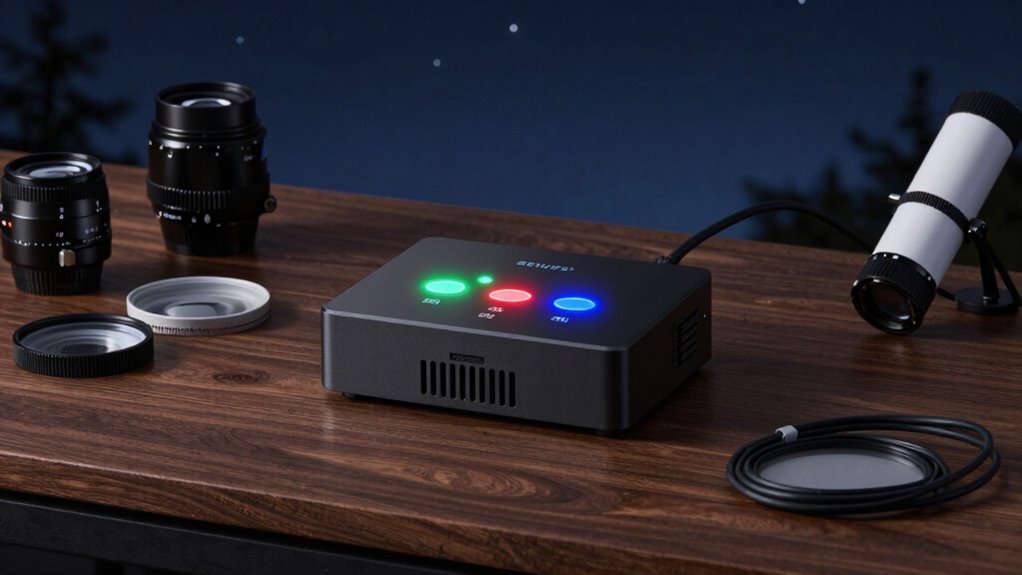
Dealing with dew is a common challenge for astronomers, especially during long observing sessions. The Celestron Smart DewHeater Controller 2X stands out for its seamless integration with Celestron gear and automatic temperature adjustments. The R-Sky Automatic Dew Controller offers energy-efficient PWM control and dual-telescope support, making it a solid choice for more advanced users. Meanwhile, the Thousand Oaks Four-Channel Digital Dew Heater Control provides precise multi-channel management, ideal for those with multiple accessories needing dew prevention. Each option balances automation, control, and compatibility differently, so understanding their tradeoffs helps narrow down the best pick for your setup.

Get the latest gadgets delivered free with Prime
- Fast, free delivery on millions of items
- Prime Video, Amazon Music and more included
- Member-only deals all year
Complete the kit



Key Takeaways
- The Celestron Smart DewHeater is best for Celestron users seeking automatic, integrated control with limited channels.
- The R-Sky Dew Controller excels in energy efficiency and supporting dual telescopes but requires some manual setup.
- The Thousand Oaks unit offers multi-channel precision but depends heavily on compatible heater bands.
- All options have specific compatibility needs; choosing one depends on your existing gear and desired automation level.
- Tradeoffs include simplicity versus flexibility, automatic versus manual control, and integrated versus multi-channel management.
| Celestron Smart DewHeater Controller 2X for Telescopes |  | Best Overall for Celestron Users | Number of ports: 2 | Supports: Celestron Dew Heater Rings and third-party heating bands | Additional device support: One 12V DC device | VIEW ON AMAZON | See Our Full Breakdown |
| Thousand Oaks Four-Channel Digital Dew Heater Control Unit |  | Best for Precise Multi-Channel Management | Number of channels: 4 | Control type: Digital | Compatibility: Requires compatible heater bands | VIEW ON AMAZON | See Our Full Breakdown |
| R-Sky Automatic Dew Controller – Dual-Channel Heater Management for Telescopes |  | Best for Energy Efficiency and Dual Telescope Support | Number of heater ports: 6 (2 auto, 2 medium, 2 full power) | Power control: PWM | Battery alert voltage: 10.5V | VIEW ON AMAZON | See Our Full Breakdown |
| dew heater controller for telescope | Supports | Compatibility |
|---|---|---|
| Celestron Smart DewHeater Cont | Celestron Dew Heater Rings and third-party heating bands | Celestron telescope hand control and CPWI software |
| Thousand Oaks Four-Channel Dig | — | Requires compatible heater bands |
| R-Sky Automatic Dew Controller | Dual telescopes, finders, mirrors | — |
More Details on Our Top Picks
Celestron Smart DewHeater Controller 2X for Telescopes
The Celestron Smart DewHeater Controller 2X stands out for its automatic monitoring of ambient temperature and humidity, which makes dew prevention effortless. Its ability to support up to two dew heaters and integrate with Celestron’s control software makes it ideal for users already invested in Celestron gear. Compared with the other options, it offers a more seamless, plug-and-play experience—especially if you rely on Celestron accessories. However, its reliance on compatible thermistor-based accessories limits flexibility for those using non-Celestron equipment. This controller is perfect for Celestron owners who want a straightforward, automated solution but might be less appealing for users with a more diverse accessory lineup.
Pros:- Automatically adjusts heat to prevent dew formation
- Supports multiple heaters and accessories
- Compatible with Celestron control software
Cons:- Requires compatible dew heater rings or straps
- Limited to Celestron and certain third-party accessories
- May need additional accessories for full functionality
Best for: Celestron telescope owners seeking automated, integrated dew control
Not ideal for: Users with multiple brands or those needing more than two channels
- Number of ports:2
- Supports:Celestron Dew Heater Rings and third-party heating bands
- Additional device support:One 12V DC device
- Compatibility:Celestron telescope hand control and CPWI software
Our verdict“A top choice for Celestron users wanting easy, automatic dew prevention with software integration.”
Thousand Oaks Four-Channel Digital Dew Heater Control Unit
The Thousand Oaks Digital Dew Heater Control offers up to four channels, making it a strong candidate for users with multiple accessories or optics prone to dew. Its digital interface provides precise temperature control, which is especially valuable for experienced astronomers who want granular management. Compared with the Celestron unit, it lacks automatic ambient monitoring but compensates with versatility across multiple channels. The main drawback is that it requires compatible heater bands, which are not included, adding to overall cost and complexity. This option makes the most sense for those who need detailed, multi-zone control and are comfortable with manual setup.
Pros:- Digital control for precise temperature management
- Supports multiple channels for varied accessories
- Suitable for complex setups
Cons:- Requires compatible heater bands (not included)
- Lacks automatic ambient humidity monitoring
- More complex to set up and calibrate
Best for: Advanced users managing multiple dew-sensitive components
Not ideal for: Beginners or those without compatible heater bands
- Number of channels:4
- Control type:Digital
- Compatibility:Requires compatible heater bands
- Power support:12V DC
- Display:Digital interface
- Manual control:Yes
Our verdict“A versatile choice for experienced astronomers needing multi-zone dew control with precise settings.”
R-Sky Automatic Dew Controller – Dual-Channel Heater Management for Telescopes
The R-Sky Automatic Dew Controller is designed for users who want energy-efficient, automatic dew prevention across two telescopes or accessories. Its PWM control extends battery life significantly, making it suitable for portable setups. It supports dual channels with different power levels—auto, medium, and full—plus features manual mode and reverse polarity protection, adding to its reliability. Compared with the Celestron and Thousand Oaks controllers, it offers a more customizable manual operation and better energy management. However, understanding its manual mode settings can be a hurdle for beginners, and compatibility with all telescope models isn’t explicitly detailed. This makes it a good fit for intermediate users prioritizing battery life and dual-device support.
Pros:- Automatically prevents dew and frost
- Energy-efficient PWM control extends battery life
- Supports dual telescopes and accessories
Cons:- Requires understanding of manual mode settings
- Limited information on compatibility with all telescope models
- Manual setup may be complex for some users
Best for: Portable setups needing energy efficiency and dual device management
Not ideal for: Beginners or those requiring plug-and-play automation
- Number of heater ports:6 (2 auto, 2 medium, 2 full power)
- Power control:PWM
- Battery alert voltage:10.5V
- Includes:Air & telescope sensors, power cable
- Features:Manual mode, reverse polarity protection
- Supports:Dual telescopes, finders, mirrors
Our verdict“An excellent choice for portable, dual-telescope setups prioritizing energy savings, with some manual configuration needed.”

How We Picked
To select these dew heater controllers, I focused on key features that impact usability, automation, and compatibility for telescope dew prevention. Priority was given to controllers that offer automatic temperature regulation, support multiple channels or accessories, and integrate well with common telescope brands. I also considered user feedback on reliability, ease of setup, and potential limitations—such as compatibility restrictions or the need for additional accessories. The goal was to identify options that serve different needs, from beginner to advanced astronomers, while balancing ease of use and control precision.
| dew heater controller for telescope | Supports | Compatibility |
|---|---|---|
| Celestron Smart DewHeater Cont | Celestron Dew Heater Rings and third-party heating bands | Celestron telescope hand control and CPWI software |
| Thousand Oaks Four-Channel Dig | — | Requires compatible heater bands |
| R-Sky Automatic Dew Controller | Dual telescopes, finders, mirrors | — |
Factors to Consider When Choosing Dew Heater Controller For Telescope
Selecting the right dew heater controller hinges on understanding your specific needs—whether you prioritize automation, multi-channel control, energy efficiency, or compatibility with your existing gear. The ideal controller prevents dew formation without constant manual adjustments, prolongs battery life, and integrates smoothly with your telescope setup. By considering these factors, you can choose a device that offers reliable, hassle-free dew prevention tailored to your observing style.Automation and Control Features
If you value automatic temperature regulation that adjusts based on environmental conditions, options like the Celestron Smart DewHeater excel. For those comfortable with manual calibration and seeking multi-zone precision, the Thousand Oaks unit provides detailed control. The R-Sky controller offers a hybrid approach with automatic dew prevention and manual settings, suitable for portable setups.
Channel Support and Compatibility
Consider how many components you need to keep dew-free. If you only have a primary telescope and finders, a dual-channel or two-port controller might suffice. For larger setups with multiple accessories, multi-channel options like Thousand Oaks provide better flexibility. Compatibility with your existing equipment—such as heater bands or specific brands—is also crucial to ensure seamless operation.
Ease of Use and Power Efficiency
Ease of setup varies significantly. Controllers with automatic ambient monitoring reduce manual work but may require compatible accessories. Energy-efficient PWM control, like that in the R-Sky model, helps extend battery life, especially important for field use. Manual controls, while more involved, give you fine-tuned management at the expense of convenience.
Frequently Asked Questions
How does a dew heater controller work?
A dew heater controller manages the power supplied to dew prevention bands on your telescope and accessories. It automatically adjusts heat output based on environmental sensors or manual settings to prevent dew and frost, ensuring clear skies during observation. Some controllers incorporate ambient temperature and humidity sensors for automatic regulation, reducing the need for constant manual adjustments.Can I use these controllers with any telescope?
Compatibility depends on the controller’s supported accessories and power requirements. Many controllers are designed for specific brands or types of dew bands. For example, the Celestron Smart DewHeater integrates with Celestron products, while others like Thousand Oaks are more universal, provided you have compatible heater bands. Always verify that your accessories match the controller’s supported interfaces before purchasing.Are automatic dew controllers better than manual ones?
Automatic controllers typically provide a hassle-free experience by monitoring environmental conditions and adjusting heat output without user intervention. Manual controllers give you precise control but require constant attention and calibration. The choice depends on your comfort with manual adjustments and whether you prefer convenience or granular control, especially during long observing sessions.How important is energy efficiency in a dew heater controller?
Energy efficiency is vital for portable astronomers relying on batteries, as it extends the operational time of your power source. PWM (pulse-width modulation) control, used in models like R-Sky, reduces power waste and prolongs battery life, making it especially beneficial for remote observing locations or extended sessions without access to mains power.What should I consider when choosing a dew heater controller?
Focus on compatibility with your existing accessories, the level of automation you prefer, the number of channels needed, and whether you want features like ambient sensors or manual control modes. Also, consider ease of setup and whether the device supports your power source. Balancing these factors will help you select a controller that reliably prevents dew with minimal fuss.Conclusion
For casual astronomers or beginners who want an easy, automated solution, the Celestron Smart DewHeater Controller 2X offers seamless integration and automatic regulation. More advanced users managing multiple accessories or seeking precise control may prefer the Thousand Oaks Four-Channel Digital Dew Heater Control, despite its manual setup. Those prioritizing energy efficiency and dual-telescope support in portable setups will find the R-Sky Automatic Dew Controller a strong fit, especially if they are comfortable with manual adjustments. Selecting the right controller ultimately depends on your specific observing needs, gear compatibility, and desired level of automation.
Halloween Picks
halloween
As an affiliate, we earn on qualifying purchases.