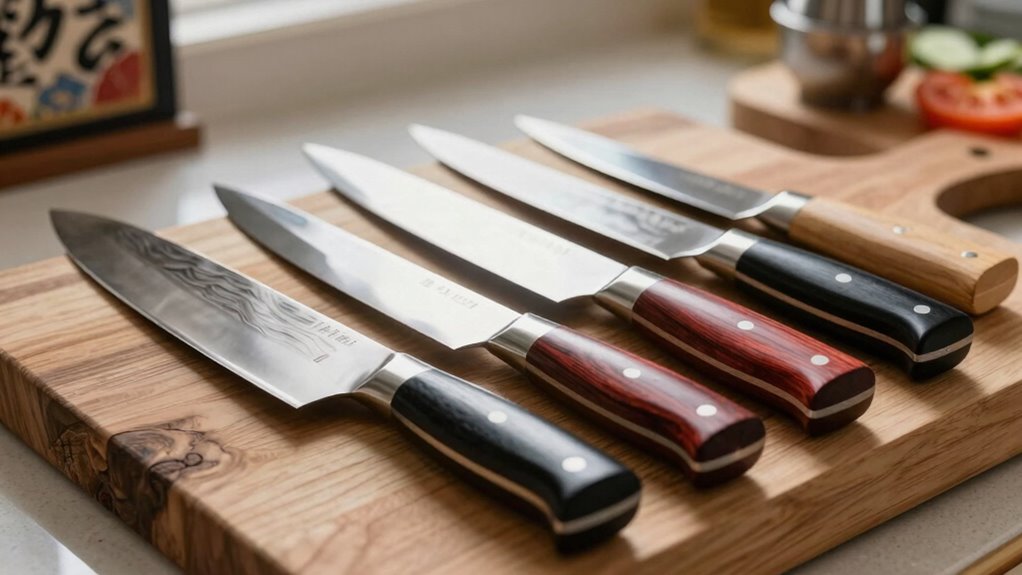
When exploring Japanese knife brands, the focus often centers on craftsmanship, steel quality, and cutting performance. The Tojiro Japan Professional Chef Knife stands out as the best overall choice, offering a balance of quality and affordability. For those seeking premium craftsmanship, the Miyabi Kaizen II and Shun Premier deliver exceptional craftsmanship and sharpness. The main challenge in this category is balancing price, ease of maintenance, and edge retention—higher-end knives tend to require more care but offer better performance. Keep reading for a detailed breakdown of these brands and what makes each unique.

Get the latest gadgets delivered free with Prime
- Fast, free delivery on millions of items
- Prime Video, Amazon Music and more included
- Member-only deals all year
Complete the kit



Key Takeaways
- Top-tier Japanese knives often feature VG10 or similar high-quality steels, which provide excellent edge retention and sharpness.
- Brand reputation and craftsmanship significantly influence price, but more affordable options can still offer impressive performance for home cooks.
- Many premium brands emphasize traditional forging techniques, which contribute to durability and a finer cutting experience.
- Maintenance varies widely; some knives require regular honing and hand-washing to preserve their edge, affecting long-term value.
- Choosing the right brand depends on your skill level, budget, and whether you prioritize aesthetics or performance.
| Tojiro Japan Professional Chef Knife – 8.2″ (21cm) – Hand Made, VG10 Steel |  | Best Overall for Versatility and Craftsmanship | Blade Length: 8.2 inches (21cm) | Material: VG10 steel | Made in: Japan | VIEW ON AMAZON | See Our Full Breakdown |
| Miyabi Kaizen II 8-inch Chef’s Knife, Stainless Steel |  | Best for Aesthetic Appeal and Edge Precision | Blade Material: FC61 super steel with 48 layers of stainless steel | Blade Length: 8 inches | Hardness: 61 Rockwell | VIEW ON AMAZON | See Our Full Breakdown |
| Miyabi Kaizen 8-Inch Chef’s Knife |  | Best for Traditional Craftsmanship and Damascus Beauty | Blade Length: 8 inches | Blade Material: VG10 super steel Cryodur | Hardening: Ice-hardened to Rockwell 60 | VIEW ON AMAZON | See Our Full Breakdown |
| Shun Premier 7-Inch Santoku Knife |  | Best for Versatility and Food Release | Blade Length: 7 inches | Material: VG-MAX steel with Damascus cladding | Edge Angle: 16 degrees | VIEW ON AMAZON | See Our Full Breakdown |
| Sunnecko 8 Inch Japanese Damascus Chef Knife – Ultra Sharp VG10 Steel |  | Best for Sharpness and Professional-Grade Performance | Layer Count: 67 layers | Blade Length: 8 inches | Steel Type: VG10 Damascus steel | VIEW ON AMAZON | See Our Full Breakdown |
| Shun Premier 8-Inch Chef’s Knife |  | Best Overall for Craftsmanship and Performance | Blade Length: 8 inches | Material: VG-MAX steel with 68 layers of Damascus cladding | Finish: Hammered tsuchime | VIEW ON AMAZON | See Our Full Breakdown |
| MITSUMOTO SAKARI 8-Inch Japanese Gyuto Chef Knife, 3-Layer 9Cr18MoV |  | Best for Elegant Japanese Craftsmanship and Versatility | Blade Length: 8 inches | Material: 9Cr18MoV high carbon stainless steel | Construction: 3-layer San-Mai | VIEW ON AMAZON | See Our Full Breakdown |
| Japanese Chef Knife 8 Inch, Handcrafted with Damascus VG10 Steel |  | Best for Sharpness and Gift Appeal | Blade Length: 8 inches | Steel Core: VG10 | Layering: 67-layer Damascus | VIEW ON AMAZON | See Our Full Breakdown |
| 8 Inch Damascus Chef Knife with VG10 Steel and Ash Wood Sheath |  | Best for Versatility and Protective Sheath | Blade Material: 67-layer Damascus steel with VG10 core | Blade Length: 8 inches | Hardness: 60±2 HRC | VIEW ON AMAZON | See Our Full Breakdown |
| japanese knife brand | Blade Length | Handle Material |
|---|---|---|
| Tojiro Japan Professional Chef | 8.2 inches (21cm) | — |
| Miyabi Kaizen II 8-inch Chef’s | 8 inches | Pakkawood |
| Miyabi Kaizen 8-Inch Chef’s Kn | 8 inches | Micarta |
| Shun Premier 7-Inch Santoku Kn | 7 inches | Pakkawood |
| Sunnecko 8 Inch Japanese Damas | 8 inches | ABS |
| Shun Premier 8-Inch Chef’s Kni | 8 inches | — |
| MITSUMOTO SAKARI 8-Inch Japane | 8 inches | Rosewood |
| Japanese Chef Knife 8 Inch | 8 inches | Stabilized wood and resin |
| 8 Inch Damascus Chef Knife wit | 8 inches | Pakkawood |
More Details on Our Top Picks
Tojiro Japan Professional Chef Knife – 8.2″ (21cm) – Hand Made, VG10 Steel
This Tojiro Professional Chef Knife stands out for combining handcrafted Japanese craftsmanship with a high-performance VG10 steel blade, making it ideal for serious home cooks and professionals alike. Compared to the Miyabi Kaizen 8-inch, it offers similar durability but with a slightly more traditional appeal and a lifetime warranty, providing peace of mind for long-term use. Its handmade nature means each knife is unique, but it also demands careful maintenance to keep the blade sharp and rust-free. The premium price reflects its quality, but for those seeking a reliable, all-purpose Japanese knife, this pick offers a balanced mix of precision, durability, and craftsmanship.
Pros:- High-quality VG10 steel for long-lasting sharpness
- Handmade craftsmanship adds uniqueness and precision
- Lifetime warranty offers peace of mind
- Versatile for various kitchen tasks
Cons:- Premium price may be prohibitive for some
- Requires careful maintenance to prevent damage
Best for: Professional chefs and experienced home cooks who value craftsmanship and durability.
Not ideal for: Beginners or casual users who may find the price and maintenance requirements too demanding.
- Blade Length:8.2 inches (21cm)
- Material:VG10 steel
- Made in:Japan
- Warranty:Lifetime
Our verdict“This knife suits those who prioritize craftsmanship and durability, willing to invest in a long-term, high-performance tool.”
Miyabi Kaizen II 8-inch Chef’s Knife, Stainless Steel
The Miyabi Kaizen II 8-inch chef’s knife excels in combining stunning damask visual patterns with traditional Japanese honing techniques, making it a favorite for those who value beauty as much as performance. Its FC61 super steel core with 48 layers of stainless steel ensures a sharp, durable edge, but requires careful maintenance to avoid corrosion—more so than the Tojiro. The ergonomic Pakkawood handle provides comfort during extended use, and the honbazuke honing process results in a precise, fine edge. This knife is better suited for enthusiasts who appreciate craftsmanship and can handle the upkeep, rather than those seeking a low-maintenance option.
Pros:- Beautiful damask pattern enhances visual appeal
- Exceptional sharpness and edge retention due to FC61 steel
- Hand-honed using traditional Honbazuke method for precision
- Comfortable ergonomic handle
Cons:- Premium price limits accessibility for casual users
- Requires careful maintenance to prevent corrosion
- 8-inch size may be too large for some users
Best for: Home cooks and collectors who value aesthetic design and precise cutting performance.
Not ideal for: Users seeking a low-maintenance, budget-friendly knife, or those who dislike caring for delicate blades.
- Blade Material:FC61 super steel with 48 layers of stainless steel
- Blade Length:8 inches
- Hardness:61 Rockwell
- Handle Material:Pakkawood
- Honing Method:Honbazuke
- Origin:Japan
Our verdict“Ideal for those who want a visually stunning, highly precise Japanese knife and are willing to invest in maintenance.”
Miyabi Kaizen 8-Inch Chef’s Knife
The Miyabi Kaizen 8-inch chef’s knife offers a blend of traditional Japanese craftsmanship with modern materials, featuring a 65-layer Damascus blade with a katana-inspired edge profile. Its VG10 Cryodur steel ensures excellent edge retention and corrosion resistance, but it may require more frequent sharpening than some other VG10 options like the Sunnecko. The ice-hardening process enhances durability, and the Micarta handle adds a touch of elegance while remaining durable. Compared with the Miyabi Kaizen II, it lacks the same damask visual pattern but compensates with a more accessible price point and classic design, making it suitable for those who value traditional aesthetics combined with reliable steel performance.
Pros:- High-quality VG10 super steel with Damascus pattern
- Precisely honed using traditional Honbazuke process
- Elegant Micarta handle with durable construction
- Made in Japan with traditional craftsmanship
Cons:- Premium price can be steep for some users
- Requires careful maintenance to preserve sharpness
- Damascus pattern may be less functional than simpler blades
Best for: Traditionalists and collectors seeking a beautifully crafted Damascus blade with modern steel technology.
Not ideal for: Beginners or users who prefer low-maintenance knives that don’t require frequent sharpening.
- Blade Length:8 inches
- Blade Material:VG10 super steel Cryodur
- Hardening:Ice-hardened to Rockwell 60
- Handle Material:Micarta
- Blade Design:65-layer Damascus with katana edge
- Manufacture Location:Seki, Japan
Our verdict“This knife is best for traditionalists who appreciate craftsmanship and are comfortable with maintenance needs.”
Shun Premier 7-Inch Santoku Knife
The Shun Premier 7-inch Santoku is designed for versatile slicing, with a hammered tsuchime finish that helps reduce food sticking—an advantage over flatter blades like the Miyabi Kaizen II. Its VG-MAX steel core with Damascus cladding provides a sharp, durable edge, while the Pakkawood handle offers comfort for extended prep sessions. While it’s slightly smaller than the 8-inch options, its balanced weight and excellent food release make it a favorite for everyday kitchen use. Compared with the Sunnecko, it offers a slightly more refined finish and traditional craftsmanship, but at a similar premium price point. This model is ideal for home cooks who want a reliable, all-around Japanese-style kitchen tool.
Pros:- Versatile for vegetables, proteins, and fruits
- Hammered finish reduces sticking
- Sharp VG-MAX steel with Damascus cladding
- Comfortable, secure grip with Pakkawood handle
Cons:- Premium price may be a barrier for some
- Hand wash recommended for longevity
Best for: Home cooks seeking a versatile, comfortable Santoku for daily prep tasks.
Not ideal for: Professional chefs or those needing a dedicated meat or fish slicer, due to its size.
- Blade Length:7 inches
- Material:VG-MAX steel with Damascus cladding
- Edge Angle:16 degrees
- Handle Material:Pakkawood
- Finish:Hammered tsuchime
Our verdict“This Santoku balances versatility and comfort, making it a strong choice for everyday home cooking.”
Sunnecko 8 Inch Japanese Damascus Chef Knife – Ultra Sharp VG10 Steel
The Sunnecko 8-inch Damascus chef knife leverages 67 layers of VG10 steel, making it one of the sharpest and most corrosion-resistant options on this list. Its full tang design offers excellent balance, and the ergonomic ABS handle provides a secure grip during demanding tasks like meat carving or dicing. Compared with the Miyabi Kaizen II, Sunnecko’s emphasis on edge retention and rust resistance makes it more suitable for busy kitchens where maintenance ease is valued. However, the handle’s lightweight feel might not suit those who prefer a more substantial grip, and the premium price could be a barrier for casual cooks. This knife is a solid pick for serious home chefs and professionals who prioritize blade performance above all else.
Pros:- Ultra sharp, corrosion-resistant VG10 steel blade
- Full tang design enhances stability and control
- Ergonomic, slip-resistant ABS handle
- Versatile for slicing, dicing, and meat carving
Cons:- Handle may feel too lightweight for some
- Requires careful maintenance to prevent rust
- Premium price might not suit budget-conscious buyers
Best for: Professional cooks and dedicated home chefs who need extreme sharpness and rust resistance.
Not ideal for: Casual users or those preferring heavier, more substantial handles that offer more feedback.
- Layer Count:67 layers
- Blade Length:8 inches
- Steel Type:VG10 Damascus steel
- Handle Material:ABS
- Edge Angle:10-12°
Our verdict“This knife appeals to those who demand high sharpness and corrosion resistance, suitable for professional use and serious home cooks.”
Shun Premier 8-Inch Chef’s Knife
The Shun Premier 8-Inch Chef’s Knife stands out for its exquisite handcrafted design and high-quality VG-MAX steel, offering exceptional sharpness and durability. Its hammered tsuchime finish not only adds aesthetic appeal but also reduces food sticking, making prep cleaner and faster. Compared to the Miyabi Kaizen II, this knife provides a more refined handle and a slightly more traditional appearance, though it comes at a higher price. Its main tradeoff is its premium cost, which may be prohibitive for casual cooks. The Pakkawood handle offers a comfortable grip, but it demands careful maintenance to avoid damage. This pick is ideal for serious home chefs and professionals who prioritize craftsmanship and are willing to invest in a long-lasting, beautiful tool.
Pros:- High-quality Japanese craftsmanship with a Damascus-clad VG-MAX steel blade
- Hammered finish reduces food sticking effectively
- Comfortable and secure Pakkawood handle
Cons:- Premium price may be too costly for casual users
- Requires careful handling to prevent handle damage
Best for: Cooks who want a beautifully crafted, high-performance chef’s knife and are comfortable with its premium price.
Not ideal for: Beginners or casual cooks on a tight budget, as the cost and delicate handle may be a concern.
- Blade Length:8 inches
- Material:VG-MAX steel with 68 layers of Damascus cladding
- Finish:Hammered tsuchime
- Handle:Pakkawood
- Edge Angle:16 degrees
Our verdict“This knife is perfect for experienced cooks seeking a beautifully made, high-performance piece that elevates their kitchen tools.”
MITSUMOTO SAKARI 8-Inch Japanese Gyuto Chef Knife, 3-Layer 9Cr18MoV
The MITSUMOTO SAKARI 8-Inch Gyuto combines layered San-Mai construction with a high carbon stainless steel core, offering a balance of sharpness, durability, and aesthetic appeal. Its hammered texture and deep-cryo treatment ensure edge retention and toughness, making it suitable for repeated use in busy kitchens. Compared to the Shun Premier, this knife’s layered San-Mai design emphasizes traditional Japanese aesthetics and toughness, though it may require more attentive sharpening due to its layered structure. The rosewood handle adds elegance but can be slippery when wet, which might be a concern during intense prep. It’s a strong choice for home chefs and professionals who appreciate layered steel craftsmanship with a refined look and feel.
Pros:- Layered San-Mai construction with high carbon steel core
- Deep-cryo treatment enhances durability and edge retention
- Elegant rosewood handle and sophisticated presentation box
Cons:- Handle may be slippery when wet
- Requires careful sharpening to preserve edge
Best for: Experienced cooks seeking a durable, beautifully crafted Gyuto with traditional Japanese appeal.
Not ideal for: Inexperienced users or those who prefer lightweight, minimalist knives, as the handle and layered blade may require more care.
- Blade Length:8 inches
- Material:9Cr18MoV high carbon stainless steel
- Construction:3-layer San-Mai
- Handle Material:Rosewood
- Blade Treatment:Deep-cryo
- Hardness:HRC 60±2
Our verdict“Ideal for those who value layered craftsmanship and a traditional aesthetic, though it demands attentive maintenance.”
Japanese Chef Knife 8 Inch, Handcrafted with Damascus VG10 Steel
This Japanese Chef Knife with VG10 Steel offers a stunning combination of craftsmanship and cutting performance, featuring a 67-layer Damascus cladding over a VG10 core. Its razor-sharp edge and ergonomic, slip-resistant handle make it suitable for precise slicing in both professional and home kitchens. Compared to the Miyabi Kaizen II, this knife emphasizes a more classic Damascus pattern with added robustness, though it may require more frequent sharpening to maintain its edge. The high-quality handle enhances comfort but might be less suitable for those with larger hands. It excels as a gift for culinary enthusiasts who appreciate beauty as much as function, though it demands careful handling and maintenance to keep its appearance and sharpness.
Pros:- Exceptional sharpness with VG10 steel core
- Beautiful 67-layer Damascus pattern enhances aesthetic appeal
- Ergonomic, slip-resistant handle for comfortable use
Cons:- Requires careful handling to preserve sharpness
- High maintenance to keep Damascus pattern pristine
Best for: Cooking enthusiasts and professionals who want a visually striking, high-performing gift knife.
Not ideal for: Beginners or budget-conscious shoppers, due to its higher price and maintenance needs.
- Blade Length:8 inches
- Steel Core:VG10
- Layering:67-layer Damascus
- HRC:62
- Handle Material:Stabilized wood and resin
Our verdict“A perfect choice for those seeking a premium, beautifully crafted gift that performs well in the kitchen.”
8 Inch Damascus Chef Knife with VG10 Steel and Ash Wood Sheath
The 8-Inch Damascus Chef Knife with VG10 Steel stands out for its combination of high-quality materials and practical features. Its 67-layer Damascus blade with a VG10 core promises excellent edge retention and stain resistance, suitable for a variety of kitchen tasks. Its razor-sharp 10° edge ensures precise cuts, while the Pakkawood handle provides a balanced grip. The included Ash wood sheath adds a layer of protection and makes storage or gifting straightforward. Compared with the other knives in this roundup, it offers a balanced blend of performance and convenience, though the sheath’s size might be cumbersome for compact storage. This knife appeals to serious cooks who want a versatile tool with added protection and presentation appeal.
Pros:- High-quality Damascus steel with VG10 core for durability
- Very sharp 10° edge for precise slicing
- Includes a sturdy, protective Ash wood sheath
Cons:- Premium price may be prohibitive
- Sheath could be bulky for small kitchens
- Requires careful handling to maintain edge
Best for: Professional or home chefs who need a durable, versatile knife with a protective sheath for storage or gifting.
Not ideal for: Casual cooks or those with limited storage space, as the sheath may be bulky and less convenient for everyday drawers.
- Blade Material:67-layer Damascus steel with VG10 core
- Blade Length:8 inches
- Hardness:60±2 HRC
- Handle Material:Pakkawood
- Sheath Material:Ash wood
- Edge Angle:10°
Our verdict“An excellent option for those who want a versatile, high-performance knife with added protection for storage or gifting.”

How We Picked
The selection process for these Japanese knife brands focused on a combination of performance, build quality, steel type, and value for money. I looked at expert reviews, user feedback, and brand reputation to identify knives that stand out for their craftsmanship and reliability. The ranking reflects a balance between premium quality and accessibility, ensuring options suit different budgets and skill levels. I prioritized knives with proven edge retention, comfortable handling, and traditional Japanese forging or manufacturing techniques, which are hallmarks of authentic Japanese knives.| japanese knife brand | Handle Material |
|---|---|
| Tojiro Japan Professional Chef | — |
| Miyabi Kaizen II 8-inch Chef’s | Pakkawood |
| Miyabi Kaizen 8-Inch Chef’s Kn | Micarta |
| Shun Premier 7-Inch Santoku Kn | Pakkawood |
| Sunnecko 8 Inch Japanese Damas | ABS |
| Shun Premier 8-Inch Chef’s Kni | — |
| MITSUMOTO SAKARI 8-Inch Japane | Rosewood |
| Japanese Chef Knife 8 Inch | Stabilized wood and resin |
| 8 Inch Damascus Chef Knife wit | Pakkawood |
Factors to Consider When Choosing Japanese Knife Brands
Choosing the right Japanese knife brand involves considering several key factors beyond just brand name. Understanding these factors can help you avoid common pitfalls and select a knife that truly matches your needs and skill level.Steel Quality and Edge Retention
High-quality steels like VG10, SG2, or softer steels like 3-layer Damascus are common in Japanese knives. Steel type impacts how sharp the knife can get, how long it stays sharp, and how much maintenance it requires. While VG10 offers excellent edge retention, it may need more careful handling, whereas softer steels are easier to sharpen but may dull faster. Matching steel to your skill level and maintenance willingness is critical to long-term satisfaction.
Craftsmanship and Forging Technique
Traditional hand-forged knives often feature a finer, more durable edge and are generally considered superior in craftsmanship. However, they tend to be more expensive and require careful handling. Machine-made knives can still deliver good performance at a lower price but may lack the same level of refinement. Consider whether you prioritize artisanal quality or value for money.
Handle Design and Comfort
Japanese knives typically feature D-shaped or octagonal handles made from wood or composite materials. The handle should feel comfortable and balanced in your hand, especially if you plan to use the knife extensively. A well-designed handle can reduce fatigue and improve control, but it’s worth trying different shapes to see which suits your grip style best.
Price and Value
Prices in this category vary widely, from budget-friendly options to high-end artisanal blades. More expensive knives often feature better steel, forging, and craftsmanship, but not everyone needs these premium features. Evaluate your cooking frequency and skill level to determine how much to invest—sometimes, a mid-range knife can deliver nearly professional results for home use.
Maintenance and Durability
Japanese knives generally require regular honing and hand-washing to preserve their edge. Some steels are more corrosion-resistant, reducing the upkeep needed, while others need more careful storage. Consider your willingness to maintain your knife and how durable you need it to be over time. Proper care can significantly extend the life and performance of your investment.
Frequently Asked Questions
Are Japanese knives harder to sharpen than Western knives?
Japanese knives, especially those made from harder steels like VG10, can be more challenging to sharpen due to their increased hardness. However, they also tend to hold their edge longer, which can reduce sharpening frequency. Using the right sharpening tools and techniques makes maintaining these knives easier, and many home cooks find that a sharpening stone designed for harder steels simplifies the process.
Should I buy a hand-forged or stamped Japanese knife?
Hand-forged knives are generally considered superior in craftsmanship, offering finer edges and better durability, but they come with a higher price tag. Stamped knives are more affordable and lighter, making them easier to handle for beginners or those with less strength. Your choice depends on your budget, skill level, and how much you plan to use the knife regularly.
How often do Japanese knives need to be sharpened?
The sharpening frequency depends on usage and steel type. Professional chefs might sharpen their knives weekly, while home cooks using their knives a few times a week could need sharpening every few months. Proper honing with a whetstone or honing rod between sharpenings helps maintain edge sharpness longer, but eventual sharpening with a stone or professional service is necessary for optimal performance.
Are expensive Japanese knives worth the investment for home cooks?
Investing in a high-quality Japanese knife can be worthwhile if you cook frequently and value precision cutting. These knives offer better edge retention, comfort, and aesthetics. However, for casual cooking, a mid-range knife often provides excellent performance at a more accessible price, so consider your cooking habits and willingness to maintain the blade before splurging.
What should I look for in the handle of a Japanese knife?
The handle shape and material influence comfort and control. D-shaped handles provide a natural grip for many users, while octagonal handles can be more secure for some. Wood handles offer a traditional look and feel but may require more care, whereas composite handles are more durable and low-maintenance. Test different styles if possible to find what feels best in your hand.
Conclusion
For those seeking the best overall balance of quality and affordability, the Tojiro Japan Professional Chef Knife is hard to beat. If premium craftsmanship and edge retention are priorities, the Miyabi Kaizen II or Shun Premier are excellent choices. Beginners or casual cooks should consider more affordable or easier-to-maintain options, while serious chefs might lean toward handcrafted, high-end knives. Ultimately, your choice hinges on how much you value performance versus price, and how much effort you’re willing to invest in maintenance. Use this guide to match the right brand to your cooking style and needs.