Searching for the best PoE injector multi port in 2026? The top pick is the TP-Link LS108GP 8-Port PoE Gigabit Ethernet Switch for its versatile port count and reliable power delivery. The TP-Link TL-SF1005P 5-Port Fast Ethernet PoE Switch offers a budget-friendly option, while the 8 Port 802.3bt POE++ Power Injector Hub excels for high-power requirements. Buyers often face tradeoffs between port count, power budget, and ease of setup. Keep reading for a detailed breakdown of each option to help you make the right choice.

Get the latest gadgets delivered free with Prime
- Fast, free delivery on millions of items
- Prime Video, Amazon Music and more included
- Member-only deals all year
Complete the kit



Key Takeaways
- High port count options like the TP-Link LS108GP provide extensive connectivity but often come with higher price tags.
- Power budgets vary significantly, making it crucial to match the injector with your device power needs.
- Gigabit speeds are common, but some models support multi-gig options for future-proofing.
- Most multi-port PoE injectors are unmanaged, simplifying setup but limiting control features.
- Budget models can handle basic needs but may lack advanced features or higher power delivery.
| TP-Link LS108GP 8-Port PoE Gigabit Ethernet Switch |  | Best Overall for Small to Medium Networks | Number of Ports: 8 | PoE Standard: 802.3at/af | PoE Power per Port: 30W | VIEW ON AMAZON | See Our Full Breakdown |
| TP-Link TL-SF1005P 5-Port Fast Ethernet PoE Switch | 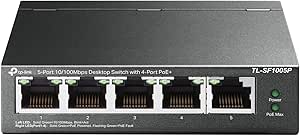 | Best Value for Basic Surveillance and IoT Setups | Number of Ports: 5 | PoE Support: Yes | PoE Power per Port: 30W | VIEW ON AMAZON | See Our Full Breakdown |
| TRENDnet Gigabit Power Over Ethernet Plus Injector TPE-115GI |  | Best for Flexible, High-Speed Single-Device Power Injection | Ports: 1 Gigabit Ethernet port, 1 PoE+ Gigabit Ethernet port | Power: PoE (15.4W) or PoE+ (30W) | Speed: Gigabit speeds up to 2Gbps | VIEW ON AMAZON | See Our Full Breakdown |
| NETGEAR 5-Port PoE Gigabit Ethernet Unmanaged Switch (GS305P) |  | Best Compact Unmanaged Switch for Small Business or Remote Installations | Number of Ports: 5 | PoE Ports: 4 | Total PoE Power Budget: 63W | VIEW ON AMAZON | See Our Full Breakdown |
| 8 Port 802.3bt POE++ Power Injector Hub, 90 Watts per Port, 250 Watts Total, Up to 10G Speeds |  | Best for High-Demand, Professional-Grade Power and Data | Number of Ports: 8 | Power per Port: 90 Watts | Total Power Budget: 250 Watts | VIEW ON AMAZON | See Our Full Breakdown |
| StarTech 4-Port Multi-Gigabit PoE++ Injector, 5/2.5/1G, NBASE-T, TAA |  | Best Overall for Demanding Multi-Gigabit Setups | Ports: 4 | Max Data Rate: 5Gbps | Power Output: up to 95W | VIEW ON AMAZON | See Our Full Breakdown |
| TP-Link TL-SG1005P 5-Port Gigabit PoE Switch with 4 PoE+ Ports, 65W Power Budget, Desktop, Fanless |  | Best Value for Small Office or Home Use | Number of Ports: 5 | PoE Ports: 4 PoE+ | Total PoE Power Budget: 65W | VIEW ON AMAZON | See Our Full Breakdown |
| TRENDnet Gigabit PoE++ Injector, TPE-119GI |  | Best for Flexible, Standalone PoE++ Conversion | Device Interface: 1 x Gigabit Data in; 1 x Gigabit PoE++ out | Compliance: NDAA and TAA | Power Output: PoE up to 15.4W, PoE+ up to 30W, PoE++ up to 95W | VIEW ON AMAZON | See Our Full Breakdown |
| 2-Port Gigabit PoE+ Injector Adapter, IEEE 802.3at/af Compliant, Plug and Play |  | Best for Simple, Small-Scale PoE Extension | Ports: 2 Gigabit Ethernet input, 2 PoE Gigabit Ethernet output | Speed: 10/100/1000Mbps | PoE Power: Up to 35W per port | VIEW ON AMAZON | See Our Full Breakdown |
More Details on Our Top Picks
TP-Link LS108GP 8-Port PoE Gigabit Ethernet Switch
This switch stands out for its straightforward plug-and-play setup and reliable PoE support, making it ideal for small businesses or surveillance setups. Compared to the NETGEAR GS305P, it offers gigabit speeds and a higher PoE power per port, but with a slightly larger footprint and no management features. Its extended transmission distance of up to 820 ft is a major plus for larger premises, while the fanless, durable metal casing ensures silent operation. However, its 8-port limit and 30W per port might restrict larger or more power-hungry deployments. Overall, this pick makes the most sense for users prioritizing ease of use and reliable PoE coverage without complex management needs.
Pros:- Easy plug-and-play setup with no configuration needed
- Silent operation due to fanless design
- Extended PoE transmission distance suitable for large areas
- Durable metal casing with versatile mounting options
Cons:- Limited to 8 ports, not suitable for larger networks
- PoE power limited to 30W per port, restricting high-power device support
- No advanced network management features
Best for: Small to medium-sized business networks or surveillance systems needing easy deployment and extended PoE reach.
Not ideal for: Large enterprise networks requiring more ports, higher power per port, or advanced management features.
- Number of Ports:8
- PoE Standard:802.3at/af
- PoE Power per Port:30W
- Total PoE Power Budget:65W
- Switching Capacity:16 Gbps
- Transmission Distance:up to 820 ft
Our verdict“This switch is ideal for users seeking a reliable, easy-to-install PoE solution with extended reach in small to medium environments.”
TP-Link TL-SF1005P 5-Port Fast Ethernet PoE Switch
This 5-port switch offers a budget-friendly way to add PoE to existing networks, especially suited for small-scale surveillance or IoT projects. While it only supports 10/100 Mbps speeds—significantly slower than gigabit options like the LS108GP—it compensates with a low price point and straightforward plug-and-play operation. The support for PoE auto recovery and an extended transmission range of 250 meters make it functional in varied environments, though the lack of managed features and slower speeds limit its use in data-heavy scenarios. Its durable metal case adds reliability, but users should expect performance constraints compared to gigabit switches.
Pros:- Easy plug-and-play setup
- Supports PoE auto recovery for reliable device operation
- Durable metal casing suitable for various environments
- Extended transmission range for surveillance applications
Cons:- Limited to 10/100 Mbps speeds, not gigabit
- Speed reduces to 10 Mbps in Extend Mode, affecting performance
- Lacks built-in management features
Best for: Budget-conscious users deploying basic PoE-powered devices, such as security cameras or sensors in small facilities.
Not ideal for: High-bandwidth applications or larger networks that require gigabit speeds and management capabilities.
- Number of Ports:5
- PoE Support:Yes
- PoE Power per Port:30W
- Total PoE Power Budget:67W
- Speed:10/100 Mbps
- Extend Mode Range:250 meters
Our verdict“This switch makes sense for budget-minded users needing basic PoE functions in small-scale setups without high data demands.”
TRENDnet Gigabit Power Over Ethernet Plus Injector TPE-115GI
This injector shines for its full gigabit speeds and high power support, making it a good choice for powering demanding devices like high-end access points or cameras. It supports up to 30W per port and offers full duplex speeds of 2Gbps, outperforming many basic injectors like the TPE-119GI, which supports only 10/100 Mbps. Its wall-mountable design and LED indicators add to its flexibility, but it’s limited to a single device, so it’s not a multi-port solution. Additionally, it requires compatible network equipment to maximize its capabilities, and the lack of an included power supply could complicate setup for some users.
Pros:- Supports high power PoE+ devices up to 30W
- Full gigabit Ethernet speeds at 2Gbps
- Wall-mountable for flexible installation
- NDAA and TAA compliant for government use
Cons:- Limited to a single device, not a multi-port switch
- No included power supply, may need external adapter
- Requires compatible network gear for full functionality
Best for: Professionals needing a high-speed, high-power injector for single PoE devices in flexible or space-constrained environments.
Not ideal for: Multi-device setups or users wanting an all-in-one switch solution; it’s strictly an injector.
- Ports:1 Gigabit Ethernet port, 1 PoE+ Gigabit Ethernet port
- Power:PoE (15.4W) or PoE+ (30W)
- Speed:Gigabit speeds up to 2Gbps
- PoE Distance:Up to 100 meters
- Compliance:NDAA and TAA
Our verdict“This injector best suits professionals needing high-speed, high-power injection for a single device rather than a multi-port switch solution.”
NETGEAR 5-Port PoE Gigabit Ethernet Unmanaged Switch (GS305P)
The GS305P offers a simple, reliable way to add PoE+ ports to a small network, with a compact, fanless design that fits easily into tight spaces. Its 4 PoE+ ports with a 63W power budget support common devices like cameras and phones, while the Gigabit ports ensure fast data transfer. Compared to the LS108GP, it’s more compact and suitable for desktop or wall-mounting, but lacks management features that some users might need for network control. The limited PoE power budget, however, may restrict use with high-demand devices, and being unmanaged means less control over traffic and security.
Pros:- Easy plug-and-play setup with no configuration needed
- Energy-efficient and silent operation
- Supports high-speed Gigabit Ethernet connections
- Flexible mounting options for various environments
Cons:- Limited to unmanaged switch features
- PoE power budget may be insufficient for high-power devices
- No advanced network management options
Best for: Small offices or remote locations needing quick deployment and reliable PoE for basic devices without management complexity.
Not ideal for: Large or complex networks requiring managed switches or high PoE power for demanding devices.
- Number of Ports:5
- PoE Ports:4
- Total PoE Power Budget:63W
- Ethernet Speed:1.0Gbps
- Design:Fanless, metal, compact
- Mounting Options:Desktop or wall-mount
Our verdict“This switch works well for small, straightforward deployments needing quick setup and PoE+ support without management features.”
8 Port 802.3bt POE++ Power Injector Hub, 90 Watts per Port, 250 Watts Total, Up to 10G Speeds
This injector offers extraordinary power output, supporting up to 90W per port and total of 250W, making it ideal for high-demand devices like advanced cameras, lighting, or AV equipment. Its support for 10G speeds sets it apart from typical PoE injectors, making it suitable for professional environments with demanding bandwidth needs. Compatibility with multiple standards (802.3bt, af, at) and intelligent power management improve safety and efficiency. However, its large size and complex setup make it less suited for smaller or less technical setups. The absence of mounting hardware may also complicate installation in some environments.
Pros:- Supports up to 90W per port, ideal for high-power devices
- Ultra-fast 10G data speeds for professional applications
- Intelligent power allocation prevents over-powering devices
- Backward compatible with older PoE standards
Cons:- Large size requiring significant space for installation
- Complex setup that may need technical expertise
- No included mounting hardware
Best for: Professional networks needing high power and ultra-fast data speeds for demanding devices such as security, AV, or lighting systems.
Not ideal for: Home users or small businesses with basic PoE needs; this device’s size and complexity are overkill for simple setups.
- Number of Ports:8
- Power per Port:90 Watts
- Total Power Budget:250 Watts
- Data Speeds:Up to 10G
- Standards:802.3bt, 802.3af, 802.3at
- Dimensions:12.625″ W x 8.25″ D x 1.75″ H
Our verdict“This injector is best for high-end, professional installations where power, speed, and reliability are critical for demanding PoE devices.”
StarTech 4-Port Multi-Gigabit PoE++ Injector, 5/2.5/1G, NBASE-T, TAA
This model stands out for its high data transfer capacity, supporting up to 5Gbps, which makes it a top choice for bandwidth-intensive applications. Compared with the TP-Link TL-SG1005P, which offers only Gigabit speeds, the StarTech injector supports multi-gigabit speeds over long distances, great for demanding network environments. Its 95W power output is ideal for powering multiple high-power devices simultaneously, unlike traditional injectors that max out at 30W. The rugged metal enclosure adds durability for industrial or outdoor use, but the unmanaged setup limits customization for advanced networks. Proper Ethernet cabling is essential to realize full performance, which could be a drawback for less prepared installations.
Pros:- Supports high data transfer speeds up to 5Gbps
- Powerful 95W PoE++ output for demanding devices
- Durable full-metal enclosure with mounting options
- Adjustable power output for flexible deployment
Cons:- Unmanaged setup limits advanced network configuration
- Requires compatible cabling to achieve maximum speeds
Best for: Network administrators needing high-speed, multi-device PoE deployment over long distances in demanding environments
Not ideal for: Small home users or setups requiring managed features or plug-and-play simplicity without specialized cabling
- Ports:4
- Max Data Rate:5Gbps
- Power Output:up to 95W
- Power Modes:802.3af/at/bt
- Power Budget:160 Watts
- Supported Standards:PoE/PoE+/PoE++
Our verdict“This is the best choice for professionals needing robust, high-speed PoE++ power and data transfer over long distances.”
TP-Link TL-SG1005P 5-Port Gigabit PoE Switch with 4 PoE+ Ports, 65W Power Budget, Desktop, Fanless
Compared with the StarTech injector’s high-capacity and multi-gigabit support, the TP-Link TL-SG1005P offers a straightforward, plug-and-play solution with four PoE+ ports suitable for powering IP cameras, phones, and small access points. It’s ideal for environments where simplicity and reliability matter most, but its 65W power budget falls short for high-power devices or multiple demanding PoE+ products simultaneously. The sturdy metal case ensures durability, and its fanless design provides quiet operation—perfect for small offices or home setups. However, with only four PoE+ ports and no advanced management features, it’s less suited for larger, complex networks.
Pros:- Plug-and-play setup simplifies installation
- Sturdy metal case ensures durability
- Fanless design keeps operation quiet
- Supports high-power PoE+ devices
Cons:- Limited to 4 PoE+ ports, restricting expansion
- Lacks advanced management or configuration options
Best for: Small business or home users needing reliable PoE+ power with minimal setup effort
Not ideal for: Large networks or installations requiring managed switches or higher power budgets
- Number of Ports:5
- PoE Ports:4 PoE+
- Total PoE Power Budget:65W
- Port Speed:Gigabit Ethernet
- Operation Mode:Plug and Play
- Case Material:Sturdy metal
Our verdict“This switch makes sense for small-scale deployments where ease of use and reliability are priorities over advanced features.”
TRENDnet Gigabit PoE++ Injector, TPE-119GI
Compared to the StarTech device, the TRENDnet TPE-119GI provides a simple, single-port solution to add PoE++ capability to existing networks, making it ideal for upgrading non-PoE setups without replacing entire switches. Its auto-sensing technology ensures the correct wattage is delivered, which prevents over- or under-powering connected devices. The wall-mount design offers flexible installation options, but it’s limited to a single PoE++ port, so it’s not suitable for expanding multi-device setups. Also, it doesn’t include advanced features like remote management, which might be a drawback for larger installations requiring centralized control.
Pros:- Supports high power PoE++ up to 95W
- Auto-sensing technology ensures correct power delivery
- Wall-mountable and compact for flexible installation
Cons:- Limited to a single PoE++ port, restricting scalability
- No remote management features for large deployments
Best for: IT professionals upgrading existing networks with demanding PoE++ devices on a limited budget
Not ideal for: Large networks requiring multiple PoE++ ports or management features
- Device Interface:1 x Gigabit Data in; 1 x Gigabit PoE++ out
- Compliance:NDAA and TAA
- Power Output:PoE up to 15.4W, PoE+ up to 30W, PoE++ up to 95W
- PoE Distance:Up to 100 meters
- Installation:Wall-mount, metal enclosure
Our verdict“Ideal for targeted upgrades, this injector provides high power for demanding devices in a compact, easy-to-install form.”
2-Port Gigabit PoE+ Injector Adapter, IEEE 802.3at/af Compliant, Plug and Play
Compared with the StarTech 4-port injector, this 2-port adapter is more suited for small, straightforward setups needing just a few PoE+ connections. Its plug-and-play nature ensures quick installation without configuration, making it perfect for quick upgrades or temporary deployments. However, with only two ports and a maximum of 35W per port, it’s less capable of powering multiple high-power devices simultaneously. It’s a solid choice for limited needs but falls short in larger or more demanding setups that require more ports or higher power.
Pros:- Supports high-speed Gigabit Ethernet
- Simple plug-and-play installation
- Compatible with PoE+ and PoE standards
Cons:- Limited to 2 ports, restricting expansion
- Power output might be insufficient for some high-demand devices
Best for: Small offices or home users adding one or two PoE+ devices without complex networking needs
Not ideal for: Larger network environments or high-power demanding devices that require more ports or wattage
- Ports:2 Gigabit Ethernet input, 2 PoE Gigabit Ethernet output
- Speed:10/100/1000Mbps
- PoE Power:Up to 35W per port
- Standards:IEEE 802.3at, IEEE 802.3af
- Distance:Up to 100 meters
Our verdict“This injector is ideal for small-scale, straightforward PoE extensions where simplicity and quick setup are priorities.”

How We Picked
I evaluated these PoE injector multi port options based on key factors like power output, port count, network speed, build quality, and ease of use. Products were selected for their relevance to different buyer needs, from small home setups to larger enterprise applications. The ranking emphasizes value for money, reliability, and scalability, ensuring each pick offers a clear advantage in its category. Devices that balanced performance with affordability or offered unique features were prioritized, while potential tradeoffs like lower power budgets or limited control were noted for each model.Factors to Consider When Choosing Poe Injector Multi Port
Choosing the right PoE injector multi port involves understanding several core factors. The number of ports determines how many devices you can power simultaneously, so consider your current and future expansion needs. Power budget is critical for ensuring your devices receive enough power without overloading the system. Network speed compatibility, such as Gigabit versus multi-gig options, affects data transfer performance, especially for high-bandwidth devices. Ease of installation and management options also matter—managed switches provide more control but are more complex to set up. Lastly, consider build quality and reliability, especially if deploying in a professional or high-traffic environment.Port Count and Scalability
The number of ports a PoE injector offers directly impacts how many devices you can connect and power at once. While smaller setups may suffice with 4-5 ports, larger networks or future expansion plans benefit from 8 or more ports. Keep in mind that some models allow daisy-chaining or stacking to increase capacity, but this adds complexity. Avoid choosing a port count that falls short of your needs, as upgrading later can be costly and disruptive.Power Budget and Device Compatibility
The power budget determines the total wattage available for all connected devices. If you have high-power devices like PTZ cameras or access points, opt for models with a higher power budget, such as 90W per port or more. Underestimating power needs can result in devices not functioning correctly or requiring additional hardware. Conversely, a higher power budget typically means a higher price, so balance your current requirements with potential future needs.Network Speed Support
While Gigabit Ethernet is standard, some models support multi-gig speeds (2.5G, 5G, 10G), which is beneficial for demanding applications like high-definition video streaming or large file transfers. If your network is primarily for basic tasks, Gigabit support suffices. However, if you’re investing in a high-performance setup, choosing a multi-gig capable injector can provide more future-proofing and faster data rates.Ease of Installation and Management
Most multi-port PoE injectors are unmanaged, making them straightforward to install, especially for small setups. Managed options, though more complex, offer features like VLAN support, traffic monitoring, and remote configuration—valuable for larger, professional deployments. Consider your technical comfort level and whether advanced control features are necessary. Also, check if the device supports plug-and-play setup to minimize setup time.Build Quality and Reliability
Durability matters, especially in environments with frequent power fluctuations or physical stress. Look for models with sturdy construction, good heat dissipation, and reliable components. Brands with reputation for quality often back their products with warranties and support, adding peace of mind. Cheaper units may save money upfront but could lead to reliability issues over time, resulting in downtime or hardware failures.Frequently Asked Questions
Can I power both high and low-power devices with a single PoE injector?
Yes, most PoE injectors are designed to support a range of devices with varying power needs, from low-power sensors to high-power cameras. However, it’s important to verify the power budget per port and total capacity. Overloading the injector can cause devices to malfunction or shut down unexpectedly. For mixed deployments, choose an injector with a high enough power budget to accommodate the most demanding device, ensuring stable operation for all connected hardware.Is it better to get a managed or unmanaged PoE switch for multi-port use?
Unmanaged switches are simpler, plug-and-play, and suitable for small or straightforward setups where advanced control isn’t needed. Managed switches, however, offer features like VLAN segmentation, traffic prioritization, and remote management, making them ideal for larger or more complex networks. Your choice should depend on your technical expertise, current needs, and whether you anticipate expanding or customizing your network later.What is the difference between PoE and PoE+ or PoE++?
PoE (IEEE 802.3af) provides up to 15.4W per port, sufficient for many basic devices. PoE+ (IEEE 802.3at) increases this to 30W, supporting more power-hungry hardware like PTZ cameras or Wi-Fi access points. PoE++ (IEEE 802.3bt) offers even higher power—up to 90W per port—ideal for high-performance or multiple devices on a single port. When choosing a PoE injector, match the power standard to your device requirements to ensure reliable operation and avoid overloading the system.Are multi-gigabit PoE injectors worth the extra cost?
Multi-gigabit injectors are valuable if your network includes devices that demand high data transfer speeds, such as 4K IP cameras or high-speed access points. They also provide a degree of future-proofing, allowing you to upgrade your network without replacing hardware immediately. For basic surveillance or IoT devices, Gigabit support is usually sufficient, and investing in multi-gig options may not be cost-effective at this stage.How important is the build quality of a PoE injector for long-term use?
Build quality directly impacts the longevity and reliability of a PoE injector. High-quality units typically feature better heat dissipation, sturdy materials, and more robust internal components, reducing the risk of failure over time. In environments with fluctuating power or physical stress, investing in a well-built device can prevent costly downtime and hardware replacements. It’s worth considering brands with positive reviews and warranties to ensure dependable operation.Conclusion
For small home or office setups, the TP-Link TL-SF1005P offers a budget-friendly, easy-to-install option. Larger networks or those needing extensive device support will benefit from the TP-Link LS108GP for its higher port count and power capacity. If you prioritize high power delivery for demanding devices, the 8 Port 802.3bt POE++ Power Injector Hub is a solid choice. For users new to network hardware, a simple unmanaged switch will suffice, while professionals seeking control and monitoring should consider managed options. Overall, the TP-Link LS108GP stands out as the best overall for most users, balancing features, reliability, and value.Halloween Picks
halloween
As an affiliate, we earn on qualifying purchases.