
TL;DR

Get the latest gadgets delivered free with Prime
- Fast, free delivery on millions of items
- Prime Video, Amazon Music and more included
- Member-only deals all year
Fujiko Nakaya has installed a fog sculpture in Berlin’s Neue Nationalgalerie sculpture garden, using weather as a dynamic artistic medium. The work, ongoing until October 2026, transforms the landscape and architecture through shifting clouds of mist.
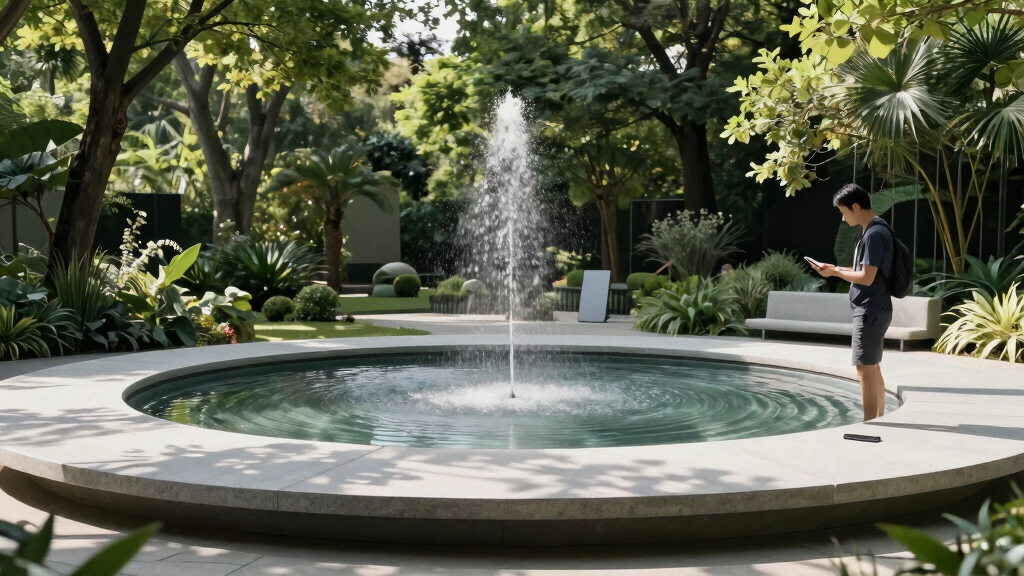
Japanese artist Fujiko Nakaya has launched a site-specific fog installation in Berlin’s Neue Nationalgalerie sculpture garden, transforming the landscape with moving clouds of water mist that drift between trees, sculptures, and the museum’s architecture. The installation, which began on April 30th, 2026, will continue until October 25th, 2026, and is curated by Klaus Biesenbach and Lisa Botti.
The installation fills the 90-meter-long sculpture garden with fog that emerges from opposite sides at regular intervals, gradually converging and then lifting into the air. The fog interacts with the environment, sometimes forming dense masses and other times becoming translucent veils that reveal the landscape and sculptures by Henri Laurens, Wolfgang Mattheuer, and Alicja Kwade.
Nakaya’s work emphasizes the relationship between atmosphere and architecture, with the fog constantly changing shape based on wind, humidity, and temperature. Visitors can experience the installation both from the museum’s galleries, which overlook the garden, and by walking through the fog itself, experiencing its shifting layers and transparency.
This project continues Nakaya’s long-standing practice of treating weather as an active sculptural medium, creating ephemeral forms that depend on environmental conditions and viewer interaction. The installation challenges traditional notions of fixed sculpture by emphasizing temporality and atmospheric interaction.
Why Nakaya’s Fog Installation Matters in Art and Architecture
This installation exemplifies a shift in contemporary art toward embracing environmental elements as integral to the artwork itself. By using fog as a living, changing medium, Nakaya blurs the boundaries between sculpture, landscape, and architecture, highlighting the fluidity of perception and space. It also underscores the potential for weather to become an active participant in artistic expression, expanding the possibilities for site-specific works that are inherently transient and interactive.
For the museum and architecture community, the work demonstrates how atmospheric phenomena can temporarily alter the experience of a landmark building like Mies van der Rohe’s design, offering a new way to engage with modernist architecture and its relationship to environment and perception. This project may influence future installations that prioritize temporality and environmental responsiveness in public art.
As an affiliate, we earn on qualifying purchases.
Background and Prior Developments in Nakaya’s Work
Fujiko Nakaya has a longstanding reputation for creating fog sculptures that treat weather as a dynamic artistic medium. Her first major work was developed for Expo ’70 in Osaka, and she has since produced numerous installations worldwide that explore the relationship between atmosphere, landscape, and architecture.
Her approach emphasizes ephemeral, ever-changing forms that respond to environmental conditions, making each activation unique. The Neue Nationalgalerie project continues her exploration of atmospheric sculpture, now integrated into a historic architectural setting designed by Mies van der Rohe, completed in 1968.
This installation aligns with her ongoing interest in creating immersive, site-specific environments that challenge viewers’ perceptions of space and materiality, emphasizing the transient nature of weather and its capacity to shape experience.
“Nakaya’s work exemplifies a pioneering approach to atmospheric sculpture, where weather becomes an active, mutable element in the artwork.”
— an anonymous researcher
As an affiliate, we earn on qualifying purchases.
Unresolved Aspects of the Fog Installation’s Impact
It is not yet clear how the installation will evolve over the full duration until October 2026, or how visitors’ interactions might influence the ongoing atmospheric effects. The long-term environmental impact and preservation considerations are also still under discussion.interactive art installation supplies
As an affiliate, we earn on qualifying purchases.
As an affiliate, we earn on qualifying purchases.
Upcoming Developments and Visitor Engagement Opportunities
As the installation progresses, the museum plans to monitor visitor interactions and environmental conditions to document how the fog’s form and movement change over time. Curators and artists may also consider future iterations or related projects inspired by this work. Visitors are encouraged to experience the installation throughout its duration, both from the galleries and by exploring the landscape directly.
As an affiliate, we earn on qualifying purchases.
Key Questions
How long will the fog installation be active?
The installation is scheduled to run until October 25th, 2026, with active fog effects throughout this period.
Can visitors walk through the fog?
Yes, visitors are invited to walk through the fog in the sculpture garden, experiencing its changing transparency and atmosphere firsthand.
What makes Nakaya’s work different from traditional sculptures?
Nakaya’s fog sculptures are ephemeral and responsive, relying on weather and environmental conditions to shape their form, unlike fixed, permanent sculptures.
Will the fog installation affect the building’s architecture?
The fog temporarily alters the perception of Mies van der Rohe’s architecture by obscuring and revealing its features, creating a dynamic interaction between the building and the environment.
Is this installation environmentally sustainable?
The installation uses water mist and environmental conditions, but specific sustainability assessments are not yet publicly detailed.
Source: designboom
Halloween Picks
halloween
As an affiliate, we earn on qualifying purchases.