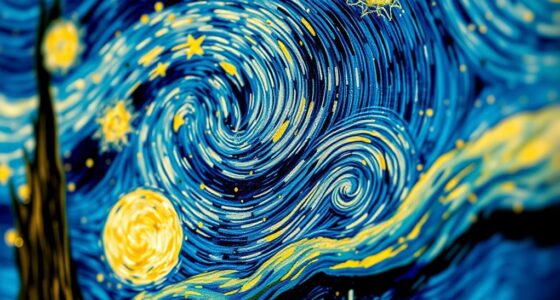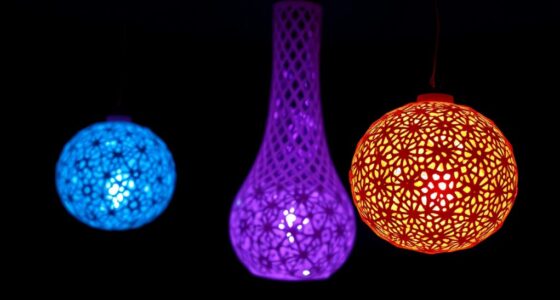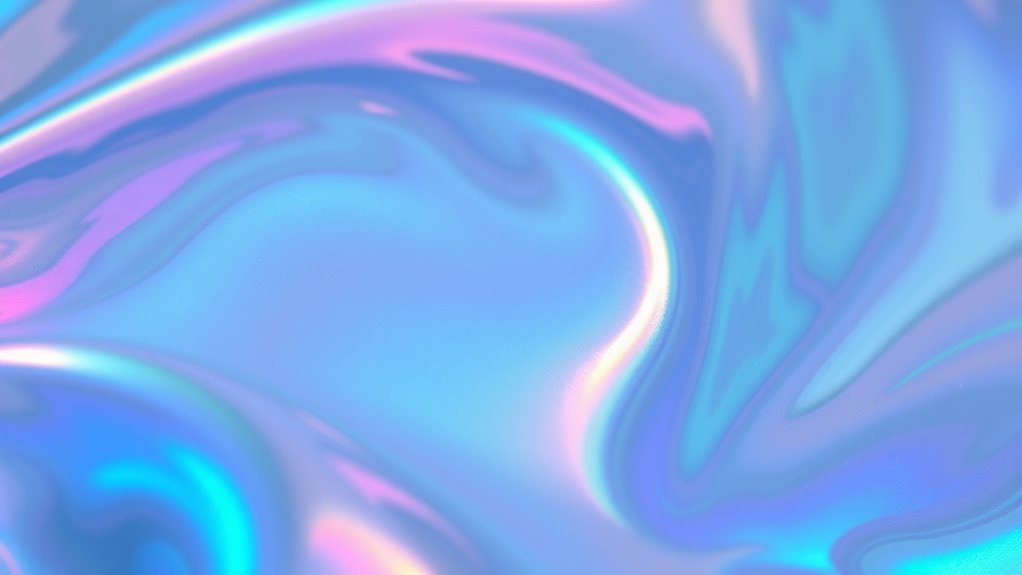

Iridescent and holographic materials in design create stunning visual effects by reflecting light that shifts colors with your viewing angle. They add dynamic, mesmerizing patterns that make fashion, decor, and packaging truly stand out. Many traditional options rely on non-eco-friendly coatings, but sustainable alternatives using recycled, biodegradable, or plant-based components are emerging. These eco-conscious choices maintain vibrant effects while reducing environmental impact. Exploring these innovative materials can open exciting possibilities for responsible, eye-catching designs.
Key Takeaways
- Iridescent and holographic materials create dynamic, color-shifting visual effects that enhance aesthetic appeal in fashion, decor, and packaging.
- These materials leverage light reflection and microstructures to produce mesmerizing, shimmering patterns that appear alive from different angles.
- Traditional holographic options often pose environmental concerns due to non-biodegradable components and toxic manufacturing processes.
- Sustainable alternatives utilize recycled, biodegradable, and plant-based elements to replicate iridescent effects responsibly.
- Eco-friendly holographic materials maintain vibrant visual qualities while supporting environmentally conscious design practices.
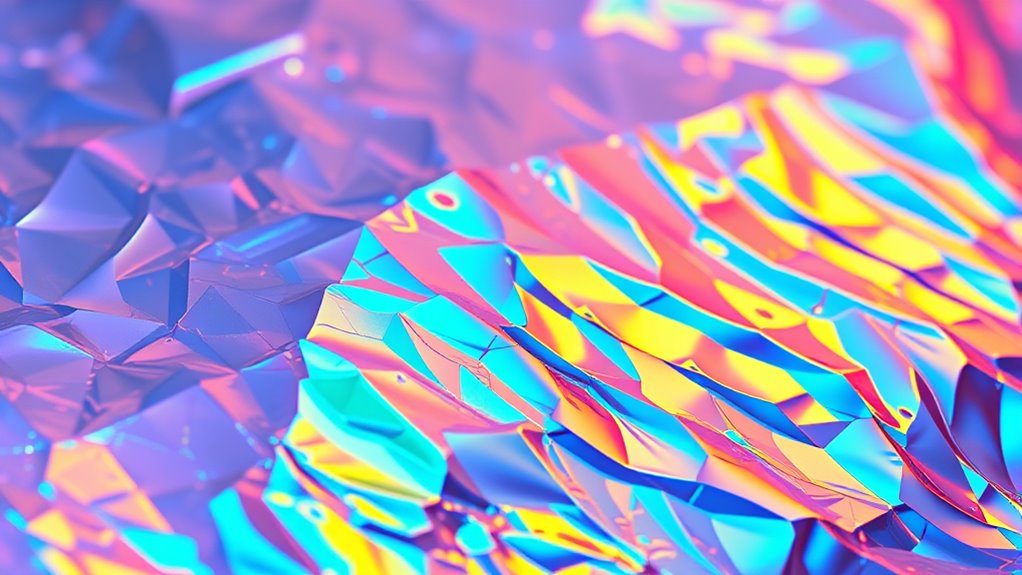
Have you ever wondered how certain materials shimmer with shifting colors and mesmerizing patterns? That enchanting quality is thanks to iridescent and holographic effects, which create dynamic visual experiences. These materials reflect light in ways that change depending on your angle of view, producing color shifting effects that seem almost alive. In design, this magic opens up endless possibilities, from fashion to interior decor, giving an element of surprise and sophistication. But as you explore these shimmering surfaces, it’s important to contemplate sustainability. Traditional iridescent and holographic materials often rely on coatings or dyes that aren’t eco-friendly, raising concerns about their environmental impact. Fortunately, the industry is shifting toward sustainable alternatives that aim to replicate these mesmerizing effects while reducing ecological footprints.
When you choose sustainable options, you might look for materials made from recycled or bio-based components that can mimic the color shifting effects of conventional products. For example, some innovative designs use biodegradable films embedded with microstructures that refract light just like their non-sustainable counterparts. These alternatives are not only better for the planet but also often more versatile and safer for a variety of applications. You can find eco-conscious holographic fabrics used in fashion, or biodegradable coatings on packaging that give a shimmering, eye-catching appearance without harmful chemicals. This shift toward sustainability doesn’t mean sacrificing visual impact; rather, it encourages creativity within environmentally responsible boundaries. Sustainable materials now enable designers to incorporate these effects responsibly.
The key to leveraging iridescent and holographic materials responsibly lies in understanding their properties and sources. Modern manufacturing techniques now enable the production of sustainable iridescent finishes that maintain their vibrant, shifting qualities over time. For instance, plant-based dyes or mineral-based coatings can produce similar visual effects without relying on toxic substances. As a designer or consumer, you can advocate for these greener options, making choices that align with both aesthetic goals and environmental values. The beauty of these materials isn’t just in their mesmerizing appearance but also in their potential to inspire a more sustainable approach to design.
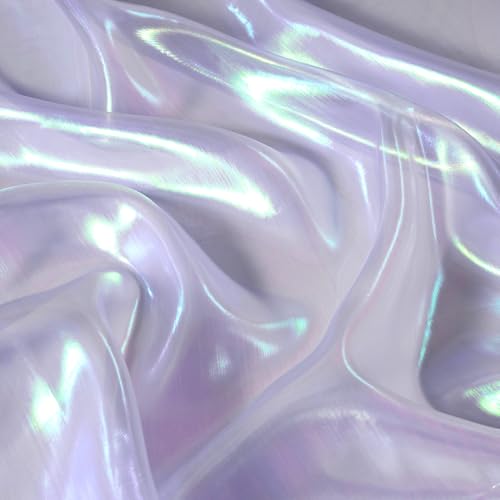
Holographic Fabric, 1 Yard Iridescent Organza Fabric, Silky Glitter Translucent 44" Wide Tulle Material for Wedding Dresses Fashion DIY Crafts Party Event Decorations
【SIZE】 1 Yard-36*44inch, 3 yards-108*44inch, 5 yards-180*44inch. Each size of fabric is an independent part. For example, if…
As an affiliate, we earn on qualifying purchases.
As an affiliate, we earn on qualifying purchases.
Frequently Asked Questions
How Do Holographic Materials Affect Environmental Sustainability?
Holographic materials can impact environmental sustainability due to recyclability challenges, making eco-friendly manufacturing more difficult. You might find that these materials often contain plastics or chemicals that aren’t easily recyclable, contributing to waste. To lessen your environmental footprint, seek out brands that prioritize sustainable production methods or develop recyclable holographic options. Your choices can help promote more eco-conscious use of these eye-catching, innovative materials.
Can Iridescent Surfaces Be Used Outdoors Without Fading?
Iridescent surfaces can shine bright outdoors, but their magic isn’t forever. Durability concerns mean they may fade or lose their luster over time if exposed to harsh weather. To keep their vibrant glow, you’ll need regular maintenance, such as cleaning and protective coatings. Without proper care, these surfaces risk losing their mesmerizing shimmer, turning from eye-catching to dull. So, if you want lasting brilliance, be prepared to nurture their enchanting appeal.
What Are the Cost Implications of Using Holographic Materials?
Using holographic materials can be costly, as you’ll need to take into account the initial expense and ongoing maintenance. Conduct a thorough cost analysis to understand the investment required, especially since material durability varies. Durability impacts how often you’ll need replacements or repairs, influencing overall costs. While holographic materials can create stunning effects, confirm your budget accounts for both the upfront costs and long-term durability to make an informed decision.
Are There Health Risks Associated With Iridescent Coatings?
Is it any wonder that iridescent coatings can raise toxicity concerns? While most modern holographic materials are designed with chemical safety in mind, some may contain substances that pose health risks if mishandled. You should always check product labels and safety data sheets, guaranteeing proper ventilation and protective gear during application. Staying informed about chemical safety helps you avoid potential health risks and ensures your projects remain safe and beautiful.
How Do Lighting Conditions Influence Holographic Display Effects?
Lighting conditions considerably influence holographic display effects. When lighting intensity is high, the holographic images become more vibrant and eye-catching, but too much light can wash out details. Viewing angles also matter; for the best effect, you should view from specific angles to see the full holographic illusion. Adjusting both lighting intensity and your viewing angle helps you experience the holographic display’s full depth and brilliance.

WINDAWNKE 100 Pcs Self Sealing Cellophane Bags 4×4 Inch, Self Adhesive Iridescent Treat Bags, Holographic Individual Cookie Bags for Gift, Baking, Snack Packaging
Package Included: This pack includes 100pieces of individual treat bags measuring 4 x 4 inches, offering excellent value…
As an affiliate, we earn on qualifying purchases.
As an affiliate, we earn on qualifying purchases.
Conclusion
You’ll love how iridescent and holographic materials transform your designs, adding striking color shifts and depth. Did you know that the holographic material market is projected to grow by over 15% annually through 2027? This rapid rise shows just how popular and versatile these materials are becoming. Incorporate them into your projects to create eye-catching, futuristic looks that stand out and leave a lasting impression. Embrace the shimmer and shine—you’re on the cutting edge of design innovation!

YOSADIER Iridescent PVC Film Sheets for DIY Clothing and Bag Making 2-Pack Rainbow Holographic Fabric Decorative Material for Crafts and Costumes
Iridescent pvc fabric:suitable size of the pvc fabric sheet, which provides you much convenience,holographic film
As an affiliate, we earn on qualifying purchases.
As an affiliate, we earn on qualifying purchases.

Iridescent Window Film, Holographic Window Tint Decorative Dichroic Film Colored Rainbow Film for Craft DIY Christmas Party Decor
Free DIY & Multiple Decorations: Our iridescent window film can be used for windows, car glass, cosplay costumes,…
As an affiliate, we earn on qualifying purchases.
As an affiliate, we earn on qualifying purchases.