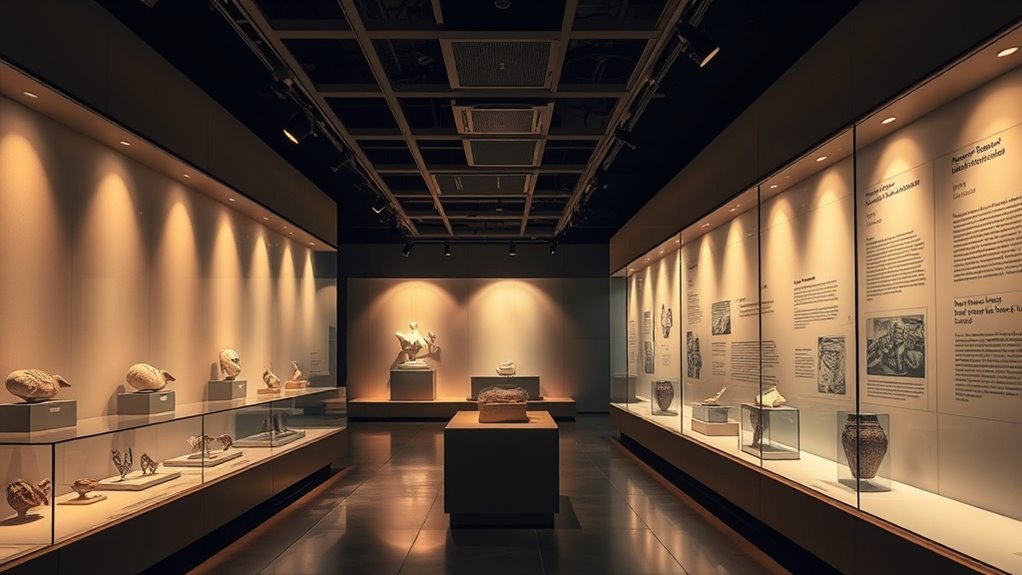

Adaptive lighting systems in museums use advanced controls and LEDs to protect fragile artifacts while creating engaging displays. These systems automatically adjust brightness, color temperature, and direction based on environmental conditions and visitor presence. This targeted approach reduces UV exposure and heat, helping preserve delicate materials. Operating efficiently, they lower energy costs and support sustainability. If you continue exploring, you’ll discover how these innovative systems can transform how museums protect and showcase their collections.
Key Takeaways
- Adaptive control systems automatically adjust lighting based on environmental conditions to protect sensitive artifacts.
- These systems optimize brightness and temperature, minimizing UV exposure and heat damage to preserve artifacts.
- Integration with smart controls allows for dynamic scene changes, enhancing exhibit presentation and visitor engagement.
- Adaptive lighting reduces energy consumption while maintaining ideal conditions for artifact conservation.
- Continuous monitoring and adjustments ensure a safe, stable environment for long-term preservation of museum collections.
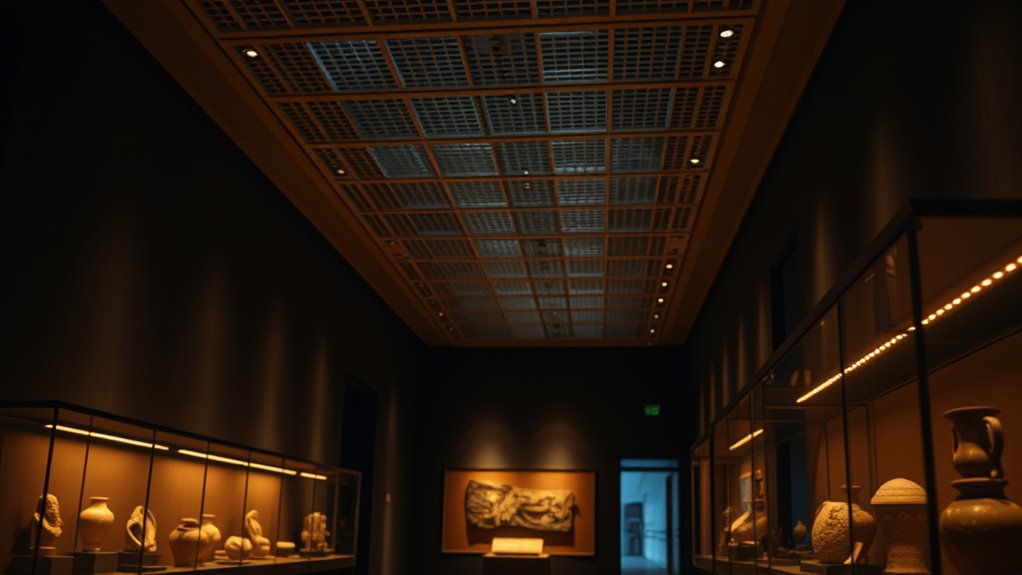
Have you ever wondered how museums make sure their exhibits shine without damaging them? The secret lies in advanced lighting systems that balance visibility with preservation. Today’s museums rely heavily on LED technology, which offers a versatile and gentle way to illuminate artifacts without exposing them to harmful UV rays or excessive heat. Unlike traditional incandescent or halogen bulbs, LEDs produce focused, energy-efficient light that can be precisely controlled. This control allows curators to adjust brightness and color temperature in real-time, ensuring that each exhibit is showcased at its best without risking deterioration. LED lighting’s low heat emission is particularly important because many delicate artifacts, such as textiles, paper, and paintings, are sensitive to temperature fluctuations. By integrating LED systems, museums can create a safe environment where exhibits are preserved for future generations while still providing visitors with a clear view of the details and textures that make each piece unique. Additionally, the use of adaptive control systems enables further customization and efficiency in lighting management.
The impact of innovative lighting extends beyond preservation; it considerably enhances the visitor experience. When lighting is well-designed, it guides visitors’ attention, highlights key features, and creates a mood that complements each exhibit’s story. LED lighting allows for dynamic adjustments, so displays can be subtly lit to evoke different atmospheres or focus visitors’ gaze exactly where it’s intended. This flexibility makes the museum experience more immersive and engaging, encouraging visitors to spend more time exploring each exhibit’s nuances. Additionally, the ability to change lighting scenes or intensities during special events or guided tours adds an interactive element that keeps the experience fresh and captivating.
Another benefit of LED technology is energy efficiency. Museums often operate extensive lighting systems, and LEDs consume considerably less power than traditional bulbs. This not only reduces operational costs but also aligns with sustainability goals, minimizing the environmental impact of museum operations. When combined with smart controls and sensors, LED systems can automatically adjust brightness based on ambient light levels or visitor presence, ensuring ideal illumination while conserving energy. These adaptive systems mean that museums can maintain a delicate balance—protecting priceless artifacts while offering visitors an inviting, visually compelling environment. In short, the integration of LED technology and adaptive lighting solutions transforms the way museums preserve and present their collections, making each visit both safe and inspiring.

LG OLED C1 Series 48” Alexa Built-in 4k Smart TV (3840 x 2160), 120Hz Refresh Rate, AI-Powered 4K, Dolby Cinema, WiSA Ready, Gaming Mode (OLED48C1PUB, 2021)
LG Electronics – OLED48C1PUB – 48 Ultra Slim 4K UHD ThinQ AI OLED TV W A9 Gen 4…
As an affiliate, we earn on qualifying purchases.
As an affiliate, we earn on qualifying purchases.
Frequently Asked Questions
How Do Adaptive Lighting Systems Detect Changes in Artwork Condition?
You set up adaptive lighting systems with sensors calibrated for accuracy, enabling real-time monitoring of artwork conditions. These sensors detect changes in light, temperature, or humidity that could harm the piece. When a change occurs, the system automatically adjusts lighting levels or shifts to safer wavelengths, protecting the artwork. This continuous, real-time feedback ensures ideal preservation conditions, helping you maintain the artwork’s integrity over time.
What Is the Typical Lifespan of Adaptive Museum Lighting Components?
Imagine a beacon guiding your way through a gallery — that’s your adaptive lighting component. Typically, these parts last about 10 to 15 years, depending on lighting component durability and usage. You’ll find that system upgrade frequency varies; some need updates sooner due to technological advances or wear. Regular maintenance guarantees your lighting remains vibrant and functional, helping preserve artworks without interruption for years to come.
How Do Lighting Systems Prevent UV Damage to Sensitive Artifacts?
You prevent UV damage to sensitive artifacts by using lighting systems with UV filtering technology, which blocks harmful ultraviolet rays. Additionally, you regulate light intensity to minimize exposure, ensuring artifacts aren’t exposed to excessive light that could cause deterioration. These adaptive systems automatically adjust both UV filtering and light levels based on the exhibit’s needs, providing ideal preservation conditions while still illuminating displays effectively.
Are Adaptive Lighting Solutions Energy-Efficient Compared to Traditional Systems?
Adaptive lighting solutions are more energy-efficient than traditional systems, saving you significant energy costs. They adjust light levels based on real-time conditions, reducing unnecessary power consumption. This not only enhances cost-effectiveness but also prolongs the lifespan of your lighting equipment. By implementing adaptive systems, you optimize both energy savings and operational efficiency, making them a smart, sustainable choice for preserving artifacts while lowering your long-term expenses.
What Maintenance Is Required for Long-Term Adaptive Lighting Performance?
You need to regularly calibrate sensors to guarantee accurate lighting adjustments, perform system redundancy checks to prevent failures, update software to enhance functionality, clean components to maintain peak performance, and monitor energy use to identify issues early. By staying proactive with sensor calibration, maintaining system redundancy, and conducting routine checks, you ensure your adaptive lighting system remains effective, reliable, and long-lasting for museum preservation efforts.
LED lighting for artifact preservation
As an affiliate, we earn on qualifying purchases.
As an affiliate, we earn on qualifying purchases.
Conclusion
So, next time you walk into a museum, marvel at the perfect lighting—carefully calibrated, endlessly adaptive, and secretly plotting to keep your favorite artifacts pristine. Thanks to these high-tech, mood-setting systems, you can admire centuries of history without a single fingerprint or fading hue. Who knew that preserving the past would require such futuristic flair? Now, enjoy your visit, knowing the lighting’s doing all the heavy lifting—while you just soak it all in.

Glendan LED Picture Light: Adjustable Aperture with Zoomable Projection — 2700–6500K High CRI Flicker-Free Smart Control — Perfect Art Light for Artwork in Museums and Galleries
Vivid Viewing Experience: This led picture light integrates anti-glare optics, high CRI 95+, and ultra-clear projection. Visitors enjoy…
As an affiliate, we earn on qualifying purchases.
As an affiliate, we earn on qualifying purchases.

WAC Lighting, Charge LED 10W Line Voltage Track Head 3000K in Black for H Track (Pack of 12)
Construction: Die-cast aluminum with frosted TIR lens. 350 degree horizontal and 90 degree vertical aiming.
As an affiliate, we earn on qualifying purchases.
As an affiliate, we earn on qualifying purchases.