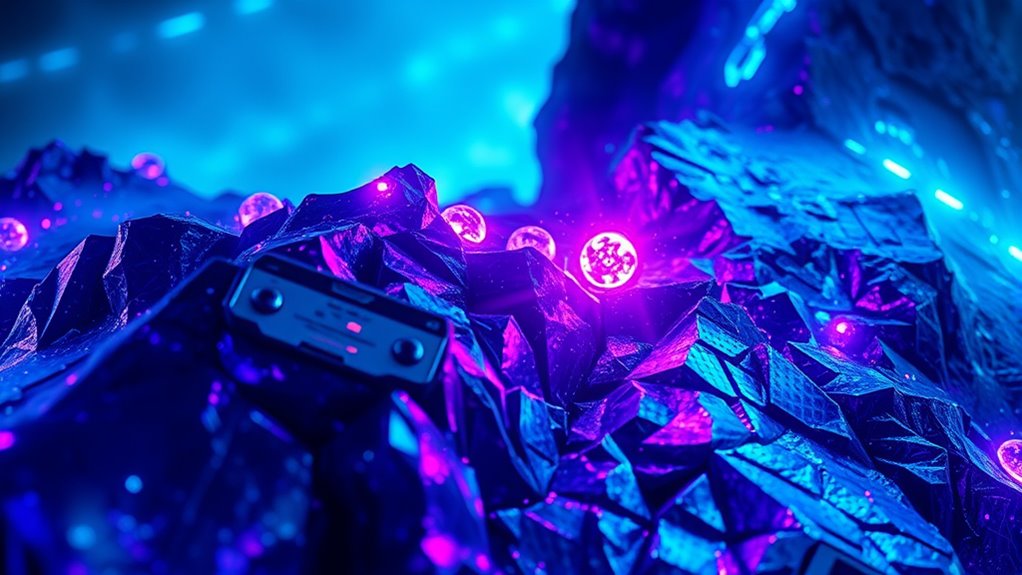

Spectral colors in video game art add vibrant, shifting hues that evoke emotion and build immersive atmospheres. You can use these hues to set the tone for scenes, communicate story elements, or highlight key moments without relying on dialogue. They deepen emotional connections and guide players’ responses while creating otherworldly domains or signaling danger. If you keep exploring, you’ll discover how these dynamic colors transform game visuals into powerful storytelling tools.
Key Takeaways
- Spectral colors offer vibrant, shifting hues that evoke emotion and enhance visual storytelling in game art.
- Color grading with spectral hues creates mood, atmosphere, and guides player emotional responses.
- Use spectral colors to differentiate worlds, factions, or mental states without dialogue.
- Incorporating spectral lighting effects boosts immersion and highlights pivotal narrative moments.
- Spectral hues deepen emotional engagement, transforming scenes into memorable, emotionally resonant experiences.
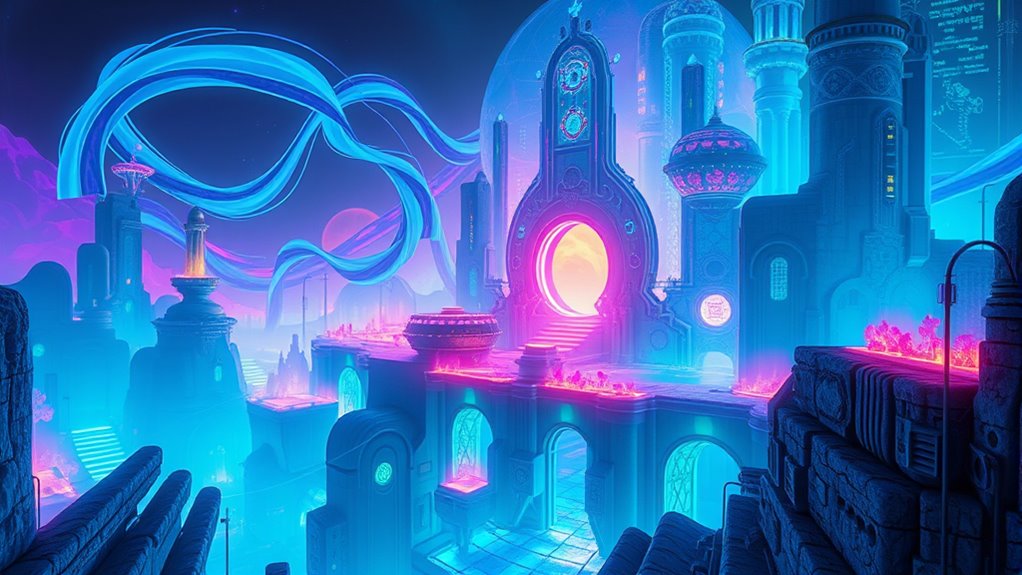
Spectral color in video game art offers a vibrant and dynamic palette that can evoke emotion and enhance gameplay experiences. These colors, often shimmering with iridescence or shifting hues, immediately captivate players and set the tone for each scene. As a game developer or artist, you can harness spectral colors through thoughtful color grading to create mood, atmosphere, and visual storytelling. Color grading isn’t just about making things look pretty; it’s a powerful tool that guides players’ emotional responses and emphasizes key narrative moments. When you apply spectral hues to your game environments, characters, or effects, you craft a visual language that communicates more than words ever could.
Spectral colors craft emotional depth and storytelling through vibrant, shifting hues in game art.
Imagine walking into a mysterious, otherworldly domain where the skies ripple with shifting shades of violet, teal, and gold. These spectral colors tell you immediately that you’re in a realm beyond normal perception, stirring curiosity and wonder. By adjusting color grading, you can intensify or subdue these hues to match the emotional beats of your story. For moments of tension, you might saturate the scene with stark, contrasting spectral colors to heighten unease. Conversely, softer, ethereal spectral tones can evoke serenity or a sense of awe. This deliberate manipulation of color not only beautifies your game but also deepens the narrative, making every scene a piece of visual storytelling.
Using spectral colors also allows you to distinguish different worlds, factions, or states of mind without relying solely on dialogue or text. For example, a corrupted zone might be bathed in sickly greens and sickly purples, signaling danger or decay. A hero’s transformation could be highlighted with shimmering, radiant spectral light, emphasizing a pivotal character development moment. These visual cues, driven by your mastery of color grading, help players interpret and feel the story on an intuitive level, strengthening their emotional connection to the game. Additionally, incorporating specialized lighting effects can further enhance the spectral quality and immersion.
Incorporating spectral colors into your game’s art style isn’t just about flashy visuals; it’s about crafting a cohesive, immersive experience. When you design with intent, using spectral hues to guide the eye and evoke specific feelings, you amplify the power of visual storytelling. Your choices in color grading can transform ordinary scenes into memorable moments, conveying complex narratives through vibrant, shifting colors that resonate deeply with players. Ultimately, spectral colors serve as a bridge between gameplay and emotion, making your game not only visually stunning but emotionally impactful as well.

DGK Color Tools Digital Kolor Pro 16:9 Large Color Calibration and Video Chip Chart, 2-Pack
SUPERIOR ACCURACY – Ensures precise color calibration with professional-grade chips, delivering consistent and reliable results for video production.
As an affiliate, we earn on qualifying purchases.
As an affiliate, we earn on qualifying purchases.
Frequently Asked Questions
How Does Spectral Color Influence Player Emotions?
Spectral color substantially influences your emotions by leveraging color psychology to evoke specific feelings. Bright, vibrant hues can energize or excite you, while cooler, muted tones may induce calm or melancholy. When game designers use spectral colors intentionally, they shape your emotional response, creating immersive experiences. You might feel tension, joy, or fear based on the spectral color palette, making your engagement more intense and emotionally resonant.
Are Spectral Colors Used Differently Across Game Genres?
You’ll notice that spectral colors are used differently across game genres, with around 65% of fantasy games employing vibrant spectral hues for magical effects. In action games, they often symbolize danger or excitement, while in horror titles, they evoke eeriness. This genre differentiation leverages color symbolism, helping players intuitively understand the game’s mood and guiding emotional responses through strategic spectral color use.
What Tools Enable Creators to Incorporate Spectral Colors?
You can incorporate spectral colors using tools like advanced rendering engines that support spectral color theory, allowing for more accurate and vivid color displays. Software such as Unreal Engine or Unity offers spectral color rendering features, giving creators control over light interactions and color vibrancy. Additionally, graphic design programs like Photoshop enable fine-tuning of spectral hues for visual effects, making your game environments more immersive and striking.
How Do Spectral Colors Impact Accessibility in Gaming?
Spectral colors can improve accessibility in gaming by helping players with color blindness distinguish important elements more easily. You can use contrast enhancement techniques alongside spectral hues to create visuals that stand out regardless of vision variations. This approach guarantees that all players, no matter their visual capabilities, can enjoy the game fully. Incorporating spectral colors thoughtfully fosters inclusivity and enhances the overall gaming experience for everyone.
Can Spectral Color Palettes Be Customized for Individual Players?
Yes, spectral color palettes can be customized for individual players. Think of your gaming experience as a canvas where you can express your unique style through player personalization and color customization. By adjusting spectral colors, you evoke emotions and create a more immersive world tailored to your preferences. This flexibility guarantees that your game environment resonates with your mood, making each adventure truly personal and emotionally engaging.

Govee RGBIC LED Strip Lights, Smart LED Lights for Bedroom, Bluetooth LED Lights APP Control, DIY Multiple Colors on One Line, Color Changing LED Strip Lighting Music Sync, Home Decor, 16.4ft
Smart RGBIC Effects: RGBIC LED Strip lights for bedroom display multiple colors on one line at a time…
As an affiliate, we earn on qualifying purchases.
As an affiliate, we earn on qualifying purchases.
Conclusion
As you explore the vibrant world of video game art, spectral colors reveal hidden depths and emotions, transforming pixels into powerful stories. By harnessing these luminous hues, you ignite a visual symphony that captivates players’ imaginations. Remember, spectral colors are the brushstrokes of a master artist—your creativity—turning mere visuals into unforgettable experiences. Embrace their magic, for in their glow, the game’s soul truly comes alive.

Designing Creatures and Characters: How to Build an Artist's Portfolio for Video Games, Film, Animation and More
As an affiliate, we earn on qualifying purchases.
As an affiliate, we earn on qualifying purchases.

Walter Foster Artist's Library Series Color Theory Book
Color Theory
As an affiliate, we earn on qualifying purchases.
As an affiliate, we earn on qualifying purchases.