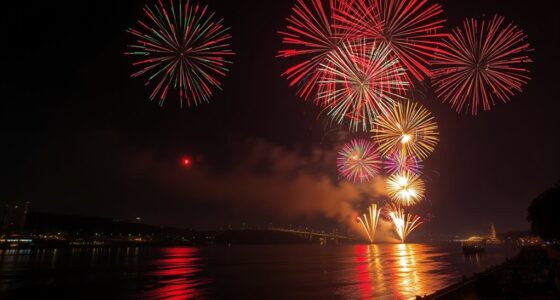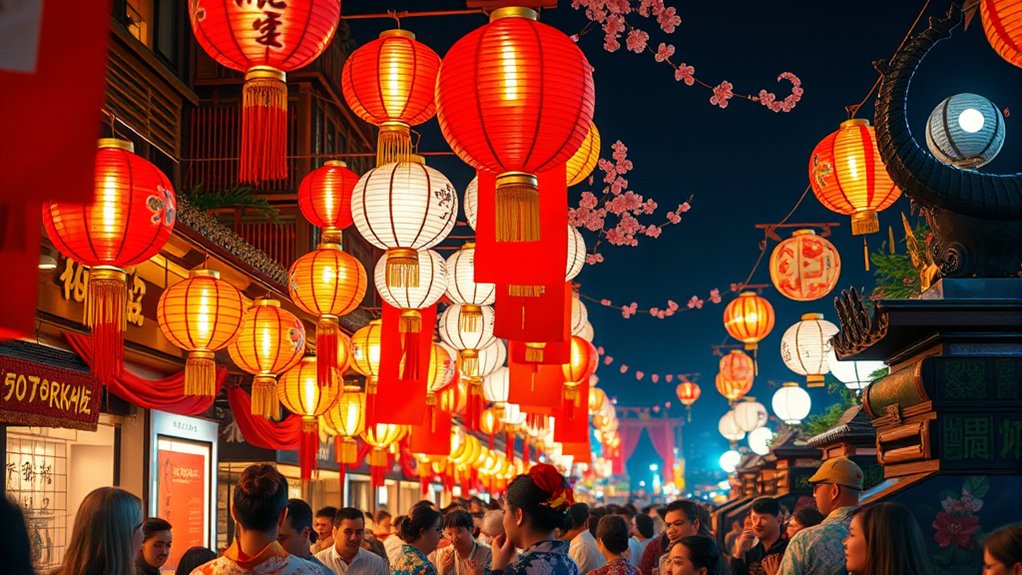

In Japanese festivals, colors hold powerful meanings that enhance the celebration. Bright reds and whites symbolize happiness, purity, and significance, while gold and yellow emphasize prosperity. Green represents renewal, and purple adds dignity, often connected to nobility. Kimono colors and decorations reflect social status, seasonal changes, and cultural values. Paying attention to these vibrant hues helps you understand the deeper significance of the festivities—continue exploring to uncover more fascinating symbolism behind these colorful traditions.
Key Takeaways
- Kimono colors indicate social status, seasons, and festival moods, enhancing cultural understanding and experience.
- Bright reds and whites in festival decorations symbolize purity, joy, and vitality, fostering unity.
- Gold and yellow hues highlight prosperity and abundance during celebratory events like New Year or harvest festivals.
- Purple signifies nobility and tradition, adding dignity to festival decorations and attire.
- Color choices in festivals communicate collective hopes, cultural values, and reinforce Japanese heritage.
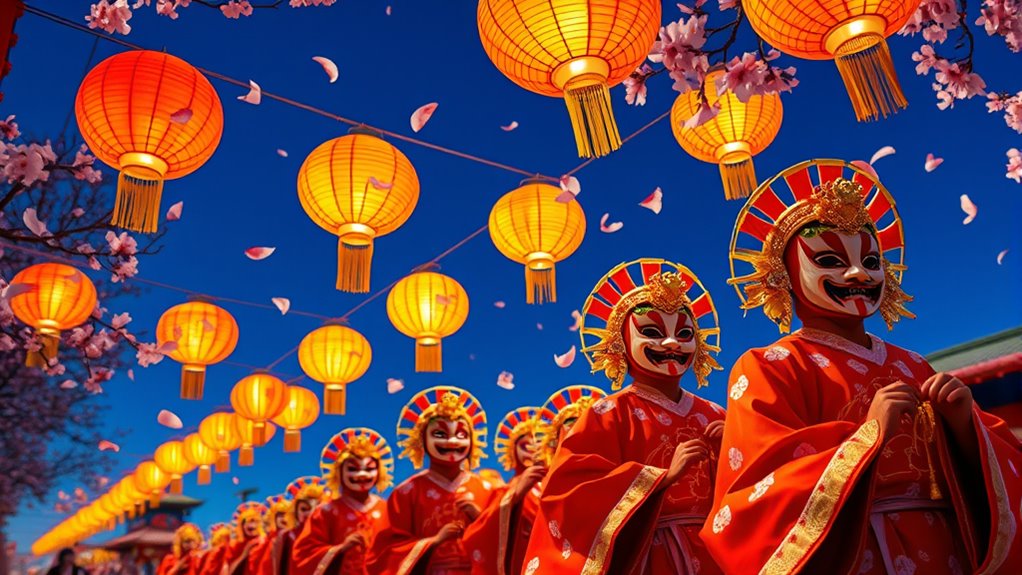
Colors play a pivotal role in Japanese festivals, as they convey deep cultural meanings and evoke specific emotions. When you see participants dressed in traditional attire, you’ll notice that kimono color meanings aren’t random—they reflect social status, seasons, or the festival’s mood. For example, vibrant reds symbolize happiness and good fortune, often worn during celebratory occasions, while softer pastels like pink and light blue evoke spring’s gentle renewal. Black, although sometimes associated with mourning, can also appear in festive contexts, representing elegance and formality. Knowing these kimono color meanings helps you understand the underlying messages conveyed during festivals, making the experience richer and more meaningful. Additionally, the use of predictive modeling in analyzing historical data can help organizers select color schemes that resonate with current cultural trends and sentiments, enhancing the festival’s emotional impact.
Kimono colors reflect social status, seasons, and festival moods, conveying cultural meanings and deepening festival appreciation.
Festival decoration colors are equally significant, shaping the overall atmosphere. Bright reds and whites dominate many festival decorations, symbolizing purity, joy, and vitality. You’ll see these colors in banners, lanterns, and streamers, creating an energetic and welcoming environment. Gold and yellow hues often highlight prosperity and abundance, especially during New Year celebrations or harvest festivals. Green, representing growth and renewal, appears in foliage and floral arrangements, emphasizing nature’s bounty. Purple, historically associated with nobility, appears in decorations to lend a sense of dignity and tradition. The careful selection of these festival decoration colors isn’t accidental; it’s rooted in centuries of symbolism that aim to invoke specific feelings and reinforce cultural values.
During festivals, color choices also serve to communicate collective hopes and beliefs. For example, during the Tanabata Festival, vibrant multi-colored streamers symbolize dreams and wishes, while the use of red and white in celebratory banners underscores unity and festive spirit. You might notice that at matsuri (festivals), the color schemes are designed to energize participants and visitors, fostering a sense of community and shared joy. The colors used in festival decoration are carefully coordinated to enhance the visual impact and emotional resonance, making the event memorable and culturally resonant.
In essence, whether through kimono colors or festival decorations, color symbolism in Japanese festivals isn’t just about aesthetics. It’s a language that communicates tradition, emotion, and collective aspirations. By paying attention to these colors, you deepen your understanding of Japanese culture and connect more profoundly with the festivities. Every hue and shade is intentional, crafted to evoke specific feelings and uphold centuries-old customs, ensuring that each festival remains a vibrant celebration of Japan’s rich heritage.

PRIJOUHE Men's Kimono Cardigan Jacket Japanese Style Flying Crane Seven Sleeves Open Front Coat
- Stylish Kimono Design: Japanese style with seven sleeves
- Unisex Fit: Suitable for men and women
- Comfortable Fabric: 100% polyester, lightweight material
As an affiliate, we earn on qualifying purchases.
As an affiliate, we earn on qualifying purchases.
Frequently Asked Questions
How Do Color Choices Vary Between Regional Festivals in Japan?
You’ll notice that regional festivals in Japan feature distinct color choices, reflecting local traditions and cultural values. These festival color variations highlight regional color significance, with some areas emphasizing red for energy or blue for tranquility. As you experience these festivals, observe how colors connect to local history and beliefs, creating unique visual displays that celebrate regional identity and community spirit through vibrant, meaningful color choices.
Are There Specific Colors Associated With Particular Japanese Zodiac Signs?
Did you know that zodiac color associations influence Japanese festival color traditions? In Japanese culture, each zodiac sign often has specific colors linked to its traits, like red for passion or blue for calmness. During festivals, these zodiac color associations are reflected in decorations and costumes, emphasizing the significance of astrology in cultural celebrations. So, the colors you see during festivals often carry deeper meanings tied to the zodiac signs.
How Has Modern Fashion Influenced Traditional Festival Color Symbolism?
Modern fashion has markedly influenced traditional festival color symbolism through color reinterpretation. You may notice that contemporary styles blend vibrant hues with traditional tones, creating new meanings and expressions. This shift allows you to personalize your festival attire while respecting cultural roots. As a result, the colors you choose can reflect current trends, individual identity, and cultural evolution, making traditional festivals more dynamic and inclusive for modern participants.
Do Colors in Festivals Differ Between Urban and Rural Areas?
You’ll notice that urban and rural areas often show different festival color preferences. Urban festivals tend to feature brighter, more varied colors, reflecting modern influences and diverse tastes. In contrast, rural festivals usually stick to traditional color schemes, emphasizing cultural heritage. These urban-rural color differences highlight how local traditions and contemporary trends shape festival celebrations, making each area’s festivities unique and vibrant.
What Are the Historical Origins of Color Symbolism in Japanese Festivals?
You might wonder about the historical origins of color symbolism in Japanese festivals. These colors often trace back to mythical origins and cultural influences from ancient China and indigenous traditions. Over centuries, colors like red and white gained significance, representing protection and purity. You can see how these symbolic meanings evolved through festivals that celebrate seasonal changes, spiritual beliefs, and societal values, reflecting Japan’s rich cultural tapestry.

Boao 10 Pcs Japanese Carp Windsock Fish Flag Kite 15.7 Inch Japanese Hanging Windsocks for Garden Backyard Home Outdoor Sushi Bar Restaurant Decoration (Classic)
- Vibrant Color Variety: 10 bright colors included
- Eye-Catching Size: 15.7 inches long
- Durable Construction: Made of reliable polyester material
As an affiliate, we earn on qualifying purchases.
As an affiliate, we earn on qualifying purchases.
Conclusion
You now see how colors craft a captivating cultural canvas, conveying customs, creating connections, and celebrating spirits. By blending bold reds, serene whites, and vibrant violets, Japanese festivals become more than mere moments—they become memorable mosaics of meaning. Remember, the palette of tradition paints a powerful picture, portraying passion, purity, and pride. So, let these luminous hues linger in your mind, lighting your love for Japan’s rich, resonant, and radiant rituals.

AimtoHome Colorful Paper Lanterns Set (12 Pcs) – 6/8/10 Inch Purple, Orange Red,Blue,Yellow, Red,Green Round Hanging Paper Lanterns for Rainbow Party, Carnival Celebration, Back to School Decor
- Vibrant Color Variety: 12-piece set with 6 colors
- Wide Application: Perfect for various celebrations
- Easy to Assemble: Quick setup with no tools needed
As an affiliate, we earn on qualifying purchases.
As an affiliate, we earn on qualifying purchases.

Festival Hanten Happi Coat (With an Obi Belt) SizeL,Blue Festival Kanji Pattern(With an Obi Belt and Bandana)
- Festival Ready: Great for festivals and shops
- Happi Coat with Obi: Includes an obi and bandana
- Unique Design Options: Features various kanji patterns
As an affiliate, we earn on qualifying purchases.
As an affiliate, we earn on qualifying purchases.