When comparing greenhouse lights, LED grow lights are more energy-efficient, produce less heat, and last longer than HPS lights, making them cost-effective over time. Although LEDs have a higher upfront price, they reduce electricity and cooling costs and last around 50,000 hours. HPS lights are cheaper initially but require more frequent replacements and generate more heat, increasing cooling expenses. To discover which option suits your needs best, explore the details further.
Key Takeaways
- LEDs are more energy-efficient and produce less heat than HPS lights, reducing operational and cooling costs.
- Despite higher initial costs, LEDs offer longer lifespan and lower maintenance expenses over time.
- HPS lights provide high-intensity illumination suitable for large-scale grows but generate more heat and energy waste.
- LEDs offer better light consistency and higher refresh rates, improving plant growth quality.
- The choice depends on balancing upfront investment against long-term savings and specific greenhouse requirements.
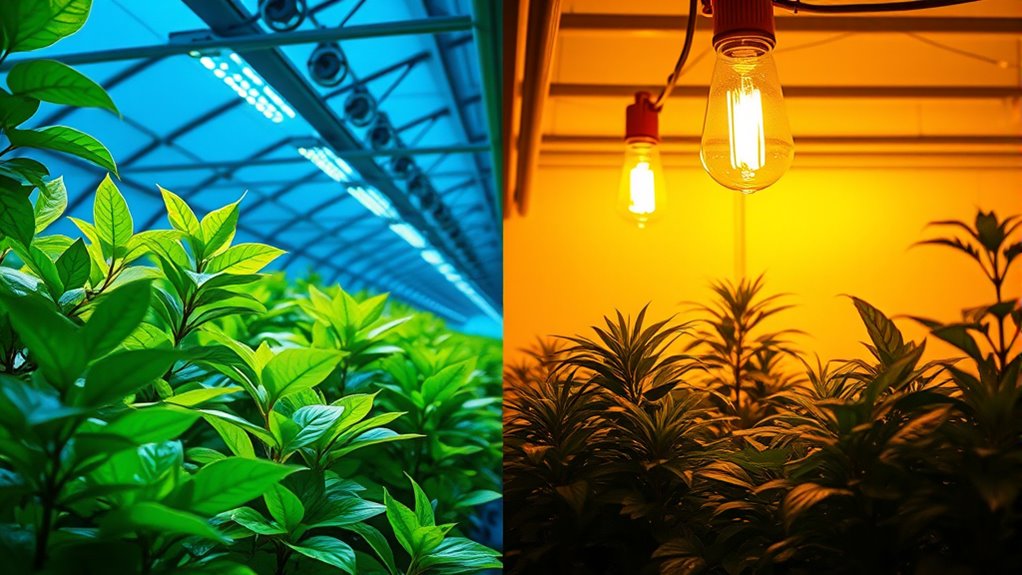
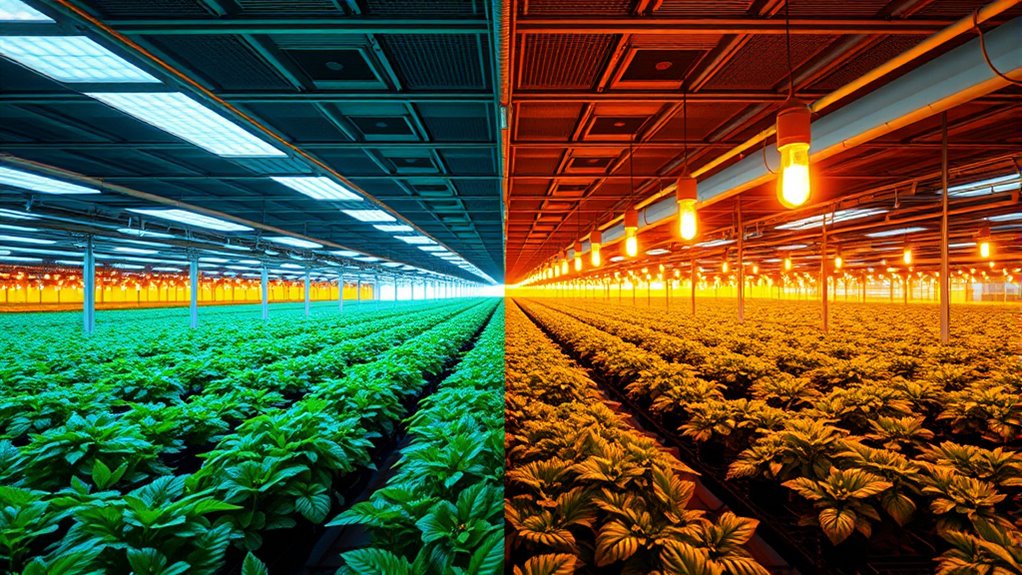
When choosing between LED and HPS lighting, understanding their differences can help you make an informed decision. One of the primary factors to consider is energy efficiency. LEDs are considerably more energy-efficient than HPS lights, consuming less power to produce the same amount of light. This means lower electricity bills and less strain on your energy resources over time. LEDs convert a higher percentage of electrical energy into usable light, reducing waste and cutting operating costs. On the other hand, HPS bulbs, while providing high-intensity light suitable for large-scale growing, tend to waste more energy in the form of heat. This extra heat can lead to additional cooling costs, which further impacts your overall energy expenditure. Additionally, the refresh rates of LEDs can be higher, providing more consistent lighting for your plants and reducing flickering that might affect growth.
Another critical aspect is the initial cost. LEDs typically have a higher upfront price compared to HPS lights. The advanced technology and longer lifespan of LEDs contribute to this higher initial investment. However, it’s important to consider this expense in the context of long-term savings. Although you’ll pay more initially, LED systems usually last much longer—often 50,000 hours or more—reducing replacement costs over time. HPS lights, while cheaper to purchase initially, tend to have shorter lifespans, often around 24,000 hours, and require more frequent replacements. This means that, despite the lower initial cost, HPS lighting can become more expensive over the lifespan of your setup due to maintenance and replacement needs.
In addition to cost, energy efficiency plays a role in the overall cost-effectiveness of your lighting choice. LEDs, with their superior energy efficiency, can considerably reduce your electricity expenses. This advantage becomes especially noticeable over the long term, as energy consumption directly impacts your operational costs. Furthermore, LEDs produce less heat, which means you might save on cooling costs as well. HPS lights generate more heat, necessitating additional cooling systems to maintain ideal growing conditions, adding to your operational costs.

Barrina Plant Grow Lights, 4FT 5000K Full Spectrum Daylight White, 252W(6 x 42W, 1400W Equivalent), T8 LED Grow Light Strips, Growing Lamp Fixture, Plant Lights for Indoor Plants, Greenhouse, 6-Pack
Please note that we have a brand new upgrade.This product is compatible with Barrina GM Series Cords. If…
As an affiliate, we earn on qualifying purchases.
As an affiliate, we earn on qualifying purchases.
Frequently Asked Questions
Which Lighting Option Is More Energy-Efficient Long-Term?
LED lighting is more energy-efficient long-term because it consumes less energy for the same light output, leading to lower energy consumption. You’ll notice significant cost savings on your electricity bills over time, as LEDs have a longer lifespan and require less maintenance. This means you save money initially and continue to benefit from reduced operating costs, making LEDs the smarter, more sustainable choice for your greenhouse lighting needs.
How Do LED and HPS Lights Affect Plant Growth Speed?
Think of LED and HPS lights as race cars on a track—LEDs often lead the pack when it comes to plant growth speed. They boost photosynthesis efficiency with their tailored light spectrum, which promotes faster development. HPS lights, while effective, may not match this speed due to less spectrum flexibility. By choosing LEDs, you give your plants a turbo boost, helping them grow quicker and healthier.
Are There Health Risks Associated With HPS Lighting?
Yes, there are health concerns associated with HPS lighting, mainly due to their high heat output and UV radiation exposure. Prolonged exposure can cause skin burns or eye damage if you don’t take proper safety precautions. To stay safe, always wear protective gear like gloves and eye protection, guarantee good ventilation, and avoid looking directly at the lights. Following safety precautions minimizes these risks and keeps you safe during operation.
Can LED Lights Be Customized for Different Plant Stages?
Yes, LED lights can be customized for different plant stages through light spectrum customization. You can tailor the spectrum to match growth stage needs, such as blue light for vegetative growth and red light for flowering. This growth stage tailoring allows you to optimize plant development, improve yields, and reduce energy consumption. With adjustable LEDs, you have precise control over your lighting conditions, ensuring your plants get exactly what they need at each growth phase.
What Are the Initial Setup Costs for LED Versus HPS?
You’ll find that LED setup costs are typically higher upfront, averaging between $200 to $1,200 per fixture, due to advanced technology. In contrast, HPS lights are cheaper initially, around $100 to $400. The cost comparison shows LEDs require more investment but save money long-term. Installation requirements also differ; LEDs are easier to install and don’t need complex ballasts, while HPS setups demand more space and electrical work.

TATU 1000w LED Grow Light for Indoor Plants, Full Spectrum Plant Light Growing Lamp for Hydroponic Indoor Plant Veg and Flower for Grow Tent (Actual Power 100W=1000W HPS)
【Perfect for All Growth Stages】 Excellent full spectrum LED grow light, including white, blue, red. The 660nm red…
As an affiliate, we earn on qualifying purchases.
As an affiliate, we earn on qualifying purchases.
Conclusion
Ultimately, choosing between LED and HPS lights depends on your needs and budget. LED lights offer efficiency and longevity, while HPS lights deliver powerful, proven results. Remember, “A journey of a thousand miles begins with a single step.” Whichever you pick, invest wisely and stay attentive to your plants’ needs. With patience and care, your greenhouse can flourish under the right lighting, turning your green dreams into a thriving reality.

Green Lighting
As an affiliate, we earn on qualifying purchases.
As an affiliate, we earn on qualifying purchases.

Horticulture Lighting Group HLG 100 V2 4000K 95W LED Quantum Board Grow Light Veg & Bloom with High Efficiency Upgraded Version 2 Samsung LM301B, Full Spectrum Growing Lights for Indoor Plants
HIGHEST EFFICIENCY LED GROW LIGHTING: HLG 100 V2 uses our custom designed high efficiency white light quantum boards;…
As an affiliate, we earn on qualifying purchases.
As an affiliate, we earn on qualifying purchases.