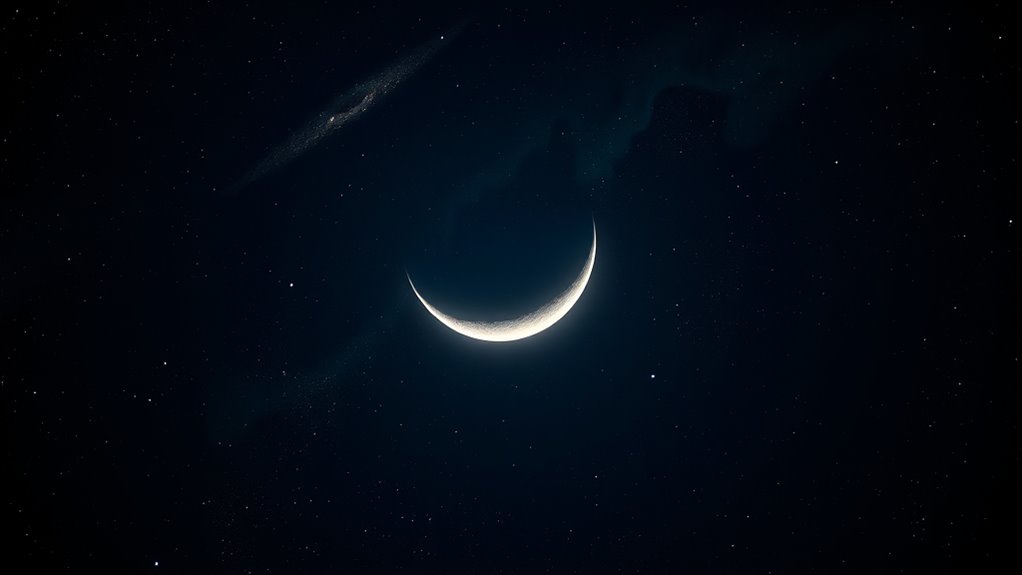
Your ability to observe faint deep-sky objects depends heavily on the Moon’s phase. During a new Moon, the sky is darkest, giving you the best chance to see stars, galaxies, and nebulae in detail. As the Moon brightens toward full, its glow washes out faint objects, making them harder to spot. By planning your stargazing around lunar cycles, you can optimize your viewing experience and capture more stunning details. Keep exploring to uncover tips for perfecting your sessions.

Get the latest gadgets delivered free with Prime
- Fast, free delivery on millions of items
- Prime Video, Amazon Music and more included
- Member-only deals all year
Key Takeaways
- New Moon phase offers the darkest skies, ideal for observing faint deep sky objects like galaxies and nebulae.
- Full Moon’s brightness reduces contrast, making it difficult to see faint stars, nebulae, and galaxies.
- Tracking lunar phases helps plan observation sessions for optimal sky darkness and detail visibility.
- During crescent phases, reduced lunar illumination enhances conditions for deep sky viewing.
- Understanding lunar influence improves astrophotography by choosing nights with minimal lunar interference.

Have you ever wondered how the changing phases of the Moon impact your ability to observe deep sky objects? The answer lies in understanding lunar illumination and how it influences the night sky. When the Moon is full, its bright glow floods the sky, washing out faint stars and distant galaxies. During this time, observing deep sky objects becomes markedly more challenging because the lunar illumination reduces the contrast needed to see these faint features. Conversely, during the new Moon phase, the sky darkens considerably, providing ideal conditions for deep sky observation. The absence of lunar light means you get a clearer, more detailed view of nebulae, star clusters, and galaxies. Knowing these phases helps you plan your stargazing sessions to maximize visibility and detail.
Knowing lunar phases helps optimize deep sky viewing by maximizing contrast and clarity.
Lunar illumination isn’t just a matter of brightness; it also plays an essential role in celestial navigation. Historically, sailors and explorers relied on the Moon’s position and phase to determine their location at sea, especially when stars weren’t visible due to weather or daylight. Today, understanding the Moon’s phases continues to be indispensable for astronomers and enthusiasts alike. By recognizing how the Moon’s illumination varies, you can better anticipate how the sky will look on any given night. For instance, during the waxing and waning crescent phases, the Moon’s glow is subdued, allowing for darker skies and more effective deep sky observation. As the Moon transitions from new to full, the increasing lunar illumination can serve as a natural reminder to plan your nights around these cycles.
Knowing the Moon’s phases also helps you avoid disappointment on nights when the sky is overly bright. If you’re passionate about studying faint galaxies or diffuse nebulae, it’s best to wait until the Moon is in a phase with minimal illumination. This strategic planning ensures you make the most of the dark sky conditions, especially if you’re using sensitive equipment like long-exposure astrophotography. Additionally, understanding lunar illumination can help you calibrate your expectations and appreciate the subtle interplay between the Moon’s cycle and your observational opportunities. It’s a simple yet powerful way to enhance your stargazing experience, making each session more productive and enjoyable.
In essence, keeping track of the Moon’s phases allows you to harness lunar illumination for better celestial navigation and optimized deep sky observation. It’s a natural rhythm that, when understood, becomes an invaluable tool in your astronomical pursuits. Whether you’re a seasoned astronomer or a casual stargazer, recognizing how the Moon’s changing glow influences your view helps you plan your nights and truly appreciate the wonders hidden in the depths of the universe. Additionally, understanding the causes and contributing factors behind lunar phases deepens your appreciation for the intricate relationship between the Moon and our sky.
telescope for deep sky observation
As an affiliate, we earn on qualifying purchases.
As an affiliate, we earn on qualifying purchases.
Frequently Asked Questions
How Do Moon Phases Affect the Visibility of Faint Deep Sky Objects?
Moon phases markedly affect the visibility of faint deep sky objects by increasing sky brightness through lunar illumination. During full moons, the bright moonlight washes out faint stars and galaxies, making observation difficult. New moons, however, provide the darkest skies, reducing sky brightness and enhancing your ability to see faint objects clearly. To maximize your viewing experience, plan your observations around the new moon phase when the sky is darkest.
Can Certain Moon Phases Improve the Contrast of Specific Deep Sky Targets?
Certain moon phases can improve the contrast of specific deep sky targets, especially during lunar eclipses when the moonlight filtering through Earth’s atmosphere dims the brightness. During these times, you’ll notice better visibility of faint objects, as the reduced moonlight minimizes glare. This increased contrast makes it easier to observe dim galaxies and nebulae, giving you a clearer view of the night sky’s hidden treasures.
What Equipment Is Best for Deep Sky Observation During Different Moon Phases?
During different moon phases, you should use moon filters to reduce glare and enhance contrast for deep sky observation. A sturdy telescope mount, like an equatorial mount, helps you track objects smoothly, especially when the sky is brighter. For new moon, you can use more sensitive equipment, but during full moon, select filters and less sensitive setups. This combination ensures clear views regardless of the moon’s phase.
Are There Specific Times During Moon Phases When Deep Sky Observation Is Optimal?
You should schedule your deep sky observations during the new moon phase when the sky is darkest, providing the best moon phase timing for viewing faint objects. Plan your observing schedule around these periods, avoiding the bright waxing and waning phases when moonlight can wash out your view. By aligning your sessions with the new moon, you’ll enhance visibility of deep sky objects and enjoy better overall observation conditions.
How Does Moonlight Interfere With Astrophotography of Deep Sky Objects?
Moonlight interference acts like a spotlight on your astrophotography, washing out the faint glow of deep sky objects. This bright interference creates astrophotography challenges, making it harder to capture crisp, detailed images. You’ll find that moonlight dims the stars’ shimmer and washes out nebulae, so you’re best off shooting during new moon phases or when the moon is below the horizon. Clear, dark skies are your canvas for stunning deep sky shots.
As an affiliate, we earn on qualifying purchases.
Conclusion
As you explore the night sky, remember the moon’s changing phases are like a guiding lantern, illuminating your journey through the cosmos. Each phase symbolizes new beginnings, full illumination, or quiet reflection—reminding you that even in darkness, there’s beauty and opportunity. Embrace these cycles as a mirror of your own growth, and let the moon’s silent dance inspire your deep sky adventures. With each observation, you connect deeper to the universe’s eternal rhythm.
astrophotography camera for low light
As an affiliate, we earn on qualifying purchases.
As an affiliate, we earn on qualifying purchases.
As an affiliate, we earn on qualifying purchases.
Halloween Picks
halloween
As an affiliate, we earn on qualifying purchases.