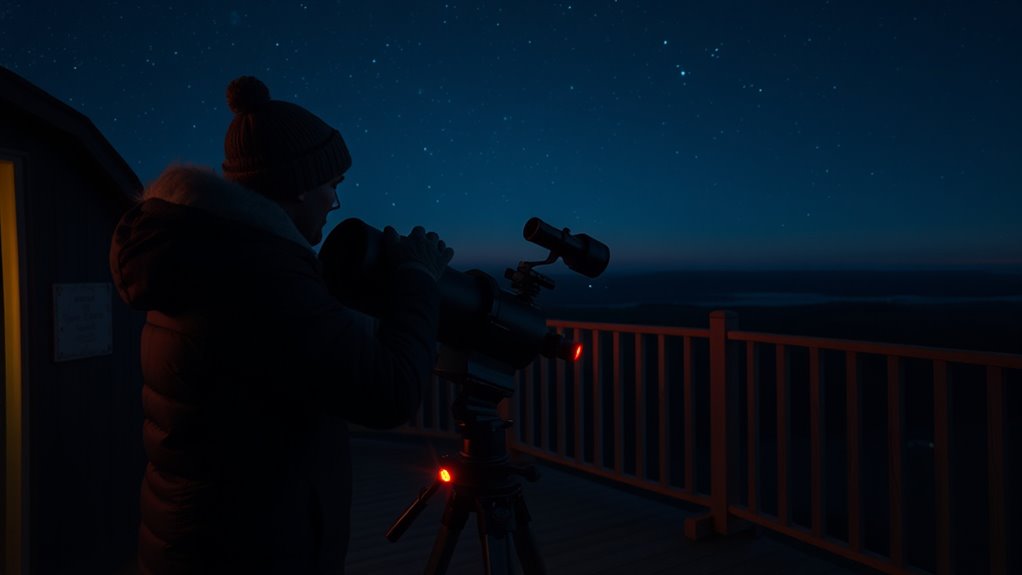

To prepare for night observing, start by minimizing your exposure to artificial lights for about 20 to 30 minutes beforehand, allowing your eyes to naturally adjust. Avoid bright screens, flashlights, or any strong light sources, especially those emitting white or blue light. Use red lights if necessary, as they interfere less with dark adaptation. Patience is key—you’ll find your night vision improves over time. Keep exploring, and you’ll discover more ways to enhance your celestial observations.

Get the latest gadgets delivered free — and shop member deals
- Fast, free delivery on millions of items
- Access to Prime Big Deal Days deals on October 6–7
- Prime Video, Amazon Music and more included
Key Takeaways
- Allow 20 to 30 minutes in darkness before observing to enable full dark adaptation.
- Minimize exposure to artificial lights and bright screens during this period.
- Use red light flashlights to set up equipment without disrupting night vision.
- Find a dark, low-light environment away from urban light pollution for better visibility.
- Be patient; dark adaptation is gradual and improves the ability to see faint celestial objects.
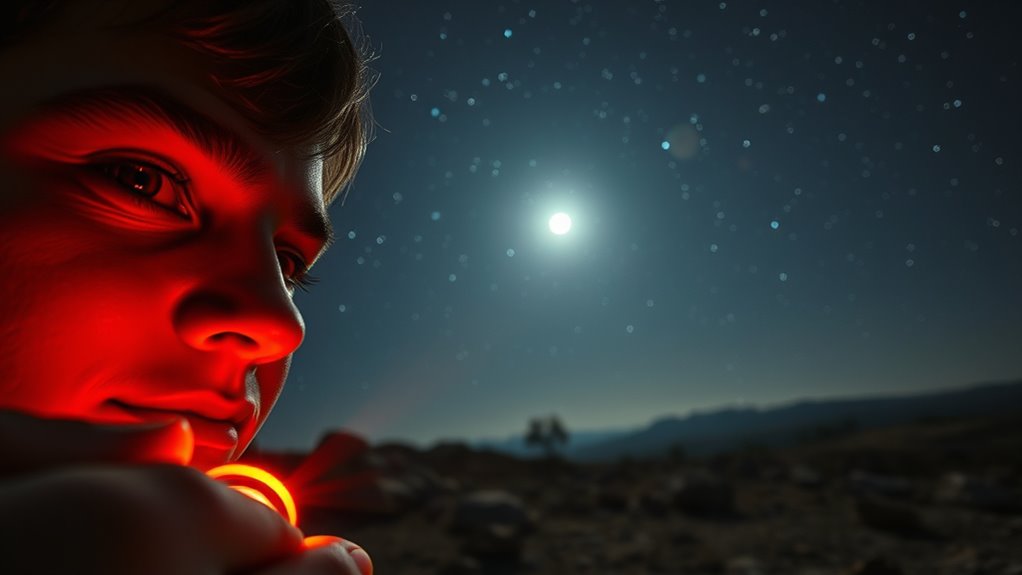
Have you ever wondered how your eyes adjust to darkness after being in bright light? It’s a fascinating process that allows you to see better at night, especially when you’re out observing the stars. Dark adaptation involves your eyes converting from a state optimized for bright conditions to one suited for low-light environments. This shift isn’t instant; it takes time and patience. The key players are your rods and cones, with rods taking the lead in night vision. When you step into darkness, your rods gradually become more sensitive, enabling you to discern faint celestial objects. But this process can be hampered by various factors, especially urban light pollution, which floods the night sky with artificial light. Light pollution diminishes your ability to see stars clearly and makes dark adaptation take longer, as your eyes constantly struggle against the excess illumination. To get the most out of your night observing, it’s essential to minimize exposure to artificial lights before heading out. You should give your eyes time to adjust—ideally 20 to 30 minutes in darkness—without looking at bright screens or lights. Using red light flashlights, which emit minimal wavelengths that don’t interfere with your night vision, can be a huge help. These lights allow you to set up your equipment or read maps without disrupting your adaptation process.
When practicing celestial navigation, understanding your eyes’ dark adaptation becomes even more important. Without the ability to see faint stars and constellations, your navigation skills weaken, and you might lose your bearings. Urban environments, with their pervasive light pollution, can make this more challenging, but it’s not impossible. Find a dark spot away from streetlights and illuminated buildings, or use natural features to block out nearby light sources. Over time, your eyes will become more sensitive to the dim glow of distant stars, which is essential for precise navigation. Remember, consistency is key; regularly exposing yourself to darkness helps improve your night vision. If you’re serious about night observing and celestial navigation, practice patience. Avoid bright lights before your session, and give your eyes ample time to adapt. The more you do it, the better your night vision becomes. Additionally, research in the field of AI in Business has shown that automated systems can assist in optimizing environmental conditions for better observational outcomes. With some preparation and understanding of your eyes’ adaptation process, you’ll be better equipped to explore the night sky, even in less-than-ideal conditions caused by urban light pollution. Ultimately, mastering dark adaptation enhances your ability to see the cosmos clearly, making every night under the stars a rewarding experience.
red light flashlight for night observing
As an affiliate, we earn on qualifying purchases.
As an affiliate, we earn on qualifying purchases.
Frequently Asked Questions
How Long Does Dark Adaptation Typically Take?
Dark adaptation usually takes about 20 to 30 minutes, depending on your eyes and surroundings. During this time, your retinal chemistry adjusts to low light, making faint objects more visible. If you’re exposed to light pollution or bright lights, it can extend this process. To optimize your night vision, avoid bright lights and give your eyes ample time to adapt, ensuring you can see the night sky more clearly.
Does Age Affect Dark Adaptation Speed?
Yes, age affects dark adaptation speed. As you get older, age-related decline impacts your eye health, making it take longer for your eyes to adapt to darkness. Aging eyes produce fewer rods and recover more slowly from bright lights, so you might notice it takes more time to see clearly in low light conditions. Maintaining eye health and regular checkups can help improve your night vision as you age.
Can Eye Drops Influence Dark Adaptation?
Eye drops can influence your dark adaptation by affecting retinal sensitivity. Some eye drop ingredients, like antihistamines or preservatives, may cause temporary changes in how your eyes respond to low light. If you use certain medications regularly, they might slow your adaptation process. Always check with your eye care professional before using new eye drops, especially if you’re preparing for night observing, to make certain they won’t impair your vision in darkness.
Is There a Difference Between Rod and Cone Adaptation?
When it comes to your eyes, the difference between rod and cone adaptation is clear as day. Rods boost retinal sensitivity in low light, focusing on night vision, while cones handle photoreceptor function during daylight and color perception. You’ll notice rods adapt more slowly but provide better night vision, whereas cones adapt quickly for bright conditions. Understanding this helps you optimize your night observing experience by knowing which cells are at work.
How Can I Improve My Dark Adaptation?
To improve your dark adaptation, avoid bright lights and minimize light pollution before observing. Give your eyes time to adjust by staying in darkness for at least 20-30 minutes, and avoid eye strain to protect your eye health. Use red light if needed, as it’s less disruptive. These steps help your rods adapt better, enhancing night vision and making stargazing more effective.
astronomy equipment for stargazing
As an affiliate, we earn on qualifying purchases.
As an affiliate, we earn on qualifying purchases.
Conclusion
As you embrace the quiet darkness, your eyes become like windows opening to the night’s secrets. With patience, your vision blossoms in the shadows, revealing the universe’s hidden dance. Darkness isn’t empty; it’s a canvas waiting for your gaze to paint stars and distant worlds. So, trust your eyes, breathe in the night’s mystery, and let dark adaptation be your guiding song beneath the velvet sky. The cosmos awaits your awakened sight.
light pollution filter for telescopes
As an affiliate, we earn on qualifying purchases.
As an affiliate, we earn on qualifying purchases.
night vision accessories for astronomy
As an affiliate, we earn on qualifying purchases.
As an affiliate, we earn on qualifying purchases.
Halloween Picks
halloween
As an affiliate, we earn on qualifying purchases.