To enjoy meteor showers, find a dark, clear spot away from city lights and allow your eyes time to adjust. Check the specific peak dates for each shower, like the Perseids in August or Geminids in December, and plan to observe after midnight when activity is highest. Using apps or star charts to locate the radiant point improves your viewing. Keep watching and you’ll uncover more tips to enhance your experience and catch the best displays.
Key Takeaways
- Check specific meteor shower schedules to identify peak dates, usually occurring annually around certain months.
- Observe after midnight when Earth faces the debris trail for the best meteor activity.
- Use dark, clear skies away from city lights, ideally during a new or crescent moon phase.
- Find the radiant point in the sky using star charts or apps to focus your viewing.
- Allow your eyes to adjust to darkness and use binoculars or chairs for a more comfortable viewing experience.
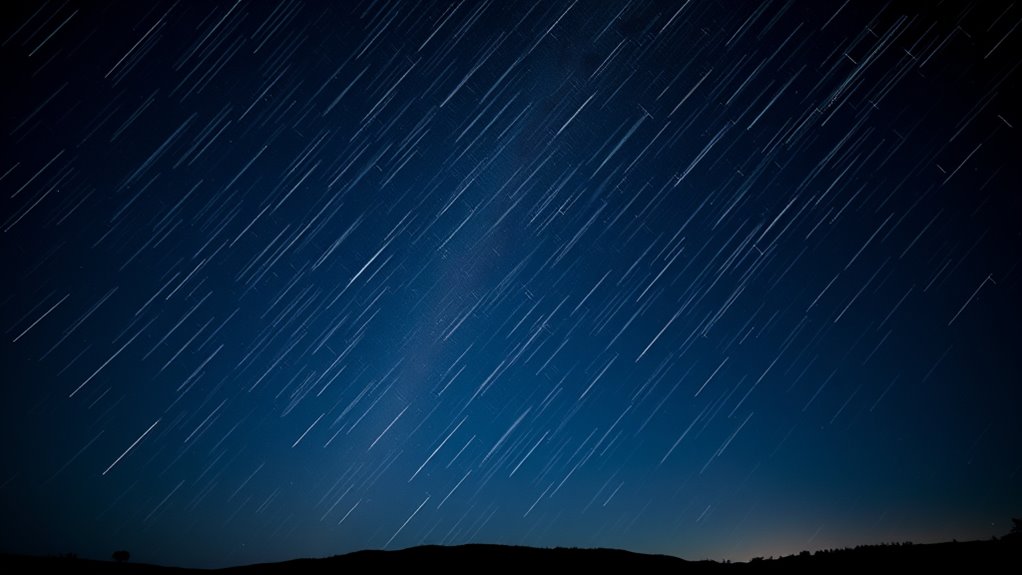
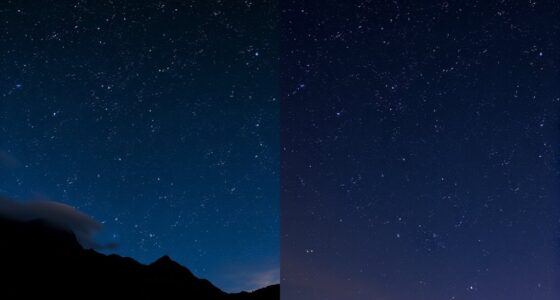
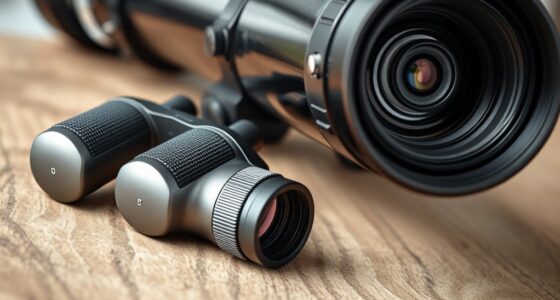
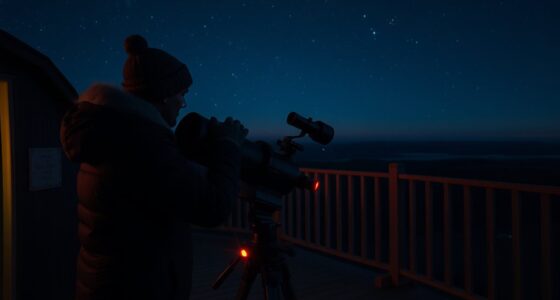
Have you ever wondered what causes those spectacular streaks of light across the night sky? The answer lies in meteor showers, which happen when Earth passes through trails of debris left behind by comets or asteroids. To truly appreciate these celestial displays, you’ll want to prepare with the right observing equipment. A good pair of binoculars can enhance your view, but a clear, dark sky is your best tool. Find a spot away from city lights, and give your eyes time to adjust — that’s when the meteors become most visible. Even with minimal equipment, you can enjoy the show, but having a comfortable chair and a blanket makes the experience more enjoyable. Remember, meteor showers aren’t just about the present; they’re connected to a rich history of observation. Throughout history, people have recorded remarkable meteor events, like the spectacular Leonid storms of the 19th century, which lit up the skies with thousands of meteors per hour. These historical meteor events helped scientists understand the nature of meteoroids and their origins, transforming casual skywatchers into serious astronomers. Knowing about past events can deepen your appreciation for what you’re witnessing tonight, as you realize how these fleeting streaks have fascinated humanity for centuries. To catch the peak of a meteor shower, timing is everything. Peak dates vary for each shower, but most occur annually around specific times, like the Perseids in August or the Geminids in December. Check an astronomy calendar or online forecast to plan your viewing. The best times are usually after midnight, when your part of Earth faces directly into the debris stream, increasing the chances of seeing more meteors. Be patient — meteor activity often varies throughout the night, and some of the most impressive displays happen in the early morning hours. Also, keep in mind that the moon’s phase can impact visibility. A new moon or a crescent moon provides darker skies, making meteors stand out more vividly. If you’re serious about observing, consider using apps or star charts to identify the constellation in which the radiant point appears, as many meteor showers seem to radiate from a specific constellation. This knowledge can help you locate the best part of the sky to focus on. Ultimately, experiencing a meteor shower is about patience, preparation, and curiosity. With the right equipment, timing, and a little bit of luck, you’ll witness a spectacular display of nature’s fireworks, connecting you with a universe that has fascinated humans for centuries. Additionally, understanding the nature of meteoroids can enhance your appreciation of the science behind these celestial events.

KAMRUI Pinova P1 Mini PC Computer, AMD Ryzen 4300U (Beats i3-10110U/3500U), 16GB RAM 256GB SSD, Mini Desktop Computer Support Triple 4K, USB-C, WiFi, Bluetooth, Ethernet for Business, Education, Home
Next-Gen Performance in a Compact Powerhouse: Meet the KAMRUI Pinova P1 Mini PC—powered by the AMD Ryzen 4300U...
As an affiliate, we earn on qualifying purchases.
Frequently Asked Questions
How Can I Best Observe Meteor Showers With Minimal Light Pollution?
To best observe meteor showers with minimal light pollution, head to dark sky reserves where light pollution is restricted. Use light pollution filters on your telescope or binoculars to enhance visibility. Find a dark, open area away from city lights, and give your eyes time to adjust. Check the forecast for clear skies and peak activity times, and bring a comfy chair to enjoy the show comfortably.
Are There Specific Moon Phases That Enhance Meteor Shower Viewing?
You’ll get the best meteor shower viewing during a new moon phase, when the moon’s light is minimal and doesn’t wash out the stars. A crescent moon also provides good conditions, but avoid full moons, as their brightness can hinder your view. Keep an eye on the moon phase calendar to pick the darkest nights, ensuring ideal viewing conditions for catching those dazzling meteors.
What Safety Precautions Should I Take While Stargazing Outdoors?
As you settle under the night sky, don’t forget safety precautions. Keep safety gear like a flashlight, sturdy shoes, and a first aid kit nearby. Check the weather forecast to avoid unexpected rain or cold. Stay aware of your surroundings, especially if you’re in a remote area. With these precautions, you can enjoy the dazzling meteor shower safely and comfortably, feeling confident as the sky puts on its spectacular show.
Can Meteor Showers Be Visible From Urban Areas?
Yes, you can see meteor showers from urban areas, but urban lighting often dims your view. To improve your chances, find a dark spot away from bright lights and check weather conditions for clear skies. Keep in mind that city lights and weather can obstruct your view, so monitoring the forecast and seeking out darker areas increases your likelihood of witnessing the meteor shower’s spectacular streaks across the night sky.
Are There Any Apps to Help Track Upcoming Meteor Showers?
Imagine a night sky filled with twinkling stars and streaks of light—apps like Star Walk or Sky Guide help you spot upcoming meteor showers. They use satellite tracking data and weather forecasts to give real-time updates. These tools simplify your stargazing, ensuring you’re in the right place at the right time. Download one before your next clear night, and you’ll be ready to catch those fleeting streaks across the darkened sky.

Pulcro.io TK QBE Mini PC - N150 CPU, Home Assistant, 8GB LPDDR5, 256GB SSD, 3X 4K HDMI, Silver
🌍 Assembled in the USA – Built and quality-checked in Texas, USA, with a 2-year limited warranty.
As an affiliate, we earn on qualifying purchases.
Conclusion
As you plan your night under the stars, remember that meteor showers are like fleeting fireworks—bright, breathtaking, and brief. Keep your eyes peeled during peak times, and don’t forget to find a dark spot away from city lights. With patience, you’ll catch those streaks of light darting across the sky, reminding you how beautiful and fleeting these cosmic displays are. So, get ready to make memories that shine as brightly as the meteors themselves.

KAMRUI Essenx E1 Mini PC, AMD Ryzen 3250U (up to 3.5GHz), 8GB DDR4 RAM 256GB M.2 SSD, Mini Desktop Computer Support Dual 4K, WiFi, Ethernet for Business, Office, Home
Powered By AMD Ryzen 3250U Processor: KAMRUI Essenx E1 Mini PC features AMD Ryzen 3250U (2 cores/ 4...
As an affiliate, we earn on qualifying purchases.

GMKtec Mini PC Computer, G10 Ryzen 5 3500U (Beats N150/4300U/3200U), 16GB RAM 512GB SSD 2.5GbE NIC LAN Desktop Office Home Business HTPC, Triple 4K Display, WiFi, BT, USB-C, DP, Type-C PD, HDMI 2.1
MINI PC COMPUTER OFFICE LIGHT GAMING - GMKtec Nucbox G10 Series is equipped with the Ryzen 5 3500U,...
As an affiliate, we earn on qualifying purchases.